Key Takeaways
- MUM is Google’s T5-based artificial intelligence system for understanding complex information needs across languages, tasks, and information types.
- Trained across 75 languages and multiple tasks, MUM can transfer knowledge across languages rather than relying solely on direct translation.
- MUM’s multimodal design connects formats such as text and images.
- Google states that MUM is not used for general organic ranking, but supports specific applications including vaccine searches and featured-snippet callouts.
MUM, short for Multitask Unified Model, is an artificial intelligence system developed by Google to better understand complex information needs across languages, tasks, and different types of information.
Google introduced MUM at Google I/O on May 18, 2021. The system uses Google’s T5 text-to-text framework, can both understand and generate language, and was trained across 75 languages and many different tasks at the same time. Google described MUM as “1,000 times more powerful than BERT,” referring to the model’s greater scale and capabilities rather than a universal claim that every task performs 1,000 times better.
MUM was designed to help Google handle information needs that may otherwise require several searches. It can connect concepts across languages and different forms of information, helping Search understand complex questions rather than depending only on individual keywords.
MUM is also multimodal. When MUM was introduced, Google said it could be used to understand information from both text and images, with the technology potentially expanding to other formats such as video and audio.
MUM and Google Rankings
Google states that MUM is not used for general ranking in Search. It is instead used for specific applications, including improving searches about COVID-19 vaccines and enhancing certain featured-snippet callouts.
Core Capabilities of MUM
MUM extends Google’s earlier language-understanding systems by combining several capabilities within one model.
- Complex Information Understanding: MUM can interpret questions involving several related considerations rather than treating each phrase as an isolated keyword.
- Language Understanding and Generation: The model can both understand existing language and generate language, giving it broader capabilities than systems designed only for classification or matching.
- Cross-Lingual Knowledge Transfer: Because MUM was trained using content from 75 languages, information learned in one language can help it perform tasks involving another. This allows useful knowledge to cross language boundaries without requiring every source to exist in the searcher’s language.
- Multitask Learning: MUM was trained on many tasks simultaneously, allowing knowledge from one task to support another rather than relying on an entirely separate model for every problem.
- Multimodal Understanding: MUM was designed to connect information across different formats. Google’s initial demonstrations focused particularly on combining text and visual information.
- Context and Nuance: The model can identify relationships, comparisons, implied requirements, and other contextual clues within complex queries.
- Cross-Source Understanding: MUM can recognize related information even when different sources use different terminology. This has been useful in areas such as vaccine-name recognition and identifying agreement across sources.
Confirmed Uses of MUM in Google Search
MUM generally works behind the scenes rather than appearing as a labeled feature. Google has publicly documented several specific applications.
COVID-19 Vaccine Name Recognition
Google’s first publicly documented real-world use of MUM involved COVID-19 vaccine searches.
In 2021, Google said MUM identified more than 800 vaccine-name variations across more than 50 languages in seconds. This helped its systems recognize that different names and spellings could refer to the same vaccines and connect searches with relevant information.
Personal Crisis Searches
Google has also used MUM to better recognize searches indicating a personal crisis, including queries related to suicide, sexual assault, substance abuse, and domestic violence. Because people may express these situations indirectly or using complicated language, MUM helps Google understand a wider range of crisis-related intent so appropriate resources can be surfaced.
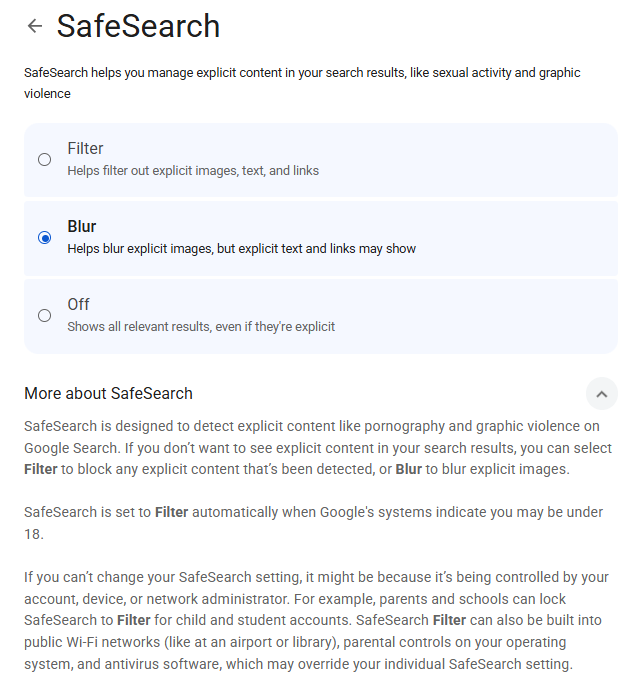
For example, a query may describe distress or danger without explicitly using terms such as suicide or domestic violence, yet MUM can help Google recognize the underlying crisis intent and surface trustworthy, actionable information. Google discusses this use of MUM within a broader Search safety effort that also addresses unexpected shocking or harmful content. SafeSearch is a separate protection feature Google uses to filter explicit results.
Featured Snippet Callouts
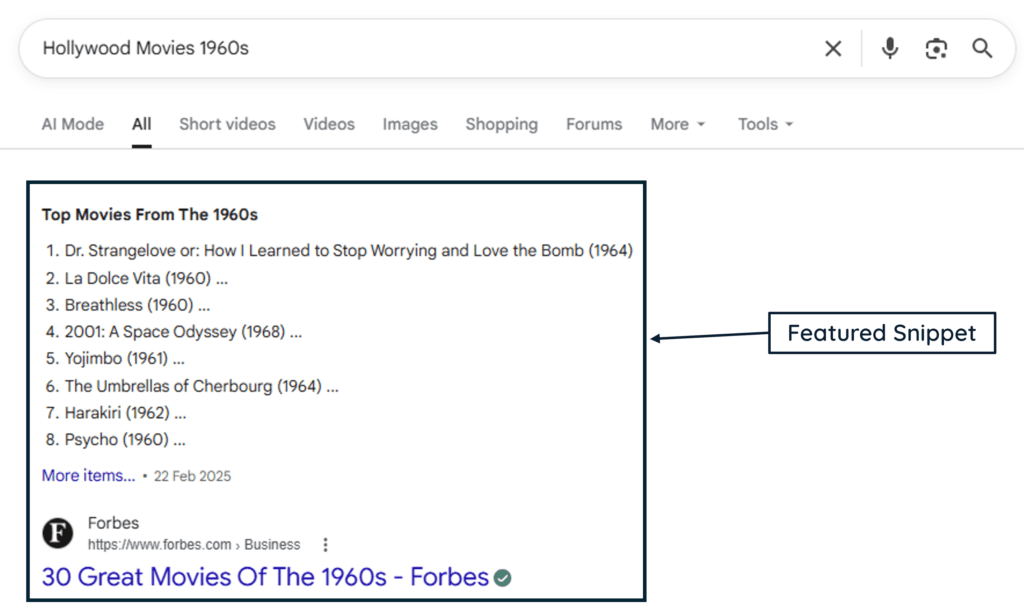
MUM has been used to help Google understand consensus across multiple high-quality sources.
For certain featured-snippet callouts, Google’s systems can compare information across sources even when they use different wording. This helps determine whether there is broad agreement around the information being highlighted.
Video Topic Understanding
Google has also used MUM to identify related topics within videos, including topics that may not be stated explicitly. For example, Google showed a video about macaroni penguins that never used the phrase “macaroni penguin’s life story.” MUM could still understand that the video covered related ideas, such as how the penguins find family members and avoid predators, and then connect users with more information on the broader topic, “macaroni penguin’s life story.”
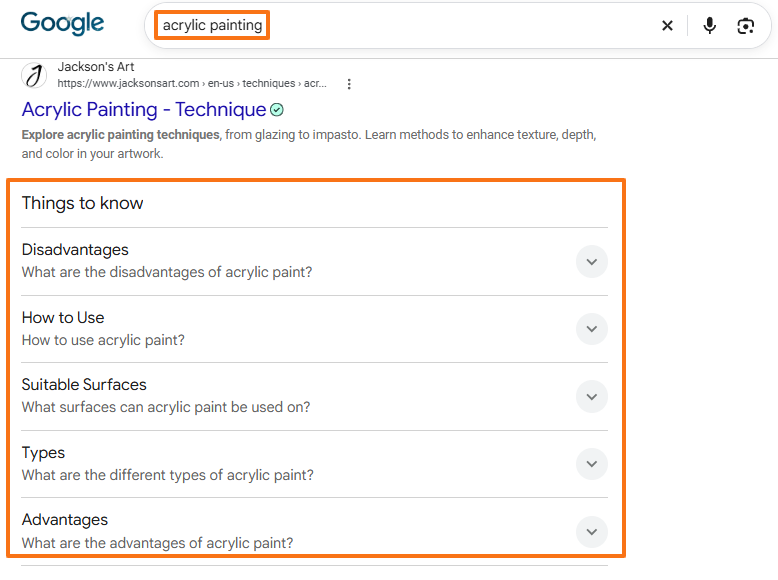
Google also demonstrated MUM-powered concepts involving image-and-text searches and discussed using MUM to provide deeper topic exploration in features such as Things to Know. However, not every Google Lens Multisearch or Things to Know result should be assumed to be generated by MUM.
Example of How MUM Can Understand a Complex Search
Google originally explained MUM using a hiking example.
Suppose someone has already hiked Mt. Adams and asks:
A simple keyword-matching system might require separate searches for altitude, weather, trail difficulty, equipment, and seasonal conditions.
MUM can instead interpret several parts of the information need together:
- Understand the Comparison: It recognizes that Mt. Adams and Mt. Fuji are being compared.
- Identify Relevant Context: It understands that season, terrain, weather, training, and equipment may all matter.
- Connect Related Information: It can draw connections among information that may come from different sources and languages.
- Surface Useful Subtopics: It can identify areas such as waterproof clothing, preparation, or equipment that the searcher may need to investigate.
Google specifically noted that fall is the rainy season on Mt. Fuji, making waterproof equipment potentially relevant. The aim is to help users reach useful information with fewer separate searches.
MUM, RankBrain, BERT, and Gemini
Google Search has used several generations of machine-learning and AI systems to solve different problems in retrieval, query understanding, ranking, and information synthesis.
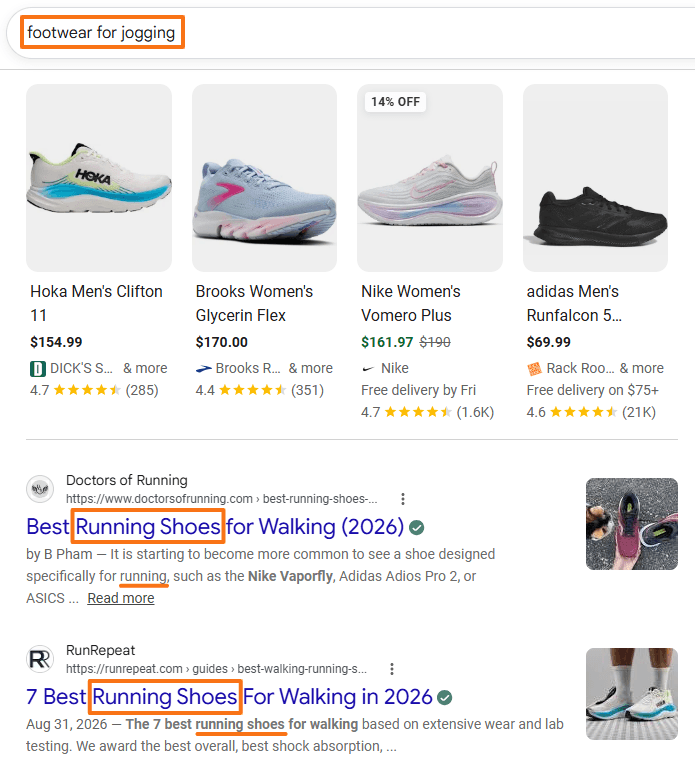
Early search systems relied heavily on lexical matching, where a query was matched with documents containing the same or similar words. This approach is efficient, but it can miss relevant pages that express the same idea differently. Embeddings and vector-based semantic matching helped search systems move beyond exact wording by representing queries and documents according to meaning. Transformers later improved this further by analyzing how words relate to one another across an entire sentence.
RankBrain
Google introduced RankBrain in 2015 to improve its understanding of how words and phrases relate to broader concepts, particularly for unfamiliar or previously unseen queries.
For example, a search for “device that keeps electricity flowing when power goes out” may be relevant to pages about an uninterruptible power supply (UPS) even though the query never uses that technical term.
RankBrain therefore helped Google move beyond literal keyword matching toward conceptual query understanding. It is also used within Google’s ranking systems.
BERT
Google introduced BERT to Search in 2019 to better understand how word order, grammar, and surrounding context affect meaning.
Because BERT analyzes words in relation to the words around them, it can understand that small terms such as to, from, or for may completely change the intent of a query.
For example, in a search about a Brazilian traveler going to the USA, BERT can better understand that the person is traveling from Brazil to the United States, rather than treating the countries as disconnected keywords.
BERT therefore improved Google’s ability to understand complete phrases and sentence-level context.
MUM
Google introduced MUM in 2021 to address more complex information needs involving multiple questions, languages, tasks, and media types.
A query such as “I’ve climbed Mt. Adams and want to climb Mt. Fuji next fall. What should I do differently?” involves several issues at once, including weather, terrain, training, and equipment.
MUM was designed to understand this broader information need, connect relevant information across 75 languages, and work across formats such as text and images. Rather than requiring many separate searches, it can help identify and connect the different parts of a complex task.
Gemini
Gemini, introduced in 2023, expands this progression into multimodal reasoning and generation. Current Gemini models can work across text, images, audio, video, and other supported inputs. In Google Search, Gemini technology powers experiences such as AI Overviews and AI Mode, where information can be retrieved, combined, reasoned over, and presented as a generated response.
In simple terms: RankBrain connected words with concepts, BERT improved contextual understanding, MUM handled more complex multilingual and multimodal information needs, and Gemini added broader reasoning and generation.
MUM and Gemini represent different stages of Google’s AI development. Google still lists MUM as a system used for specific Search applications, while Gemini now powers many of Google’s newer AI Search experiences.
Frequently Asked Questions
Is MUM a direct ranking system for organic website SEO?
Google states that MUM is not used as a general ranking system. It is used for specific applications, while systems such as RankBrain and BERT have ranking-related roles.
How does MUM help overcome language barriers?
MUM was trained across 75 languages simultaneously, allowing knowledge learned from information in one language to support tasks involving another. This is broader than simply translating a webpage from one language into another.
What does “multimodal” mean when using Google Search?
Multimodal means working with more than one type of information, such as text and images. Google originally demonstrated MUM’s multimodal capabilities using these formats and discussed expanding them to additional media types.
Where can I see MUM actively working in Google Search today?
MUM generally operates behind the scenes rather than appearing as a named SERP feature. It has been used for vaccine-information searches and featured-snippet callout improvements.
Has MUM made alt text less important?
No, MUM’s ability to understand visual information does not replace alt text. Alt text remains important for accessibility and provides useful textual context about images for browsers, assistive technologies, and search engines.