
Key Takeaways
- Rank tracking monitors where website pages appear for selected queries, revealing whether search visibility is improving, declining, or holding steady.
- Dedicated tools record positions across defined keywords, locations, devices, competitors, and SERP features, providing more controlled snapshots than aggregated Search Console data.
- Ranking changes identify movement but not its cause; technical issues, algorithm updates, intent shifts, content decay, lost backlinks, and competitors require further investigation.
- Traditional rankings should be supplemented with visibility distributions, SERP features, and AI metrics such as mentions, citations, cited pages, and share of voice.
Rank tracking is the ongoing process of monitoring and recording where a website’s pages appear in search engine results pages (SERPs) for selected search queries over time. It helps website owners and SEO professionals understand whether important pages are gaining, losing, or maintaining search visibility.
Tracked queries can include primary or focus keywords, secondary keywords, branded searches, commercial terms, local queries, and keywords that a page begins ranking for even though they were not deliberately targeted. Rather than manually searching Google every day, rank-tracking software repeatedly checks selected queries and records their positions so that changes can be compared over days, weeks, or months.
Modern rank tracking can also account for mobile and desktop results, geographic locations, competitors, and SERP features.
Rank tracking is closely related to SERP monitoring, but the emphasis is slightly different. SERP monitoring examines broader changes across the search-results environment, while rank tracking concentrates primarily on where particular pages or domains appear for specific queries.
Why Rank Tracking Matters
Rank tracking helps website owners understand how search visibility changes over time and whether important pages are gaining or losing ground for their target queries.
Measures SEO Progress
Rank tracking creates a historical record showing whether important pages are moving toward stronger or weaker positions for their target searches.
For example, if an article gradually moves from position 18 to position 6 for an important query, the trend provides useful evidence that its search visibility is improving. However, ranking changes should not automatically be attributed to a particular SEO edit because competitors, Google updates, and changes in search intent can also affect positions.
Provides an Early Warning System
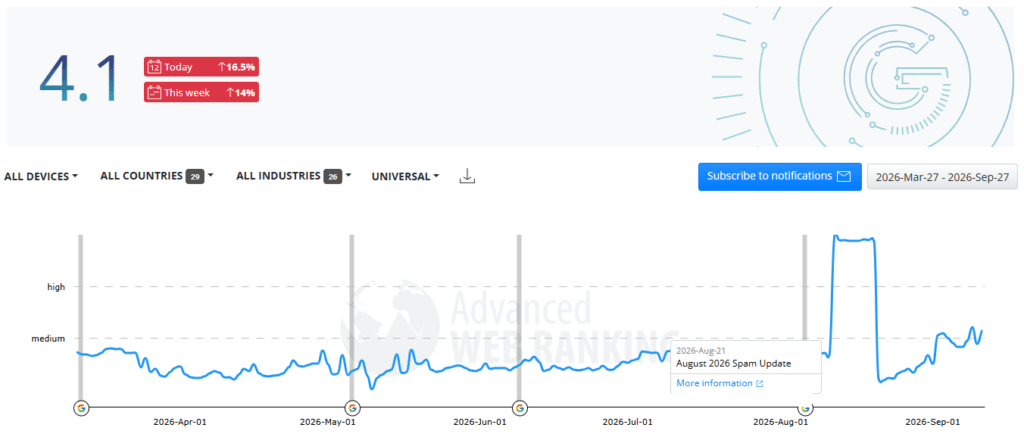
A sudden ranking decline across several related keywords can indicate that something deserves investigation.
If dozens of pages lose positions at approximately the same time, possible causes may include a technical problem, indexing issue, Google ranking update, website migration, or broader competitive change. Rank tracking identifies that something changed, but further analysis is required to determine why.
Provides Competitor Intelligence
Rank trackers can monitor competing domains across the same keyword set.
This can reveal when competitors gain or lose important rankings, new domains begin competing for target queries, rival sites capture SERP features, and overall competitive visibility changes over time.
Rather than evaluating a website in isolation, this makes it possible to see whether a ranking decline reflects a site-specific problem or a competitor simply becoming stronger.
Adds Geographic and Device Context
A single keyword does not necessarily have one universal ranking.
Results can vary according to country, city, device, language, and other search context. This is particularly important for local businesses, where a company might rank strongly within one city but much lower a few miles away.
Dedicated trackers can therefore monitor a keyword under specific conditions. Semrush Position Tracking, for example, supports tracking across desktop, mobile, and tablet devices and locations down to postal-code level.
Common Reasons Search Rankings Drop
A decline in rankings can result from many different causes. Rank tracking reveals the movement, but the underlying reason still needs to be investigated.
- Accidental
noindexDirectives: If an important page receives anoindexdirective, it can eventually disappear from Google Search after Google recrawls and processes the page. - Broken Redirects or Removed Pages: Incorrect redirects, deleted URLs, or broken migration paths can cause previously ranking pages to lose visibility.
- Google Ranking Updates: Core updates and other changes to Google’s ranking systems can alter how competing pages are evaluated.
- Search Intent Changes: The type of content users expect for a query can change. A detailed guide may lose ground, for example, if Google begins favoring product pages, tools, videos, or another result format.
- Content Decay: Previously useful content may gradually become outdated, less complete, or less competitive as the topic and competing pages evolve.
- Lost Backlinks: Losing valuable external links can affect pages whose ranking strength partly depended on those references.
- Technical or Indexing Problems: Canonicalization mistakes, server errors, crawl problems, accidental template changes, or poorly executed migrations can interfere with search visibility.
- Competitor Improvements: A page can lose positions even when nothing is technically wrong if competing websites publish stronger, more relevant, or better-supported content.
A ranking drop is therefore a symptom rather than a diagnosis. Rankings should be examined alongside Search Console data, technical checks, SERP changes, competitors, and recent website activity before conclusions are drawn.
Important Rank Tracking Metrics
Rank tracking combines first-party search data with proprietary measurements provided by SEO platforms. Google Search Console reports actual Google Search performance, while third-party trackers can repeatedly check defined keywords under specific locations and devices.
Average Position
Average position is a Google Search Console metric representing the average position of the site’s topmost result across the impressions included in the report.
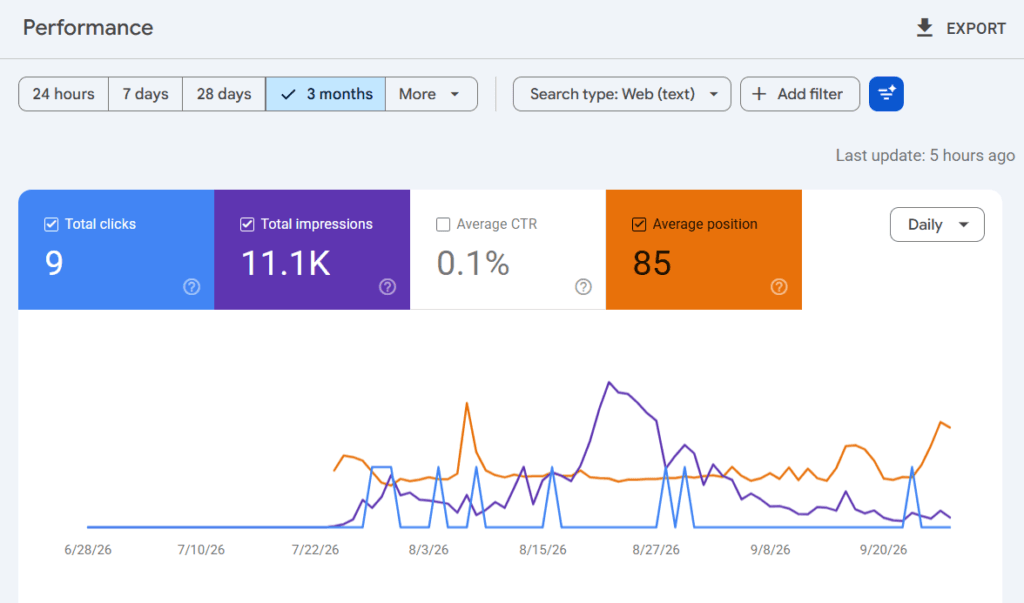
It should not be interpreted as one fixed ranking. A page could appear in different positions for different users, locations, devices, and searches, with Search Console averaging those observations. Google recommends focusing more heavily on trends in clicks and impressions than on position alone.
Current Tracked Position
Dedicated rank trackers can report where a page was found for a particular keyword, search engine, location, device, and tracking configuration.
For example:
Keyword: technical SEO audit
Location: New York
Device: Mobile
Tracked Position: 4
This provides a more controlled ranking snapshot than Search Console’s aggregated average position.
Position Changes
Rank trackers record how many positions a keyword has gained or lost over a specified period. A keyword moving from position 14 to position 8 has gained six positions, while one falling from position 5 to position 11 has lost six. Historical movement helps distinguish persistent trends from ordinary daily fluctuations.
Search Volume
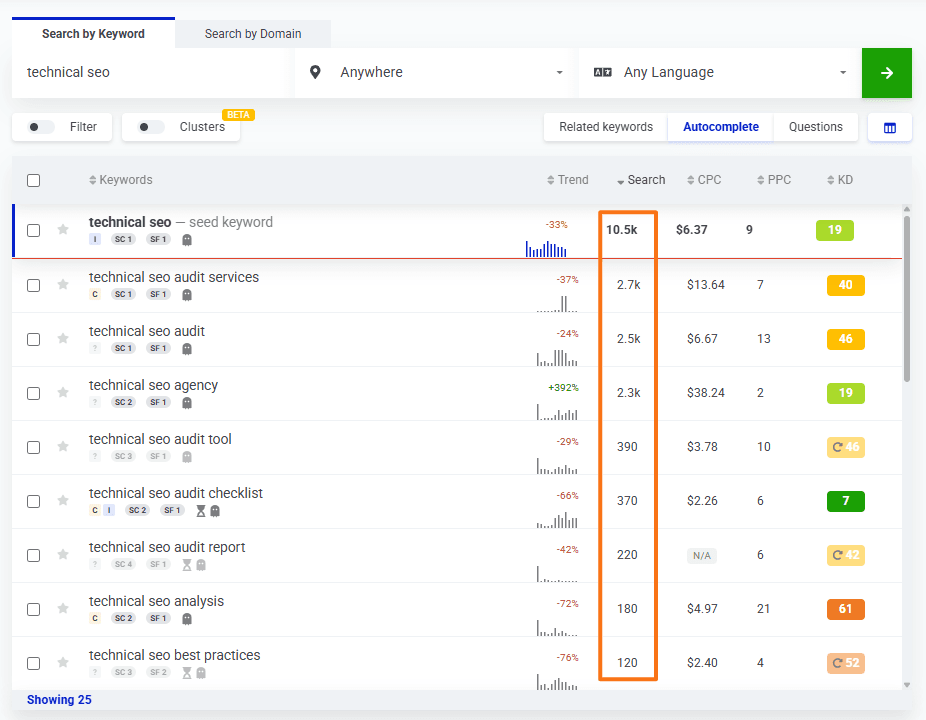
SEO platforms commonly estimate how often a keyword is searched per month within a selected country, market, or database. Search volume is supporting keyword data rather than a ranking metric, but it helps prioritize tracked keywords. Moving from position 10 to position 3 for a high-demand commercial query may matter more commercially than gaining the same positions for a rarely searched term.
Ranking Distribution
Instead of examining hundreds of keywords individually, a website can group them into ranking ranges such as:
- Top 3: Positions 1–3
- Top 10: Positions 1–10
- Top 20: Positions 1–20
- Near-Miss: Positions 11–20
This makes it easier to see whether a larger share of the tracked keyword portfolio is moving toward stronger positions.
Visibility Score
A visibility score summarizes ranking performance across an entire tracked keyword set rather than focusing on one query. The exact formula varies by platform, so scores from different tools should not be compared directly.
SERP Features
Rank trackers can also record whether target queries contain features such as featured snippets, local packs, image results, videos, shopping results, and AI Overviews.
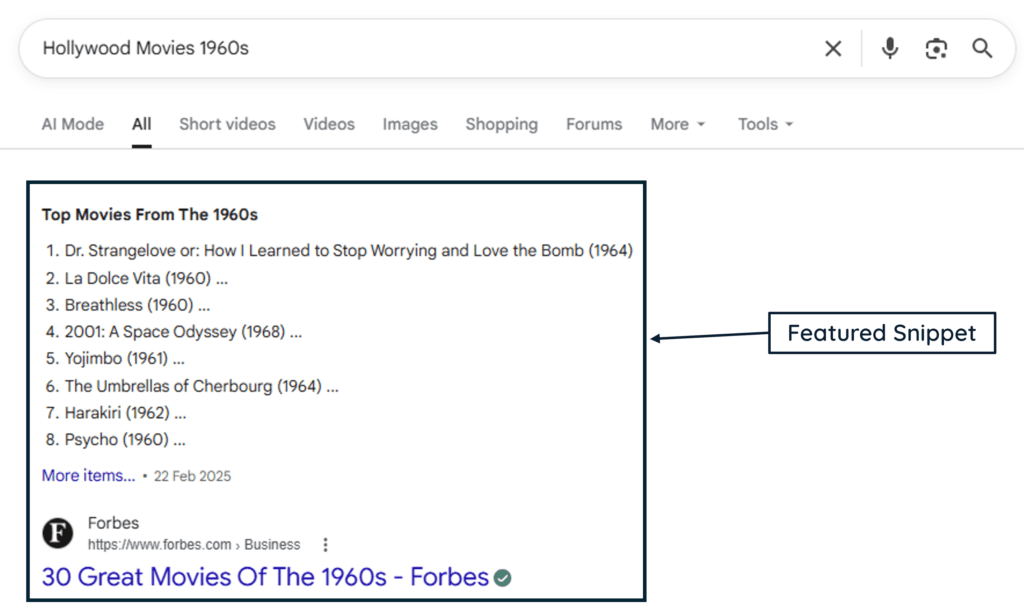
This matters because traditional ranking position does not always describe actual screen visibility. Ahrefs currently tracks 19 SERP features, including AI Overviews.
Ranking Queries and URLs
Google Search Console can show which queries caused particular URLs to appear in Search, while third-party SEO databases can estimate a much broader range of keywords for which pages and domains rank.
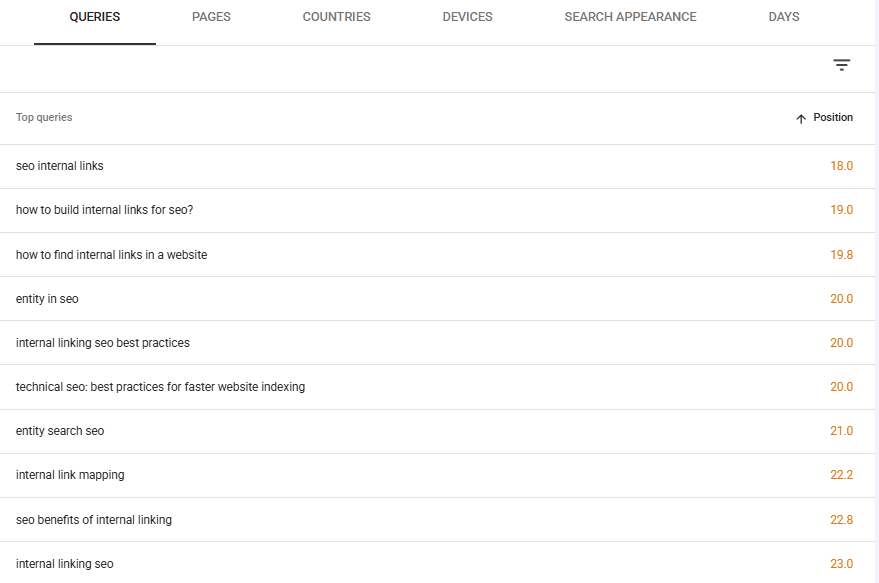
Search Console query data is first-party Google performance data, although anonymized queries are omitted for privacy and some additional rows may be unavailable because of data truncation.
Rank Tracking in the Age of AI
Traditional search engines usually provide a measurable search-result position. Generative AI search works differently. A brand or webpage may be mentioned, cited, recommended, or omitted within a generated response rather than simply occupying position 1, 2, or 3.
AI monitoring therefore uses additional metrics:
- Mention Rate measures how frequently a brand, product, or organization appears across a defined group of prompts.
- Citation Rate measures how frequently a website or page is cited or linked as a supporting source in generated answers.
- Cited Pages shows which specific URLs are most frequently referenced by AI systems, helping identify content that already performs strongly in AI-driven discovery.
- AI Visibility measures how frequently or prominently a brand appears across monitored prompts, according to the platform’s methodology.
- Share of Voice compares a brand’s presence with competing brands across the monitored prompt set.
- Prompt Position or Recommendation Order can show where a brand appears within an ordered generated response. However, this is not equivalent to a conventional Google ranking because generative answers can change when the same prompt is repeated.
- Competitor Mentions and Citations reveal which competing organizations receive more exposure for the same monitored questions and topics.
Note
AI-search measurement is not yet standardized, so metric names and calculation methods can vary considerably between platforms.
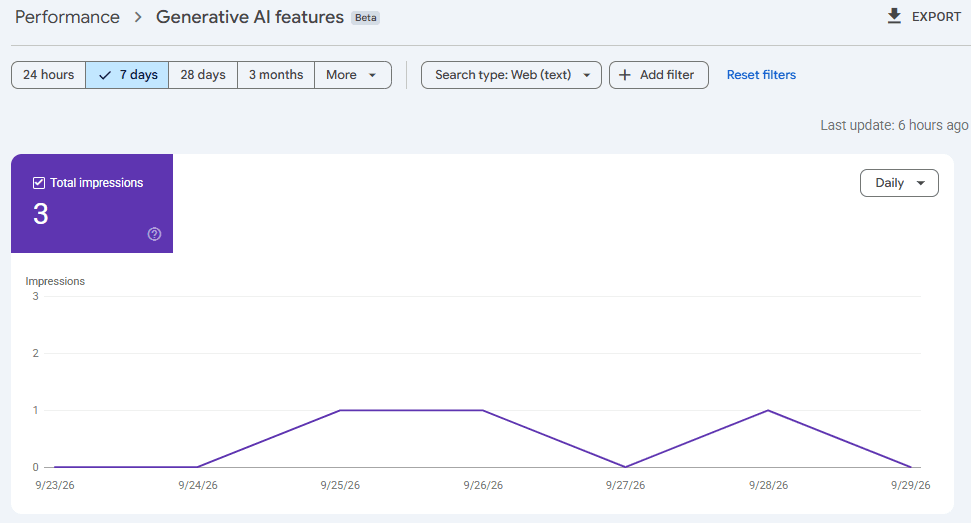
Several platforms now provide data for these newer search environments. Google’s Generative AI features report in Search Console shows impressions from AI Overviews and AI Mode. As of August 31, 2026, Google says these insights have been rolled out to websites worldwide.
Semrush Position Tracking can now monitor selected searches across traditional search engines as well as ChatGPT Search and Google AI Mode. Mangools AI Search Watcher similarly monitors brand visibility across Google AI Overviews, AI Mode, ChatGPT, Gemini, Mistral, Claude, Grok, and Llama, including mentions, positions, citations, and competitor comparisons.
AI visibility measurements should still be treated as directional rather than perfectly fixed rankings. Generated answers can vary between repeated prompts, models, locations, personalization, and time, which is why some AI-monitoring tools run the same prompts multiple times before reporting averages.
Frequently Asked Questions
Why do I see a different rank on Google than what my tracking tool shows?
Rankings can differ because of location, device, language, personalization, time of measurement, and changes in the search results themselves. A rank tracker also uses a defined search configuration, which may not exactly match the conditions of a manual Google search.
How often should I check my keyword rankings?
Important keywords can be tracked daily, particularly during migrations, major SEO projects, or highly competitive campaigns. However, weekly and longer-term trends are usually more meaningful than reacting to every daily movement because search rankings naturally fluctuate.
What is the difference between Average Position and a tracked keyword position?
Google Search Console’s Average Position is an aggregated metric based on actual Google Search impressions and can combine many different search contexts. A tracked keyword position is a snapshot recorded by a rank-tracking tool for a specific keyword under defined conditions such as location and device.
Does a drop in rank always mean my SEO is failing?
No. Rankings can decline because of competitor improvements, Google ranking changes, shifts in search intent, different SERP features, localization, or ordinary volatility. A persistent or widespread decline should be investigated, but the ranking movement alone does not establish the cause.
Can rank tracking tools track mobile and local searches separately?
Yes. Many dedicated platforms allow separate monitoring by device and geographic location. Ahrefs. for example, supports desktop and mobile rankings with locations down to ZIP-code level, while Semrush supports device and location-specific tracking down to postal codes.
What are SERP features and do they affect my rank?
SERP features are search-result elements beyond standard organic links, such as featured snippets, local packs, images, videos, shopping results, and AI Overviews. They do not necessarily change a page’s traditional organic position, but they can substantially change its visual prominence and opportunity to receive clicks.