
Key Takeaways
- Keyword clustering groups queries with closely related meanings, topics, and search intents so one appropriate page can target them together.
- Different wording does not require separate pages when queries satisfy substantially the same need; distinct intents may warrant separate URLs.
- Keyword clusters operate at the page level, while topic clusters organize interconnected pillar and supporting pages across a broader subject.
- SERP overlap, search intent, keyword data, and business relevance help determine clustering, while mapping and internal linking organize content within the site architecture.
Keyword clustering is the process of organizing keywords with the same or closely related meaning, topic, and search intent so they can be targeted together on the most appropriate webpage. Instead of creating a separate page for every keyword variation, clustering helps determine which searches can be satisfied by one page and which represent different needs that deserve separate content.
For example, consider these keywords:
- best running shoes for beginners
- beginner running shoes
- good running shoes for new runners
- running shoes for beginners
Although the wording differs, the underlying need is very similar. These keywords could therefore form one cluster and be targeted by a single comprehensive page.
A query such as how long do running shoes last represents a different information need. It may belong to another keyword cluster and potentially another page.
It is also useful to distinguish two related concepts:
- Keyword cluster: A group of related queries that can usually be addressed by one page.
- Topic cluster: A group of interconnected pages covering different aspects of a broader subject.
Keyword Clustering vs. Keyword Mapping
Keyword clustering groups related queries into meaningful groups, while keyword mapping assigns each cluster to the most appropriate webpage in the website hierarchy. Clustering identifies which keywords should be targeted together on a webpage; mapping determines which URL should serve as the primary page for each group.
How Keyword Clusters Fit Into a Topic Cluster Structure
Keyword clustering operates mainly at the page level, while topic clustering organizes multiple pages across a broader subject. Once keyword groups have been identified, they can be mapped into a hub-and-spoke content structure.
The Pillar Page — The Hub
A pillar page covers the broader subject and provides paths to more specific supporting content.
For example, a broad page about running shoes might introduce shoe types, fit, cushioning, surfaces, and selection while linking to more focused pages.
Cluster Content — The Spokes
Supporting pages address distinct keyword clusters and information needs.
A running-shoes topic cluster might contain pages about:
- running shoes for beginners;
- trail running shoes;
- running shoes for flat feet;
- how long running shoes last.
Different wording alone does not justify a separate page. If best beginner running shoes and best running shoes for beginners lead to substantially the same search intent, creating two near-duplicate pages would usually add little value.
Internal Linking — The Glue
Pillar and supporting pages should connect through relevant internal links. These links help readers move between related subjects and help search engines discover and understand connections among pages.
Google states that it uses links both to find new pages to crawl and as a signal when determining page relevance.
The Process of Clustering Keywords
Keyword clustering converts a large keyword list into groups that can be mapped to individual pages and then organized within the site’s broader content architecture.
1. Start With a Seed Keyword or Topic
Begin with a broad term that represents the subject, product, service, or category being researched.
For example:
⇒ Seed keyword: running shoes
A website may use several seed topics when researching a large content area.
2. Expand the Keyword List
Find related searches using keyword research tools, Search Console, autocomplete, People Also Ask, competitor research, forums, customer questions, and existing site data.
For running shoes, the expanded list might contain best running shoes, beginner running shoes, trail running shoes, waterproof running shoes, running shoes for flat feet, how long running shoes last, and running shoes vs. walking shoes.

At this stage, collect relevant possibilities rather than trying to assign every keyword immediately.
3. Group Keywords by Meaning and Search Intent
Look for keywords that represent substantially the same need. Search intent is commonly categorized as informational, commercial, transactional, and navigational.
Intent labels alone are not enough. Two keywords can both be informational while requiring very different content.
For example, how to choose running shoes and how to clean running shoes are both informational but clearly belong to different clusters.
4. Analyze SERPs and Keyword Data
Search the keywords and compare the pages that rank.
If several queries return many of the same URLs, this SERP overlap can indicate that Google interprets the queries similarly enough for one page to address them. This can help determine whether related keywords should be grouped on one page or separated into different pages based on distinct search intent.
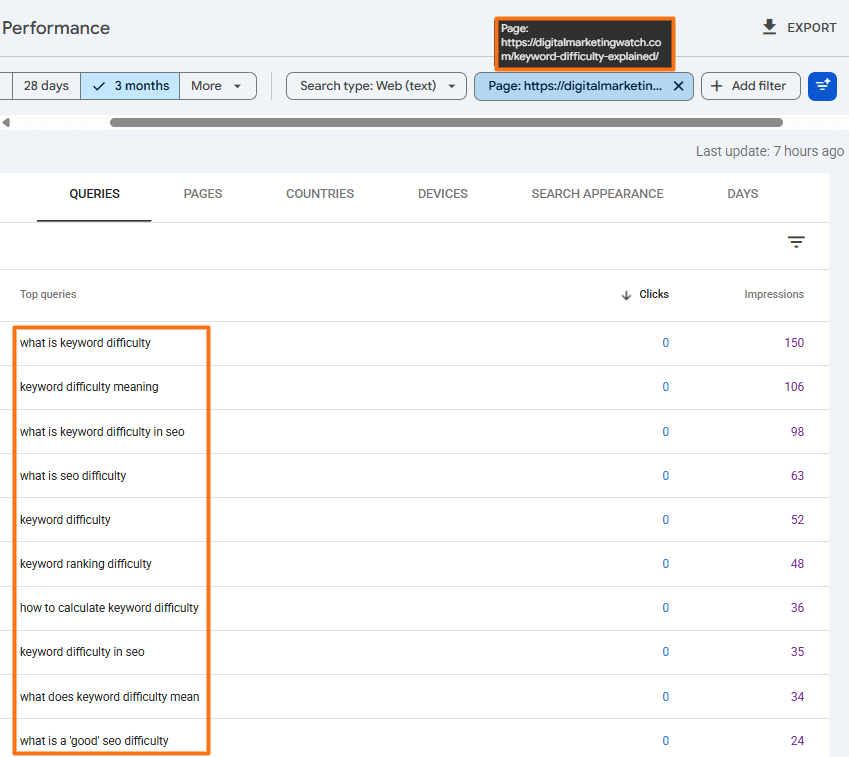
Also evaluate search volume, keyword difficulty, long-tail opportunities, and business relevance when prioritizing clusters, while using search intent and SERP overlap to help decide how keywords should be grouped.
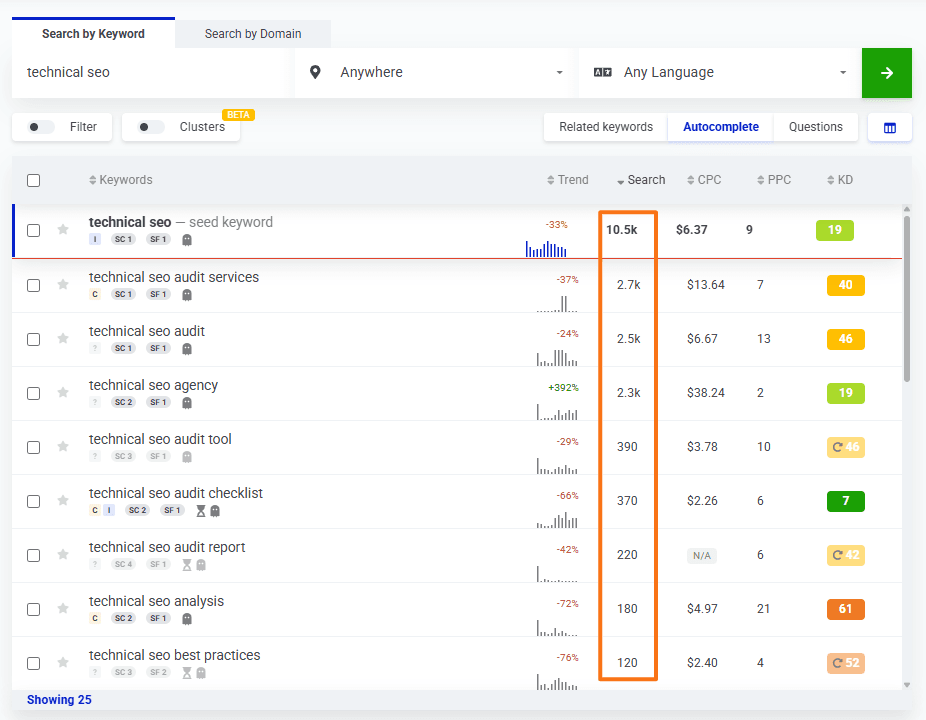
Search volume should not decide clustering by itself. Two high-volume keywords may still need separate pages if they represent different needs.
5. Establish a Hierarchy
Organize clusters from broader topics to narrower subtopics.
For example:
Running Shoes
→ Beginner Running Shoes
→ Trail Running Shoes
→ Running Shoe Fit
→ Running Shoe Lifespan
This makes it easier to decide which cluster belongs to a pillar page, category, subcategory, or supporting article.
6. Map, Create, and Interlink Content
Assign each useful keyword cluster to an existing or planned URL. Then create or update the content and connect genuinely related pages through internal links.
A practical workflow is:
Why Keyword Clustering Is Important for SEO
Keyword clustering improves more than keyword organization. It can influence content planning, site structure, internal linking, and how efficiently a website covers a subject.
- Creates a Clear Content Hierarchy: Keywords become organized into topics, subtopics, and pages rather than remaining as an unstructured research list.
- Improves Internal Linking: Once relationships between clusters are clear, relevant links between pillar pages and supporting content become easier to plan.
- Reduces Keyword Cannibalization Risk: Cannibalization can occur when multiple pages compete unnecessarily for substantially the same intent. Clustering makes it easier to recognize overlapping queries and consolidate them before duplicate pages are created.
- Builds Topical Depth: Different information needs can receive appropriate coverage without forcing an entire subject into one very long page.
- Reduces Unnecessary Content: Closely related keyword variations can often be targeted together rather than producing separate pages with almost identical purposes.
- Can Reduce Orphan-Page Risk: Mapping clusters into a broader hierarchy creates more opportunities for new content to be connected to relevant hubs, categories, and supporting pages.
- Improves Reader Navigation: A clear topic structure allows readers to move naturally from broad information to more specialized questions.
Keyword Clustering Best Practices
Keyword clusters should be treated as an ongoing content-management system rather than a one-time keyword research exercise.
Maintain a Keyword and Content Database
A spreadsheet, Notion database, or similar system can track how keywords, pages, and clusters relate.
Assign a Primary Page to Each Important Intent
The same keyword can naturally appear across many webpages, but each important search intent should generally have a clear primary URL.
This is more useful than applying a rigid one keyword = one page rule.
Align Clusters With Site Architecture
Where appropriate, connect major clusters with existing categories, pillar pages, subcategories, and topic hubs. Do not create a new category simply because a keyword tool generated a cluster; the architecture should remain logical for readers.
Monitor Queries in Google Search Console
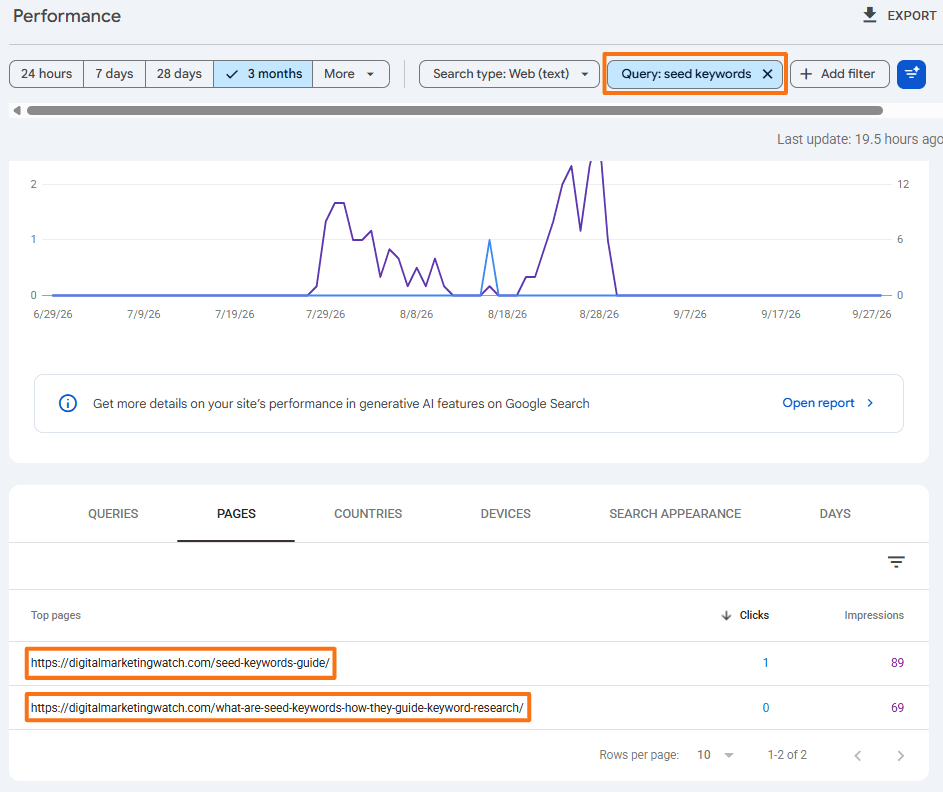
After publishing, compare planned clusters with the queries pages actually receive. Search Console allows a query to be selected and then shows which URLs from the site appeared for that query. This can reveal whether several pages are unexpectedly competing for the same searches.
Review Clusters Periodically
Search behavior and search results change over time. Existing content may also expand, merge, or become outdated. Revisit clusters periodically to identify pages that should be consolidated, separated, updated, or linked more effectively.
Frequently Asked Questions
Can the exact same keyword belong to two different clusters?
Yes, in some cases the same phrase can represent different meanings or purposes depending on context. However, assigning the identical keyword to multiple clusters should be deliberate rather than automatic. Clustering should focus on the search intent and subject being addressed.
How does keyword clustering help reduce keyword cannibalization?
Keyword clustering can identify queries with overlapping intent before separate pages are created. Closely related searches can then be assigned to one primary page, while genuinely different information needs receive distinct URLs.
How many keywords should be included in a keyword cluster?
There is no ideal number. A cluster might contain a few keywords or dozens of variations. What matters is whether the queries can be satisfied naturally and comprehensively by the same page.
What is the difference between keyword clustering and keyword mapping?
Keyword clustering groups related queries together, while keyword mapping assigns those clusters to specific webpages. Clustering determines which keywords belong together; mapping determines which URL should target each group.