
Key Takeaways
- Keyword cannibalization occurs when multiple pages target substantially the same search intent and compete for the same role, not merely when they share keywords.
- It can divide ranking signals, create ambiguous relevance, cause ranking fluctuations, surface the wrong page, and complicate performance analysis.
- Detection requires comparing intent, audience, purpose, and URL performance using Search Console, ranking tools, keyword maps, or manual searches.
- Solutions depend on the overlap and may include merging pages, redirecting redundant URLs, retargeting content, improving internal links, or using canonicals.
Keyword cannibalization is an SEO problem that occurs when multiple URLs on the same website are built to satisfy essentially the same search need and begin competing for the same visibility. It is not simply a case of several pages mentioning or ranking for the same keyword; related pages can rank for overlapping queries without causing a problem when each serves a distinct purpose.
For example, a website might publish:
- Best CRM Software for Small Businesses
- Top CRM Tools for Small Companies
The two pages may compete because they target essentially the same audience, topic, and search intent.
By contrast, the same website could publish:
- Best CRM Software for Small Businesses
- How to Migrate Customer Data to a New CRM
In this case, both pages are about CRM software, and they may even rank for some overlapping keywords, but they serve different search intents. The first helps users compare products before choosing one, while the second helps users complete a specific task after selecting a CRM. This is not keyword cannibalization.
Keyword cannibalization is not a named Google or Bing penalty. Google states that ordinary duplicate content is generally not a violation of its spam policies. Bing similarly says duplicate or near-duplicate pages do not harm a site, but they can blur relevance signals and make it harder to select the intended URL.
How Keyword Cannibalization Can Harm SEO
Cannibalization can weaken search performance when several pages unnecessarily compete for the same role.
- Splits Ranking Signals: Backlinks, internal links, and other relevance or authority signals may be distributed across several similar pages instead of reinforcing one clear destination.
- Weakens Ranking Potential: When links and relevance signals are distributed across several overlapping pages, none may become as competitive as a stronger consolidated page.
- Creates Ambiguous Relevance Signals: Search engines must determine which URL best satisfies a query. Several pages with nearly identical intent can make that selection less clear, particularly when internal links, content, and canonical signals do not identify a clear preferred page. Bing specifically notes that duplicate content can blur the signals used to evaluate relevance.
- Can Cause Ranking Fluctuations: One URL may rank for a query and later be replaced by another similar page from the same site. Frequent URL switching can make rankings less stable and optimization more difficult.
- May Surface the Wrong Page: An informational article might rank where a product or commercial landing page would better satisfy the query, potentially reducing leads or conversions.
- Complicates Internal Linking: Internal links may be divided among several competing pages rather than reinforcing the page that should be strongest for a particular intent.
- Uses Unnecessary Crawl Resources: Large collections of duplicate or overlapping URLs can cause crawlers to revisit similar content instead of focusing on more useful pages. This is primarily a concern for larger websites rather than a serious crawl-budget issue for most small sites.
- Makes Performance Analysis Harder: Impressions, clicks, backlinks, conversions, and rankings can be distributed across several URLs, making it harder to identify the page actually responsible for performance.
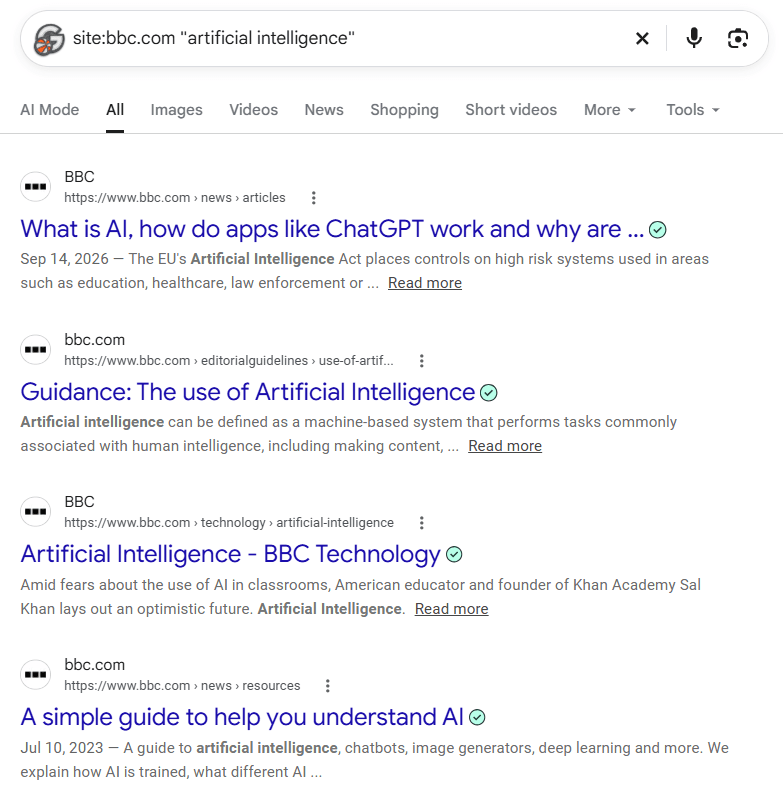
How to Detect Keyword Cannibalization
Several URLs ranking for the same query are not automatically evidence of cannibalization. The pages should be reviewed to determine whether they satisfy substantially the same intent and compete for the same role.
Google Search Console
Google Search Console provides one of the simplest ways to investigate competing URLs:
The PAGES tab shows which URLs from the property appeared for the selected query. Google specifically documents this workflow for viewing pages shown for an individual query.
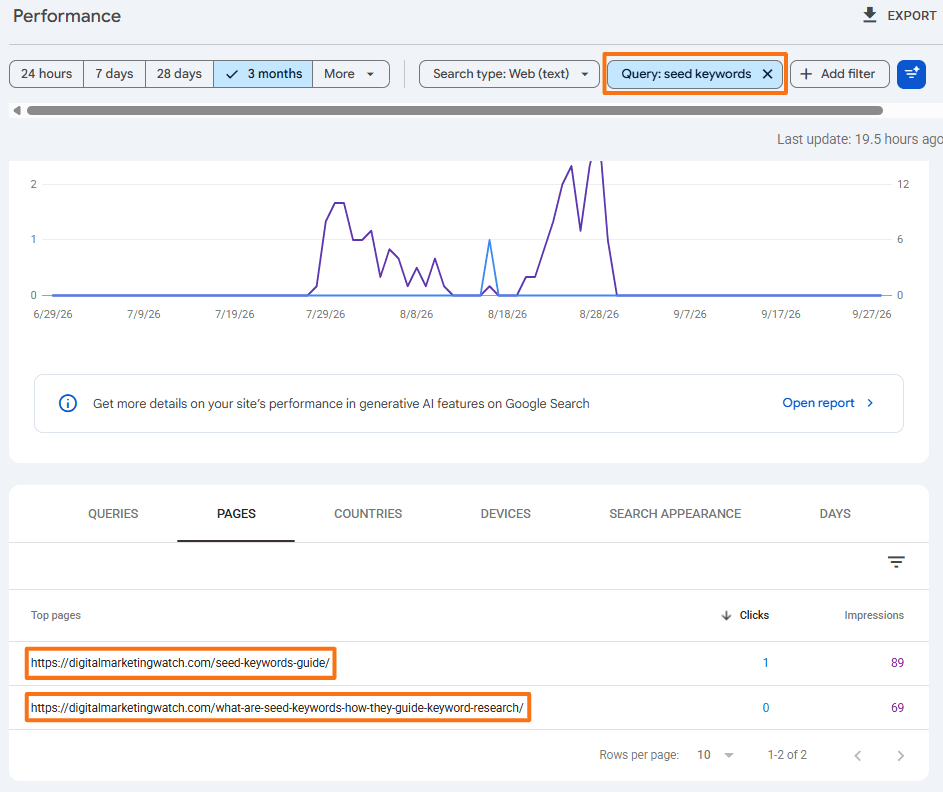
Common warning signs of keyword cannibalization include:
- several similar URLs repeatedly receiving impressions for the same query;
- one URL replacing another over time;
- the less appropriate page receiving most of the visibility;
- two pages serving essentially the same intent;
- neither page performing as strongly as expected.
Search Console data should be interpreted carefully because page-level and property-level metrics are aggregated differently.
Semrush Cannibalization Report
Semrush provides a dedicated Cannibalization report within Position Tracking, which can be accessed through: Position Tracking → Cannibalization
The report identifies cases where multiple pages rank for the same tracked keyword in Google’s top 100 results. It can be viewed by Keywords or Pages, and ranking-history graphs can help identify URLs that repeatedly replace one another.
Manual Google Search
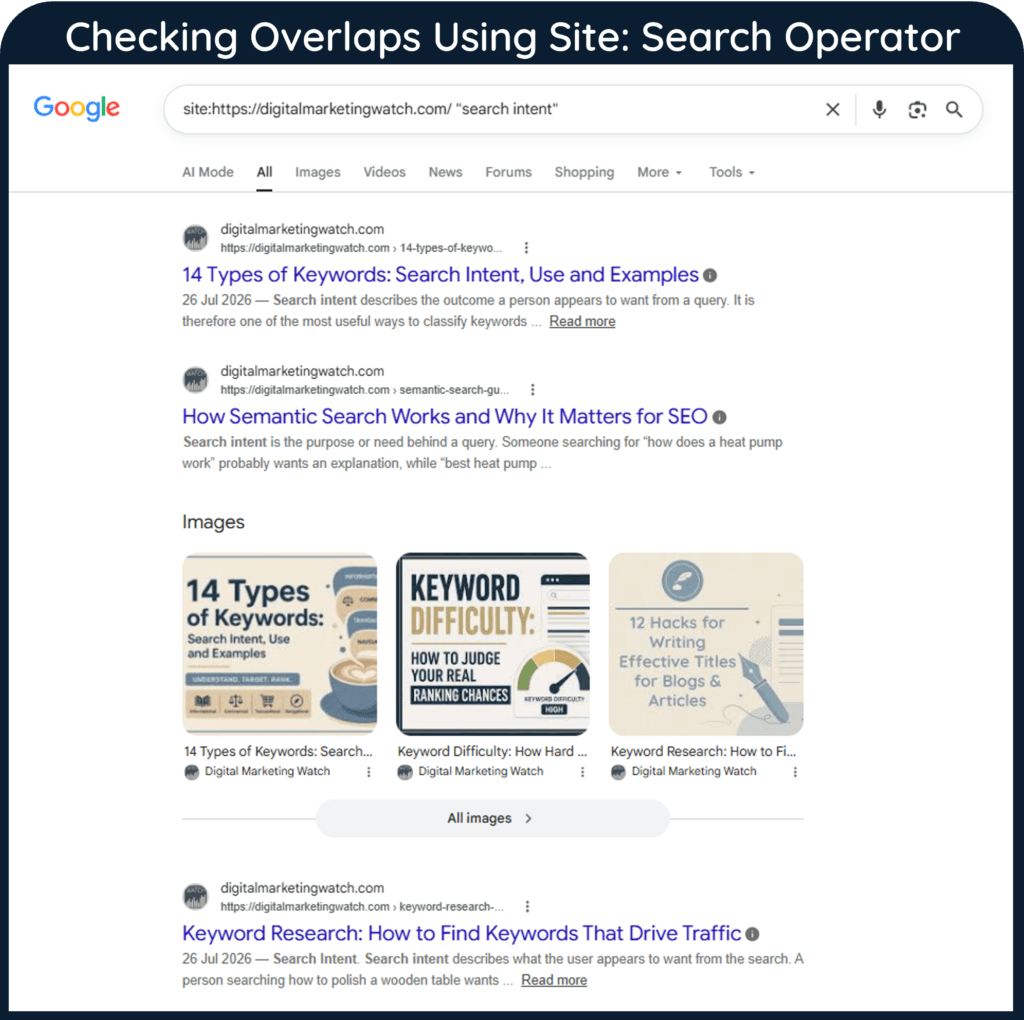
A simple search can uncover pages covering the same subject: site:example.com "target keyword"
This is useful for finding possible overlaps, but the site: operator should be treated as a discovery method rather than definitive proof of cannibalization.
Keyword Mapping
A keyword map can reveal overlap before or after publication:
If two pages have almost identical keywords, audience, purpose, and intent, they may need to be differentiated or consolidated.
/running-shoes/blog/how-to-choose-running-shoes/trail-running-shoesSEO platforms such as Ahrefs and Semrush can help reveal overlapping rankings, while crawlers such as Screaming Frog and Sitebulb can help audit duplicate titles, similar pages, and other on-site overlap.
How to Avoid Keyword Cannibalization
Preventing unnecessary overlap is usually easier than repairing established pages after they have accumulated links, rankings, and traffic.
- Create a Content Map: Assign important topics, keywords, and intents to specific URLs so every page has a defined role.
- Define Search Intent Before Publishing: Two different keywords may actually require the same page, while similar terms may deserve separate pages because users expect different answers.
- Use Clear Content Briefs: Define the primary keyword, supporting keywords, audience, purpose, funnel stage, and intended page type before drafting.
- Build a Clear Hierarchical Structure: Organize broad subjects into categories, subcategories, pillar pages, and supporting content so related pages complement rather than duplicate each other.
- Target Meaningful Long-Tail Variations: Separate pages should answer genuinely different needs rather than merely changing a few keyword modifiers.
- Use Clear Internal Internal Linking: Use descriptive internal links that reinforce the purpose of each destination and consistently link to the most relevant page for a topic.
- Keep Tags and Archive Pages Useful: Category, tag, and archive pages should provide a distinct organizational purpose rather than simply reproducing article content.
- Use Canonicals for Genuine Duplicates: If substantially similar URLs must remain accessible, a canonical tag can identify the preferred representative version. Google treats
rel="canonical"as a strong canonicalization signal.
How to Fix Keyword Cannibalization
Keyword cannibalization does not have a single universal fix. The correct solution depends on why the pages overlap.
- Merge Overlapping Pages: When two pages answer essentially the same question, combine their strongest content into one more complete page.
- Use a 301 Redirect Where Appropriate: If one overlapping page no longer needs to exist independently, redirect it to the most relevant surviving page. Google confirms that ranking signals can pass appropriately through 301 redirects.
- Retarget One Page: If both pages are useful, reposition one around a different search intent, audience, use case, product, location, or stage of the funnel.
- Update Internal Links: Strengthen links to the preferred page and replace ambiguous anchor text that currently distributes signals across competing URLs.
- Use Canonical Tags for True Duplicates: Canonicalization is appropriate when similar versions need to remain accessible but one URL should represent the group.
- Use Noindex Only When a Page Should Stay Out of Search: A page that needs to remain accessible but should not appear in search may warrant
noindex; do not use it merely because two URLs rank for the same keyword. - Differentiate Titles and Content: Rewrite titles, headings, introductions, and page content when two pages currently appear to serve the same purpose.
- Remove Pages With No Distinct Value: A page with no unique intent, audience, useful information, traffic, or links may simply be unnecessary. If a redundant page has a relevant replacement, redirect it; if it has no replacement or continuing purpose, removal with an appropriate HTTP status may be more suitable.
Keyword Cannibalization and AI Search
Overlapping content can also affect AI-powered search, although there is no separate AI cannibalization penalty.
Microsoft Bing says that when several pages repeat the same information, the intent signals available to AI systems become less clear, potentially reducing the likelihood that the intended page is selected or summarized. Bing also notes that near-duplicate URLs may be clustered by LLMs, with one version chosen to represent the group.
The underlying principle remains the same:
⇒ A clear page with a distinct purpose gives search and AI systems stronger signals about when that page is relevant.
This does not mean related content should be consolidated indiscriminately. A pillar page, category page, and several supporting articles can coexist successfully when each serves a clearly different need.
Frequently Asked Questions
Is keyword cannibalization considered a Google penalty?
No, keyword cannibalization is an SEO problem, not a named Google penalty. Google also states that ordinary duplicate content is generally not a spam-policy violation. Problems arise from overlapping intent, divided signals, duplicate pages, or unclear URL selection rather than an automatic punishment.
Should cannibalized pages be fixed using a 301 redirect?
Not always. A 301 redirect is appropriate when one page is redundant and no longer needs to exist independently. If both pages satisfy distinct purposes, rewriting one, improving internal linking, or clarifying their search intent may be the better solution.
Does having a category page and a subcategory page create keyword cannibalization?
Not automatically. Category and subcategory pages can rank for related keywords without harmful competition if their scope and intent are clearly different. Cannibalization becomes a concern when both effectively try to satisfy the same query for the same audience.
Can keyword cannibalization affect AI search visibility?
In some cases, yes. Bing says duplicate and highly similar pages can blur intent signals and make it harder for AI systems to determine which version should be selected or summarized. The issue is clarity and selection, not an AI-specific penalty.