Key Takeaways
- Natural Language Processing enables computers to process, understand, analyze, and generate human language rather than relying solely on rigid programming languages.
- NLP encompasses Natural Language Understanding for interpreting meaning and Natural Language Generation for producing human-readable language.
- Tokenization, grammatical analysis, entity recognition, sentiment analysis, embeddings, training, and inference support different language-processing tasks.
- For digital marketing, NLP helps search engines interpret concepts, context, and intent, improving query understanding beyond exact keyword matching.
Natural Language Processing (NLP) is a branch of artificial intelligence that enables computers to process, understand, analyze, and generate human language. Rather than requiring language to follow rigid commands or predefined formats, NLP helps software and platforms work with the language people naturally write or speak. Google Cloud describes NLP as using machine learning to reveal the structure and meaning of text.
For example, an online store may receive the query, “Show me affordable running shoes that work well in rain.” An NLP system can analyze ideas such as affordable, running shoes, and rain, identify the request’s intent, and connect it with relevant products rather than relying only on exact keyword matches.
NLP is used in search engines, translation services, chatbots, voice assistants, spam filters, predictive text, document analysis, and many other applications. For spoken input, speech-recognition technology typically converts speech into text or another representation that language-processing systems can analyze.
NLP is an umbrella term that also encompasses other important concepts. Natural Language Understanding (NLU) focuses more specifically on interpreting meaning, while Natural Language Generation (NLG) focuses on producing human-readable language. Modern conversational systems can combine both: understanding a person’s request and then generating a relevant response.
Human language is challenging because words can have several meanings, sentences may depend on earlier context, and people routinely use slang, abbreviations, sarcasm, idioms, and incomplete grammar. NLP attempts to find useful patterns within this variation.
NLP vs. Generative AI
NLP is the broader field of technologies used to process and understand human language. Large language models and generative AI are modern approaches within this broader landscape, but NLP also includes non-generative tasks such as tagging, classification, entity recognition, sentiment analysis, and information extraction.
A Brief History of Natural Language Processing
The evolution of NLP can be divided into broad, overlapping stages rather than strict technological eras.
- The Symbolic and Rule-Based Era — 1950s to 1980s: Early NLP systems depended heavily on dictionaries, grammar rules, and instructions written manually by researchers. They could perform narrowly defined tasks but struggled when language became ambiguous or varied.
- The Statistical Era — Late 1980s to 2000s: Researchers increasingly used statistical methods and machine learning to learn patterns from collections of language data. Instead of relying entirely on fixed rules, systems could estimate which interpretation or output was most likely.
- The Neural and Word Representation Era — 2010s to 2017: Neural networks and word embeddings became increasingly important. Embeddings represented words as numerical vectors, helping systems capture relationships between related words and concepts.
- The Transformer Era — 2017 to Present: In 2017, Google researchers introduced the Transformer architecture in the landmark Attention Is All You Need paper. Its attention-based design allowed models to examine relationships among different parts of a sequence and became foundational to BERT and many modern large language models.
How Natural Language Processing Works
There is no single sequence of steps followed by every NLP system. Traditional approaches may perform explicit linguistic analysis, while modern transformer models can learn many language relationships directly from data. A simplified workflow helps explain the main concepts.
1. Preparing and Tokenizing Language
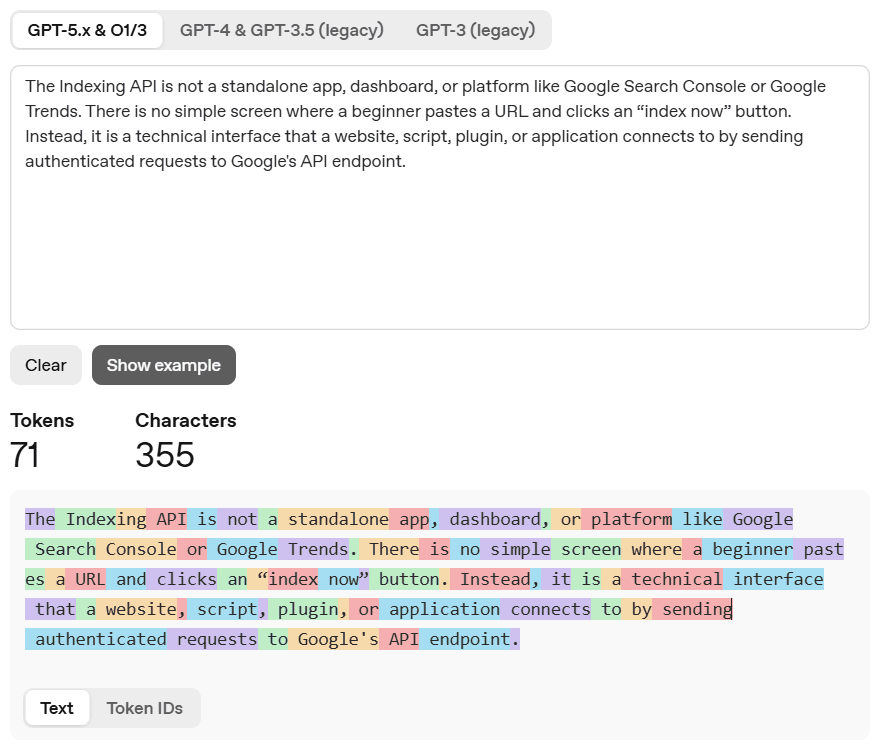
Raw text may first be cleaned or standardized. Tokenization then divides language into smaller units called tokens. Depending on the system, a token may represent a word, part of a word, punctuation mark, or another useful unit.
For example, “The customer loved the shoes” can be divided into smaller pieces that a model can process mathematically.
2. Analyzing Words and Grammar
Several traditional NLP techniques help analyze grammatical structure:
- Part-of-Speech (POS) Tagging: Identifies whether a word functions as a noun, verb, adjective, or another grammatical category.
- Lemmatization: Converts grammatical variations to a dictionary form, such as runs, ran, and running to run.
- Stemming: Removes parts of words more mechanically and may produce a stem that is not a normal dictionary word.
These are useful NLP techniques, but modern systems do not necessarily perform each one as a separate step.
3. Identifying Meaning and Context
Named Entity Recognition (NER) identifies entities such as people, organizations, locations, dates, and products. Sentiment analysis, an NLP technique, can classify or estimate whether language expresses positive, negative, neutral, or more detailed attitudes.
Context is equally important. The word bank means something different in river bank and bank account. NLP systems use surrounding language to help determine the intended meaning.
4. Converting Language Into Numerical Representations
Computers ultimately work with numbers, so NLP systems convert language into mathematical representations. Embeddings represent words, sentences, or other language units as vectors in a multidimensional space. Related meanings can therefore be positioned closer together mathematically.
Multilingual embeddings extend this idea across languages. Google’s LaBSE research, for example, produced language-agnostic sentence embeddings for 109 languages, allowing semantically related sentences from different languages to share a common representation space.
This does not mean every language is understood equally well. Performance can vary because of training data, scripts, grammar, dialects, and model design. Research on multilingual BERT, for example, found systematic differences in cross-language performance.
Developers may also train or fine-tune systems using language-specific or regional data. This can help models learn local vocabulary, idioms, spelling conventions, and grammatical patterns, although localized data does not automatically eliminate bias or guarantee equal performance.
5. Training, Inference, and Output
During training, an NLP model learns patterns and relationships from data by adjusting its internal parameters. During inference, the trained model processes new input.
The resulting output depends on the task. It might identify an entity, classify sentiment, translate a sentence, rank a search result, summarize a document, or generate a conversational response.
How Search Engines and Digital Platforms Use NLP
NLP is useful wherever a system needs to interpret, classify, search, translate, or generate language.
Search Engines and Query Understanding
Search engines use language-understanding systems to move beyond exact keyword matching and better interpret concepts, relationships between words, context, and intent.
Google documents several AI systems that help Search understand language, concepts, and relationships. According to Google’s current ranking systems guide:
- BERT helps understand how combinations of words express different meanings and intent.
- RankBrain helps relate words to concepts, allowing Google to find relevant content even when it does not contain every exact word in the query.
- Neural matching helps understand representations of concepts in queries and pages and match them together.
- MUM can understand and generate language, although Google says it is used for specific Search applications rather than general ranking.

Google’s generative Search experiences also use Gemini models. AI Overviews and AI Mode combine Gemini capabilities with Google’s broader Search, ranking, and information-retrieval systems.
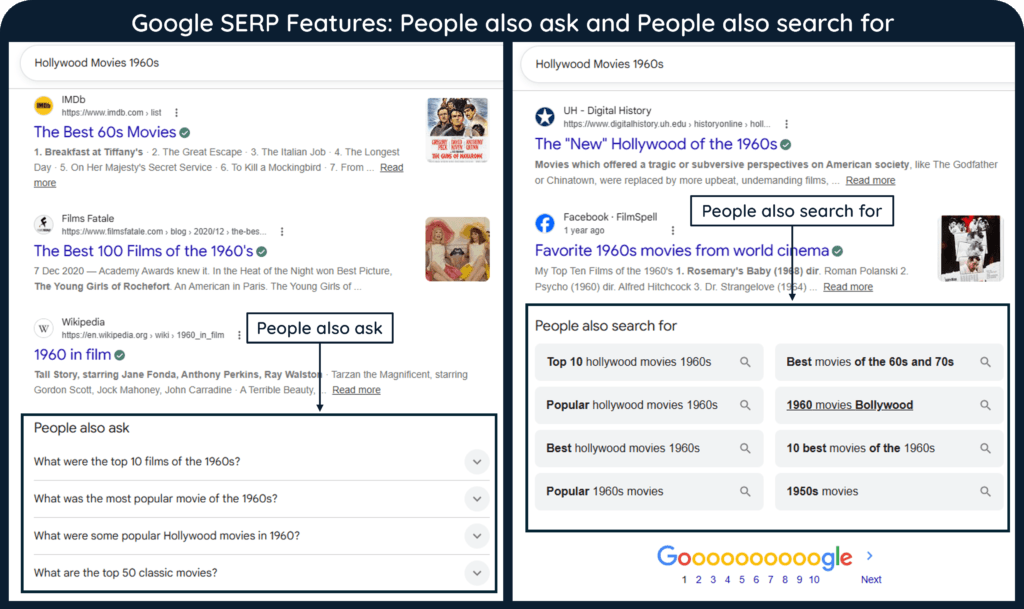
Features such as Knowledge Panels, Featured Snippets, People Also Ask, and multimodal search are not NLP algorithms, but depend on natural language processing for specialized search features. They may combine language understanding with knowledge systems, ranking systems, computer vision, or multimodal AI.
Machine Translation
NLP helps translation systems analyze a source sentence and produce a translation in the target language while attempting to preserve meaning and context. Modern systems consider relationships across phrases and sentences rather than simply replacing each word with a dictionary equivalent.
Voice Assistants and Conversational Systems
Voice assistants typically combine speech recognition with NLP. Speech recognition processes spoken input, while NLP helps interpret the words, recognize intent, maintain context, and provide an appropriate response.
Conversational chatbots use similar language-understanding techniques and may also generate natural-language responses.
Sentiment Analysis and Text Classification
NLP can classify reviews, emails, social posts, support tickets, and other text by sentiment, topic, intent, or category. Spam filters, message-routing systems, and some predictive-text applications also use language-processing techniques to identify patterns and likely outcomes.
Practical Applications of NLP
NLP is used across industries where large amounts of language need to be searched, understood, classified, or summarized.
Healthcare and Medical Information
NLP can extract information from electronic health records and clinical notes, organize medical documents, and assist with tasks such as medical coding or information retrieval. Human oversight remains important because medical language can be complex and errors may have serious consequences.
Finance, Legal, and Compliance
Organizations can use NLP to review contracts, identify important clauses and entities, classify documents, analyze financial news or market sentiment, and search large collections of regulatory and compliance material.
Human Resources
NLP can help organize resumes, match skills with job requirements, classify employee feedback, and summarize survey responses. Automated hiring applications require particular care because biased data or poorly designed systems can contribute to unfair outcomes.
E-Commerce and Personalization
Online stores can use NLP to understand conversational product searches, classify or summarize reviews, route customer-service requests, and improve product discovery.
Cybersecurity and Threat Detection
NLP can help identify suspicious language in phishing emails, classify potentially malicious messages, and detect sensitive information in text. It is generally one part of a broader cybersecurity system rather than a complete defense by itself.
Frequently Asked Questions
Is NLP the same as generative AI?
No, natural language processing and generative AI are different. NLP is the broader field concerned with enabling computers to work with human language, while generative AI uses NLP techniques and language models to create new text.
How does NLP handle different languages and dialects?
Multilingual models can learn patterns from multiple languages and map related meanings into shared representations. Accuracy still varies depending on training data, language structure, dialect, script, and model design.
What are the biggest data privacy concerns with NLP?
NLP systems may process emails, conversations, customer records, documents, or other sensitive text. Organizations should consider what data is collected, where it is stored, how long it is retained, who can access it, and whether it is shared with third-party services.
Do I need a background in coding to use NLP tools for my business?
No. Many translation, search, chatbot, analytics, and AI products provide NLP through ordinary user interfaces. Coding becomes useful when a business needs custom integrations, automation, models, or specialized language-processing workflows.