Key Takeaways
- A referring domain is a unique website domain containing one or more links pointing to another website.
- Referring domains measure linking-source diversity, while backlinks count every individual incoming link, including repeated links from one domain.
- Quality depends on relevance, legitimacy, context, natural placement, descriptive anchor text, and the genuine reason the link exists.
- Referring-domain totals vary across tools because platforms use different indexes, root-domain grouping rules, crawling systems, and counting methodologies.
A referring domain, also called a linking domain, is a unique website domain that contains one or more links pointing to another website. While a backlink is the individual link itself, the referring domain is the website from which that link originates.
For example, suppose there are links to a website from four different articles on another website. The receiving website has 4 backlinks from 1 referring domain. However, if four different websites each provide one backlink, there are instead 4 backlinks from 4 referring domains.
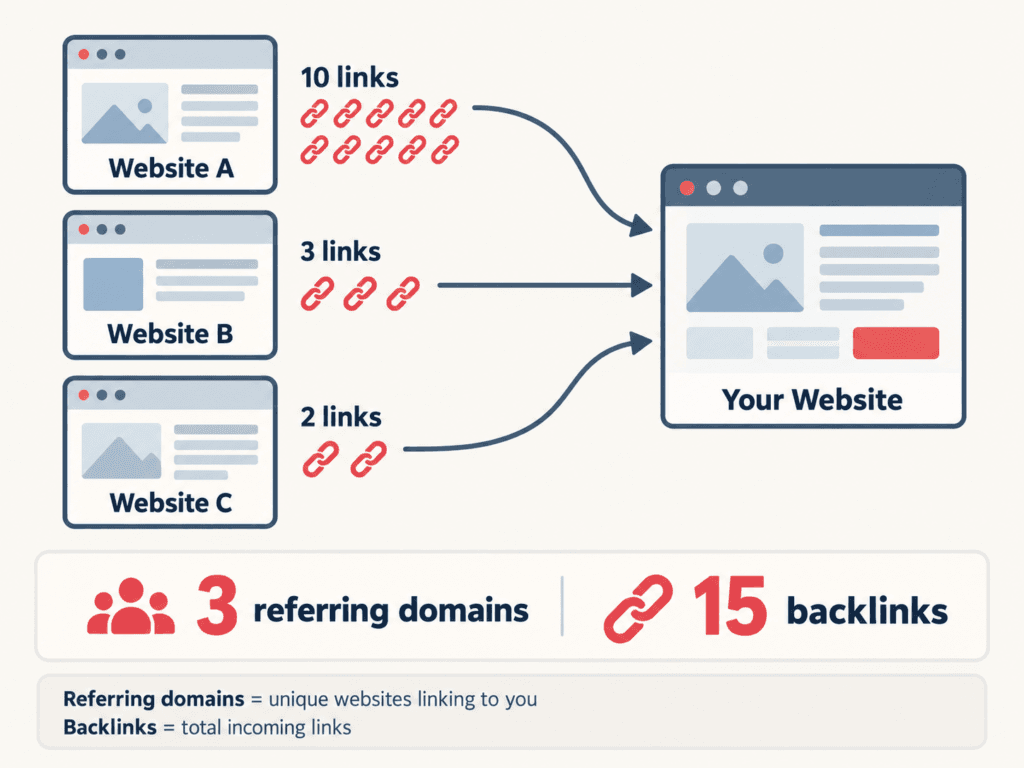
SEO tools track both metrics because they describe different characteristics of a backlink profile. A website receiving links from many independent sources has a different link profile from one receiving hundreds of links from only a few websites.
Google does not document the number of referring domains as a standalone ranking factor. It does, however, use links and link-analysis systems such as PageRank as part of its core ranking systems.
A Backlinko analysis of 11.8 million Google results found correlations between rankings and referring-domain diversity. It reported that the first-ranking pages had roughly three times as many referring domains as results in positions 2–10. However, correlation does not prove that Google directly rewards a specific referring-domain count.
How Google Search Console Counts Linking Sites
Search Console groups linking sites by their root domain. For example, links from blog.example.com and shop.example.com can both appear under example.com. Other backlink tools can use different counting methodologies, which is one reason referring-domain totals often differ between platforms.
Referring Domains vs. Total Backlinks
Referring domains and backlinks are related, but they measure different things.
Referring Domains
The referring-domain count shows how many different domains provide links to a website or webpage. For example, if one article receives links from a university, an industry publication, a local newspaper, and a specialist blog, it has backlinks from four referring domains regardless of how many individual links each site provides.
Total Backlinks
Total backlinks count every individual incoming link. One referring domain can sometimes generate hundreds or thousands of backlinks. A link placed in a sitewide template, for example, could appear on many pages of the same website.
What Makes a Quality Referring Domain?
A useful referring domain should be evaluated by relevance, legitimacy, context, and the reason the link exists, rather than a single authority score.
Topical and Contextual Relevance
A referring domain does not have to operate in exactly the same industry as the website receiving the link.
For example, a university research department could legitimately cite a digital marketing study even though an educational institution and a marketing publication belong to different industries. What matters is whether the linking page and citation make contextual sense.
Reputation and Legitimacy
A credible referring domain is generally a genuine website with original content, a real purpose, identifiable ownership or authorship where appropriate, and an audience beyond people seeking backlinks.
Sites created primarily to publish paid links, automatically generated pages, or large numbers of unrelated guest posts are much less valuable indicators of genuine recognition.
Relevant Linking Page
The individual page providing the backlink also matters.
A highly relevant article on a broad publication may provide stronger context than an unrelated page on a website operating in exactly the same industry.
Genuine Audience and Traffic
Real traffic can be a useful supporting indicator that a website has an audience. However, low traffic does not automatically mean a domain is poor quality.
A new specialist publication, small professional association, university resource, or local organization could provide a highly relevant backlink despite having relatively modest traffic.
Natural Link Placement
Editorial links placed naturally within relevant content generally provide more useful context than links appearing in mass directories, spam profiles, automatically generated footers, or unrelated pages.
Link Attributes and Referring Domains
A referring domain may still appear in a backlink tool even when its links use attributes such as nofollow, sponsored, or ugc. These attributes describe the nature of a link and can affect how Google treats it, but backlink databases may still discover and report the link.
For this reason, a referring-domain count should not be interpreted as the number of domains passing ranking value to a website.
Third-Party Authority Metrics
Metrics such as Ahrefs Domain Rating, Moz Domain Authority, and Semrush Authority Score can help compare websites, but they are proprietary measurements created by those platforms.
They are not Google or Bing ranking scores. A low-authority local organization could provide a highly relevant backlink, while a high-scoring domain could still contain an irrelevant or manipulative linking page.
How to Earn Quality Referring Domains
Growing referring domains means giving new, legitimate websites a genuine reason to cite or recommend the site’s content, rather than repeatedly collecting additional links from websites that already link to it.
- Create Linkable Resources: Publish something other websites have a reason to reference, such as original research, statistics, surveys, industry datasets, calculators, templates, or detailed reference resources. The strongest assets often contain information that is difficult to find elsewhere or that saves other publishers considerable research time. Examples include “100 SEO Statistics and Facts for 2026” and “The State of AI Search: Industry Data and Trends.”
- Respond to Media Requests: Journalists, editors, and publishers regularly need expert commentary, statistics, examples, and professional perspectives for their stories. Responding to genuinely relevant requests through platforms such as Qwoted or Featured can lead to editorial mentions from publications that have never previously linked to the website. Contributions should focus on providing useful expertise rather than simply obtaining a backlink.
- Find Unlinked Brand Mentions: A website may mention a company, author, research study, product, or resource without linking to its original source. Monitoring these mentions can uncover opportunities to contact the publisher and politely suggest a link where it would help readers verify or explore the information. Not every mention requires a backlink, so outreach should remain selective and relevant.
- Use Broken-Link Opportunities: Publishers sometimes link to resources that have been deleted, moved, or become outdated. If the website already contains a genuinely suitable replacement, the publisher can be informed about the broken link and offered the alternative. The goal should be to help repair a useful resource rather than replace unrelated broken links simply to obtain backlinks.
- Use Local and Business Relationships: Industry associations, chambers of commerce, suppliers, retailers, universities, event partners, professional organizations, and other legitimate relationships can create natural citation opportunities.
- Analyze Competitor Backlinks: Examining domains that link to competing websites can reveal publications, resource pages, organizations, and content formats that may also be relevant. The objective is not to copy every competitor backlink, but to identify credible sources that could have a genuine reason to reference the site’s own work.
- Write for Relevant Publications: Writing useful content for reputable industry publications can introduce a website to new audiences and referring domains. Guest posting should focus on expertise and reader value rather than large-scale production designed primarily to manufacture links.
- Promote Useful Content: Social media, newsletters, communities, and targeted outreach can place useful resources in front of journalists, researchers, bloggers, and publishers. Promotion does not automatically generate backlinks, but it increases the likelihood that valuable content will be discovered and cited.
The objective should be to increase the number of independent, credible sources that genuinely find the website worth referencing, rather than merely increasing the referring-domain count displayed by an SEO tool.
Note
Google considers large-scale article or guest-post campaigns designed primarily to create ranking links a form of link spam, particularly when links use optimized anchor text or paid links are allowed to pass ranking credit.
How to Check and Track Referring Domains
Referring domains can be checked through search-engine tools, backlink databases, and analytics platforms.
Google Search Console
To check referring domains in Google Search Console, navigate to Links → External links to view backlink-related data. The report includes:
- Top linking sites: Shows domains providing the most backlinks.
- Top linked pages: Shows which website pages receive the most external links.
- Top linking text: Shows commonly used backlink anchor text.
Search Console groups linking sites by root domain, removing subdomains for reporting purposes. Its Links report contains links Google has discovered over time and should not be treated as a complete web-wide backlink inventory.
Bing Webmaster Tools
Bing’s Backlinks report provides information on referring domains, referring pages, individual backlinks, anchor text, source URLs, and target URLs.
It also allows backlink-profile comparisons with other websites. Bing describes the available backlinks as a representative set rather than a complete profile.
Google Analytics 4
GA4 serves a different purpose. In Google Analytics 4, navigate to Reports → Acquisition → Traffic acquisition to view traffic-source data, including visits from referring websites.
In GA4, dimensions such as Session source and Session source / medium can identify websites that actually sent measurable visitors. Google defines referral traffic as traffic resulting from users following links from other websites.
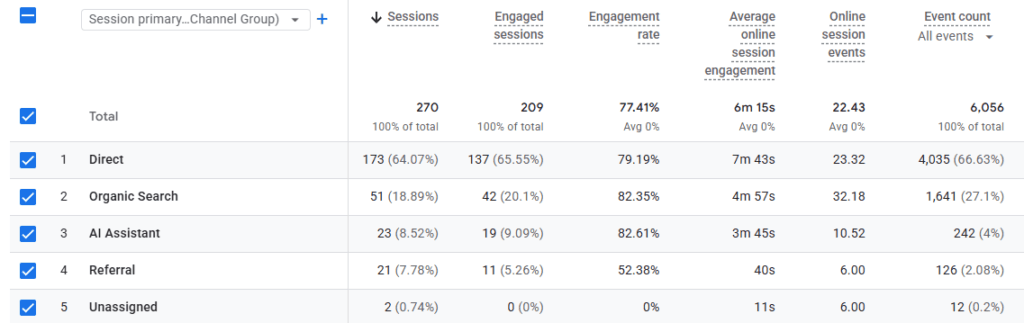
The distinction is important: Backlink tools identify domains that link to the website; GA4 identifies referring sources that actually generated measurable visits.
However, a referring domain does not need to send traffic to appear in a backlink database.
Third-Party Backlink Tools
Third-party backlink tools generally provide broader backlink and referring-domain data than search-engine reporting alone, using their own link indexes and proprietary metrics to analyze link profiles.
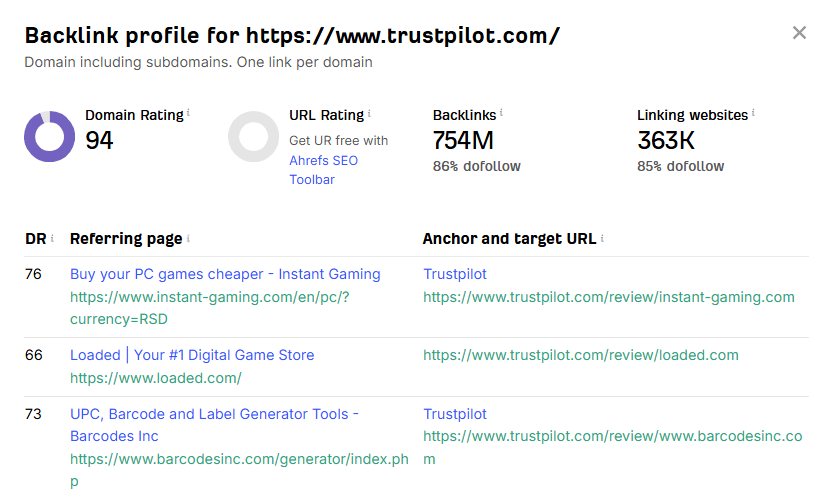
- Ahrefs Site Explorer: Provides referring domains, backlinks, anchors, new and lost links, and Domain Rating.
- Semrush Backlink Analytics: Reports backlinks, referring domains, anchor text, and Authority Score.
- Moz Link Explorer: Provides linking domains, backlinks, anchor text, and Domain Authority.
- Mangools LinkMiner: Offers backlink and linking-domain research.
- Majestic: Tracks referring domains alongside proprietary Trust Flow and Citation Flow metrics.
- SE Ranking: Provides backlink and referring-domain monitoring.
- Ubersuggest: Provides backlink and referring-domain estimates.
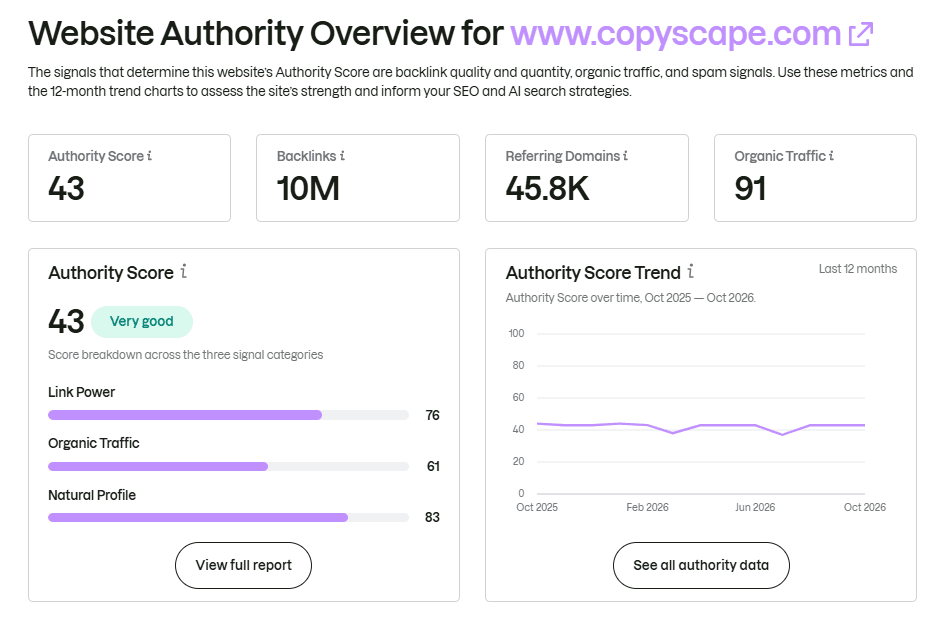
Referring-domain counts often do not match exactly between platforms because each provider maintains its own link index, crawling infrastructure, and counting methodology.
Frequently Asked Questions
What is the main difference between a backlink and a referring domain?
A backlink is an individual incoming link, while a referring domain is the unique domain providing one or more backlinks. Twenty links from one website therefore represent 20 backlinks but only one referring domain.
Is it better to have more backlinks or more referring domains?
Neither number should be maximized in isolation. A diverse collection of relevant, legitimate referring domains generally provides more useful information about backlink diversity than repeatedly gaining links from a small number of websites, but quality and context remain essential.
Why did my referring domain count drop suddenly?
A linking website may have removed a page or link, redirected content, gone offline, or changed its website structure. Third-party tools also continually recrawl and update their indexes, so a reported referring domain can disappear even when nothing changed on the receiving website.
Can a single referring domain lead to a penalty?
Simply receiving a backlink from one questionable domain does not automatically cause a penalty. Search-engine risk is more closely associated with deliberate manipulative link-building patterns and participation in link schemes than with the existence of an unwanted backlink.
What is a good number of referring domains for a new website?
There is no universal target. A specialist new website may naturally begin with only a few legitimate referring domains, while established competitors may have thousands. Relevant competitors, backlink quality, and growth over time provide more useful benchmarks than an arbitrary number.
Would a backlink from social media count the platform as a referring domain?
A backlink-analysis tool may count a crawlable social-media link and its platform as a referring domain according to its own methodology. However, social links can be redirected, qualified with link attributes, inaccessible to crawlers, or counted differently between tools, so they should not automatically be treated as equivalent to editorial backlinks from independent websites.