Key Takeaways
- A backlink is an incoming link from one website to another, while an internal link connects pages within the same website.
- Backlinks can help search engines discover pages, understand relationships, evaluate relevance, support rankings, and generate referral traffic.
- Backlink value depends on source trustworthiness, topical relevance, editorial context, anchor text, link attributes, audience value, and genuine intent.
- Quality backlinks are earned through useful resources, original research, credible relationships, relevant outreach, and legitimate mentions—not manipulative link-building tactics.
A backlink, also called an inbound link or incoming link, is created when a page on one website links to a page on another website. If Website A publishes an article containing a clickable link to Website B, Website B has received a backlink.
Backlinks are important in search engine optimization (SEO) because search engines can use links to discover webpages, understand relationships between pages, and evaluate which pages may be useful or relevant to a search. Google confirms that it uses links as a relevance signal and that PageRank continues to form part of its core ranking systems. Bing similarly describes naturally earned links from trusted websites as an important search signal and emphasizes quality over simply accumulating large numbers of links.
Backlinks are therefore sometimes described as “votes of confidence.” The analogy is useful, but not every vote has equal value. A relevant editorial link from a reputable publication can be very different from hundreds of automatically generated links on spam websites.
Backlink vs. Referring Domain
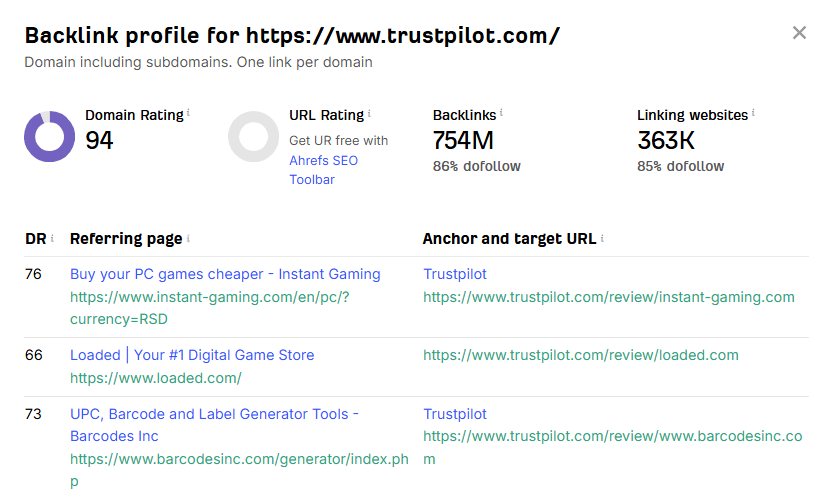
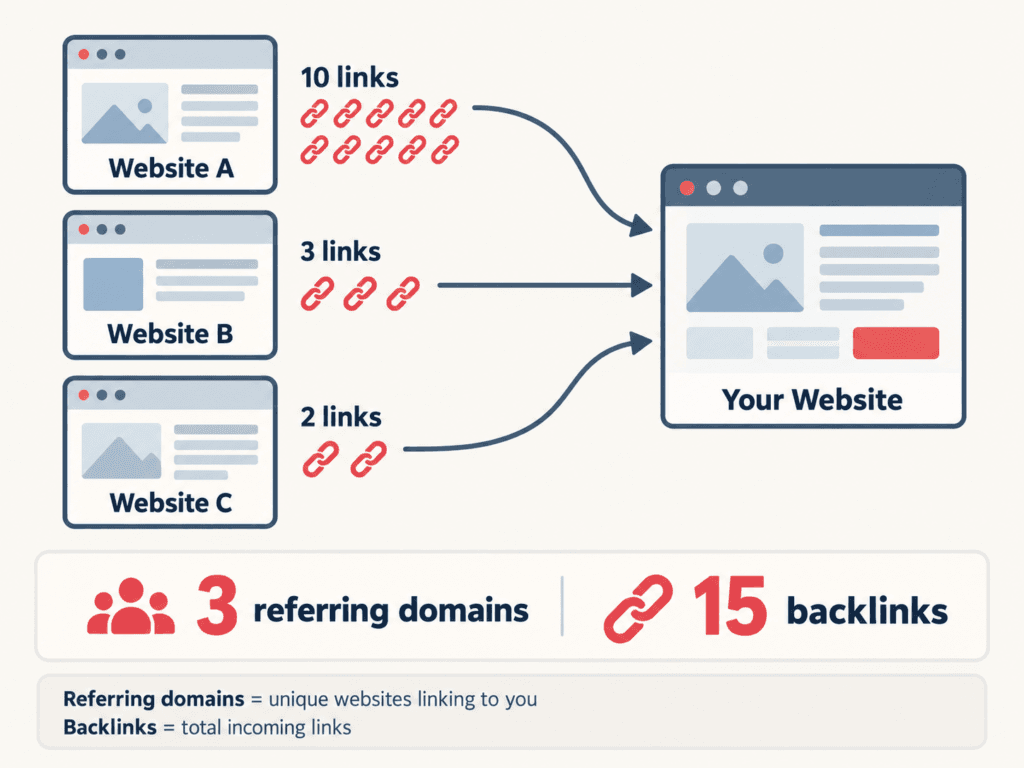
A backlink is an individual incoming link, while a referring domain is the unique website providing one or more backlinks. If example.com links to a website from 20 different pages, that represents 20 backlinks from one referring domain.
Inbound, Outbound, and Internal Links
The terminology used for links depends partly on which website is being examined.
- Inbound Link: An inbound link points from another website to the website being analyzed. It is another name for a backlink. For example, news-site.com → example.com
- Outbound Link: An outbound or external link points from a page on one website to a different website. For the destination website, that same external link becomes a backlink. For example, example.com/seo/ → news-site.com
- Internal Link: An internal link connects two pages on the same website. Internal links are not backlinks because they do not originate from another website. For example, example.com/seo/ → example.com/backlinks/
Types of Backlinks
A backlink is an external incoming link viewed from the perspective of the website receiving it. Common types of backlinks include:
- Editorial Backlinks: Links naturally included because another publisher considers a page useful or worth citing.
- Guest-Post Backlinks: Links within contributed articles. Guest posting can be legitimate, but large-scale guest posting primarily intended to manipulate rankings can become link spam.
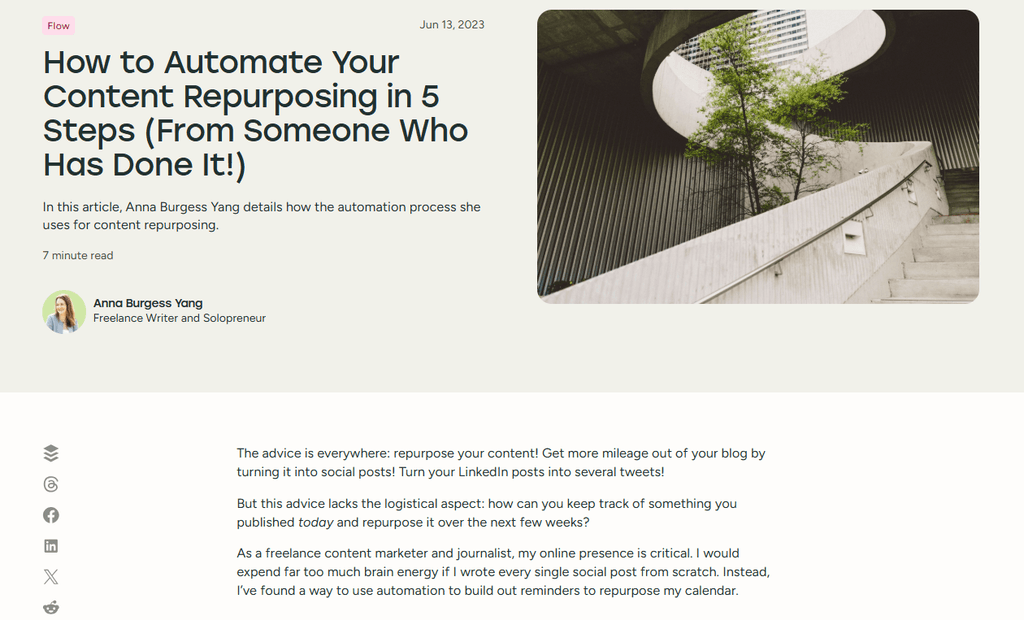
- Profile Backlinks: Links from legitimate company, author, organization, or professional profiles.
- Directory Backlinks: Links from business or industry directories. Relevant directories can be useful, while mass-created low-quality directory links should be avoided.
- Image Backlinks: Links received when another publisher credits, embeds, or references an image and links to its source.
- Sponsored Links: Paid or sponsored links, which Google recommends qualifying with
rel="sponsored"or, alternatively,nofollow. - Social Media Backlinks: Links from social profiles, posts, or other platform content.
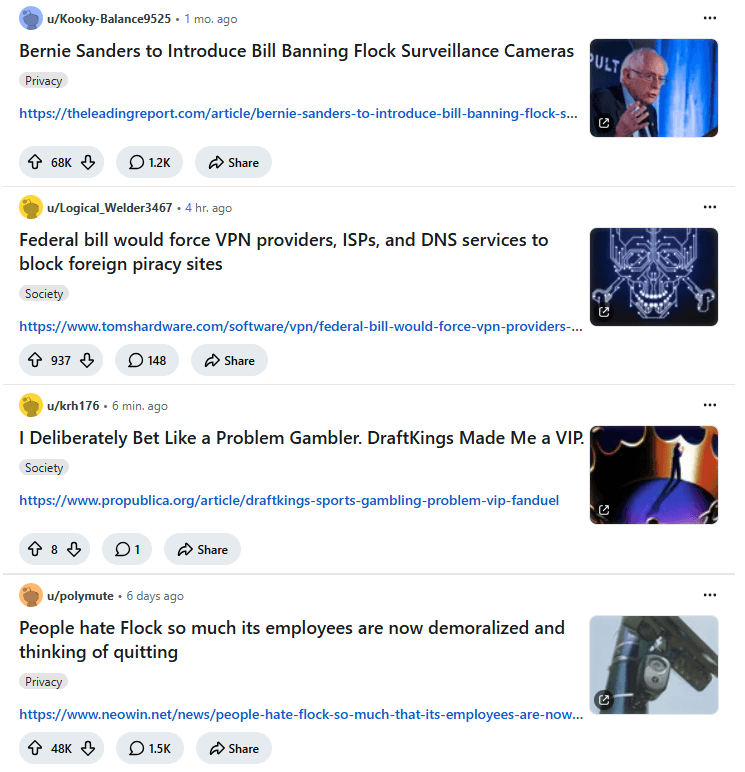
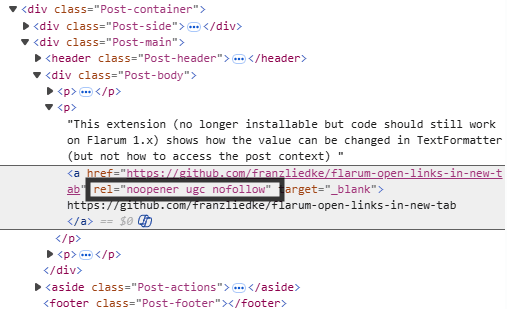
- Forum and UGC Backlinks: Links placed through forums, comments, communities, or other user-generated content. Google recommends qualifying many such links with
rel="ugc"orrel="nofollow"where appropriate.
How Backlinks Can Support SEO and AI Visibility
Backlinks can provide several benefits, but their value depends heavily on the source, context, relevance, and reason the link exists.
- Can Support Organic Rankings: Google’s PageRank and other link-analysis systems examine relationships between webpages. Relevant and trustworthy backlinks can contribute to ranking signals, but backlinks alone do not guarantee high rankings because Google uses many systems and signals.
- Helps Search Engines Discover Pages: Search engines crawl links to find content they do not already know about. A backlink therefore creates another route through which a new or existing webpage can be discovered. Google explicitly states that it uses links to find new pages to crawl.
- Drives Referral Traffic: Backlinks are useful beyond SEO. Readers can click a link from another website and arrive directly at the linked page, creating referral traffic.
- Builds Recognition and Exposure: Citations from respected publications, organizations, and industry websites can expose content and brands to new audiences and potentially generate further mentions and links.
- Can Support AI Search Discoverability: Bing states that relevant external links support URL discovery and that strong internal and external linking can contribute to AI search visibility across Bing and Copilot experiences. However, there is no universal documented backlink score that guarantees citation by ChatGPT, Gemini, Claude, Perplexity, or other AI systems.
What Makes a Good Backlink and How to Earn One
A useful backlink should ideally exist because the destination provides genuine value to the publisher’s audience.
Features of a High-Quality Backlink
- Relevant Source: The linking page should have a logical connection to the linked subject.
- Trustworthy Website: Legitimate sites with useful content, genuine audiences, and credible publishing histories are preferable to sites created primarily for links.
- Editorial Context: A naturally placed citation within relevant content is generally more meaningful than an automatically generated sitewide or profile link.
- Natural Anchor Text: The clickable words should describe the destination naturally rather than repeatedly forcing commercial exact-match keywords.
- Appropriate Link Qualification: Normal editorial links require no special
relattribute, while paid and user-generated links should be qualified appropriately. Google treatssponsored,ugc, andnofollowas hints when deciding how links should be considered in Search rather than as absolute ranking directives. - Potential Audience Value: A good backlink may send relevant visitors even when its direct SEO impact cannot be measured.
rel="noopener ugc nofollow"How to Earn Quality Backlinks
Quality backlinks are usually earned by creating useful, credible resources and building genuine relationships that give other websites a reason to link naturally.
- Create Original Research: Surveys, studies, experiments, and proprietary datasets give other writers something original to reference.
- Publish Reference Resources: Statistics pages, calculators, glossaries, templates, factual collections, and detailed guides can attract citations.
- Find Broken-Link Opportunities: When a relevant website links to a useful resource that no longer exists, a genuinely suitable replacement can be suggested.
- Respond to Media Requests: Journalists and publishers may seek expert commentary through services such as Qwoted or Featured.
- Analyze Competitor Backlinks: Examining websites that cite competitors can reveal publications, directories, resources, or partnerships that may also be relevant.
- Use the Skyscraper Technique Selectively: Create substantially more useful material than an existing widely linked resource, then conduct appropriate outreach.
- Guest Post Carefully: Contribute useful content to reputable publications for their audience rather than mass-producing articles purely to manufacture links.
- Link Reclamation for Unlinked Mentions: Unlinked brand mentions can provide practical backlink opportunities because the publisher has already referenced the business or organization. Where a link would genuinely help readers, a short and polite outreach message can suggest linking the mention to a relevant source page.
- Use Existing Relationships: Suppliers, retailers, associations, customers, partners, and professional organizations may have legitimate reasons to mention or link to a business.
Evaluating Backlinks: Five Examples
Backlinks should be evaluated by quality, context, diversity, and intent, not simply by counting how many exist.
A backlink should therefore be examined by looking at the linking page, legitimacy of the website, topical relationship, anchor text, placement, link attributes, and whether the link appears to exist for genuine users.
A high DA, DR, or Authority Score by itself does not prove that a backlink is good.
How to Track Backlinks and Handle Spammy Links
Several first-party and third-party tools can help identify websites linking to a site.
Google Search Console
In Google Search Console, open Links → External links
The report includes:
- Top linked pages
- Top linking sites
- Top linking text
Search Console does not provide a complete inventory of every backlink Google knows about. Google describes the report as a sample intended to help understand the overall link profile.
Bing Webmaster Tools
Bing’s Backlinks report provides information about referring domains, referring pages, anchor text, and destination URLs. Bing similarly states that its report provides a representative set rather than the complete backlink profile.
Ahrefs
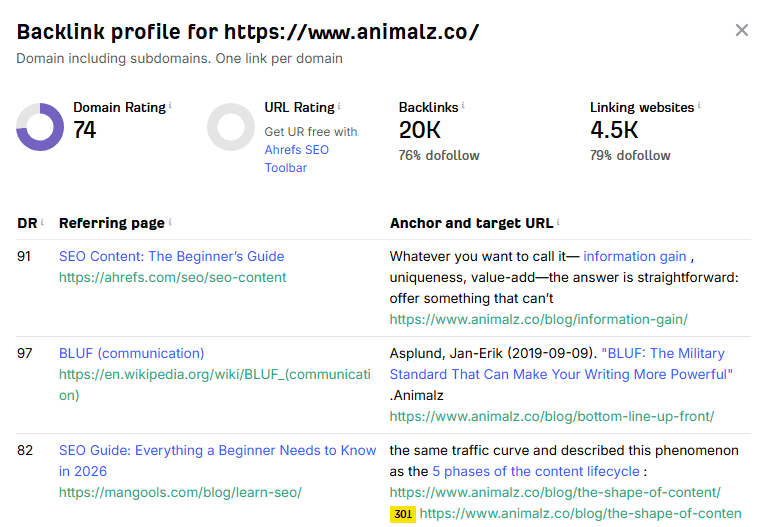
Ahrefs provides extensive backlink and referring-domain data, including new and lost links, anchor text, linking pages, and its proprietary Domain Rating metric.
Semrush
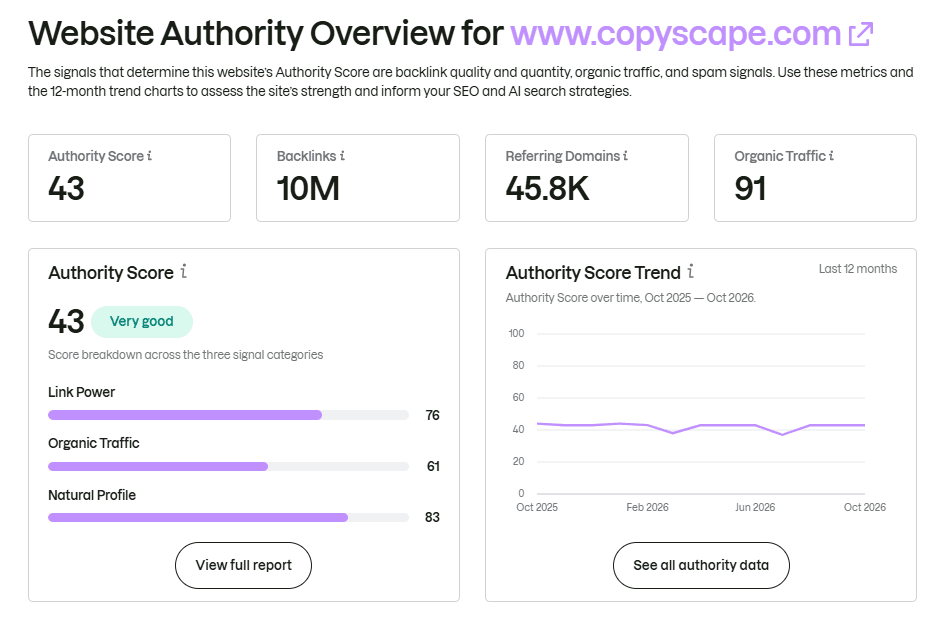
Semrush provides backlink analysis, referring-domain information, anchor-text analysis, and proprietary metrics such as Authority Score.
Moz
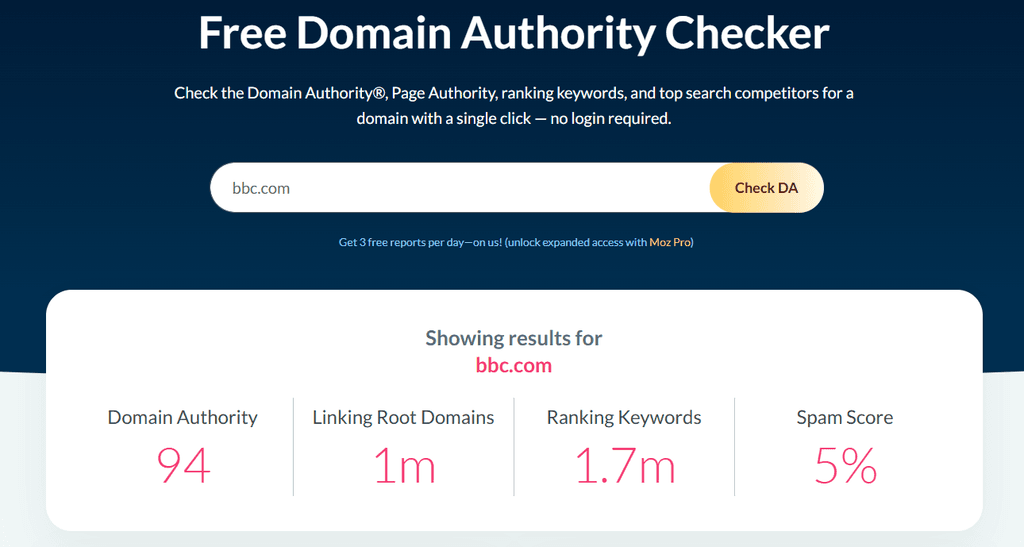
Moz Link Explorer can examine backlinks, linking domains, anchor text, and metrics such as Domain Authority.
Note
Moz Domain Authority, Ahrefs Domain Rating, and Semrush Authority Score are proprietary third-party SEO metrics. They can help compare websites and backlink profiles, but they are not Google or Bing ranking scores.
WordPress Plugins and Browser Extensions
Some WordPress plugins and browser extensions can surface link information by connecting to external SEO databases. WordPress itself, however, does not maintain a complete web-wide backlink index.
What Should Be Done With Spammy or Toxic Backlinks?
The term “toxic backlink” is not a formal Google classification. SEO platforms may assign spam or toxicity scores using their own proprietary systems.
Suspicious patterns can include link farms, automated links, paid ranking links, private link networks, irrelevant pages containing large numbers of outbound links, and heavily manipulated keyword-rich anchor text.
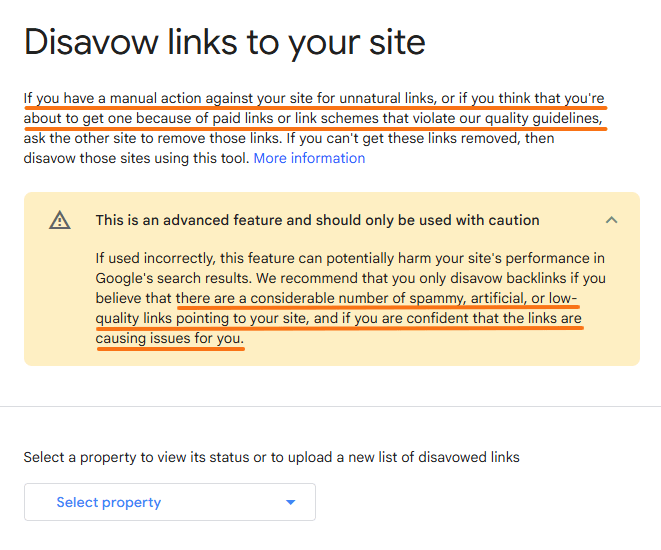
Google states that most websites do not need to use the Disavow Links tool because its systems can usually determine which links to trust. Its link-spam systems can also neutralize the ranking benefit of spammy links rather than necessarily applying a site-wide penalty.
If genuinely manipulative backlinks are found:
- Investigate where the links came from.
- Check Search Console → Security & Manual Actions → Manual actions.
- Attempt removal when the links were deliberately created and removal is practical.
- Consider Google’s Disavow Links tool only when there is a considerable number of spammy, artificial, or low-quality links and they have caused, or are likely to cause, a manual action.
- Ordinary unsolicited spam links can generally be left alone.
Backlinks: Mistakes to Avoid
Some backlink tactics can create unnecessary SEO risk, especially when links are built primarily to manipulate rankings rather than provide genuine value to users.
- Do not buy links intended to manipulate rankings.
- Do not participate in link farms or private link networks.
- Do not use automated backlink-generation services.
- Do not conduct excessive reciprocal-link exchanges.
- Do not mass-publish guest posts primarily to obtain keyword-rich backlinks.
- Do not create large numbers of low-quality directory or forum links.
- Do not automatically disavow every unfamiliar or low-authority website.
Google’s current link spam policies specifically identify practices such as purchasing ranking links, excessive exchanges, automated link building, low-quality directories, manipulative guest-post anchors, and spammy forum links as examples of link spam.
Frequently Asked Questions
What is the difference between a dofollow and nofollow backlink?
“Dofollow” is informal SEO terminology rather than an HTML attribute. It generally refers to a normal link without a nofollow, sponsored, or similar qualification. Google recommends sponsored for paid placements and ugc for many user-generated links, while nofollow can be used when a site does not want Google to associate its reputation with the destination.
Can I have too many backlinks?
There is no fixed maximum number of backlinks a website should have. A popular website can naturally receive millions of links, but large-scale artificial links created primarily to manipulate rankings can violate search engine spam policies.
Should I just buy backlinks to rank faster?
No. Buying links specifically to pass ranking credit or manipulate search positions violates Google’s link spam policies. Paid advertising and sponsorship links are legitimate when they are appropriately qualified, such as with rel="sponsored" or nofollow.
How do I check who is linking to my website?
Use Google Search Console, Bing Webmaster Tools, Ahrefs, Semrush, Moz, or another backlink-analysis platform. Totals will often differ because each service discovers and stores links using its own index and methodology.
How can I tell whether a backlink is spammy or toxic?
Examine the source website, linking page, relevance, anchor text, placement, surrounding content, link patterns, and apparent purpose of the link. A low DA or DR score alone does not prove that a backlink is harmful.
What should I do if my site receives spammy or toxic backlinks?
Ordinary unsolicited spam links usually do not require action. Google says most sites do not need the Disavow tool because its systems can generally determine which backlinks to trust. Disavow should be reserved for serious situations involving substantial manipulative linking and manual-action risk.
What is the difference between an internal link, an external link, and a backlink?
An internal link connects pages on the same website. An external link points from one website to another. From the perspective of the website receiving that external link, it is a backlink.
What if spammy backlinks were inherited from a previous domain owner?
Backlinks should not automatically be disavowed simply because they were created before the current owner acquired the domain. Review whether they represent ordinary web spam or evidence of deliberate historical link manipulation, check Search Console for manual actions, and use Google’s Disavow tool only when its documented conditions are genuinely met.