
Key Takeaways
- Entity disambiguation determines which specific person, organization, place, product, or other entity an ambiguous name represents.
- Systems typically identify an entity mention, generate possible candidates, and rank them using surrounding context, entity relationships, and other relevance signals.
- Correct disambiguation improves search intent interpretation, information retrieval, knowledge graph accuracy, brand attribution, and product matching.
- Website owners can support disambiguation through consistent naming, clear profiles, suitable structured data, official social accounts, and accurate sameAs references.
Entity disambiguation is a natural language processing (NLP) and information retrieval process that determines which specific person, organization, place, product, or other entity an ambiguous name or phrase refers to based on its context. It helps search engines, AI systems, and databases distinguish between different entities that share the same or similar names.
Here are three examples of entity ambiguity:
- Apple market: Does Apple refer to the technology company or the fruit?
- Jordan news: Does Jordan refer to the country, Michael Jordan, or another person named Jordan?
- Delta changes: Does Delta refer to Delta Air Lines, a river delta, the Greek letter, or another company?
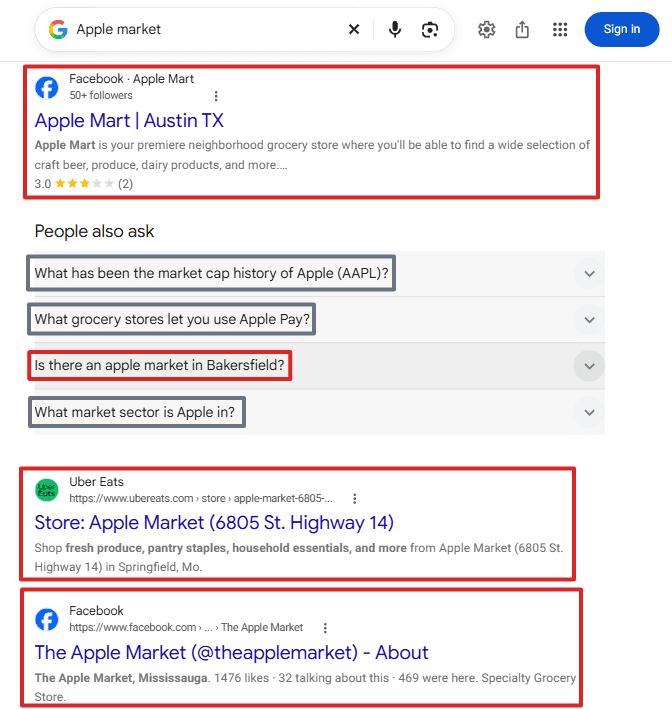
The word or phrase being interpreted is known as an entity mention. Once the system determines which real-world entity the mention represents, it may connect it with a unique record in a knowledge base such as Wikidata or Wikipedia. This broader process is commonly called entity linking. Research on entity linking describes the task as disambiguating mentions in text and mapping them to the appropriate entities in a knowledge base.
Entity disambiguation is particularly important when brands, people, products, or locations have similar names. Correct identification helps prevent information about one entity from being incorrectly attributed to another.
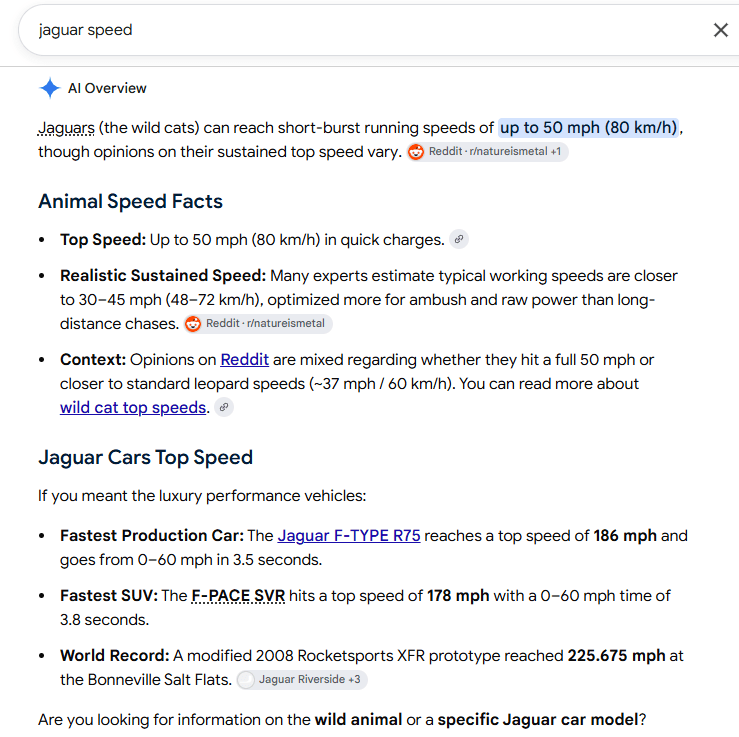
Why Entity Disambiguation Matters
Modern search and AI systems need to understand what a word refers to, not simply recognize that the word appears in a document.
- Understands Search Intent: The intended meaning often depends on surrounding words. A search for Apple quarterly earnings clearly refers to the company, while health benefits of apple refers to the fruit.
- Prevents Incorrect Matches: Without disambiguation, information about organizations, products, people, or locations with similar names could be mixed together.
- Supports Knowledge Graphs: A knowledge graph stores information about entities and the relationships between them. Once a system identifies the correct entity, information can be associated with the appropriate record rather than simply with a matching word.
- Improves Information Retrieval: A search system that understands the intended entity can concentrate on documents about that particular subject instead of retrieving everything containing the same name.
- Supports Brand Attribution: A clear entity identity can help machines distinguish one company, author, or product from businesses and individuals with similar names.
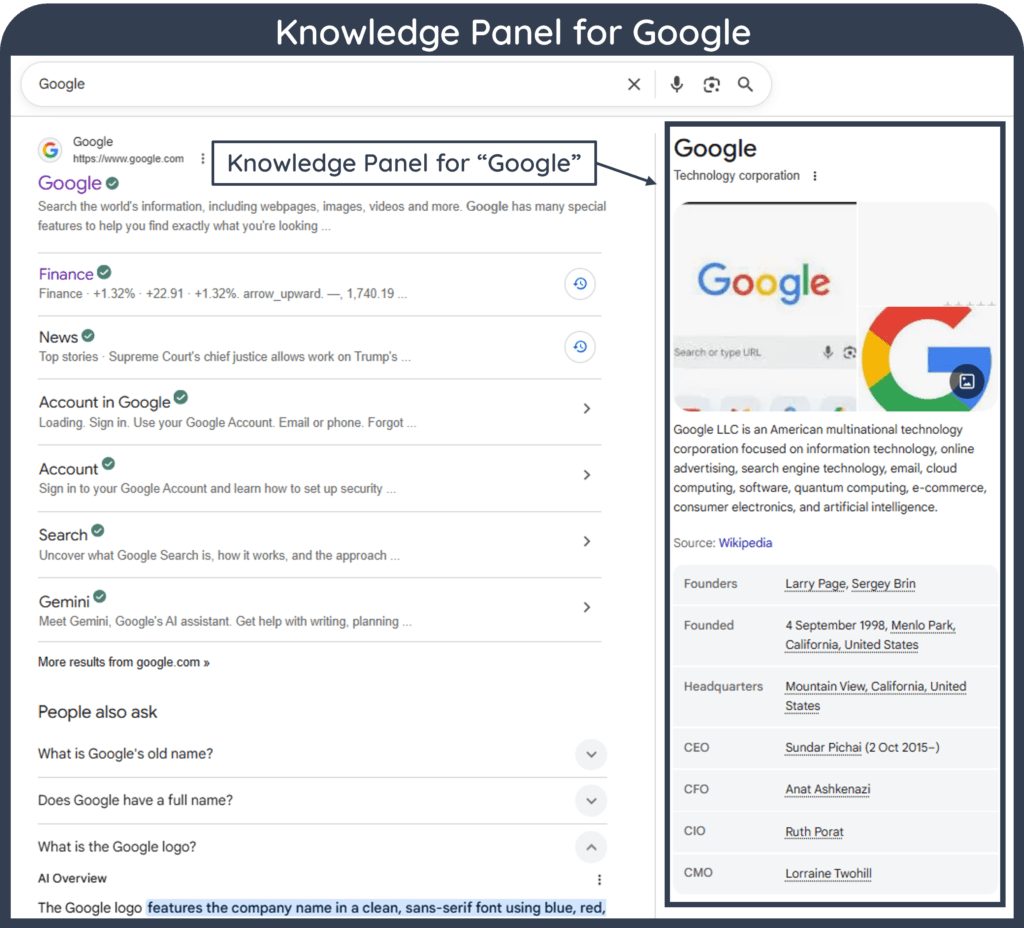
Google’s Knowledge Graph contains facts about entities such as people, places, organizations, and things, with information gathered from multiple sources.
How Entity Disambiguation Works
Entity-linking systems vary in design, but a common process can be simplified into three stages: identifying the mention, generating possible candidates, and determining which candidate best fits the context. Candidate generation followed by candidate ranking is a widely used entity-linking approach.
Consider this sentence:
1. Named Entity Recognition
The first step identifies words or phrases that may represent entities. This process is known as Named Entity Recognition (NER). It can identify mentions representing categories such as people, organizations, and locations. In the example, the system may detect:
- Jordan → Person
- Chicago → Place or organization
- Phoenix → Place or organization
NER identifies that Jordan is likely to represent an entity, but it does not necessarily establish which Jordan is being discussed.
2. Candidate Generation
The system then creates a list of possible entities that could match the mention. This is known as candidate generation. Possible candidates for Jordan could include Michael Jordan, Jordan Poole, the country of Jordan, and other people or organizations containing Jordan in their names.
The candidates may come from a knowledge base, entity index, or another structured collection.
3. Candidate Ranking and Disambiguation
The candidates are then evaluated against the surrounding context. In the example, terms such as scored, Chicago, Phoenix, and 1993 Finals strongly point toward Michael Jordan. The system can use these contextual clues, known relationships between entities, and other relevance signals to score the candidates and select the most likely match.
The result can then be connected to a unique entity record representing Michael Jordan rather than simply to the word Jordan.
The simplified process is:
Modern systems may combine some of these stages rather than performing them as three completely separate processes, but the model provides a useful way to understand how entity disambiguation works.
How Website Owners Can Help Search Engines Disambiguate Their Brand
Website owners cannot force a search engine to recognize an entity in a particular way. They can, however, provide clear and consistent information that makes the entity easier to identify. They should use a consistent official name across the homepage, About page, contact information, author profiles, structured data, and social profiles.
In WordPress, the website name can be added or checked under Settings → General → Site Title.
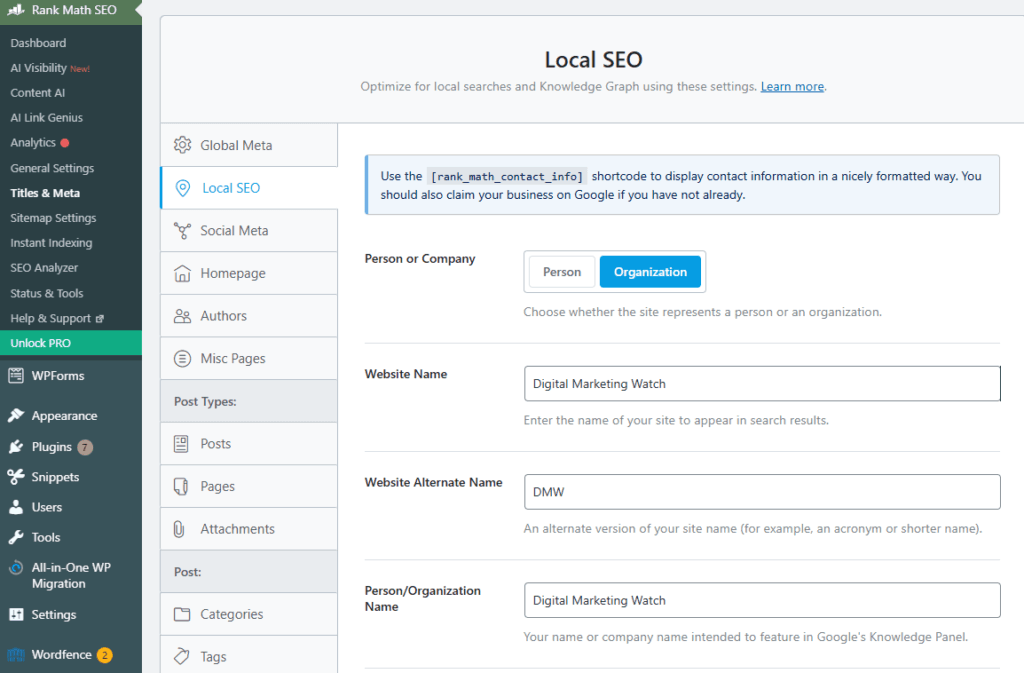
With the free Rank Math plugin, organization details can then be configured under Rank Math SEO → Titles & Meta → Local SEO → Person/Organization. If Organization is selected, fields such as Website Name, Website Alternate Name, Person/Organization Name, and Logo can be filled.
Social profiles can be added under Rank Math SEO → Titles & Meta → Social Meta. Here, one can add the official social profile URLs and use the Additional Profiles field for other authoritative entity URLs, such as a relevant Wikipedia or Wikidata page. Rank Math uses these URLs in the sameAs property of its structured data.
Author information can also be reviewed under Rank Math SEO → Titles & Meta → Authors, including the Author Archive Description.
Google specifically states that adding Organization structured data can help it better understand an organization’s details and disambiguate the organization in search results.
sameAs References
Schema.org’s sameAs property can point to another webpage that unambiguously represents the same entity, such as a genuine Wikidata entry, Wikipedia page, official website, or a social profile.
For example:
"sameAs": [
  "https://www.linkedin.com/company/example/",
  "https://www.wikidata.org/wiki/Q12345"
]
Google also recognizes sameAs links to relevant social-media and review profiles. A company can therefore maintain accurate official profiles on platforms such as LinkedIn, Instagram, or X and reference appropriate profiles in its structured data.

Use Appropriate Structured Data
Structured data provides machine-readable information about the entities represented on a webpage. Depending on the website, suitable Schema.org types can include Organization, LocalBusiness, Person, and Product.
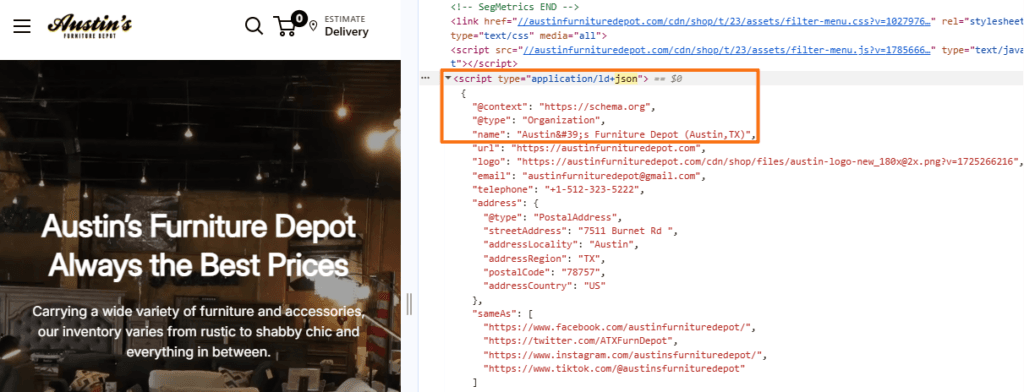
WordPress websites can often generate this structured data through an SEO or schema plugin rather than requiring every JSON-LD script to be written manually.
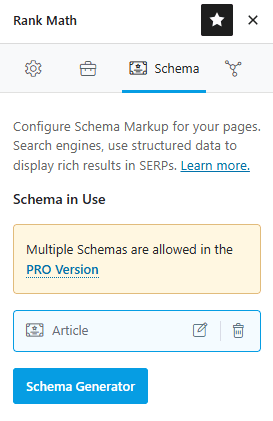
After implementation, the structured data can be checked by:
- Viewing the Page Source: Press Ctrl+U to open the page source in the browser.
- Locating the JSON-LD Markup: Search the source for
application/ld+jsonto find structured data scripts. - Inspecting the Rendered Markup: Open Inspect → Elements to check structured data that may have been added dynamically. Confirm that fields such as
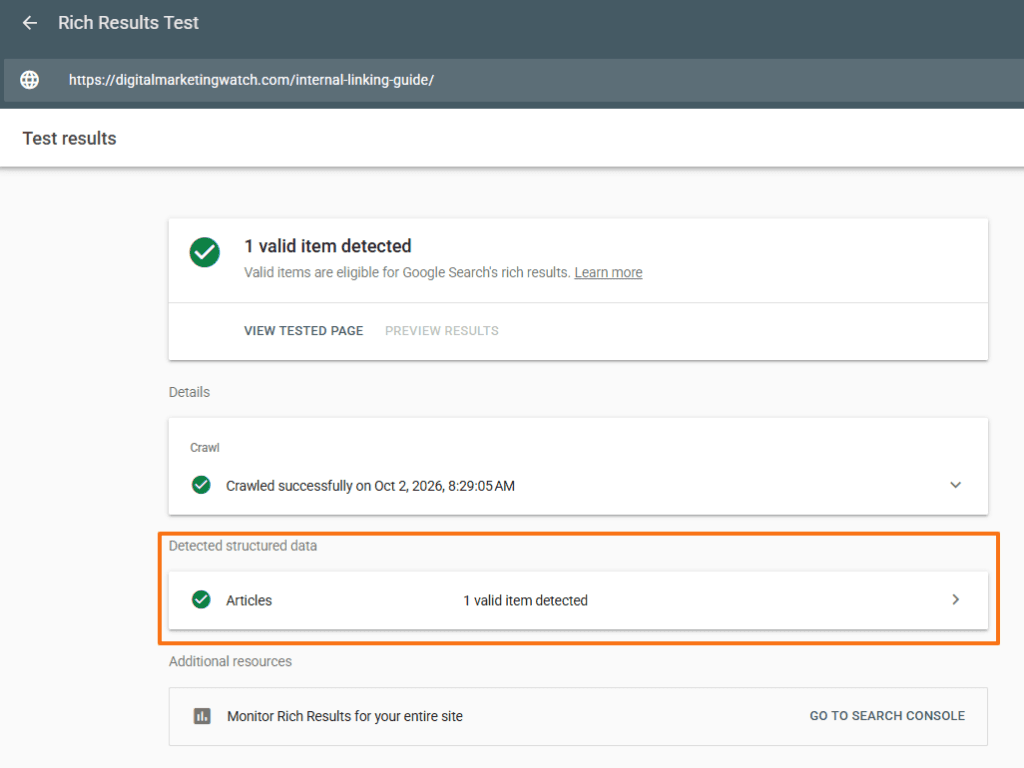
name,url, andsameAscorrectly describe the intended entity. - Validating the Markup: Google’s Rich Results Test can check supported rich-result markup, while Schema Markup Validator can be used for broader Schema.org validation.
Entity Disambiguation and Knowledge Panels
Clear organization information and structured data can help Google understand and disambiguate an entity, but they do not guarantee a Knowledge Panel. Google states that Knowledge Panels are generated automatically using information gathered from various sources across the web.
Real-World Applications of Entity Disambiguation
Entity disambiguation is useful wherever systems need to determine which real-world thing a name represents.
Ecommerce: A large catalog or marketplace may contain overlapping product, manufacturer, and brand names. Entity disambiguation helps a system determine whether Delta refers to a product from Delta Faucet or an unrelated entity such as Delta Air Lines.
Enterprise Search: Company documents may contain project code names, employee names, product names, and ordinary words that look identical. Disambiguation helps an internal search system determine which entity is intended from the surrounding context.
News and Media: Automated systems can distinguish stories about Paris Hilton from articles about Paris, France, helping news services group articles around the correct person, place, or event.
Frequently Asked Questions
Can entity disambiguation be performed without an external knowledge base?
Yes. A system can use context to determine that two meanings are different even without linking them to an external database. However, connecting a mention to a specific, unique entity record requires some form of entity collection, knowledge base, or identifier system.
How do search engines handle new entities that do not exist in their knowledge base yet?
A system may recognize that a name represents an entity without being able to connect it confidently to an existing record. Such entities can initially remain unlinked or be grouped with related mentions until enough reliable information is available to identify them more precisely.
Why is entity disambiguation important for ecommerce websites?
Ecommerce sites can contain thousands or millions of products with similar model names, brand names, descriptions, and attributes. Disambiguation helps search and recommendation systems connect a customer’s query with the intended product or brand rather than an unrelated item that happens to contain similar words.
How can website owners help Google disambiguate their entity?
Website owners can use consistent names, clear About and profile pages, accurate Organization or Person structured data, official social profiles, and appropriate sameAs references. Google specifically states that Organization structured data can help it understand and disambiguate organizations, but website owners cannot force Google to create or interpret an entity in a particular way.