
Key Takeaways
- Pageviews count webpage views, sessions group those views into visits, and users represent distinct visitors identified by the analytics system.
- GA4 records pageviews through page_view events, including some browser-history changes on dynamic websites without complete page reloads.
- High pageviews can indicate content interest, but require context from engagement, traffic sources, conversions, and other performance metrics.
- AI search can provide visibility without website visits, making citations, mentions, organic clicks, and referral quality important alongside pageview totals.
A pageview is recorded when an analytics system measures a webpage being viewed. If the same page is loaded again, another pageview can be recorded, even when the same person is viewing the same URL.
For example, if a visitor opens the homepage, that generates 1 pageview. If the visitor refreshes the homepage, the total becomes 2 pageviews. If the visitor then opens the About page, the visit has generated 3 pageviews.
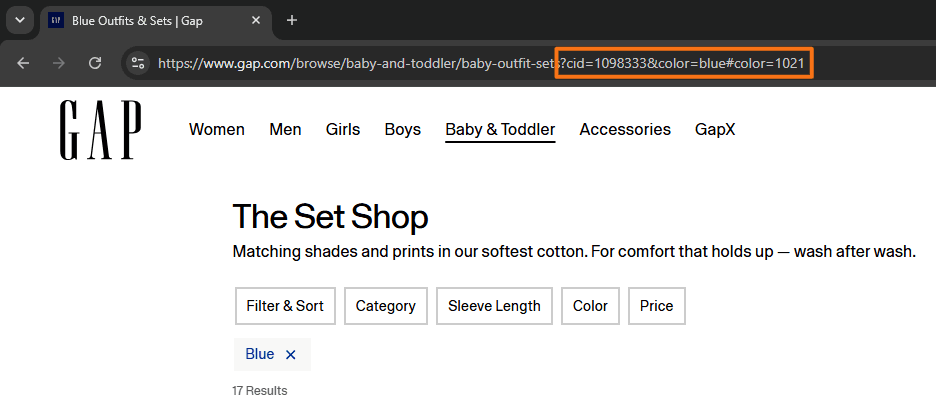
In Google Analytics 4 (GA4), pageviews are tracked using the page_view event. Google records this event when a page loads and can also record it when the page URL changes dynamically without a full page reload.
Note
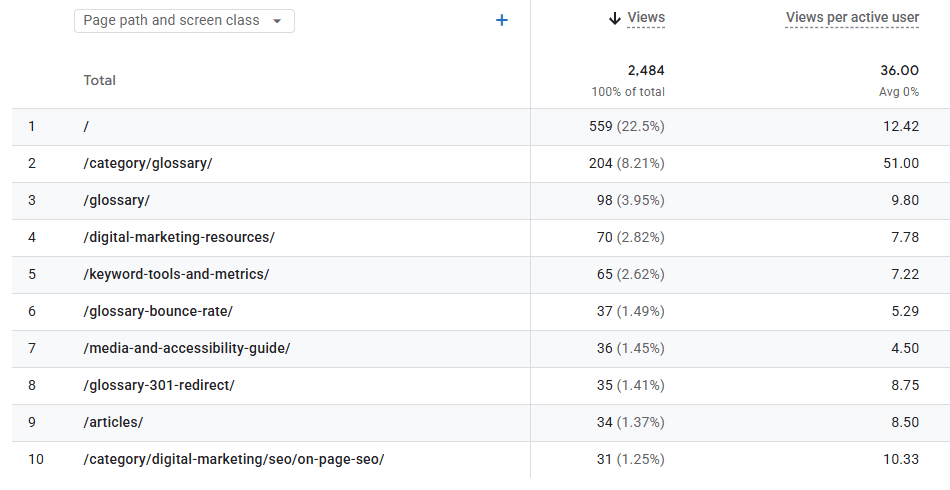
In GA4 reports, Google generally labels the combined page-and-screen metric Views. For websites, those views are populated by page_view events, and repeated views of the same page are counted separately.
Pageviews help show how often individual pages and the website’s content as a whole are being viewed. However, pageviews need to be interpreted in context. A large increase does not automatically mean that the website has gained more users, improved SEO performance, or generated more business. One visitor can generate many pageviews during the same visit.
Pageviews vs. Sessions
Pageviews and sessions measure different parts of website activity and are often analyzed together. However, unique users, sessions, and pageviews answer different questions, so pageviews should not be used as a substitute for audience size.
Pageviews
A pageview represents one viewing of a webpage. Repeated views of the same page can each be counted.
For example, a visitor:
- opens the About page;
- opens the Home page;
- returns to the About page.
This activity produces 3 pageviews, even though the About page was viewed twice by the same person.
Sessions
A session represents a period during which a user interacts with a website or app. One session can contain multiple pageviews and other measured events.
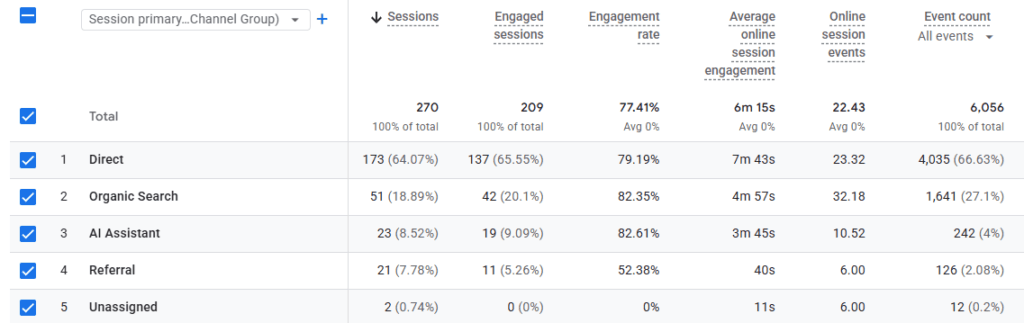
For example, if someone spends 15 minutes browsing five different pages, the activity can produce: 1 session + 5 pageviews
The relationship is therefore straightforward: one session can contain several pageviews, and one user can generate several sessions and many pageviews over time.
Why Pageviews Matter for SEO and Website Analysis
Pageviews provide useful information about content consumption, but they should be examined alongside metrics such as sessions, engagement rate, average engagement time, scroll behavior, conversions, and Search Console clicks and impressions. High pageviews do not automatically mean strong SEO performance.
- Measures Content Popularity: Comparing pageviews can reveal which articles, product pages, landing pages, or other resources receive the most viewing activity. This can help identify subjects and formats that attract substantial interest.
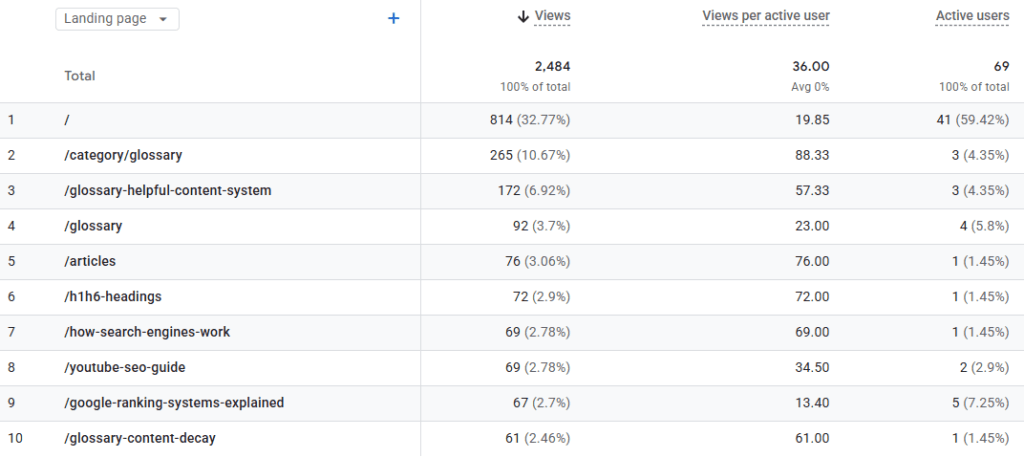
- Shows Top-of-Funnel Traffic: Increasing pageviews can indicate that more content is being discovered and consumed. For SEO analysis, this becomes more meaningful when pageviews are compared with organic sessions, search impressions, clicks, and traffic sources.
- Supports Engagement Analysis: A highly viewed page with strong engagement and useful downstream actions may be performing well. A highly viewed page with weak engagement may require investigation into content quality, intent alignment, navigation, or usability.
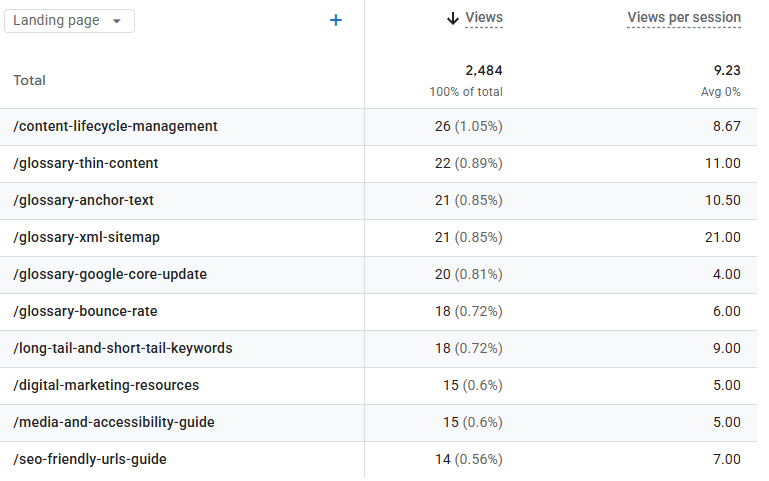
- Provides Internal Navigation Clues: Multiple pageviews within a session can indicate that visitors are exploring related content, potentially supported by effective internal linking. However, unusually high pageviews per session can also occur when visitors struggle to find information, so the metric should not automatically be interpreted as positive.
- Supports Advertising Revenue: Publishers that display advertisements can create more opportunities to serve ad impressions as pageviews increase. Actual revenue also depends on factors such as ad placement, fill rate, audience location, CPMs, and advertiser demand.
- Helps With Capacity Planning: Growing pageviews can indicate that a website is handling more activity. For technical planning, however, metrics such as concurrent visitors, server requests, bandwidth use, response times, and infrastructure load provide more precise information than pageviews alone.
Pageviews and SEO Rankings
Google’s public ranking documentation does not identify GA4 pageviews, bounce rate, or engagement time as direct ranking metrics. These analytics metrics are useful for understanding visitor behavior and improving content, but higher pageviews do not automatically produce higher search rankings.
Pageviews in the Age of AI Search
Organic search has traditionally generated substantial website traffic, but AI Overviews and other answer-focused interfaces can satisfy some information needs directly on the search results page.
AI Answers Can Reduce Some Click Opportunities
A 2025 Pew Research Center analysis found that users clicked a traditional Google search result on 8% of visits where an AI summary appeared, compared with 15% of visits without an AI summary.
This does not mean AI search universally cuts every website’s pageviews by the same percentage. The effect varies by query, industry, SERP layout, brand, and type of content. However, it shows why website owners increasingly need to look beyond pageviews alone when evaluating search visibility.
Search Visibility Can Exist Without a Pageview
A website may now receive value from appearing in AI Overview citations, AI-generated answers, traditional organic results, featured snippets, and other search features.
A citation or brand mention can increase visibility even when it does not immediately generate a website pageview.
High-Quality AI Referral Traffic
Google has stated that clicks from its AI-powered search experiences can be higher quality, meaning users who do click may be more likely to remain on the destination rather than quickly returning to Search. Google also reported that overall organic click volume to websites remained relatively stable year over year in its own data.
These claims apply specifically to Google’s reported Search data and should not automatically be extended to every AI platform.
Tools for Tracking Pageviews
Several analytics platforms can measure page-level activity, while behavior analytics tools provide additional information about what visitors do after a page loads.
Google Analytics 4
GA4 records pageviews using the page_view event and allows page performance to be analyzed alongside users, sessions, engagement, traffic sources, and key events.
Adobe Analytics
Adobe Analytics provides enterprise-level reporting for page activity, traffic sources, audience behavior, conversions, and customer journeys across digital properties.
Matomo
Matomo measures pageviews, visits, traffic sources, actions, and related website analytics. It is available through both cloud-hosted and self-hosted implementations.
WordPress Jetpack Stats
Jetpack Stats provides WordPress websites with a simpler traffic dashboard showing views, visitors, popular posts and pages, referrers, search terms, and other information. Jetpack counts a view when someone directly loads a post, page, or archive URL.
Frequently Asked Questions
Does a pageview count if a user refreshes the page?
Yes. Reloading a page can trigger another page_view event, so repeatedly refreshing the same URL can increase its pageview total. A pageview therefore does not represent a unique visitor.
What is the difference between a pageview and a session?
A pageview records one viewing of a webpage, while a session represents a period of website activity. A visitor who opens five pages during one visit can therefore generate one session and five pageviews.
Do bot visits and search crawlers count as pageviews?
It depends on whether the automated visitor reaches the analytics system and whether it is recognized as bot traffic. GA4 automatically excludes traffic from known bots and spiders, although this does not guarantee that every automated request will always be identified.
Why do GA4 pageviews differ from web hosting statistics?
Hosting systems can record requests directly at the server, while GA4 depends on analytics events being successfully sent from the website. Bot filtering, consent settings, blocked JavaScript, ad blockers, caching, tracking configuration, and different counting rules can therefore cause the totals to differ.
Does a higher number of pageviews mean a website is successful?
Not necessarily. Pageviews show how much viewing activity occurred, but success depends on the website’s purpose. Engagement, leads, purchases, subscriptions, revenue, returning users, and other outcomes may provide a better indication of whether that traffic is valuable.