Key Takeaways
- SERP monitoring regularly tracks rankings, competitors, locations, devices, and SERP features for defined queries over time.
- Unlike SERP analysis, monitoring emphasizes performance changes, while analysis examines search intent, competing pages, result formats, and content opportunities.
- Ranking movements provide early warning signals, but further investigation is needed to identify causes such as competitor improvements, indexing issues, or system updates.
- Effective monitoring combines rankings with impressions, clicks, CTR, Share of Voice, ranking distributions, and visibility across features such as AI Overviews.
SERP monitoring is the ongoing process of tracking how a website, its competitors, and important search features appear and change in search engine results pages (SERPs) for a defined group of search queries over time.
A SERP is the page a search engine displays after someone performs a search.
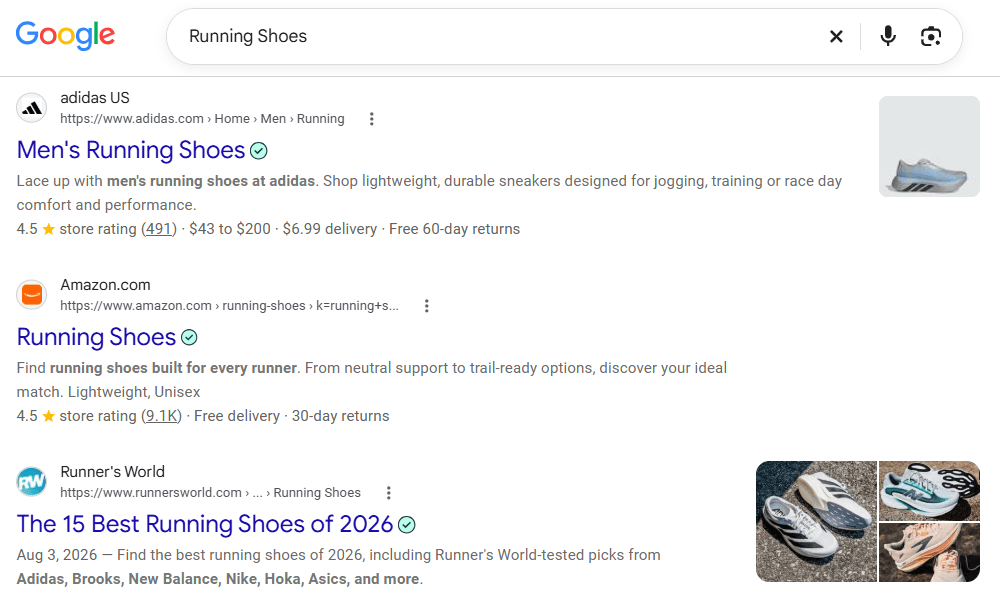
Instead of manually searching the same keywords every day, SERP monitoring tools can repeatedly track hundreds or thousands of queries and record changes in ranking positions, competitors, locations, devices, and SERP features. This creates a historical record showing whether search visibility is improving, declining, or remaining stable.
Consistent monitoring is useful because search results are not fixed. Rankings change as search engines update their systems, competitors improve their pages, new content enters the index, and search-result layouts evolve. Results can also vary by location, language, device, time, and personalization.
SERP Monitoring vs. SERP Analysis
SERP monitoring and SERP analysis both examine search results, but they answer different questions. Monitoring primarily tracks what changes over time, while analysis examines a SERP more deeply to understand search intent, competing pages, content formats, and ranking patterns.
For example, after an article is published, its target queries can be monitored to see whether rankings move from position 12 to position 6. Before writing or substantially updating that article, the SERP can be analyzed to determine whether high-ranking results are guides, product pages, videos, tools, or another type of content.
The distinction is not absolute. Monitoring can begin before publication to establish a baseline, while SERP analysis can be repeated later when refreshing content or investigating a ranking decline.
The Three Core Dimensions of SERP Monitoring
Effective SERP monitoring normally looks beyond a single ranking number.
1. Rank and Visibility Tracking
Rank tracking records the chronological movement of important keywords and URLs.
For example, if a commercial landing page falls from position 3 to position 12 for an important query, the change can trigger further investigation. Possible causes could include competitor improvements, content decay, indexing problems, technical changes, or a wider ranking-system update.
The ranking movement itself does not identify the cause. It acts as an early warning signal showing that something has changed.
2. SERP Feature Monitoring
Modern search results contain many elements beyond traditional blue links. Monitoring tools can track the appearance or disappearance of SERP features, which are special search-result formats such as AI Overviews, featured snippets, local packs, image and video results, shopping results, and knowledge panels.
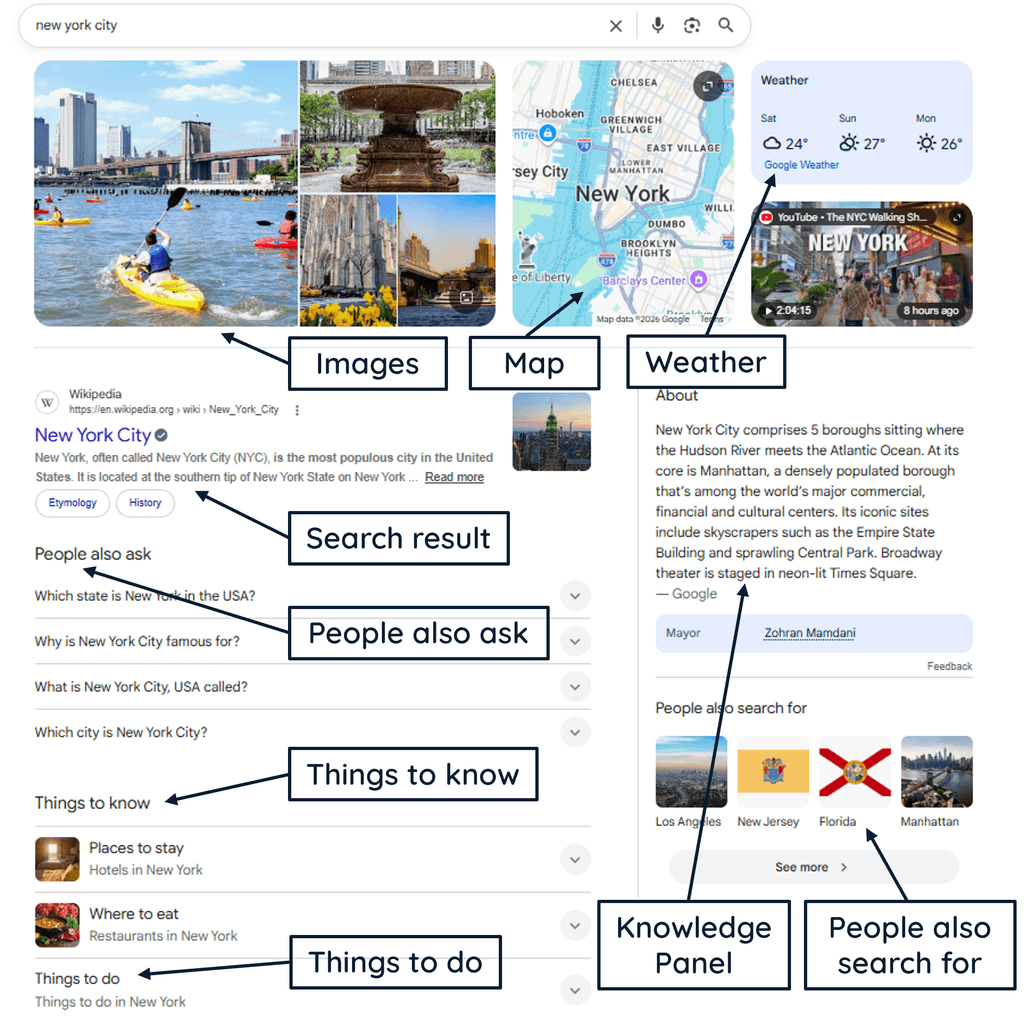
This matters because a page can keep approximately the same organic position while its actual screen visibility changes substantially. A newly introduced AI Overview, local pack, or other prominent feature may occupy considerable space above the traditional result.
Ahrefs Rank Tracker currently tracks 19 SERP features, including AI Overviews, featured snippets, local packs, images, videos, and knowledge panels.
3. Competitor Monitoring
SERP monitoring can also track how competing domains perform across the same keyword set. This can reveal when competitors gain or lose important rankings, new domains begin competing for target queries, rival sites capture featured snippets or other SERP features, and overall competitive visibility changes over time.
Monitoring shows what changed, while a deeper SERP or competitor analysis is needed to determine why the change occurred.
Why SERP Monitoring Is Important for SEO
SERP monitoring turns individual ranking checks into historical performance data that can support better SEO decisions.
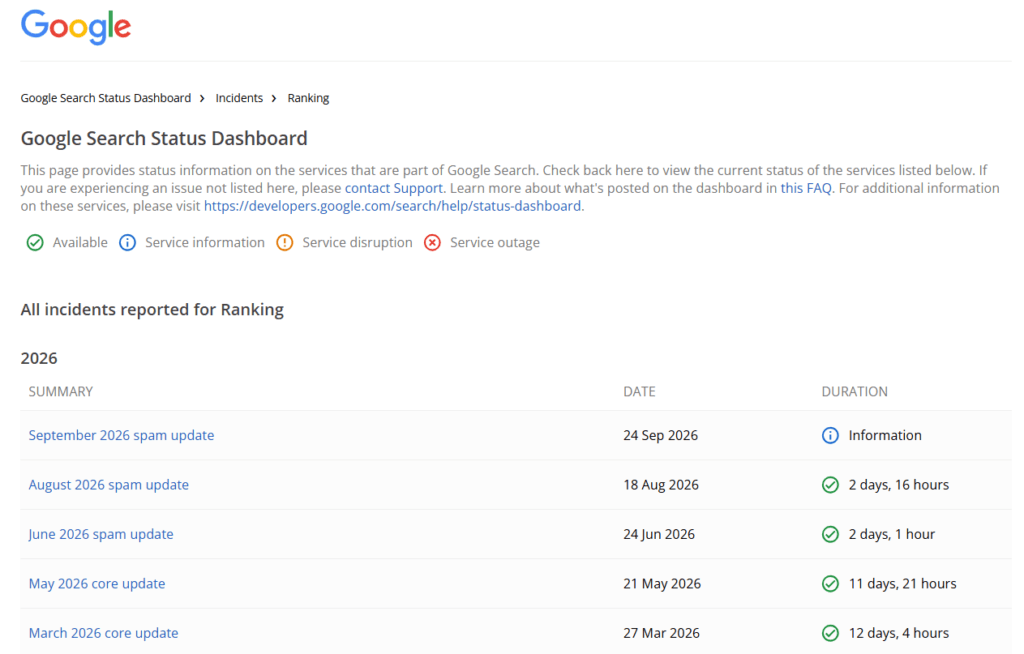
- Provides Early Warning of Ranking Changes: A sudden decline across many tracked keywords may indicate a wider problem worth investigating. Google’s Search Status Dashboard can then be checked to see whether the volatility coincides with a confirmed ranking update or Search incident.
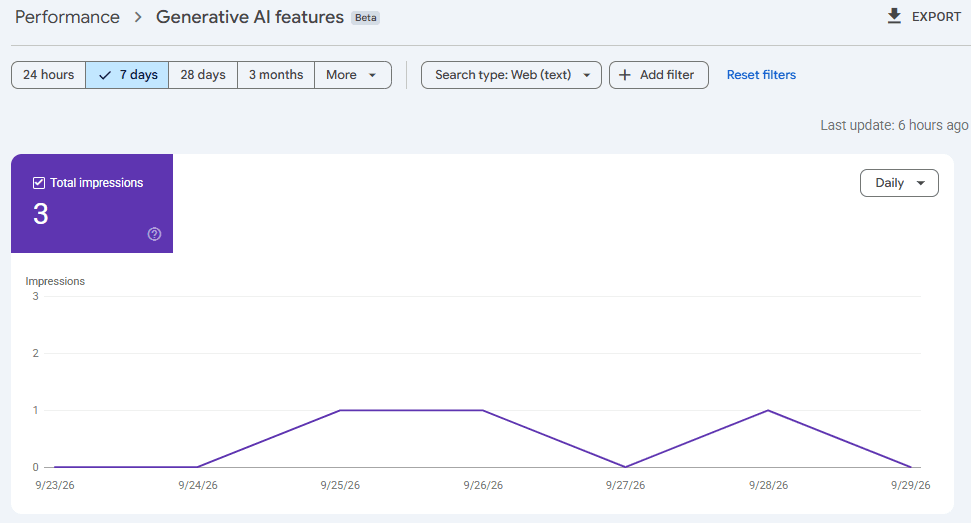
- Tracks AI Search Visibility: Search visibility increasingly extends beyond traditional organic links. Google Search Console now provides a dedicated Generative AI performance report covering impressions from AI Overviews and AI Mode, allowing website owners to monitor how often pages receive visibility in these AI-powered Search experiences.
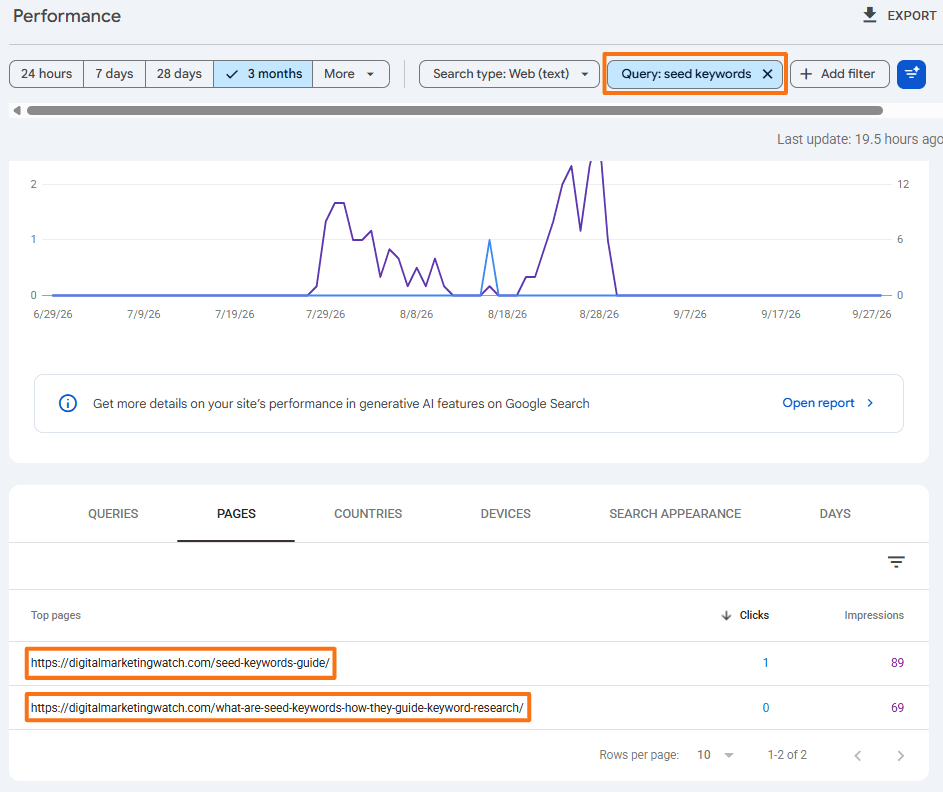
- Identifies Possible Keyword Cannibalization: If two or more URLs repeatedly replace one another for the same important query, the pattern may indicate overlapping targeting or keyword cannibalization. Monitoring identifies the pattern, although further analysis is required to confirm the problem.
- Tracks Changes in SERP Real Estate: Rankings alone do not show how much visible space a result receives. A new AI Overview, featured snippet, local pack, or shopping section can reduce the prominence of conventional organic results even when their numeric positions remain similar.
- Measures Local and Device Differences: Search results can differ according to geographic location and device type. Dedicated rank trackers can monitor the same keyword from different cities or devices instead of assuming one ranking represents every searcher.
- Finds Near-Miss Opportunities: Keywords ranking around positions 11–20 can be useful optimization candidates because they already have some visibility and may benefit from further improvement. Near-miss is an SEO working term rather than an official Google ranking category.
- Provides Competitive Intelligence: Tracking competitors alongside a website shows whether visibility is being gained or lost across an important group of queries rather than relying on isolated ranking checks.
Key SERP Monitoring Metrics
Looking at rankings alone can be misleading, so impressions, clicks, CTR, SERP features, device differences, and competitor movement should also be reviewed together.
Ranking Position
Ranking position shows where a webpage appears for a particular tracked query.
A dedicated rank tracker can repeatedly check a defined keyword, device, and location. Google Search Console instead reports average position, which can combine multiple appearances and should not be interpreted as a single fixed ranking. Google recommends focusing more on trends in impressions and clicks than on position alone.
Organic Impressions, Clicks, and CTR
Google Search Console reports impressions, clicks, click-through rate (CTR), and average position. These metrics help connect search-result visibility with actual user traffic.
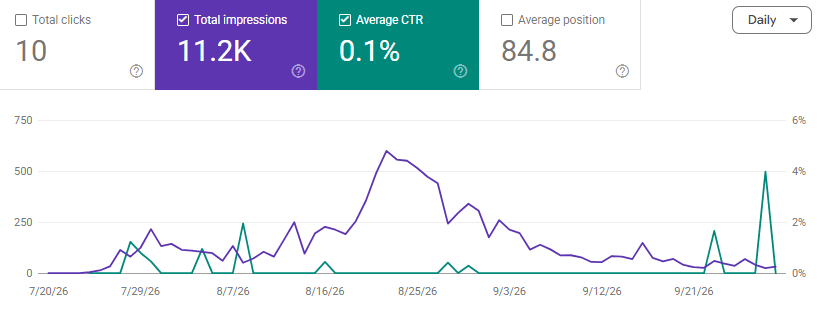
For example, a ranking increase that produces substantially more impressions but few additional clicks may justify examining the query intent, SERP layout, and visible search result.
Share of Voice
SEO Share of Voice (SoV) estimates how much search visibility or traffic a website captures across a defined group of keywords compared with other websites competing for those searches.
The exact calculation depends on the tool. Ahrefs calculates Rank Tracker SoV from the estimated clicks received by the tracked site compared with clicks going to all results across the tracked keyword set.
Semrush also offers Share of Voice, but its calculation weights search volume and estimated traffic. Its Visibility % is a separate metric and should not be treated as identical to Ahrefs SoV.
Ranking Distribution
Instead of watching every keyword individually, tracked keywords can be grouped into useful ranking ranges:
- Top 3: Positions 1–3
- Top 10: Positions 1–10
- Top 20: Positions 1–20
- Near-Miss: Positions 11–20
This quickly shows whether more keywords are moving toward stronger or weaker positions. Semrush’s Position Tracking reports, for example, provide ranking distributions including Top 3 and Top 10 groups.
SERP Feature Visibility
Monitoring can also record whether a website appears in or alongside important SERP features such as AI Overviews, featured snippets, local packs, images, and videos. This provides a broader picture than traditional keyword positions alone.
Tools for SERP Monitoring
Different tools provide different views of search performance.
Google Search Console
Google Search Console provides first-party Google performance data, but it is not the same as a conventional fixed-keyword rank tracker. Its rankings and metrics represent actual aggregated Search performance.
In Google Search Console, navigate to Performance → Search results. The report provides detailed information on:
- Clicks: The number of times users clicked a search result leading to the website.
- Impressions: The number of times the website appeared in Google Search results.
- Average CTR: The percentage of impressions that resulted in a click.
- Average Position: The average position of the topmost result from the property across recorded impressions.
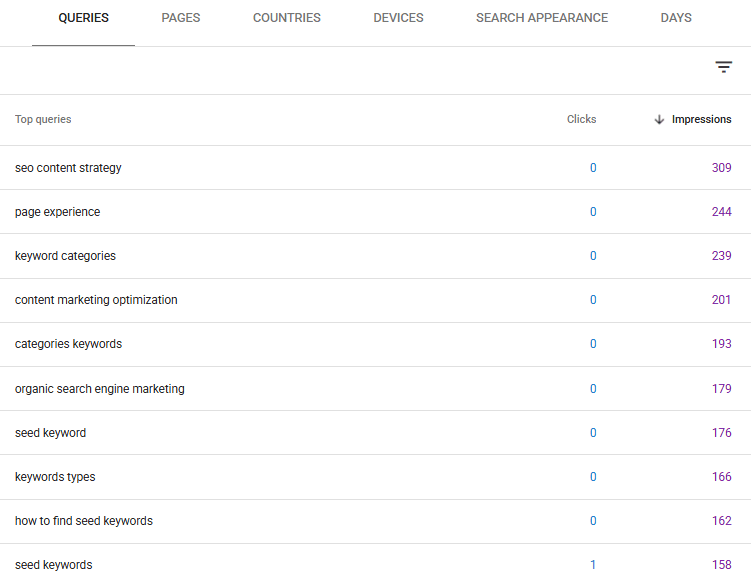
- Queries: The search terms for which the website appeared.
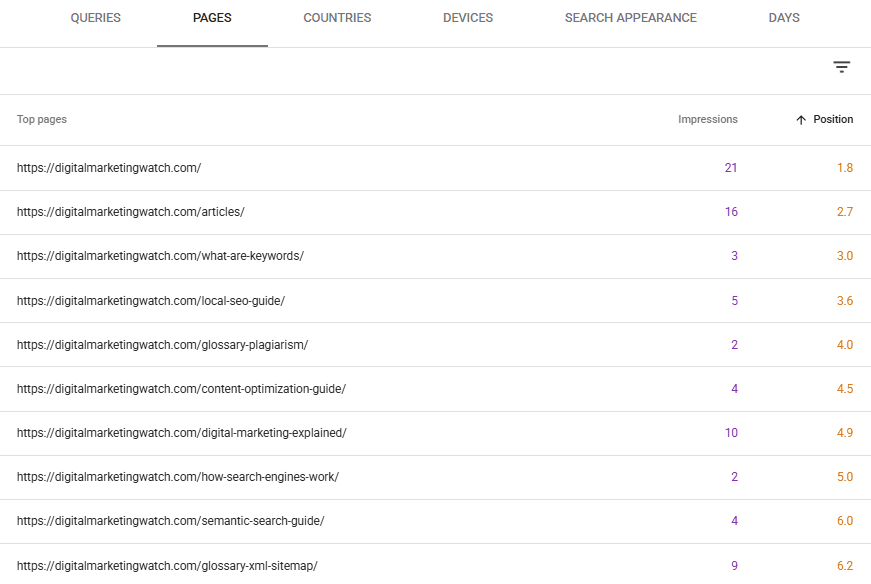
- Pages: The individual URLs receiving search visibility and clicks.
- Countries: The geographic locations from which search activity originated.
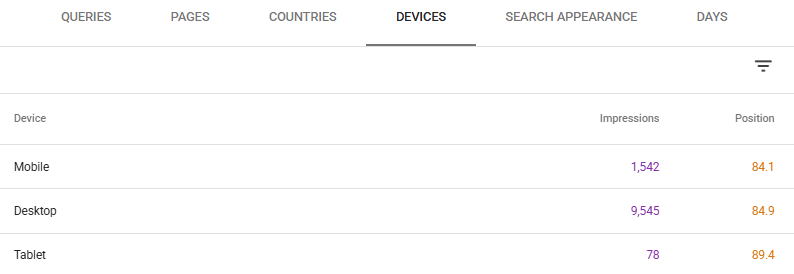
- Devices: Performance segmented by desktop, mobile, and tablet devices.
Google also provides a separate Generative AI performance report for AI Overviews and AI Mode impressions.
Bing Webmaster Tools
Bing Webmaster Tools → Search Performance provides impressions, clicks, CTR, and average-position information. Bing currently reports visibility across sources including Web and Chat, News, Images, Videos, and Knowledge Panel.
Third-Party Rank Tracking Tools
Platforms such as Ahrefs, Semrush, and Moz provide dedicated rank-monitoring capabilities. Ahrefs can track rankings by location and device, compare competitors, maintain ranking history, and monitor SERP features including AI Overviews.
Similarly, Semrush Position Tracking provides daily keyword monitoring, geographic and device targeting, competitor tracking, ranking distributions, SERP features, AI Overviews, and AI-search monitoring.
Frequently Asked Questions
How is SERP monitoring different from SERP analysis?
SERP monitoring tracks changes over time, such as keyword movements, competitor visibility, and SERP feature changes. SERP analysis examines the search results in greater depth to understand search intent, ranking competitors, content formats, titles, and opportunities for creating or improving content.
What is Share of Voice (SoV) in search tracking?
SEO Share of Voice estimates how much visibility or potential search traffic a website captures across a selected group of keywords relative to competing websites. The precise formula varies between SEO platforms, so SoV values from different tools should not automatically be compared directly.
What is a near-miss keyword tier?
A near-miss keyword usually refers to a query for which a page ranks just outside the strongest organic positions, often around positions 11–20. These keywords can be useful optimization opportunities because the page already has some relevance and visibility but may need further improvement to compete for higher positions.
Why do my search rankings change from day to day?
Rankings can fluctuate because of ranking-system changes, newly indexed content, competitor changes, location, device, language, personalization, and ordinary SERP updates. Google also notes that results can differ over time and between users because of context and changes across its systems.
Can I see what my website looks like to a searcher in a different city?
Yes. Dedicated rank-tracking tools can monitor or simulate rankings from specific geographic locations. For example, Ahrefs supports tracking from country level down to cities and ZIP codes, while Semrush Position Tracking can target locations down to postal-code level. Exact results seen by an individual user may still vary because search engines consider additional contextual signals.