
Key Takeaways
- Doorway pages target similar search queries with substantially similar content, funneling visitors toward one more useful destination.
- Google classifies doorway abuse as a spam-policy violation, potentially causing ranking suppression, reduced visibility, or manual actions.
- Location, service, and programmatic pages are not automatically doorway pages when they provide distinct, useful information and function as destinations.
- Fixes include consolidating overlapping pages, strengthening legitimate pages with specific value, improving site hierarchy, and removing related spam tactics.
Doorway pages are webpages or websites created primarily to rank for closely related searches and funnel visitors through intermediate pages that provide less value than the final destination. Google refers to this practice as doorway abuse and classifies it as a violation of its spam policies.
Doorway pages often target different cities, locations, services, or closely related keyword variations while ultimately leading visitors toward substantially the same destination. They may exist on one website or across several domains created to expand visibility for similar searches.
For example, a local plumbing company might create separate pages for “Emergency Plumber Dallas,” “24-Hour Plumber Dallas,” and “Urgent Plumbing Dallas” even though all three pages contain almost identical information and direct visitors to the same general booking page.
Google specifically identifies several patterns as doorway abuse, including multiple domains with slight variations, city- or region-specific pages that funnel visitors to one destination, pages created mainly to lead visitors toward the actually useful part of a website, and pages that are largely similar.
How Doorway Pages Work
Doorway pages attempt to increase a website’s presence in search results by creating multiple entry points for queries that could often be served by one stronger destination.
Doorway pages can take different forms, but they often share several characteristics that reveal their main purpose: capturing search visibility rather than serving as useful standalone destinations.
- Highly similar pages: Large groups of pages may use the same structure and information while changing only a city, product, service, or keyword.
- Narrow query targeting: Each page is optimized around a slightly different search phrase so that the website can appear for more variations of essentially the same intent.
- Funneling behavior: Instead of fully satisfying the search query, the page directs visitors toward another page where the useful content, booking system, product inventory, or service information actually exists.
- Multiple domains: Doorway abuse can also involve several websites or domains with slightly different names or homepages that ultimately send visitors toward the same business or destination.
Thin content and keyword stuffing sometimes accompany doorway pages, but they are not requirements. Doorway abuse also does not require an automatic redirect. In simple terms, a page can still be a doorway page even if it contains substantial content and sends users to another page through normal links rather than an automatic redirect.
Google treats deceptive automatic redirects separately under its policy on sneaky redirects.
The defining issue is that the page exists mainly to capture search traffic and act as an unnecessary intermediate step, rather than functioning as a useful destination in its own right.
Examples of Doorway Pages
Doorway abuse can appear in several different forms.
Location pages funneling to one service page: A company creates hundreds of pages targeting different cities, but each contains nearly identical information and directs visitors to the same general service or contact page.
For example:
- Plumber in Austin → Generic plumbing booking page
- Plumber in Dallas → Generic plumbing booking page
- Plumber in Houston → Generic plumbing booking page
Programmatic SEO is not automatically doorway abuse. Pages created at scale can be legitimate when each serves a distinct search need and provides useful, differentiated information. However, location pages that add little local value and mainly exist to capture geographic searches can resemble Google’s doorway-abuse examples.
Here are some examples of doorway abuse:
- Keyword-variation pages: A travel website creates separate pages for “Cheap Flights to Paris,” “Affordable Flights to Paris,” and “Low-Cost Flights to Paris,” even though each page contains substantially the same content and leads to the same booking results. A similar illustrative example of this scenario is shown in the introduction.
- Multiple domains: A business registers several domains targeting slightly different queries or areas solely to occupy more search-result positions and route visitors back to one central website.
- Artificial category pages: An ecommerce website creates hundreds of near-identical category pages for small keyword variations even though the inventory, filters, information, and user experience are essentially the same.
In the illustration shown above, if the pages exist mainly as search entry points rather than useful categories within a clear, browsable hierarchy, they may constitute doorway abuse.
Google’s current policy explicitly mentions multiple similar domains, city- or region-targeted pages that funnel users to one destination, and largely similar pages created primarily as search entry points.
Doorway Pages vs. Landing and Location Pages
A webpage does not become a doorway page simply because it targets a particular location, product, service, or search query. The important distinction is whether the page provides a useful destination in its own right.
A legitimate location page might contain the actual branch address, opening hours, telephone number, local staff information, directions, parking details, photographs, services available at that location, local pricing, and other information that genuinely differs from another branch.
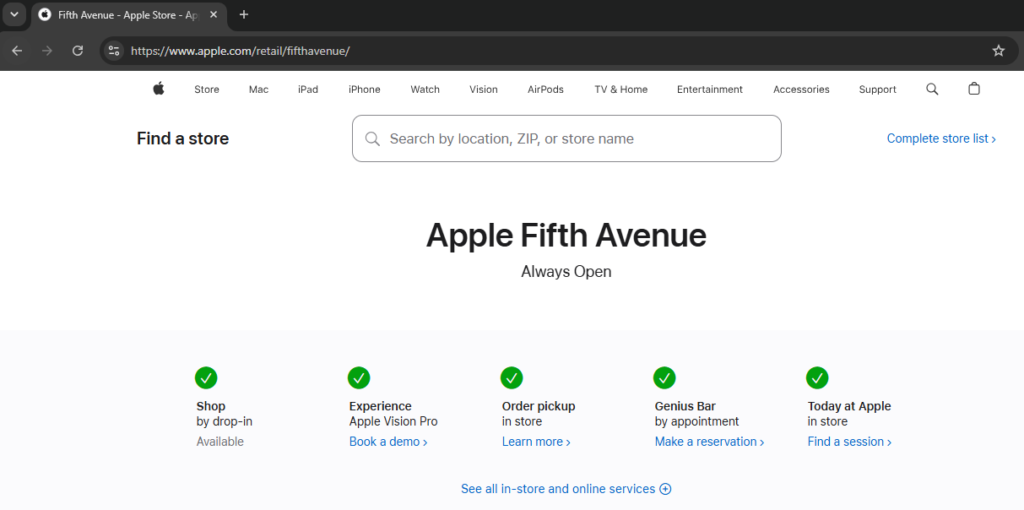
Similarly, an ecommerce landing page can legitimately target a narrow category when it provides a distinct product selection, filters, comparisons, availability, or information that satisfies a particular shopping need.
A doorway page, by contrast, primarily exists to capture a query and move the visitor elsewhere, with little independent reason for the page to exist.
This distinction is particularly important for businesses using templated or programmatic pages. Similar layouts do not automatically make pages doorway pages if each page serves a genuine purpose and provides sufficiently useful, specific information.
How Doorway Pages Affect SEO
Google says sites that violate its spam policies may rank lower or disappear from search results. Violations can be detected automatically or through human review, which can result in a manual action.
Possible consequences include:
- individual doorway pages losing rankings;
- groups of substantially similar pages being suppressed;
- wider portions of a website losing search visibility;
- manual actions in serious cases;
- large numbers of low-value or duplicate URLs making crawling less efficient, particularly on large or frequently updated sites;
- poorer user experience when searchers repeatedly encounter pages that do not directly satisfy their needs.
Google’s Manual Actions documentation also lists doorways among examples of pages that provide little or no added value.
Doorway pages can overlap with other spam techniques such as keyword stuffing, scaled content abuse, cloaking, link spam, or sneaky redirects, but each of these practices has its own definition under Google’s spam policies.
How to Fix Doorway Pages
Fixing doorway pages requires addressing why the pages exist, rather than merely rewriting a few sentences or changing titles to make them appear different.
- Identify substantially similar pages. Review groups of URLs targeting small location, service, or keyword variations and determine whether they actually serve distinct user needs.
- Evaluate each page independently. A page should provide enough useful information or functionality to justify its existence even when reached directly rather than through Google Search.
- Consolidate unnecessary pages. When several URLs satisfy essentially the same intent, useful information can be combined into one stronger destination. Retired URLs can then be redirected appropriately where necessary.
- Improve legitimate location and service pages. Pages that genuinely represent separate branches, services, or product groups should include information specific to those entities rather than merely swapping place names or keywords.
- Improve site hierarchy and navigation. Relevant pages should fit naturally within categories, menus, filters, internal links, and other browseable website structures instead of existing mainly as search-engine entry points.
- Remove accompanying spam tactics. Keyword stuffing, cloaking, manipulative redirects, or other violations should be corrected separately if they are also present.
If Google has issued a manual action, the underlying problem should be corrected before requesting reconsideration through the Manual Actions report. Google recommends providing examples of problematic content that was removed and useful content that was added.
Frequently Asked Questions
What makes a page a doorway page?
A page may be considered a doorway when it is created primarily to rank for a particular query or a set of closely related queries and acts as a less-useful intermediate step toward another destination. Similar design alone is not enough; the page’s purpose, usefulness, and relationship with other pages matter.
Would doorway pages be classified as a black-hat SEO tactic?
Doorway pages are generally regarded in the SEO industry as a black-hat tactic because they are intended to manipulate search visibility rather than provide distinct user value. Google formally classifies doorway abuse as spam.
What is the difference between a landing page and a doorway page?
A legitimate landing page is designed to satisfy a particular visitor need and provides useful information, products, services, or functionality directly on that page. A doorway page primarily exists to capture search traffic and funnel visitors toward another destination that contains the genuinely useful experience.