
Key Takeaways
- SERP scraping automates extraction of rankings, ads, snippets, local results, and other search-result data at scale.
- Third-party SERP APIs collect and structure results, commonly as JSON, for rank tracking, competitor analysis, reporting, and dashboards.
- Search-result data is time-specific and can vary by location, language, device, personalization, and later page changes.
- Legal and contractual risks depend on access controls, terms of service, copyright, privacy, data use, and applicable jurisdiction.
SERP scraping is the automated process of extracting data—such as organic links, ads, snippets, and local results—from search engine results pages using specialized bots or tools.
SERP scrapers are used to collect search-result data at scale for tasks such as rank tracking, competitor analysis, keyword research, local SEO monitoring, SERP-feature analysis, and market research. They save time compared with checking individual queries manually and make it easier to compare results across keywords, locations, devices, and dates.
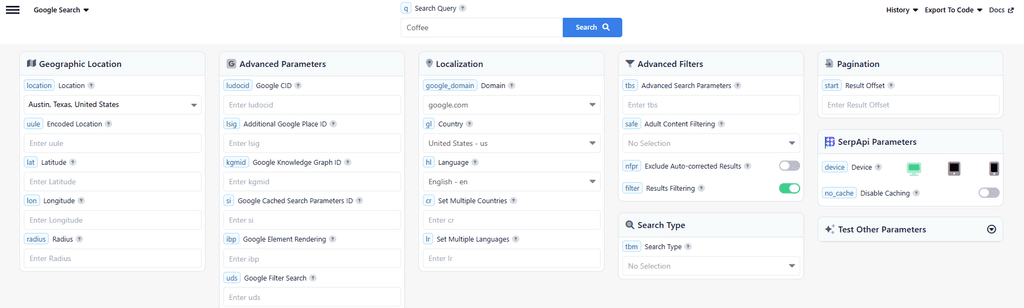
Third-party SERP APIs provide a managed way to collect and structure search-result data for specified keywords, locations, languages, and devices. Depending on the provider, they can return rankings, titles, URLs, snippets, ads, and SERP features as structured data, commonly in JSON format.
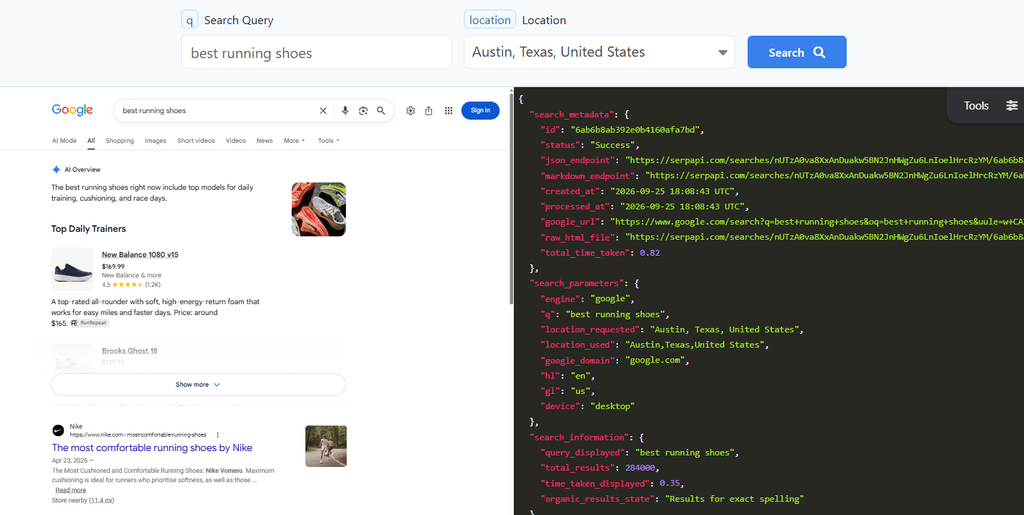
The returned JSON can then be parsed to extract only the fields needed for analysis, reporting, or storage. That data may be saved to spreadsheets or databases, compared across searches, or used in dashboards and rank-tracking workflows.
Third-Party vs. Official SERP APIs
Most SERP APIs are third-party services, not APIs provided by Google, Bing, or other search engines. Third-party SERP API providers collect search-result data and return it in a structured format so businesses, marketers, researchers, and software tools can track rankings, analyze competitors, monitor SERP features, and power search-based applications.
Official search APIs, by contrast, are provided directly by the search engine and operate under its own access rules and limitations. For example, Google’s Search Researcher Result API is an official Google API intended for approved, noncommercial research rather than general commercial rank tracking.
Common Use Cases of SERP Scraping
SERP APIs are most useful when teams need raw search-result data and greater control over how it is collected and used. They can support custom rank trackers and dashboards, large-scale keyword monitoring, location/device comparisons, and integration with databases, BI tools, or machine-learning systems. They are also valuable when a business needs to track specific SERP features, combine search data with proprietary datasets, or power its own search-data product or service.
SERP scraping supports several SEO, competitive research, market analysis, and AI applications by collecting search-result data at scale.
- Rank Tracking: Measuring how specific keyword positions change over time across different regions and devices.
- Competitor Analysis: Monitoring competitors’ rankings, page titles, ad placements, content structures, and overall search visibility.
- Market Research: Collecting pricing trends, product listings, and emerging consumer topics from search results.
- SERP Feature Monitoring: Tracking visibility across features such as featured snippets, People Also Ask boxes, and local map results.
- AI Grounding: Supplying recently collected search-result data to AI applications or agents so they can use more recent web information when generating responses.
The Broader Scope of Scraping
Scraping is not limited to extracting data from search engines. It encompasses the automated collection of public data across the entire digital ecosystem, including:
- E-Commerce Monitoring: Scraping marketplaces to track shifts in competitor pricing and product stock levels.
- Social Media Sentiment: Extracting public posts and reviews to analyze brand reputation and consumer trends.
- Real Estate Tracking: Collecting property prices, availability, listing changes, and other publicly available real-estate data for market analysis.
- Lead Generation: Collecting publicly listed business information from directories and map listings, subject to privacy requirements and website terms.
How SERP Scraping Works
SERP scraping can be performed through a custom scraper or a managed SERP API. The following steps describe a typical API-based SERP scraping process.
- The Search Request Is Submitted: A developer sends a keyword together with settings such as the search engine, country, language, location, device type, and result page.
- The API May Manage Page Access: Depending on the provider, the service may handle automated browsers, proxy routing, location targeting, request retries, and changes to search-page layouts, reducing the need to maintain a separate scraper.
- The Search Results Are Loaded: Depending on the provider and search feature, the service retrieves the requested results and may use browser rendering or other collection methods when dynamic content must be processed.
- Important Elements Are Extracted: The service identifies organic listings, advertisements, titles, URLs, descriptions, featured snippets, People Also Ask questions, local results, and other supported SERP features.
- The Results Are Structured: Instead of returning an entire page of difficult-to-read HTML, the API normally organizes the information into JSON fields such as ranking position, title, link, description, and result type.
- The Data Is Delivered to the Application: The structured results can be sent directly to rank-tracking tools, SEO dashboards, competitor reports, keyword-research systems, databases, or spreadsheets.
SERP data represents a time-specific snapshot and may vary by location, language, device, personalization, and later changes to the results page.
How a SERP API Simplifies the Process
A custom SERP scraper requires developers to retrieve search results, handle access problems, maintain extraction rules when search layouts change, and convert raw results into usable data. A managed SERP API handles much of this technical work and returns structured output that applications can analyze directly.
Depending on the provider, the API may manage browsers, servers, proxies, retries, request limits, and location targeting. This reduces the need to build and maintain separate browser-automation tools such as Playwright or Puppeteer. Providers also update their systems as search-result layouts and HTML structures change.
Instead of returning an entire HTML page, a SERP API can organize information such as rankings, titles, URLs, descriptions, ads, local results, and featured snippets into structured fields. It can also process large sets of keywords across different locations, languages, and devices and send the resulting data to dashboards, databases, spreadsheets, or reporting tools.
SERP API service providers such as SerpApi, Bright Data SERP API, DataForSEO, and Oxylabs Web Scraper API provide different combinations of localization, structured extraction, search-engine coverage, and other features.
The simplified process is:
How Non-Technical Users Can Access SERP Data
Non-technical users do not need to write raw code to run a SERP API. Services such as SerpApi and ScraperAPI provide dashboards or visual API playgrounds that make it easier to configure and test requests.
- Create an Account: Register for an account or trial and obtain an API key.
- Open the Visual Interface: Access the platform’s playground or dashboard.
- Enter the Search Settings: Add the search term and select available settings such as location or language.
- Run the Search: View the structured results and copy, export, or download the available data where the provider supports it. JSON results can also be converted into formats such as CSV for analysis in spreadsheet software.
Legal Considerations and Anti-Scraping Controls
Web scraping is not automatically legal or illegal. In the United States, collecting publicly accessible factual information may be lawful in some circumstances, but legality depends on access controls, contractual terms, copyright, privacy, and how the data are used. This overview focuses mainly on United States law and is not legal advice.
Is SERP Scraping Legal?
Collecting publicly accessible factual information may be lawful in some circumstances. In hiQ Labs v. LinkedIn, the Ninth Circuit held at the preliminary-injunction stage that hiQ had raised serious questions about whether accessing publicly available LinkedIn profiles was “without authorization” under the Computer Fraud and Abuse Act. The decision concerned the specific facts of that dispute and did not create a general right to scrape every publicly accessible website.
Under the Supreme Court’s Feist decision, raw facts themselves are not protected by copyright, although an original selection or arrangement of factual information may be protected. Extracting factual fields such as ranking positions therefore raises different copyright issues from reproducing creative descriptions, images, reviews, or other protected expression.
In Google LLC v. SerpApi LLC, a federal court dismissed Google’s DMCA (Digital Millennium Copyright Act) claims on July 20, 2026. Claims involving search results without copyrighted content were dismissed without leave to amend, while Google was allowed to amend claims involving allegedly copyrighted content. The ruling did not establish that bypassing anti-scraping protections generally is lawful.
Terms of Service and Privacy
Even when SERP scraping does not violate computer-access or copyright law, it may conflict with a website’s contractual terms. Google’s machine-generated traffic policy identifies unauthorized automated queries, including scraping search results for rank checking, as prohibited automated traffic. Google’s current Terms of Service also restrict bypassing protective measures and using automated means in violation of machine-readable instructions. Scraping personal information may also create privacy obligations under laws such as the GDPR.
Is Academic Scraping Legal?
Academic or noncommercial scraping is not automatically legal. Research may support a fair-use argument, but the analysis depends on the purpose and character of the use, the nature of the copyrighted work, the amount copied, the effect on the potential market, access restrictions, privacy implications, and other applicable laws.
Eligible researchers may instead apply for Google’s Search Researcher Result (SRR) API, which provides controlled access to search results for approved research.
Google’s Anti-Scraping Defenses
Google uses several controls to identify and restrict automated search traffic:
- Traffic Analysis: Google monitors traffic patterns and may restrict networks that appear to be sending automated searches.
- CAPTCHA Verification: Suspicious automated traffic may trigger a reCAPTCHA challenge before additional searches are allowed.
- Temporary Restrictions: Repeated automated traffic can result in warning pages or temporary search restrictions.
- SearchGuard: Filings in Google v. SerpApi describe Google’s allegation that its SearchGuard technology detects and restricts automated access to certain Search content.
Using authorized APIs, collecting only necessary data, avoiding private or authenticated information, respecting applicable access rules, and limiting reproduction of protected content may reduce some technical, contractual, privacy, or copyright risks. However, these practices do not create a legal safe harbor or guarantee that a particular scraping activity is lawful. Commercial or large-scale SERP scraping may require advice from qualified legal counsel.