
Key Takeaways
- Query fan-out expands one user question into multiple related searches covering subtopics, context, comparisons, freshness, or likely next steps.
- The process occurs behind the scenes: systems decompose the request, generate synthetic queries, retrieve information concurrently, and combine relevant results.
- Query fan-out extends, rather than replaces, semantic search, query expansion, ranking, and other traditional retrieval technologies.
- SEO visibility increasingly depends on useful topic coverage, clear structure, internal linking, original value, and performance across related information needs.
Query fan-out is an AI search and retrieval technique in which a system expands a user’s original question into multiple related queries or subtopics, retrieves information for those searches, and uses the combined results to help produce a more comprehensive response.
Google uses the term query fan-out to describe how AI Mode can expand a question into multiple related searches. Instead of relying only on the exact wording of a user’s prompt, AI Mode can break a complex question into several related searches and run them concurrently. Google has also stated that AI Overviews and AI Mode may use query fan-out as part of their retrieval process.
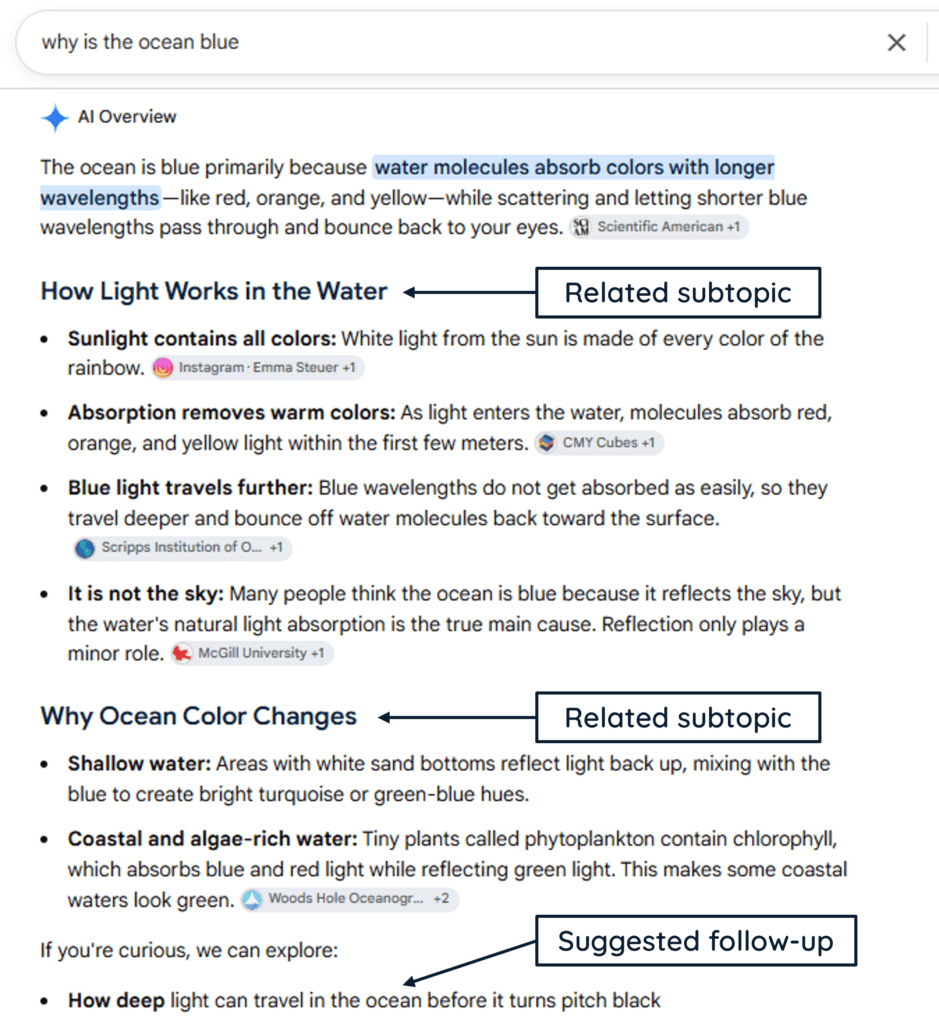
These generated searches are often described as fan-out queries or synthetic queries in AI-search and SEO discussions because they are created automatically by the AI system rather than typed directly by a user. They may explore reformulations, supporting background information, comparisons, freshness requirements, geographic context, or logical next steps needed to answer the original question more completely.
Query fan-out does not replace traditional search technologies such as semantic search or query expansion. Instead, it extends retrieval by allowing one complex request to branch into several related searches.
Understanding the possible subtopics behind query fan-out also helps explain how content can be made more useful for AI-driven search—without creating a separate page for every possible synthetic query.
Query Fan-Out Happens Behind the Scenes
Query fan-out is a backend retrieval process. A user submits one question, while the system can generate and execute multiple related searches without displaying every synthetic query individually. The exact queries and number of searches can vary from one request to another.
How the Query Fan-Out Process Works
Query fan-out can be understood as a multi-stage process in which the system first interprets the user’s request, then expands retrieval before constructing the final answer.
Step 1: Understand and Decompose the Question
The system first analyzes the original prompt to identify its main topic, intent, constraints, implicit needs, and supporting information requirements.
A simple factual question may require little expansion, while a complex prompt can contain several different information needs. Suppose the original query is: What is an LLM?
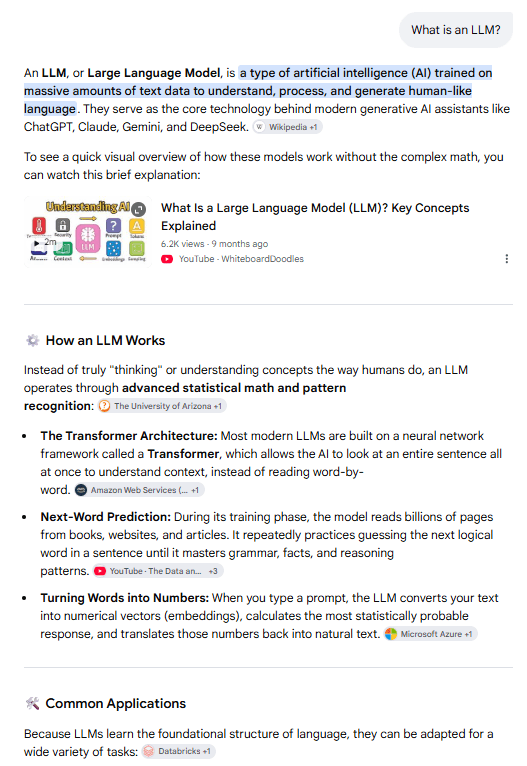
The system may determine that a useful answer requires more than defining the acronym. A beginner may also need to understand how large language models are trained, how they generate text, and how they relate to generative AI.
Step 2: Generate Related Queries
The system can then create several synthetic queries covering different parts of the original information need.
Possible illustrative sub-queries for “What is an LLM?” might include:
- What does large language model mean?
- How are large language models trained?
- How do LLMs generate text?
- What is the difference between an LLM and generative AI?
- What are common applications of large language models?
These are examples of the kinds of sub-queries that might be generated rather than the actual searches made by Google.
Step 3: Retrieve Information Concurrently
The related queries are used to retrieve relevant supporting information.
Google has described AI Mode as issuing a multitude of searches simultaneously, allowing Search to explore different subtopics and data sources before producing a response. Depending on the query, Google’s systems can draw on information from its Search index and other systems such as the Knowledge Graph, shopping data, and real-world information.
Running related searches in parallel allows the system to gather broader information than would normally be retrieved through one exact query.
Step 4: Evaluate and Combine the Retrieved Information
The system evaluates the retrieved documents or passages for relevance to the original question and its broader context, then combines the most useful information into a coherent response.
In AI search, this can involve grounding the generated answer in retrieved webpages and presenting supporting citations where appropriate. The final answer can therefore combine information discovered through several related retrieval paths rather than relying on a single search-result set.
Identify the main topic, intent, and information needed.
“What is an LLM?”
- What does LLM mean?
- How are LLMs trained?
- How do LLMs generate text?
- LLM vs. generative AI
Related searches retrieve supporting information in parallel.
- LLM definition
- Training process
- Text generation
- Generative AI context
Relevant information is evaluated and combined into one response.
A broader explanation of what an LLM is, how it works, and how it relates to generative AI.
Google also describes retrieval-augmented generation (RAG), or grounding, as a technique used alongside query fan-out. RAG retrieves relevant, up-to-date webpages from Google’s Search index to help ground generated responses, while query fan-out expands the original request into multiple related searches.
Other AI search systems can perform related behavior even when they do not use Google’s exact query fan-out terminology. For example, ChatGPT Search can rewrite a user’s request into one or more targeted searches and perform additional searches when more specific information is needed.
Common Types of Query Fan-Out
Query fan-out can expand a prompt in several different directions. Semrush groups common fan-out behavior into categories such as reformulation, implicit intent, comparison, recency, contextual variation, and next-step queries. These are useful practical categories rather than an official Google taxonomy.
A complex prompt can trigger several types at the same time. A travel query, for example, may require location-specific, comparative, recency, and next-step searches before a useful answer can be produced.
Fan-out queries are also dynamic rather than a fixed keyword list. The same original question can generate different related searches on another run as models, context, available information, and retrieval conditions change.
This is one reason query fan-out should not be approached as a new form of exact-match keyword targeting.
Query fan-out is closely related to query expansion, but the two concepts are not identical. Query expansion usually broadens or reformulates the original query, while query fan-out can go further by branching one complex request into several related information needs and subtopics.
How Query Fan-Out Changes SEO and Search Visibility
Query fan-out changes how search visibility should be interpreted because a webpage may be discovered through a related synthetic search rather than only through the wording of the user’s original prompt.
- A Single Ranking Position Shows Only Part of the Picture: Ranking first for an important keyword still matters, but an AI response can retrieve supporting information through several related queries. A site may therefore appear in an AI-generated answer because its content is relevant to one of those related information needs.
- Low-Volume Queries Can Still Matter: Synthetic queries are generated dynamically and may never appear as conventional keywords with measurable monthly search volume. This makes topic coverage and search intent increasingly important alongside traditional keyword-volume analysis.
- Broader Topic Coverage Creates More Retrieval Opportunities: Definitions, comparisons, examples, processes, limitations, FAQs, and related explanations can help content address several legitimate aspects of an information need. This does not mean every page should become unnecessarily exhaustive.
- Topic Hubs Can Support Deeper Coverage: Some subtopics deserve their own pages. Creating useful supporting content and connecting it with meaningful internal links can help search engines discover related material without forcing every subject into one oversized article.
- Search Visibility Measurement Is Expanding: Traditional ranking positions remain useful, but AI search increasingly introduces additional measurements such as citations, mentions, cited URLs, AI visibility, prompt coverage, and visibility across related intent clusters.
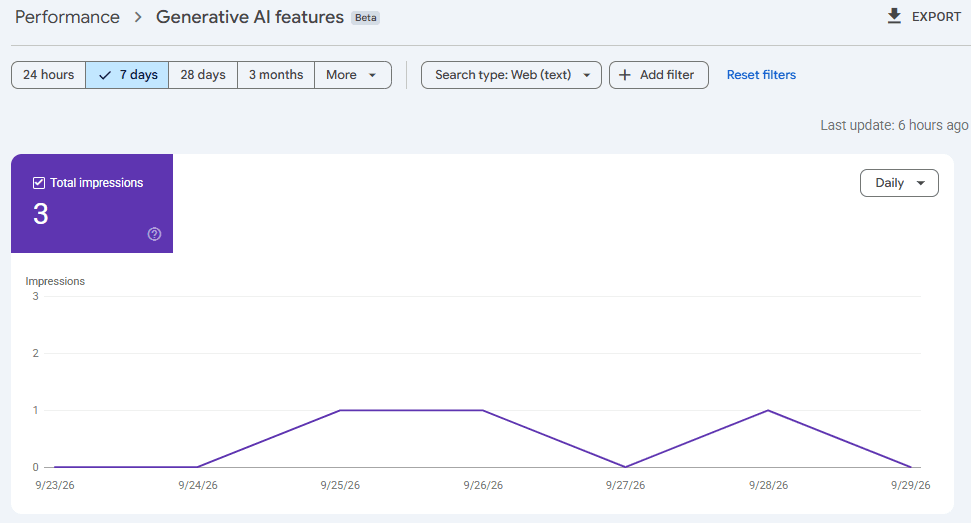
Google’s newer generative AI reporting in Search Console also provides impression data for search experiences such as AI Overviews and AI Mode, giving website owners another way to understand how content appears in AI-assisted search.
Third-party platforms are also developing dedicated query fan-out and AI visibility tools. For example, Semrush Enterprise AIO includes Query Fan-Out Analysis, while other SEO platforms provide related prompt, citation, and AI visibility monitoring.
How to Optimize Content for Query Fan-Out and AI Search
There is no special technical optimization required specifically for query fan-out. Google says established SEO principles continue to apply to generative AI search, including crawlability, indexing eligibility, useful and original content, a clear technical structure, good page experience, and appropriate structured data.
- Answer the Main Question Directly: Important sections should begin with a clear response before expanding into supporting detail, examples, or exceptions. This helps readers quickly understand the subject and creates well-defined passages around specific information needs.
- Use Logical Headings and Sections: Organize complex topics through meaningful H2 and H3 headings covering definitions, processes, comparisons, limitations, examples, and practical applications. Clear structure makes information easier for readers to navigate and keeps related information grouped logically.
- Cover Important Supporting Questions: Consider what readers genuinely need before, during, and after the main question. Relevant supporting information can improve completeness without adding unnecessary FAQs merely to target hypothetical synthetic searches.
- Use Related Terminology Naturally: Include synonyms, alternate terminology, and closely related concepts where they improve understanding. Avoid mechanically repeating every possible keyword variation.
- Include Comparisons When They Clarify the Topic: Tables and comparison sections can be valuable when readers genuinely need to evaluate alternatives, specifications, methods, or trade-offs. They should be added because they improve comprehension, not because AI systems are assumed to favor tables.
- Provide Original Evidence and Experience: First-hand observations, original research, datasets, expert explanations, experiments, and unique examples provide information that cannot easily be reconstructed from generic sources. Google emphasizes creating unique, useful, non-commodity content.
- Build Related Topic Coverage: When an important subtopic requires substantial explanation, create a dedicated page and connect it through relevant internal links. This can provide deeper coverage without making the primary page unnecessarily long.
- Use Structured Data Where Appropriate: Add structured data when it accurately represents visible page content and qualifies for relevant Search features. There is no special query fan-out, AI Mode, or AI Overview schema.
The goal is not to manufacture fragments or separate pages for every potential fan-out query. Google’s current guidance specifically warns against producing large numbers of pages designed primarily to target variations of queries rather than providing genuine value.
Frequently Asked Questions
What is the difference between traditional Google Search and AI Search using query fan-out?
Traditional Google Search retrieves and ranks results around a submitted query, although Google has long used semantic understanding, query expansion, and other systems to interpret searches. Query fan-out can additionally generate multiple related searches covering different subtopics, retrieve information from those searches, and use the combined material to support an AI-generated answer.
Is query fan-out a backend process?
Yes, a user normally submits one prompt while the related synthetic queries are generated and executed behind the scenes. Google has described AI Mode as issuing multiple related searches simultaneously on the user’s behalf.
How does query fan-out choose what sub-queries to create?
Google does not publish the exact logic used to select every fan-out query. In practice, related searches can cover subtopics and additional information needs, while third-party frameworks describe patterns such as reformulations, implicit needs, comparisons, recency, contextual variations, and next steps.
Does query fan-out make single-keyword rank tracking less complete?
It makes single-keyword rank tracking less complete, not obsolete. Traditional rankings still matter, but one AI request can retrieve information through several related searches, so modern visibility analysis may also need to consider broader topic coverage, citations, mentions, and performance across related query clusters.