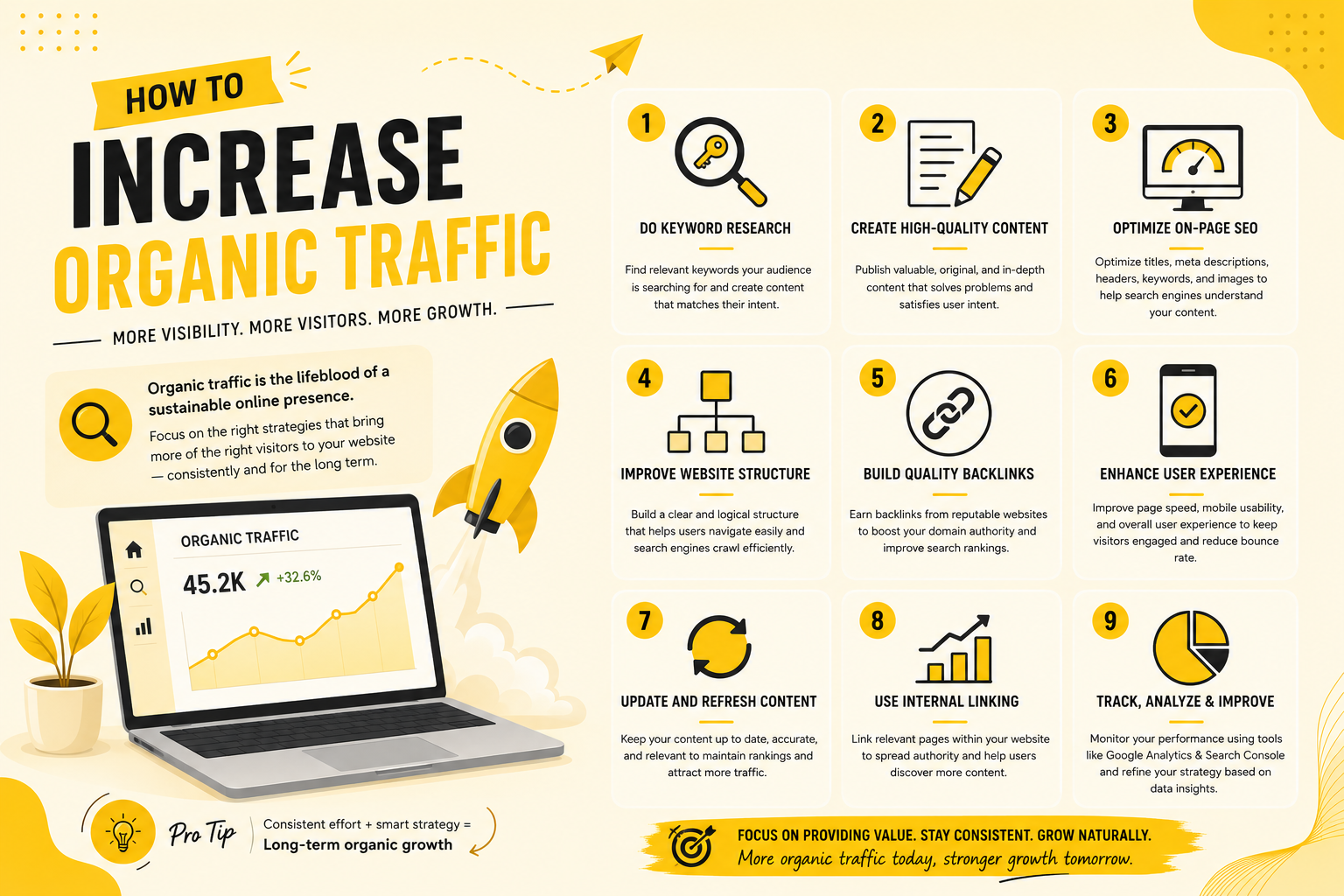
Increasing organic traffic requires more than publishing additional articles. Sustainable growth usually comes from SEO strategies such as improving keyword targeting, search-intent alignment, content usefulness, internal linking, website structure, technical performance and external authority as one connected strategy.
For example, a page targeting best accounting software for small businesses must do more than mention the keyword. It should compare suitable products, explain meaningful differences, load reliably, connect with related resources and give readers enough evidence to make a decision.
Organic traffic is therefore the outcome of stronger search visibility and better audience alignment. Google Search Central’s SEO Starter Guide describes SEO as helping search engines understand content while helping people find a website and decide whether to visit it. However, no individual optimization can guarantee rankings because search systems evaluate many signals and competing pages.
Table of Contents
Increasing Organic Traffic by Improving Search Rankings
Higher rankings can create more opportunities for searchers to discover and visit a website. However, ranking improvements generally depend on several areas working together rather than one isolated tactic.
Research Relevant Keywords and Search Intent
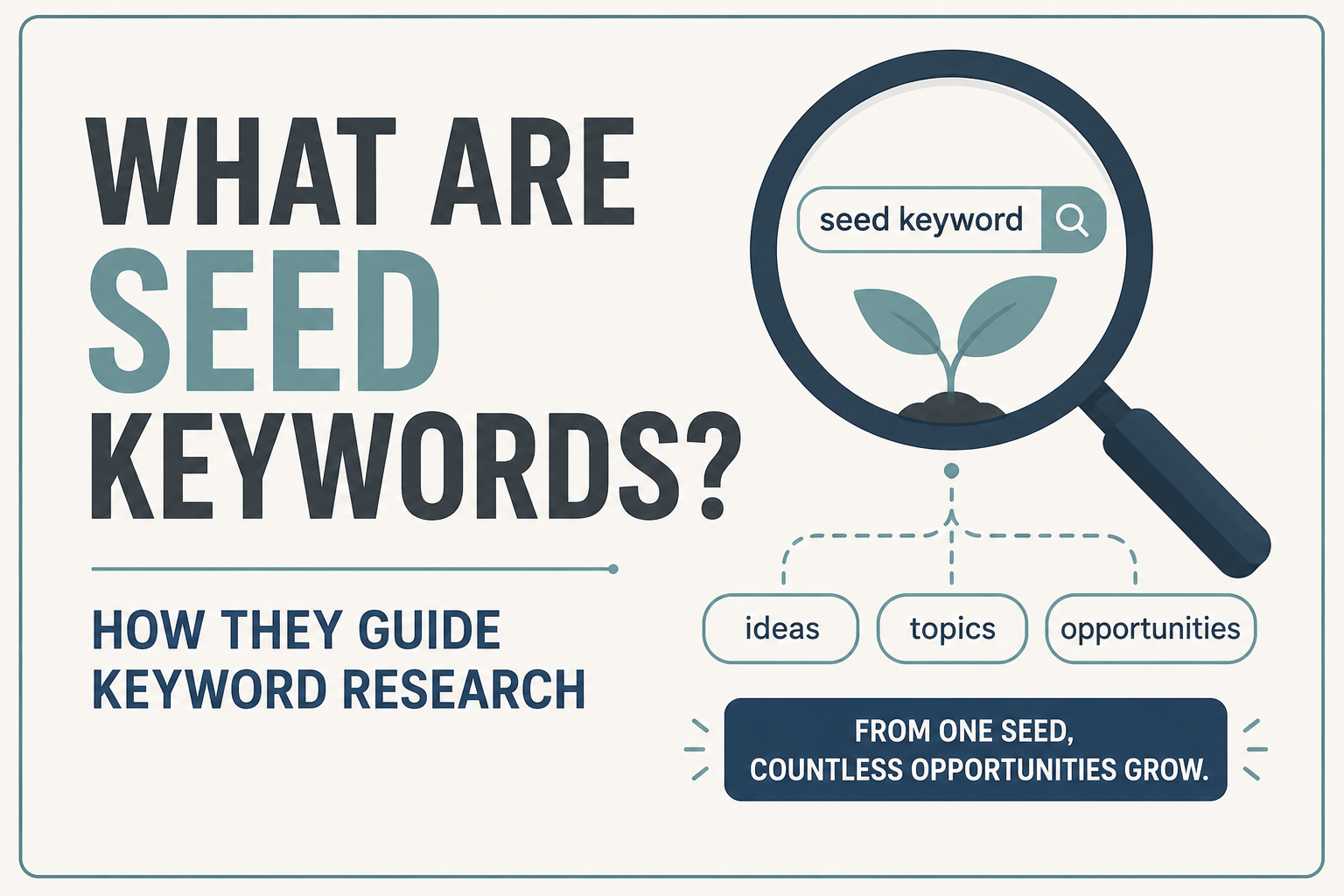
Keyword research reveals how an audience describes its questions, problems and desired solutions. Useful research considers search demand, ranking difficulty, business relevance and the likely intention behind each query.
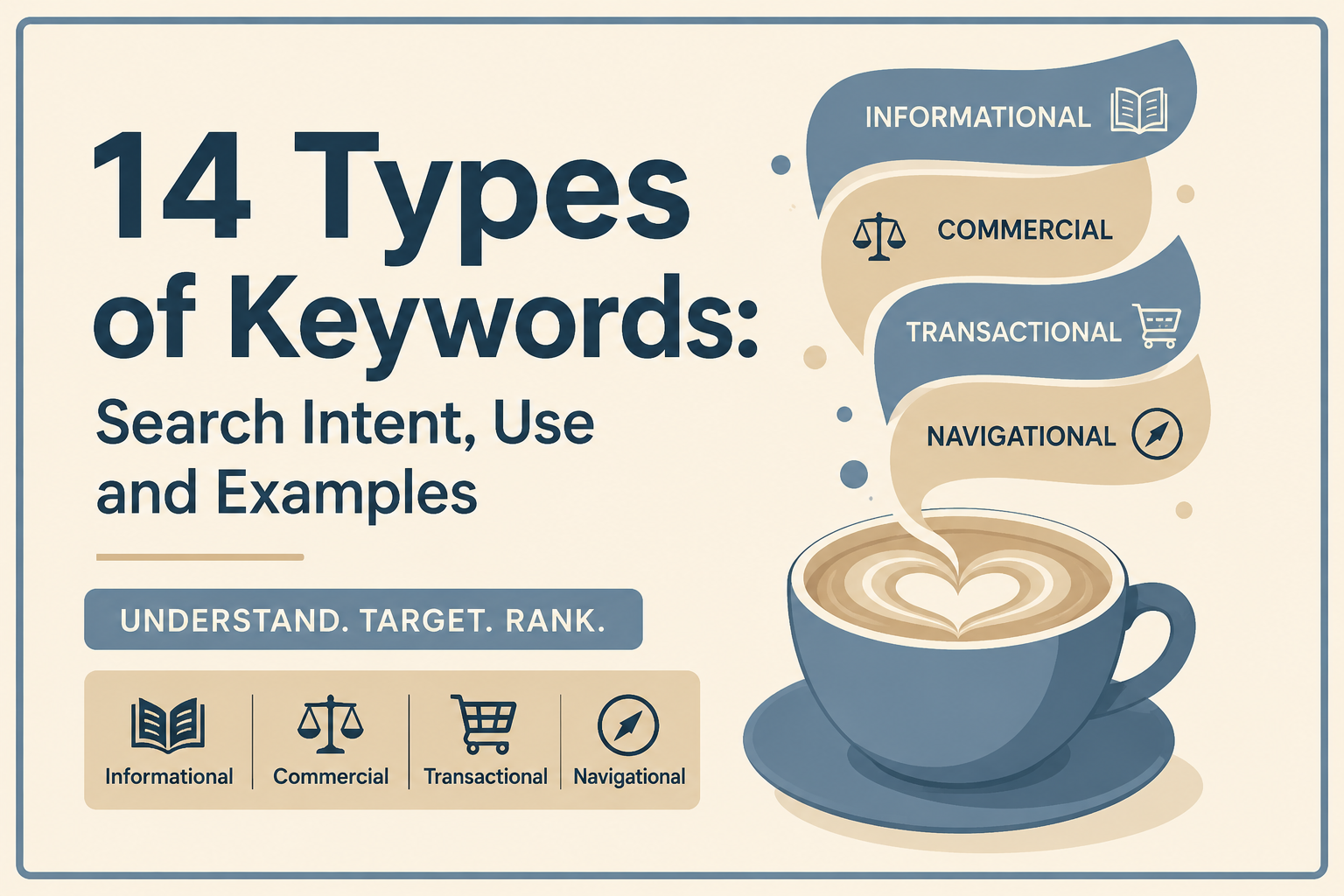
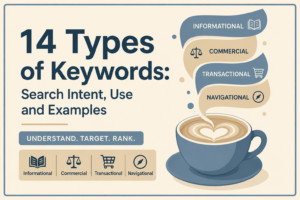
For example, these searches require different pages:
| Keyword | Likely intent | Suitable page |
| What is CRM? | Informational | Beginner guide |
| Best CRM software | Commercial | Comparison article |
| CRM free trial | Transactional | Product landing page |
It is therefore important to examine the current results before choosing a format. Reviewing the SERP can reveal whether searchers are being served guides, videos, product pages, comparison articles or local listings. A page may be detailed and technically sound but still struggle when it answers the wrong need. Search Engine Land recommends evaluating both the dominant intent and possible mixed intentions within search results.
Keyword selection should not be based only on high search volume. A narrower term may attract fewer people but deliver visitors who are better aligned with the website’s products, expertise or services.
Strengthen On-Page and Technical SEO
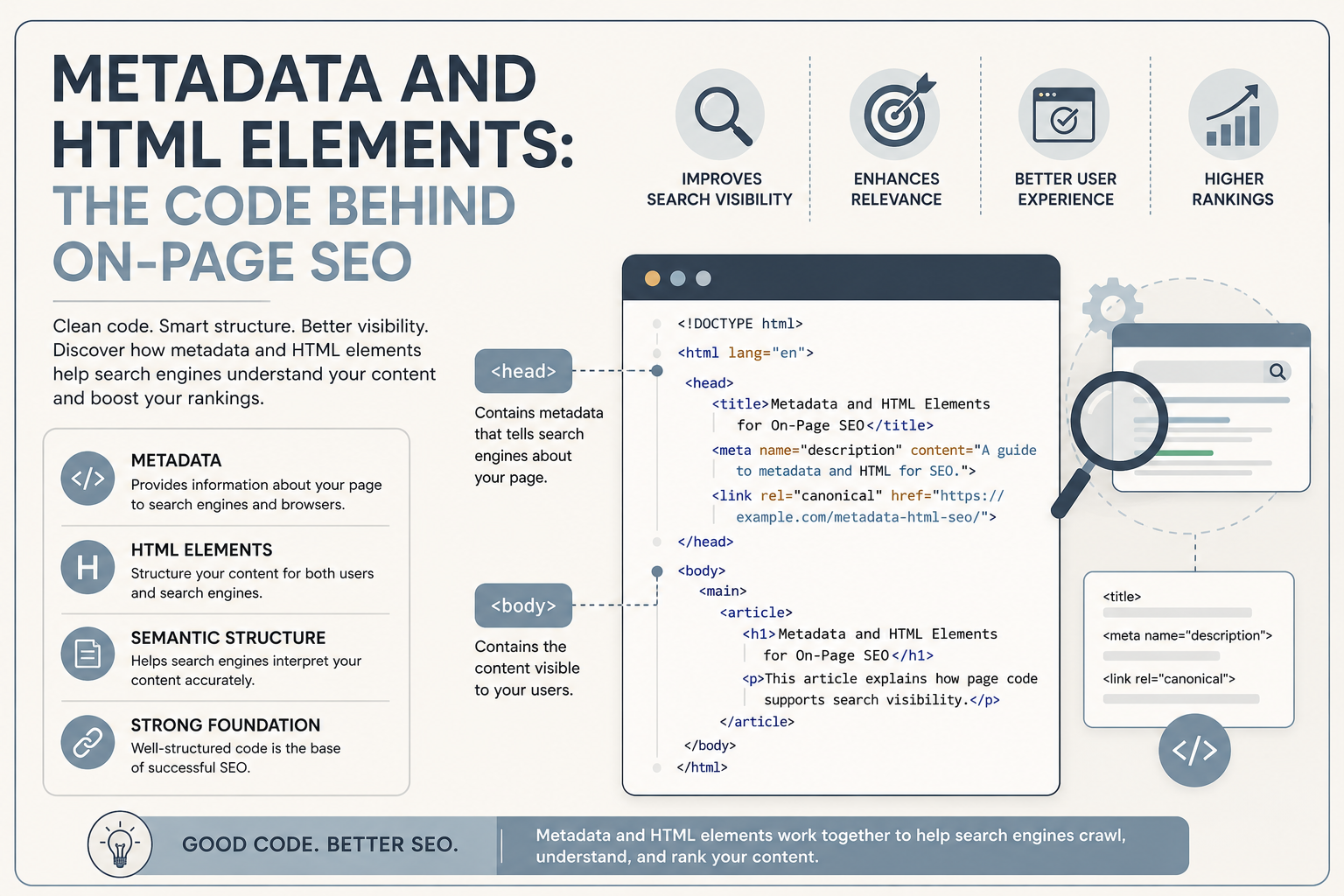
On-page SEO helps communicate the purpose and relevance of an individual page. Important elements include a descriptive title, clear headings, useful content, readable formatting, internal links and an accurate meta description.
The primary keyword can appear naturally in the title, introduction and relevant headings. However, repetition does not create depth. Related concepts, questions and examples should be included because they help explain the subject.
Technical SEO ensures that important pages can be crawled, rendered and indexed. A strong article cannot generate search traffic when it is accidentally marked noindex, blocked from crawling or hidden behind broken navigation.
It is recommended to check:
- Indexing status and canonical URLs.
- XML sitemaps and internal discovery paths.
- Mobile presentation and secure HTTPS delivery.
- Broken links, redirects and server errors.
- Page performance and Core Web Vitals.
A good Core Web Vitals score can support user experience, but it does not guarantee a top ranking. Page experience should therefore be treated as one part of a broader SEO strategy.
Improve Internal Linking and Website Structure
Internal links connect related pages and help readers move through a subject logically. They can also help search engines discover pages and understand relationships within a website.
For example, a broad SEO guide might link to detailed resources on keyword research, on-page SEO, technical SEO and link building. Those supporting pages should also link back to the broader guide when the connection is useful.
It is better to use descriptive internal anchors rather than repeatedly relying on vague wording such as click here. Important pages should also be reachable through categories, navigation and contextual links instead of existing as isolated orphan pages.
A logical structure might follow:
Home → SEO → Keyword Research → Keyword Difficulty
This hierarchy helps clarify which pages introduce broad subjects and which provide detailed supporting information.
Create Helpful and Trustworthy Pages
Search-focused content should answer the main question clearly, provide sufficient supporting information and offer something more useful than a superficial summary.
Original value may come from:
- First-hand examples.
- Research or proprietary data.
- Expert commentary.
- Detailed comparisons.
- Screenshots and demonstrations.
- Templates, calculators or checklists.
- Clear explanations for beginners.
Google Search Central’s helpful content guide recommends considering whether readers will leave feeling that they have learned enough to achieve their objective. It also emphasizes original information and analysis rather than content created mainly to attract search visits.
Build Relevant Authority
Backlinks can introduce referral traffic, help pages get discovered and demonstrate that other publishers consider a resource worth referencing. However, quality and relevance matter more than the total number of links.
Useful approaches include:
- Publishing original research or statistics.
- Providing expert commentary to journalists.
- Creating tools, templates and public resources.
- Contributing genuinely useful guest articles.
- Reclaiming links pointing to moved or deleted pages.
- Promoting strong resources to relevant publishers.
Ahrefs highlights internal-link optimization, broken-link reclamation and compelling search-result presentation among practical ways to improve organic performance. Its broader research also shows a relationship between referring domains and search traffic, although correlation does not mean every backlink will improve rankings.
In short, authority should be earned through useful work and credible relationships rather than automated link schemes.
Content and Topic SEO Strategies for Long-Term Organic Growth
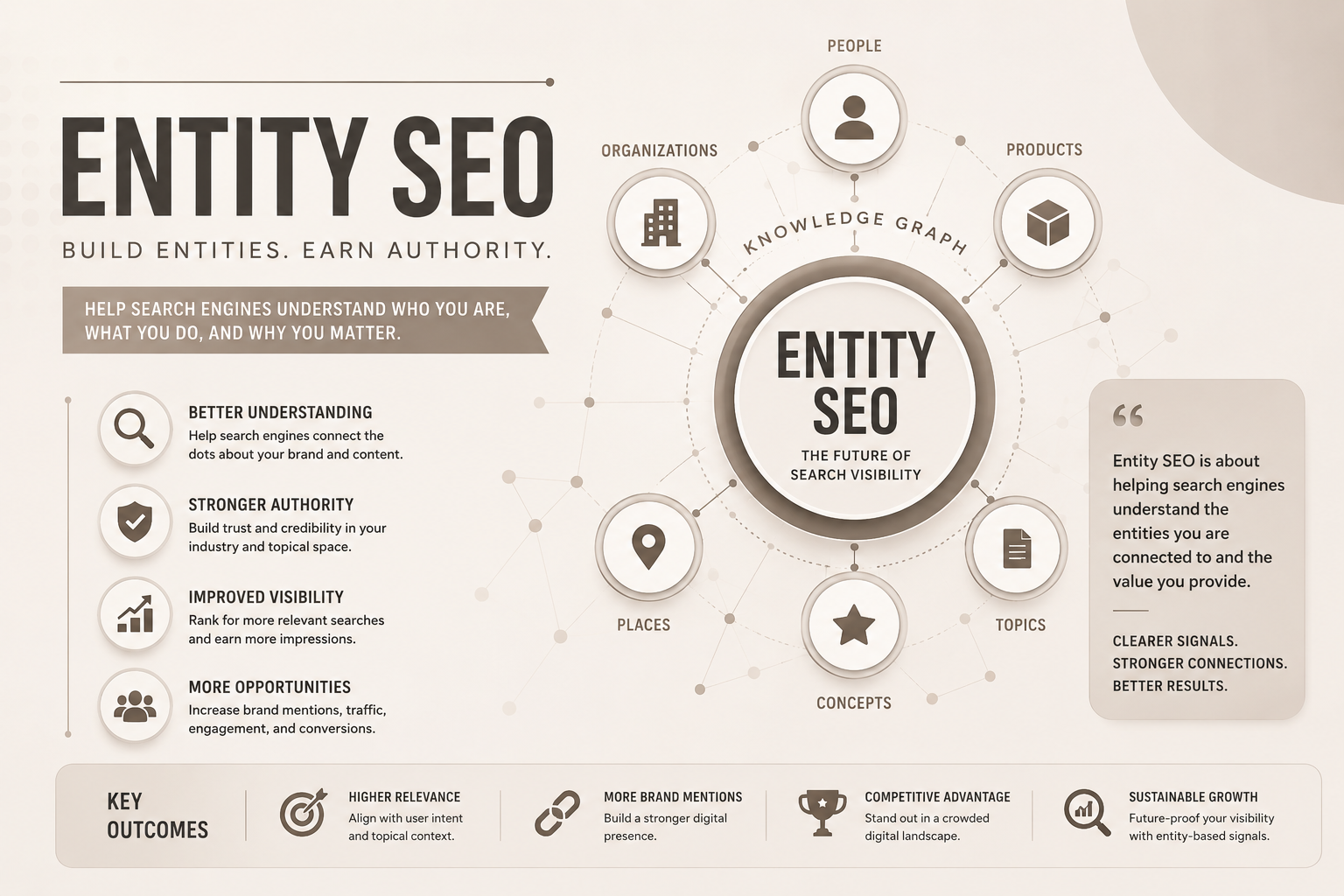
A website rarely builds sustainable visibility through disconnected articles. It is better to organize content around subjects that matter to the audience and that the business can cover with genuine depth.
Build Content Hubs and Topic Clusters
A content hub introduces a broad subject, while supporting pages explain its major components.
For example:
Main hub:
Complete SEO Guide
Supporting pages:
- Keyword research
- Search intent
- On-page SEO
- Technical SEO
- Link building
- Local SEO
This structure creates clear paths between introductory and detailed information. However, every possible keyword variation does not require a separate page. Closely related searches with the same intent can usually be answered together.
Match Content with Customer Needs
Content can serve different stages of the customer journey.
A beginner may need a definition or tutorial. Someone evaluating options may need a comparison, case study or pricing guide. A visitor ready to act may require a product, service or booking page.
It is therefore important to connect informational traffic with suitable next steps. An article may link to a related guide, newsletter, template or service page without turning every paragraph into a sales message.
Create and Maintain Evergreen Resources
Evergreen resources address needs that remain useful over time, such as definitions, beginner guides, processes and checklists. These pages can attract traffic long after publication, but they still require maintenance.
Information may become inaccurate, competitors may improve their pages and search intent may change. Updates should therefore involve checking facts, screenshots, examples, links and content gaps rather than changing only the publication date.
A practical content refresh process can focus on pages losing rankings or traffic, outdated information and SERPs whose dominant format has changed.
Repurpose and Distribute Content
A detailed article can be adapted into social posts, email newsletters, short videos, visual summaries or downloadable resources. This distribution can introduce the page to new audiences and increase the likelihood of shares, mentions and links.
However, repurposing should adapt the idea to each platform rather than copying the same text everywhere. The website should remain the complete source, while shorter formats highlight the most useful points.
Author biographies can also help readers understand who created the information and why that person is qualified to discuss it. This is especially valuable for subjects where accuracy, professional experience or financial and health implications matter.
Complete Organic Traffic Growth Checklist: 35 Practical Steps
Use this checklist to coordinate research, technical improvements, content development and performance measurement.
Search Research and Planning
- Identify search terms that are relevant to the target audience and business.
- Determine whether each query is informational, commercial, transactional or navigational.
- Assign important keywords and search needs to specific pages.
- Review the pages currently ranking for priority searches.
- Identify relevant topics that competitors cover but the website does not.
Website and Technical Optimization
- Confirm that important pages can be crawled and indexed.
- Improve loading performance where delays affect visitors.
- Test navigation, forms and content on mobile devices.
- Organize pages through clear categories and internal links.
- Fix broken links, redirect chains and important server errors.
Content Optimization
- Create pages that answer genuine audience questions directly.
- Improve useful existing pages instead of publishing only new content.
- Write descriptive titles and headings that accurately represent each page.
- Add contextual internal links between related resources.
- Use complete paragraphs, logical headings and readable formatting.
- Include practical examples, evidence and explanations where useful.
- Build connected topic clusters around important subjects.
- Develop evergreen resources that can remain valuable over time.
Search Visibility Improvement
- Format suitable content for featured snippets and other SERP features.
- Improve titles and descriptions when impressions are high but clicks are weak.
- Monitor pages that are gaining or losing search visibility.
- Replace outdated facts, screenshots, links and recommendations.
- Strengthen relevant pages already ranking near the leading results.
Authority Building
- Earn links from credible and relevant websites.
- Create original resources that publishers have reasons to reference.
- Build relationships with industry publications, creators and specialists.
- Use digital PR to promote research, expertise and useful stories.
- Encourage genuine customer reviews and maintain a professional reputation.
Measurement and Growth
- Compare organic traffic over meaningful periods.
- Monitor impressions, clicks, CTR and average positions.
- Identify pages attracting valuable visitors rather than traffic alone.
- Measure leads, subscriptions, enquiries and sales from organic search.
- Review content gaps and changing audience questions.
- Test improvements and record their effect on performance.
- Prioritize sustainable growth instead of temporary ranking shortcuts.
How to Measure and Analyze Organic Traffic Performance
SEO performance should be evaluated through visibility, visits, engagement and business results.
| Metric | What it shows |
| Organic sessions | Visits attributed to unpaid search |
| Impressions | How often website links appeared in search |
| Clicks | Visits generated from search results |
| Click-through rate | The percentage of impressions producing clicks |
| Average position | The reported average ranking position |
| Engagement | How visitors interact after arriving |
| Organic conversions | Valuable actions completed by search visitors |
| Referring domains | External websites linking to the content |
Google Search Console reports clicks, impressions and CTR, along with average position. These metrics can reveal high-impression pages with weak click-through rates, declining queries and subjects beginning to gain visibility.
Google Analytics can then show what visitors do after arriving. It is recommended to measure key actions such as purchases, enquiries, registrations and downloads rather than evaluating success through page views alone. Organic search can receive credit for conversions through cross-channel attribution reports, depending on the selected attribution settings.
Search Console and Analytics will not always display identical traffic totals because the platforms use different measurement methods. They should therefore be treated as complementary tools rather than expected to match perfectly.
Common Mistakes and Long-Term Growth Strategies
A common mistake is targeting only high-volume keywords. Popular searches can be highly competitive, broad or weakly connected with business value. More specific opportunities may attract fewer visitors but produce stronger engagement and conversions.
Other mistakes include:
- Publishing unrelated topics without a clear strategy.
- Creating pages that do not match search intent.
- Ignoring crawling and indexing problems.
- Producing thin summaries of existing results.
- Using keyword repetition instead of meaningful coverage.
- Building irrelevant or manipulative backlinks.
- Measuring rankings without measuring conversions.
- Expecting immediate results from a long-term process.
Sustainable growth comes from combining audience research, useful content, technical maintenance, internal linking, credible authority and regular analysis.
Search behaviour continues to evolve, so SEO strategies should remain flexible. It is therefore better to focus on useful content, strong technical foundations and clear audience relevance than to chase temporary tactics tied to a particular search feature.
Conclusion
Increasing organic traffic requires coordinated SEO improvements rather than one isolated tactic. Relevant keywords, accurate search-intent analysis, useful content, technical accessibility, internal links and credible external recognition all contribute to stronger visibility.
However, traffic alone is not the final objective. To sum up, the strongest SEO strategy attracts the right people and helps them complete meaningful actions, including reading related content, subscribing, making an enquiry or purchasing a product.
Frequently Asked Questions
How can SEO increase organic traffic?
SEO improves how easily search engines can discover, understand and select relevant pages. Stronger keyword targeting, useful content, technical accessibility, internal links and backlinks can create more opportunities to earn impressions and clicks.
Which SEO strategy should a new website begin with?
A new website should begin with a technically accessible structure and a focused set of topics relevant to its intended audience. It is better to build several connected, useful pages than publish unrelated content across many subjects.
How long does SEO take to increase traffic?
There is no universal timeline. Results depend on competition, website history, content quality, technical condition, authority and available resources. Some pages gain early impressions quickly, while meaningful and stable growth may require sustained work.
Should existing content be updated?
Yes, when information, examples, products, links or audience needs have changed. Pages losing impressions, rankings or traffic should be reviewed, but updates should improve the actual content rather than merely replace the date.
Do backlinks increase organic traffic?
Relevant backlinks can generate referral visits, assist page discovery and strengthen recognition. However, backlinks vary greatly in quality, and links alone cannot compensate for weak content, poor intent alignment or technical problems.
Which metrics should measure organic growth?
Useful metrics include organic sessions, impressions, clicks, CTR, average position, engagement and organic conversions. The most important measures depend on whether the page is intended to educate, generate leads or support sales.
Why is organic traffic decreasing?
Possible causes include lost rankings, changing search intent, stronger competitors, outdated content, indexing problems, technical changes, reduced demand or changes to the search-results layout. The decline should be investigated by page, query and date.
Do SEO strategies work for AI search?
Many established practices remain useful because AI-powered search still depends on accessible, indexed and credible web content. Clear answers, supporting evidence, connected topic coverage and strong authority may improve eligibility, although inclusion in an AI-generated answer is never guaranteed.