Long-Tail and Short-Tail Keywords: Uses and Differences
Key Takeaways
- Long-tail keywords are defined by relatively low search demand, not by a fixed word count, while short-tail keywords generally represent broader, more popular topics.
- Short-tail terms help organize markets, categories, pillar pages, and content clusters, while long-tail queries address narrower questions, problems, products, and intents.
- Long-tail keywords may be easier to rank for or convert better, but outcomes depend on intent, competition, SERP conditions, relevance, and business value.
- Effective SEO combines both keyword types, consolidating variations with the same intent and covering underlying topics rather than repeating conversational queries verbatim.
Long-tail and short-tail keywords describe different parts of search demand. Short-tail keywords are broad, popular search terms, while long-tail keywords sit further down the search-demand curve and usually attract fewer searches individually. They are often longer and more specific, but word count alone does not determine whether a keyword is long-tail or short-tail.
That distinction matters because SEO discussions often reduce the difference to “one to three words versus three or more words.” In practice, a two-word phrase can be long-tail if very few people search for it, while a five-word query can still attract substantial search demand. Ahrefs similarly explains that long-tail keywords are defined primarily by their position on the search demand curve rather than by a fixed number of words.
The two types also serve different purposes. Broad short-tail terms can help define major topics, categories, and markets, while long-tail keywords can reveal more specific problems, products, comparisons, questions, and intentions. Used together, they can help businesses build content around broad areas while also answering the narrower needs that people express through search.
This distinction is becoming even more interesting as search becomes more conversational. Google reported in 2026 that the average query in AI Mode was three times longer than a traditional Google Search query. Longer queries do not automatically become SEO “long-tail keywords,” but the change shows that people are becoming more comfortable expressing detailed needs instead of compressing every search into a few words.
Table of Contents
What Are Long-Tail and Short-Tail Keywords?
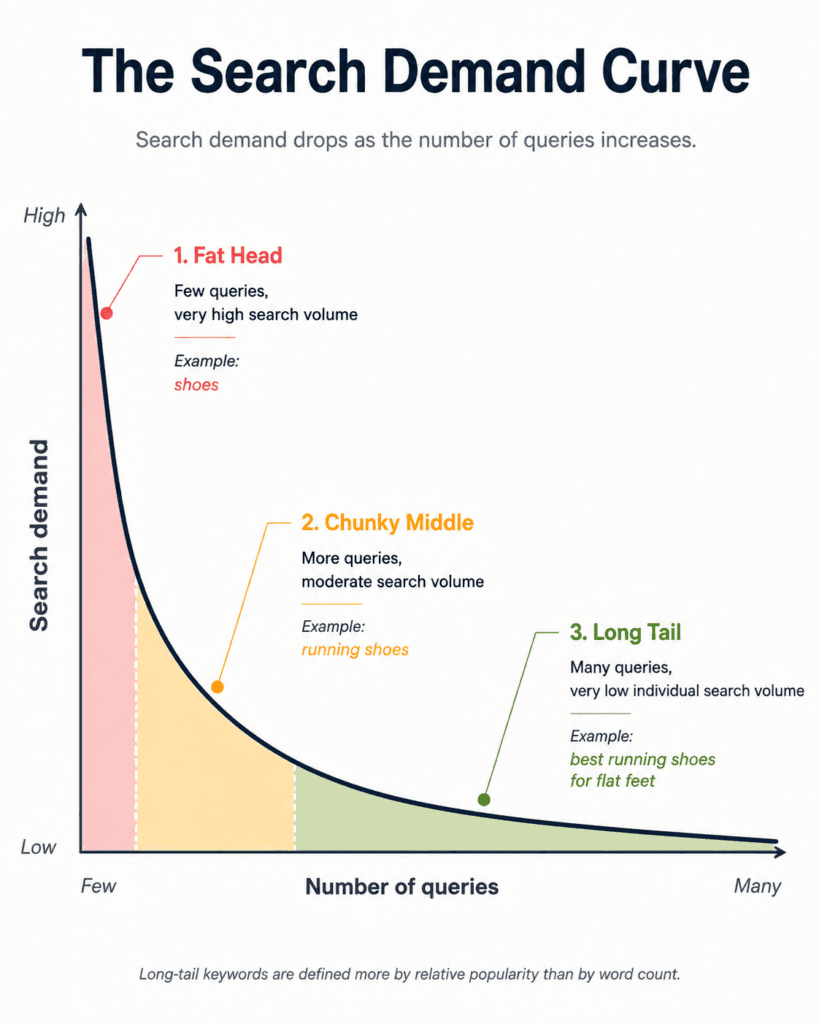
The easiest way to understand long-tail and short-tail keywords is to imagine every query in a market arranged according to how frequently it is searched.
At one end are a relatively small number of highly popular terms. These form the head of the search-demand curve. At the other end are very large numbers of individually less popular searches. Together, they form the long tail.

Short-Tail Keywords
Short-tail keywords, also called head terms or head keywords, are relatively popular and broad search terms. For example, terms such as SEO, laptops, coffee, running shoes, email marketing, and office supplies can represent enormous subjects.
Now, someone searching for laptops might want to buy a laptop, compare brands, understand laptop specifications, find repair information, or research gaming laptops.
Here, the keyword laptops does not reveal much about the searcher’s exact requirement. It identifies the broader topic, but not the specific need behind the search.
Short-tail keywords are therefore useful for identifying broad markets, categories, pillars, and major content themes. They can also have significant traffic potential because large numbers of people may search for them.
However, greater search demand often brings stronger competition, which means established companies, major publishers, ecommerce marketplaces, manufacturers, and other authoritative websites may already compete for the same broad terms.
Long-Tail Keywords
Long-tail keywords are search queries with relatively low individual search demand compared with the more popular terms in the same market.
Examples of such keywords include best running shoes for flat feet, lightweight laptop for video editing, how to clean a mechanical keyboard, desk organizer for small office, and email marketing software for nonprofits.
These searches usually reveal more context and make the searcher’s intent easier to interpret. For example, compare a short-tail keyword, running shoes, with a long-tail keyword, best running shoes for flat feet.
Here, the first keyword identifies a product category, while the second indicates a more specific commercial or research intent.
Long-tail keywords are not defined by a fixed number of words. They are defined by relatively low search demand compared with the most popular queries in a market or keyword dataset. Ahrefs notes that keyword length is not decisive: a short query can still belong to the long tail if few people search for it, while a longer query may not be long tail if it receives substantial search demand. The defining factor is therefore where the query sits on the search-demand curve, not how many words it contains.
In other words, short-tail or head terms are generally high-volume queries, while long-tail keywords are generally lower-volume queries.
Why Is It Called the Long Tail?
The term comes from the shape created when search queries are plotted according to popularity. A small number of keywords receive very high search demand and form the head of the curve. The curve then stretches across an enormous number of increasingly low-volume searches.
Ahrefs reported in its 2026 U.S. keyword database that keywords receiving fewer than 10 monthly searches represented almost 93% of the database, illustrating just how large the tail can become.
Each individual long-tail keyword may generate modest demand. But collectively, long-tail searches can represent a substantial part of the opportunities available within a topic.
Long-Tail vs. Short-Tail Keywords: Key Differences and Uses
Long-tail and short-tail keywords should not be treated as competing strategies where one must replace the other. They are better understood as complementary approaches that perform different roles.
For example, short-tail keywords are especially useful for shaping the broader structure of a website, including pillar pages, major categories, topic clusters, and core navigation themes. Long-tail keywords, by contrast, can be used more selectively to address question-based searches, specific problems, detailed comparisons, and narrower subtopics within that structure. They can be particularly valuable when a topic benefits from first-hand experience, demonstrations, testing, or highly specific guidance that would feel excessive on a broad category page.
Used together, short-tail keywords provide the framework, while long-tail keywords add depth and help capture more precise user needs.
Note
Long-tail keywords are not automatically easier to rank for, and short-tail keywords do not always have higher CPCs or lower conversion rates. Actual outcomes depend on factors such as search intent, competition, SERP landscape, industry, commercial value, and the strength of the competing websites.
Where Short-Tail Keywords Are Used
Short-tail keywords are particularly useful when defining large sections of a website. For example, an ecommerce stationery website might have:
Here:
- office supplies could represent a major category;
- desk organizers could represent a narrower category;
- drawer dividers could represent a product group.
The broader terms help define the top levels of the taxonomy. In other words, short-tail terms are also useful for pillar pages, category pages, major product collections, broad educational guides, navigation labels, and market and competitor research.
A business generally should not select a short-tail keyword merely because it has high search volume. A broad keyword has value only when the business can genuinely satisfy the intent behind it.
Where Long-Tail Keywords Are Used
Long-tail keywords become especially useful deeper within a topic. A broad page about email marketing might link to narrower articles such as email marketing for small businesses, how to improve email open rates, best time to send ecommerce emails, and email welcome sequence examples.
These narrower queries can expose specific questions that deserve focused explanations. Long-tail keywords can therefore be useful for supporting articles, product variations, comparison pages, FAQs, tutorials, niche landing pages, local searches, commercial-intent content, and specific customer problems.
However, not every long-tail variation needs a separate webpage. Different keyword variations can represent the same underlying topic or search intent, so they do not necessarily require separate pages. For example, healthy dog treats, best healthy treats for dogs, and healthy treats to give dogs might belong on one comprehensive page rather than three nearly identical articles.
The practical question is therefore not:
❌ “Is this keyword long-tail?”
It is:
✅ “Does this query represent a distinct topic or intent that deserves separate content?”
How to Find Long-Tail and Short-Tail Keywords
Keyword research does not require a single platform. Search engines, specialist tools, community websites, social platforms, and keyword databases can all reveal different parts of search behavior.
Start With a Seed Keyword
You may begin with a broad term that represents the market or subject. For example, running shoes.
That is a useful short-tail seed keyword to start your keyword and topic research. It can then be expanded into narrower concepts such as running shoes for beginners, trail running shoes, running shoes for flat feet, waterproof trail running shoes, and lightweight running shoes for women.
Here, the objective is not simply to make the phrase longer. Instead, each expansion should reveal a meaningful difference in audience, product, need, or search intent.
Google Autocomplete
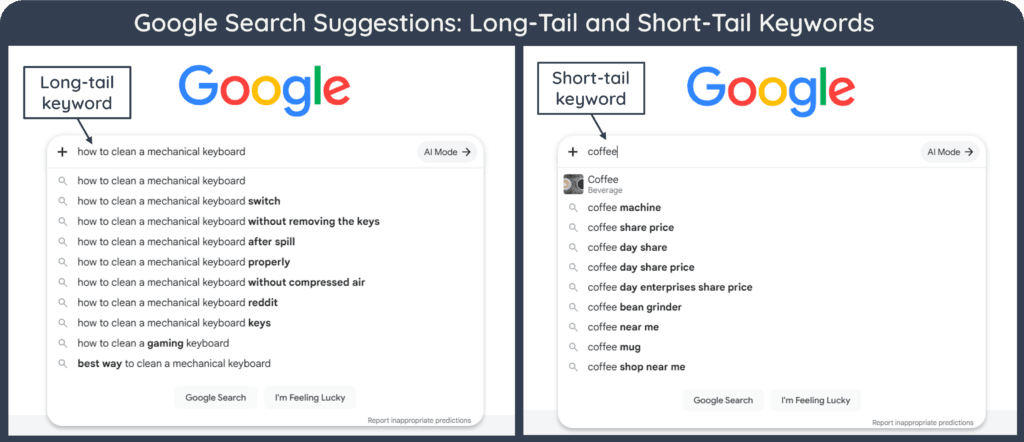
Google Autocomplete is one of the easiest ways to expand a seed keyword. Google explains that its Autocomplete predictions are generated using common queries matching what someone begins typing. The predictions are based on factors such as language, location, trending interest, and previous searches where applicable.
For example, when you enter “running shoes” in the Google search bar and then add different modifiers such as “running shoes for…”, “running shoes with…”, or “running shoes without…”, the Autocomplete may reveal very specific questions or product requirements.
However, Autocomplete should not be treated as a search-volume ranking. Google explicitly notes that the feature does not simply show the most common searches on a topic. You may instead use it for topic or keyword discovery and then validate these ideas using other tools.
Google’s People Also Ask
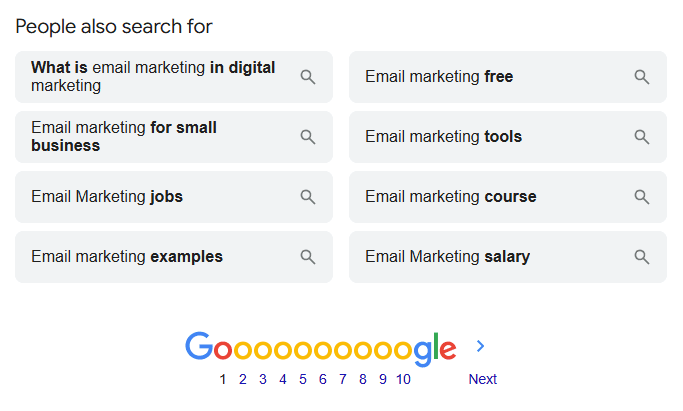
People Also Ask boxes suggest questions related to the topic being searched.
For a query about running shoes, related questions might concern shoe lifespan, cushioning, foot shape, sizing, running surface, and injury concerns. These questions can help identify long-tail topics, supporting sections, and FAQ opportunities.
The value of People Also Ask is not that every displayed question should become a keyword target. Instead, it helps reveal the questions surrounding the main topic.
Google Trends
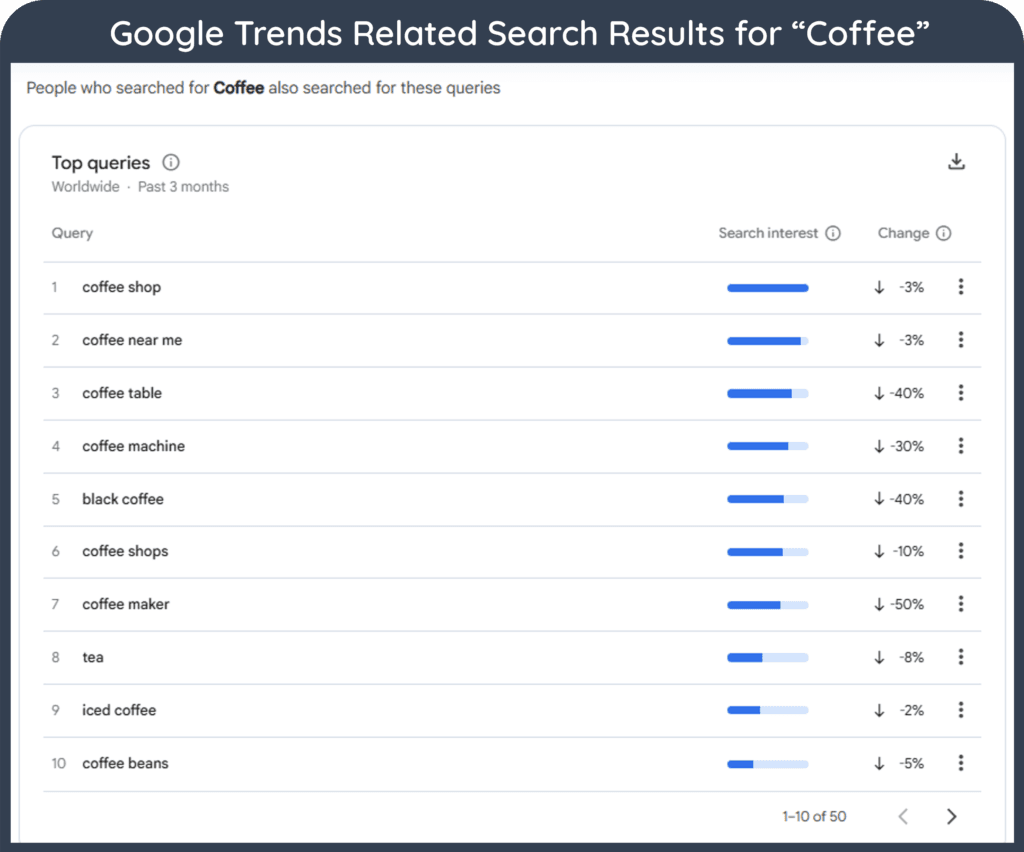
Google Trends is particularly useful when comparing terminology and identifying changing or seasonal demand. Google allows researchers to compare search terms and topics across locations and periods.
It can help you find emerging long-tail queries, seasonal variations, changing terminology, regional differences, and related short-tail topics through its Top queries section.
Google Trends measures relative interest rather than conventional monthly search volume, so it works best alongside other keyword tools.
Google Search Console
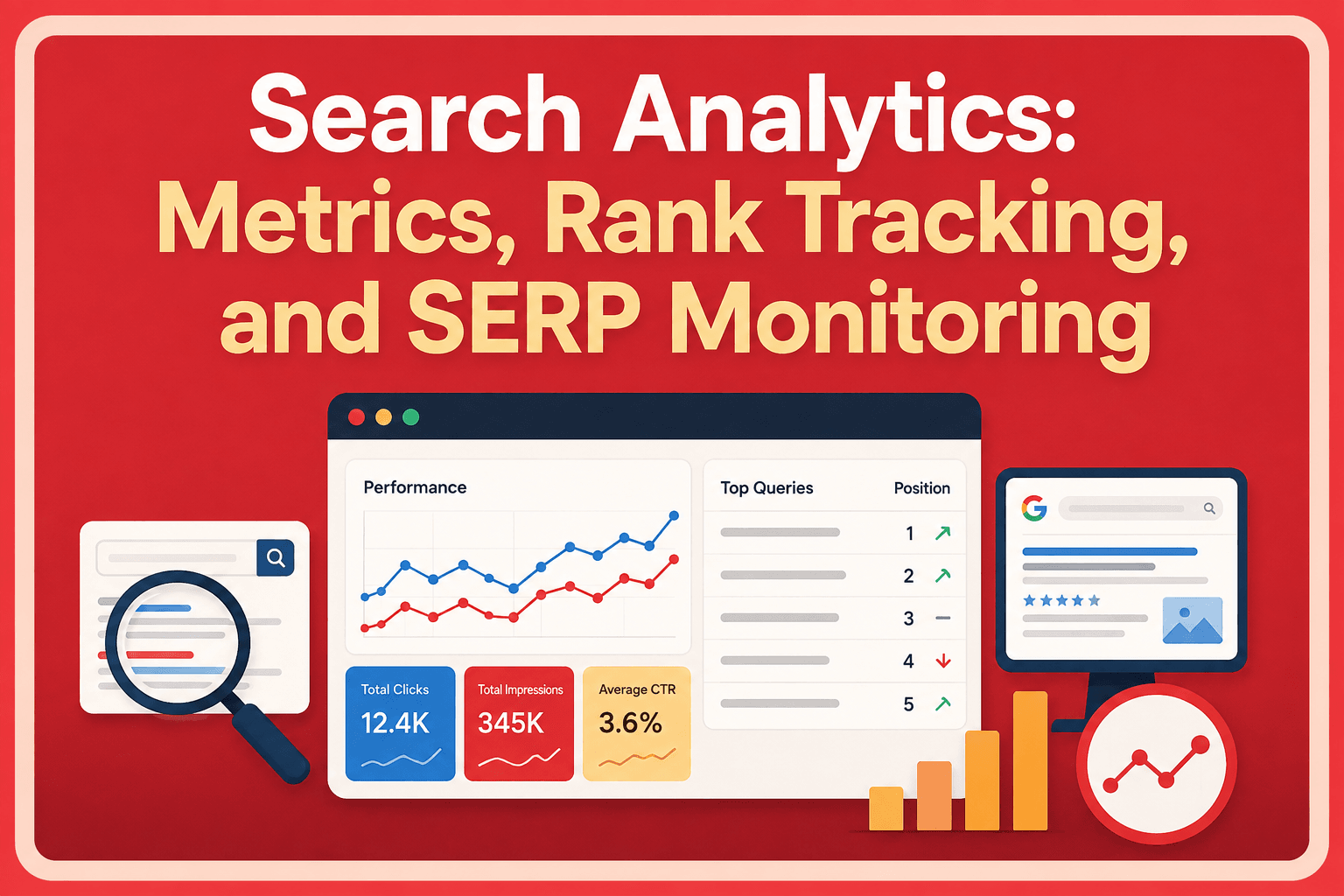
For an established website, Google Search Console can reveal long-tail queries that are already generating impressions or clicks. These real query patterns can uncover unexpected questions, variations, and subtopics that keyword tools may not surface clearly.
YouTube Search Predictions
YouTube can be an excellent keyword-discovery tool when the topic is commonly explained through video.
YouTube says its search predictions can reflect entered terms, previous activity where applicable, and what other people are searching for, including trending searches.
For example, “keyword research…” might produce queries related to “keyword research for beginners”, “keyword research for YouTube”, “keyword research without paid tools”, and “keyword research for blogging.”
These suggestions can reveal query ideas, recurring phrasing, and vocabulary used specifically on YouTube.
Reddit is useful because people often describe problems conversationally rather than reducing them to polished SEO phrases. A user might not ask “best ergonomic office chair”. They might instead write, “What chair actually works if you sit at a desk for ten hours and have lower-back pain?”
That phrasing is important as it can reveal pain points, terminology, objections, comparisons, purchase criteria, and niche questions. Reddit discussions should therefore be used as audience research, not simply copied into a keyword list.
AnswerThePublic
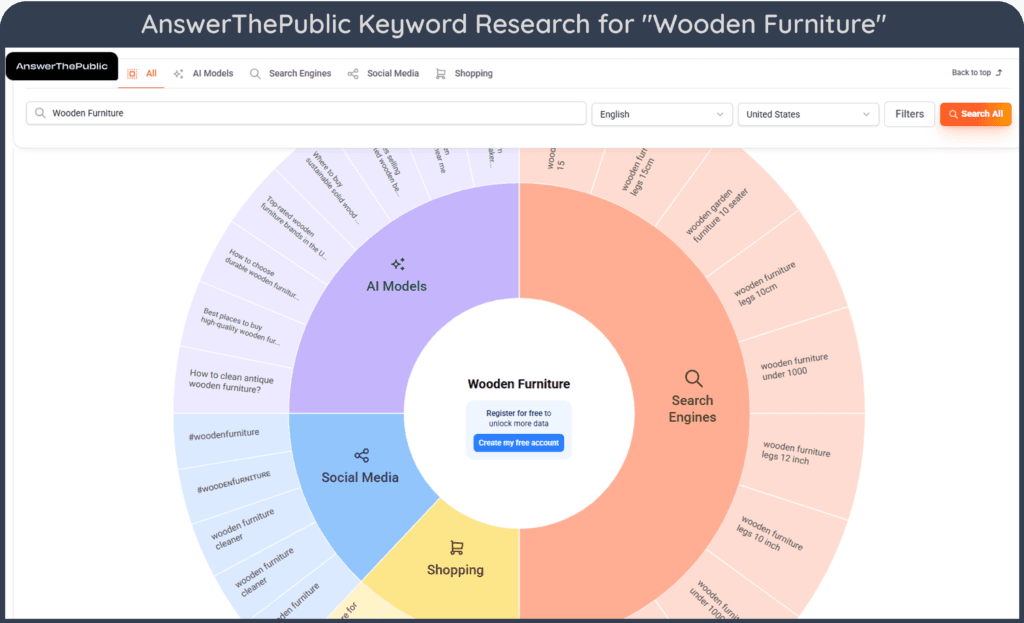
AnswerThePublic is particularly useful for question-based research. Its current documentation describes the platform as a search-listening tool that gathers questions, phrases, and trends using autocomplete data from platforms including Google, Bing, YouTube, Amazon, TikTok, and Instagram.
In AnswerThePublic, you can enter a broad seed keyword to uncover related questions, comparisons, preposition-based searches, and other terms people search around the topic.
Question patterns beginning with how, why, which, where, or can can be particularly useful for finding specific long-tail opportunities.
AnswerSocrates
AnswerSocrates takes a similar question-focused approach. The platform expands seed topics into questions and related search ideas, which can be useful for discovering informational queries, comparisons, niche problems, and FAQ opportunities.
As with any third-party platform, the suggestions should be validated against actual search results before deciding that each one warrants content.
Mangools KWFinder
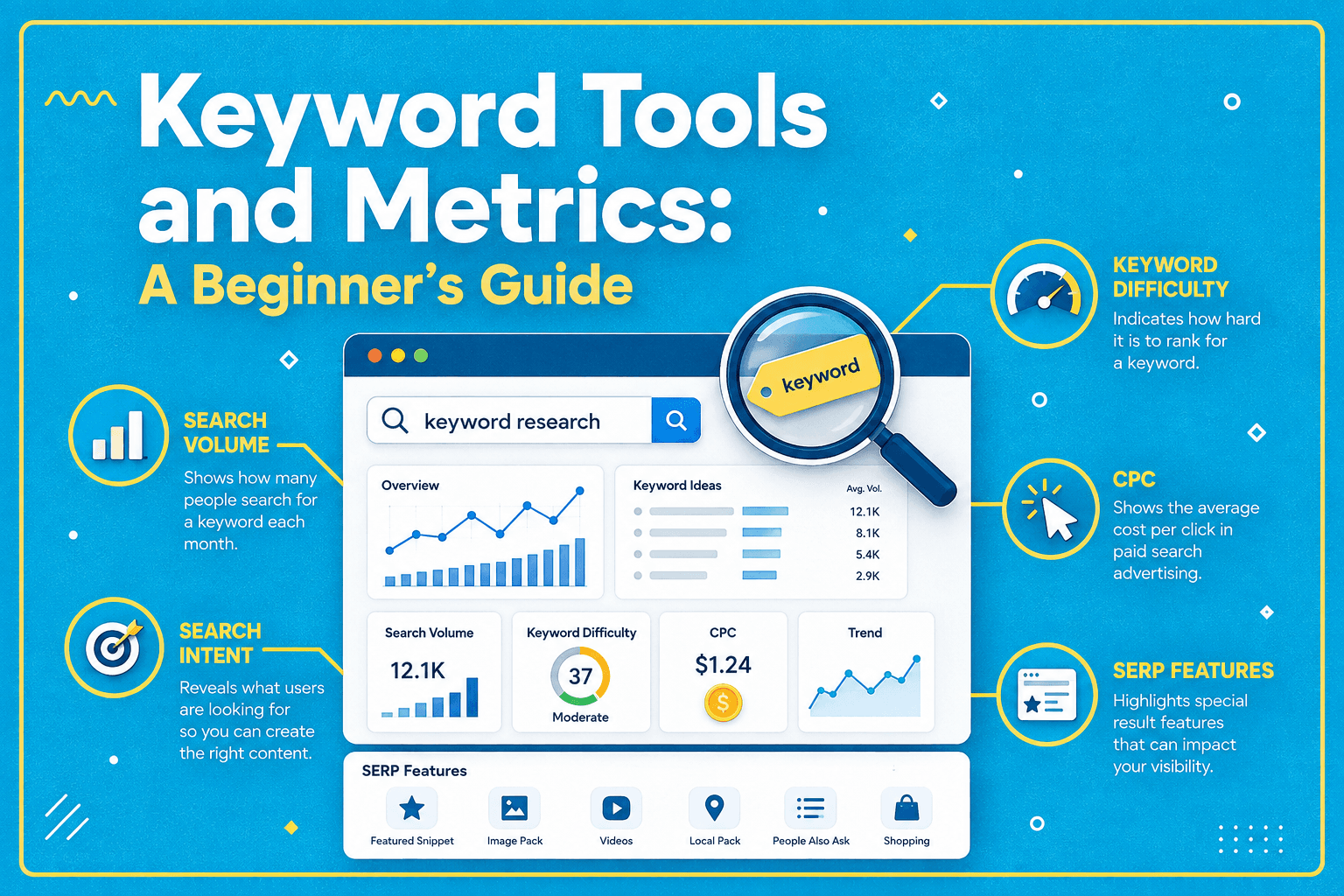
Mangools KWFinder is a more traditional keyword-research platform. It provides keyword suggestions and metrics including search volume, keyword difficulty, CPC, search-volume history, competitor keywords, and SERP information.
Ahrefs Keyword Generator and Keywords Explorer
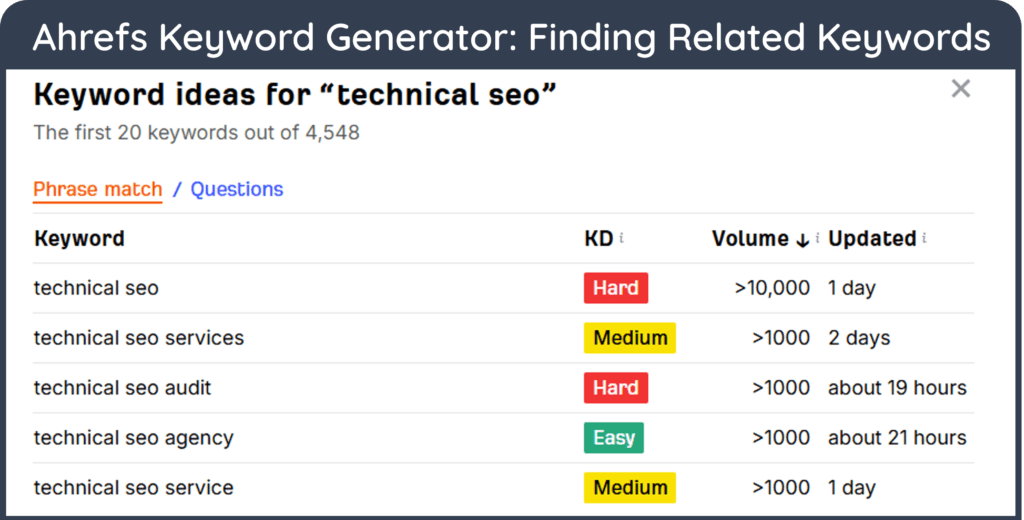
Ahrefs can be used to move in both directions. For example, you may start with a broad keyword and expand it into narrower terms. Alternatively, you may filter a large keyword set by search volume and difficulty to expose less popular queries. Ahrefs recommends using search volume, difficulty, questions, and competitor keywords when identifying long-tail opportunities.
Its free Keyword Generator can be useful for basic discovery, while its premium Keywords Explorer provides deeper filtering and SERP analysis. The important lesson applies to every tool: Do not equate a long phrase with a long-tail keyword; instead, evaluate its actual search demand, SERP, intent, and relationship with broader topics.
Which Keywords Are Better for Rankings, Conversions, and AI Search?
Long-tail and short-tail keywords have different strengths, and the best content strategy often combines both.
Why Are Long-Tail Keywords Often Easier to Rank For?
Long-tail keywords frequently receive less search demand. Lower demand can mean fewer websites deliberately compete for them, particularly when the query represents a highly specific topic. For example, the keyword running shoes may attract major retailers, manufacturers, magazines, review websites, and established publishers.
On the other hand, a query such as best waterproof running shoes for winter trails addresses a much narrower problem. For such queries, fewer pages may target that exact need comprehensively, which can create an opportunity for a smaller website.
In other words, long-tail keywords are generally less competitive, although this is not universally true. A long-tail phrase can still be difficult to rank when:
- powerful websites dominate the SERP;
- the query has strong commercial value;
- the search results overlap with a competitive head term;
- it is merely a supporting variation of a broader topic.
Therefore, SERP analysis remains necessary to know whether a keyword is actually competitive.
Which Keywords Convert Better?
Long-tail keywords can produce highly valuable traffic because specific searches often reveal clearer intent. For example, compare the short-tail keyword camera with the long-tail keyword Sony mirrorless camera under $1,000 for travel.
In this case, the second query reveals far more about product type, brand preference, budget, and intended use. Using such queries, a business selling an appropriate product can create a much more focused landing page or guide for that searcher.
Long-tail queries can have higher conversion potential because their specificity often makes the searcher’s needs and intent easier to identify. However, this should not be turned into a rule that long-tail keywords necessarily produce higher conversions. For example, even a short query such as buy iPhone 17 could have exceptionally strong transactional intent.
In other words, specific commercial intent can drive strong conversion traffic, and long-tail queries often make that intent easier to identify.
Can Short-Tail Keywords Drive More Traffic?
As broad popular terms, short-tail keywords can create much larger traffic opportunities when a website ranks prominently. However, the traffic may also be less focused.
For example, a site ranking for coffee could attract users interested in coffee history, brewing, beans, nutrition, cafes, prices, and recipes.
By contrast, a site ranking for buy single-origin Ethiopian coffee beans may attract a much narrower audience but one that is closer to purchasing. Traffic quantity and traffic quality therefore need to be considered separately.
Which Is Better for New Websites?
Long-tail topics can be a practical starting point because a new website may struggle to compete immediately with strong, established domains for broad head terms.
Specific topics also make it easier to demonstrate useful depth.
A new running website might struggle to compete for a broad keyword like running, but could build useful coverage around:
- running after knee surgery;
- running shoes for flat feet;
- winter running clothes for beginners;
- how to carry water during long runs.
Over time, those pages can support broader topical coverage. However, the site should still understand its short-tail keywords because they define the broader categories around which the long-tail content is organized.
Which Keywords Are Better for AI Responses?
There is no special keyword type that guarantees inclusion in AI Overviews, AI Mode, ChatGPT, Copilot, Perplexity, or another AI-generated response. Google explicitly states that its normal SEO best practices remain applicable to AI features and that there are no additional technical requirements or special optimizations needed to appear in AI Overviews or AI Mode.
Google reported in May 2026 that the average AI Mode query was three times the length of a traditional search query. In other words, AI search is allowing people to express more complicated information needs, which makes long-tail and conversational queries particularly relevant. Here, it is important to keep in mind that longer conversational queries are not automatically long-tail keywords in the traditional SEO sense.
Google also explains that AI Mode and AI Overviews may use query fan-out, where the system issues several related searches across subtopics and data sources while assembling a response.
This changes how keyword thinking should be applied. For example, suppose a user asks:
What lightweight waterproof trail running shoes would work for someone with wide feet who runs mostly in cold weather?
In this case, optimizing a page around that exact sentence would make little sense. Instead, useful content might comprehensively cover concepts such as waterproof trail shoes, wide-fit running shoes, cold-weather running, shoe weight, trail grip, sizing, and winter conditions.
In Google’s AI search experiences, information may be retrieved through several related searches rather than through an exact match to the original question. Therefore, long-tail research could be useful for identifying detailed audience needs, but content for AI search should cover the underlying topic and related concepts naturally rather than trying to repeat long conversational queries verbatim.
At the same time, short-tail keywords remain useful too because they identify the broader entities and topics that organize this content.
Conclusion
Long-tail and short-tail keywords describe different parts of search demand. Short-tail keywords, which tend to represent broader, more popular topics, can help define major markets, categories, pillar pages, and content clusters. On the other hand, long-tail keywords, which represent more specific queries with lower individual search demand, can expose clearer intent and may reveal opportunities that broad keywords cannot.
More importantly, several common assumptions should be avoided.
Long-tail keywords do not have to contain three or more words. They are not always easier to rank for. They do not automatically convert better, and not every long-tail variation deserves its own webpage. Likewise, short-tail keywords are not inherently too competitive or commercially weak. However, a strong keyword strategy uses both.
Broad keywords can help create structure, while long-tail queries can help reveal depth. The final decision should always consider search intent, SERP results, relevance, competition, content architecture, and business value rather than keyword length alone.
Tools such as Google Autocomplete, People Also Ask, Google Trends, YouTube Search, Reddit, AnswerThePublic, AnswerSocrates, KWFinder, and Ahrefs can help uncover these opportunities from different perspectives.
Frequently Asked Questions
What is the main difference between long-tail and short-tail keywords?
Short-tail keywords generally have higher search demand and represent broader topics, while long-tail keywords receive fewer searches individually and often address more specific needs. The distinction is primarily about popularity and position on the search-demand curve rather than a fixed number of words.
Are all keywords with three or more words long-tail keywords?
No. A long keyword can still receive high search volume, while a one- or two-word query can belong to the long tail if very few people search for it. Word count is therefore only a tendency, not the definition.
Why are long-tail keywords often easier to rank for?
They are often less competitive because fewer websites actively target very specific, lower-volume searches. However, some long-tail keywords can still be difficult, particularly when powerful websites dominate the SERP or the query is simply a variation of a competitive broader topic.
Do long-tail keywords convert better?
They can. More specific searches often reveal clearer commercial or transactional intent, which can make it easier to match the user with the right product, service, or content. However, conversion depends on intent rather than keyword length alone.
Which keyword type brings more traffic?
A high-ranking short-tail keyword can produce more traffic because it usually has greater search demand. Long-tail keywords produce less traffic individually, but many related long-tail queries can collectively create substantial and highly relevant traffic.
Are long-tail keywords better for AI search?
Longer, conversational queries are increasingly common in AI-powered search, but they are not necessarily long-tail keywords. However, there is no special long-tail optimization required for AI results. Google recommends following established SEO practices and creating useful content that covers the underlying subject comprehensively.
How can I find long-tail keywords for free?
Google Autocomplete, People Also Ask, Google Trends, YouTube Search predictions, Reddit, AnswerSocrates, and free keyword generators can all expose specific questions and niche searches. The ideas should then be checked against actual search results and business relevance.
Which tools are best for finding long-tail keywords?
Useful options include Google Search, Google Trends, AnswerThePublic, AnswerSocrates, Mangools KWFinder, Ahrefs Keyword Generator, Ahrefs Keywords Explorer, Semrush, and similar keyword platforms. Each provides a different combination of keyword ideas, questions, search-volume estimates, competition metrics, or SERP data.
Should every long-tail keyword have its own article?
No. Several long-tail keywords may represent the same underlying search intent. If the same types of pages rank for multiple variations, one comprehensive page will often be more appropriate than creating several nearly identical articles.
Should a new website focus only on long-tail keywords?
No. Long-tail topics can provide practical early opportunities, but broad short-tail terms still help define the site’s categories, pillars, and overall content architecture. A balanced strategy uses short-tail keywords for structure and long-tail keywords for depth.