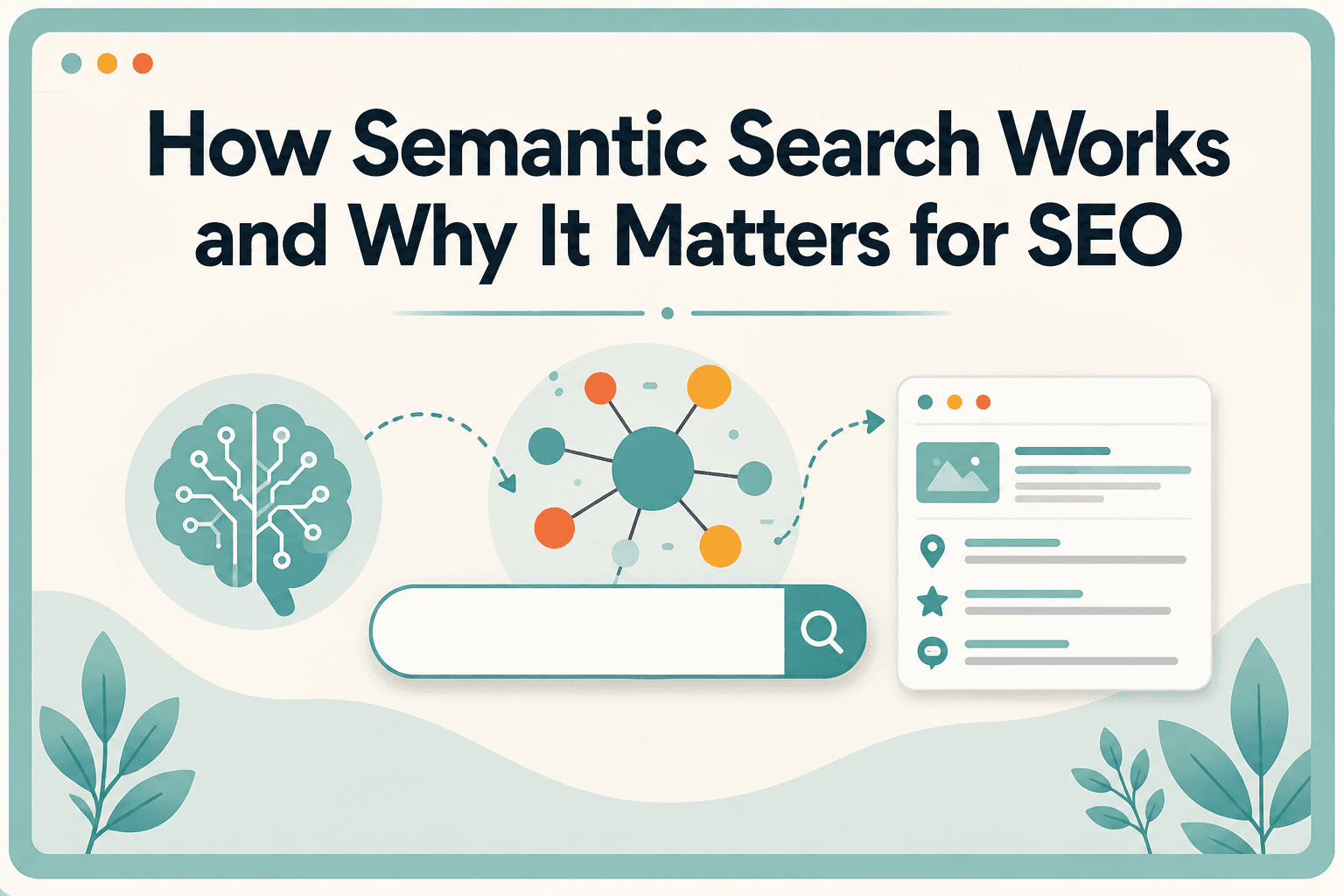
How Semantic Search Works and Why It Matters for SEO
Key Takeaways
- Semantic search interprets meaning, context, concepts, and relationships rather than relying solely on exact keyword matches.
- Search intent describes the purpose behind a query, making informational, commercial, transactional, navigational, local, and mixed needs important distinctions.
- Effective SEO content addresses the relevant concepts and subquestions naturally, rather than forcing synonyms, entities, or related keywords into copy.
- Query fan-out expands complex searches into related subqueries, reinforcing the value of comprehensive content organized around genuine information needs.
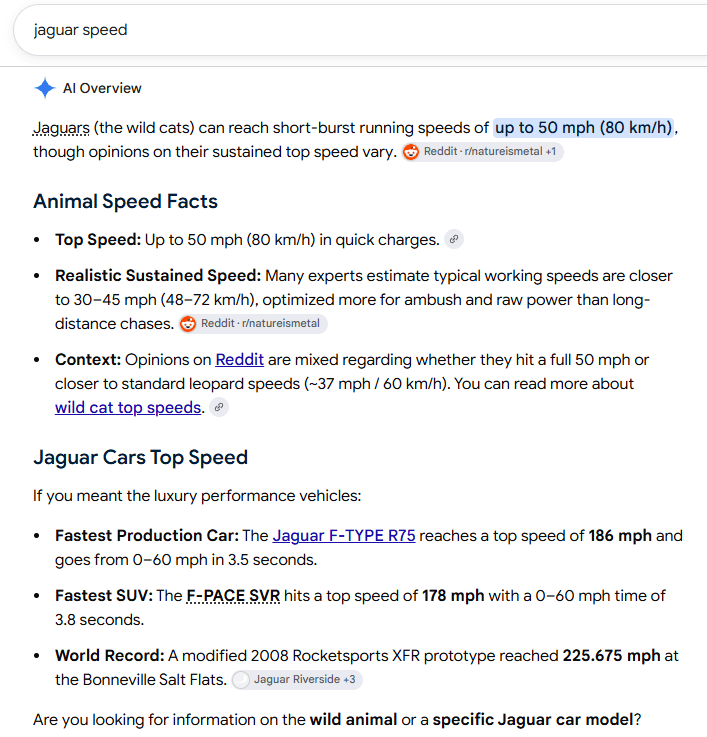
Search engines increasingly need to understand more than the words typed into a search box. A person searching for “apple charger” is probably looking for a device accessory rather than information about charging fruit, while someone searching for “jaguar speed” may mean the animal or the car depending on the surrounding context. Semantic search helps search systems interpret these relationships between words, concepts, context, and likely user needs.
For SEO, this changes how content should be planned. Keywords still matter because they reveal how people express their needs, but matching an exact phrase is not enough. A useful page also needs to satisfy the purpose behind the query, explain relevant concepts naturally, and fit the type of result a searcher expects.
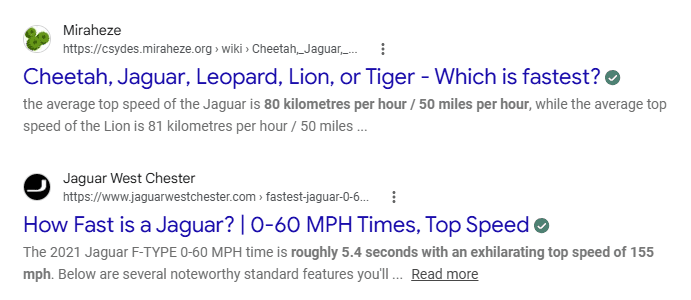
In other words, semantic search connects what people type with what they actually mean. Understanding that connection helps marketers create pages around real information needs rather than isolated keyword strings.
Table of Contents
Understanding Semantic Search and Search Intent
Semantic search refers broadly to search systems that consider meaning and context rather than depending only on literal word matching. A search engine may therefore connect a query with relevant information even when the page does not contain every exact word the searcher used.
For example, Google uses neural matching to help its systems understand representations of concepts in queries and pages. Similarly, RankBrain helps Google connect words with concepts so that relevant pages can be surfaced even when they do not contain all the exact words in a query.
What Is Search Intent?
Search intent is the purpose or need behind a query. Someone searching for “how does a heat pump work” probably wants an explanation, while “best heat pump brands” suggests comparison and “buy heat pump online” indicates a much stronger intention to purchase.
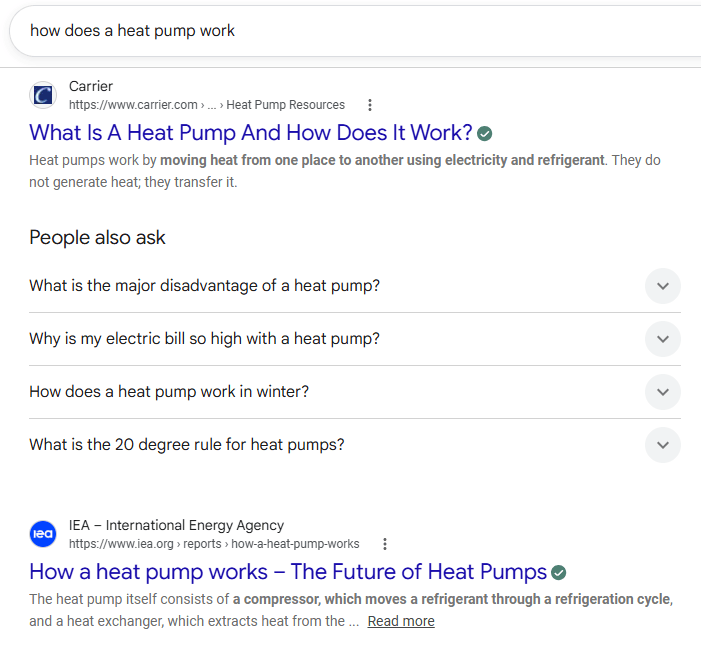
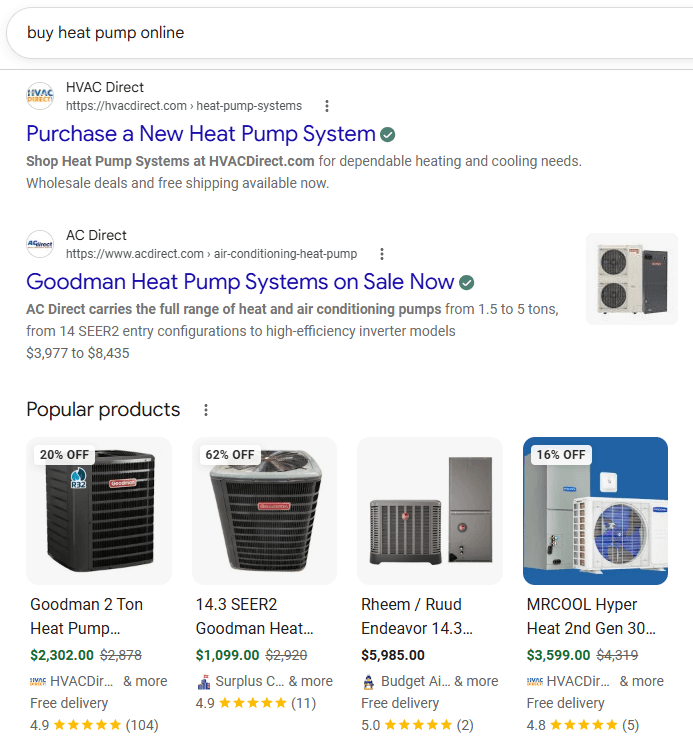
Semantic search and search intent are therefore closely connected but not identical:
⇒ Semantic search concerns meaning; search intent concerns purpose.
For example, consider these two searches:
- “apple watch battery life”
- “how long does an Apple Watch last?”
The words differ considerably, but both may represent a similar informational need.
Conversely, two searches containing the same main word can represent very different purposes. For example, “Canva” may be navigational if the user wants Canva’s website, while “Canva vs Adobe Express” is primarily comparative and slightly commercial.
In other words, “Canva” refers to the same online tool in both instances, but the two queries indicate different search needs.
Note
Semantic SEO does not mean adding as many synonyms, entities, or related keywords as possible. The objective is to explain the subject clearly, cover relevant ideas naturally, and satisfy the searcher’s needs.
How Semantic Search Works
Traditional keyword retrieval and semantic retrieval solve related but different problems. Keyword-based systems are good at locating documents containing particular words or close textual matches. Semantic techniques can help connect queries and documents through concepts and meaning.
Modern search systems can use several approaches together rather than choosing only one.
Embeddings and Semantic Similarity
Modern retrieval systems can represent words, sentences, passages, or entire documents numerically as embeddings. An embedding captures useful characteristics of the content as a collection of numbers rather than storing meaning as ordinary text. These representations can be positioned in a multidimensional space, where content with similar meanings may appear closer together than unrelated content.
This allows a retrieval system to identify semantic similarity even when a query and a relevant document use different wording. For example, a search for “footwear for jogging” could be associated with content about “running shoes” because the concepts are closely related.
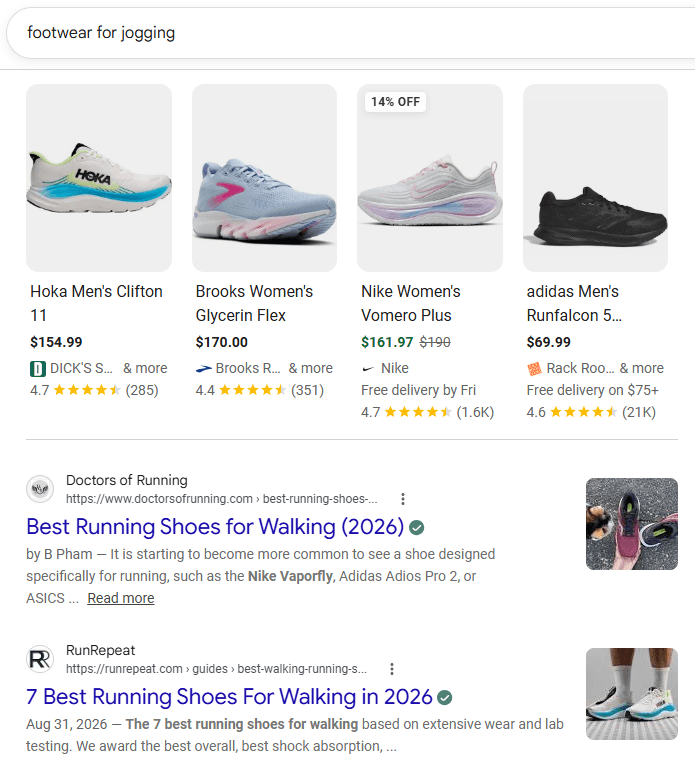
However, semantic similarity is only one technique used in modern information retrieval. It should not be treated as a complete explanation of Google’s proprietary Search ranking systems or how Google determines final rankings.
From Exact Words to Meaning
Google’s BERT system demonstrates why context matters. BERT considers words in relation to the other words around them, which helps Google understand how even small words change the meaning of a query.
For example, “flights from Paris to London” and “flights from London to Paris” contain almost the same words, but from and to completely change the travel direction. Context-aware language systems help search engines understand this difference rather than treating the queries as a mere collection of keywords, which is very different from simply counting matching terms.
Consider another example:
- Query 1: “bank near river”
- Query 2: “bank near me”
Both contain the word bank, but the surrounding words point toward very different interpretations. One may concern land beside a river, while the other strongly suggests a financial institution and local intent.
Context, Concepts, and Relationships
Meaning can also depend on relationships among concepts. A comprehensive page about electric vehicles may naturally discuss batteries, charging networks, range, regenerative braking, charging time, and energy efficiency. These concepts belong together because they help explain the topic, not because an SEO tool has labeled them “semantic keywords.”
For SEO, the practical lesson is straightforward:
⇒ Cover the relationships needed to explain a topic clearly and completely, rather than repeating the same keyword in different forms.
For example, a page about running shoes should naturally explain related concepts such as cushioning, sizes, heel-to-toe drop, surface type, fit, and training distance because these relationships help readers understand how to choose the right shoe. Simply repeating phrases such as best running shoes, running shoes for runners, and top running shoes adds far less topical value.
How Search Intent Works
Search intent helps explain why two relevant pages may not be equally useful for the same query. A searcher looking for a definition needs different content from someone comparing products or trying to visit a particular website.
Google explains that some queries can have several interpretations. For example, its discussion of query meaning notes that “pizza” could relate to restaurants, delivery, recipes, or other needs, and Search may prioritize the interpretations that appear most likely.
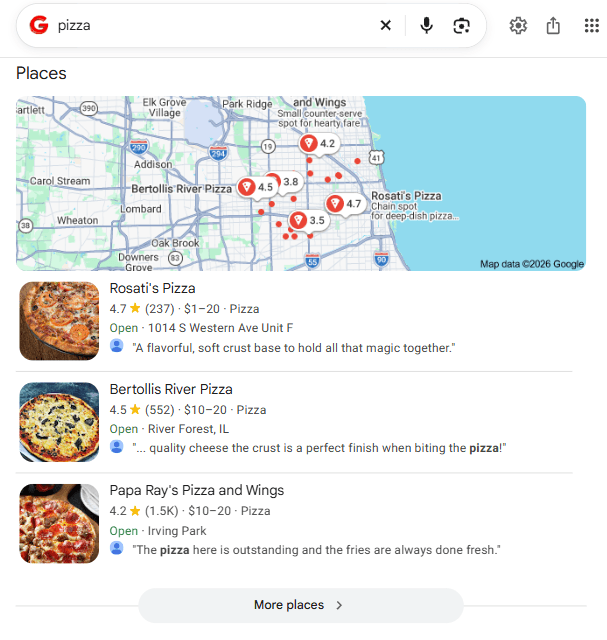
Types of Search Intent
SEO practitioners commonly use four broad intent categories—informational, commercial, transactional, and navigational. Local intent and mixed intent are also useful practical descriptions. Conversational search, by contrast, primarily describes the natural-language form of a query rather than a separate user goal.
Informational, Commercial, and Transactional Intent
The distinction is particularly useful when planning pages. A person searching “what is CRM software?” is probably learning. In this case, the query is purely informational, so using the keyword “what is CRM software” in an aggressive purchase page may not satisfy the immediate need.
Someone searching “HubSpot vs Salesforce” is indicative of both information and commercial search intent. In this case, the person already knows the category and wants help comparing alternatives.
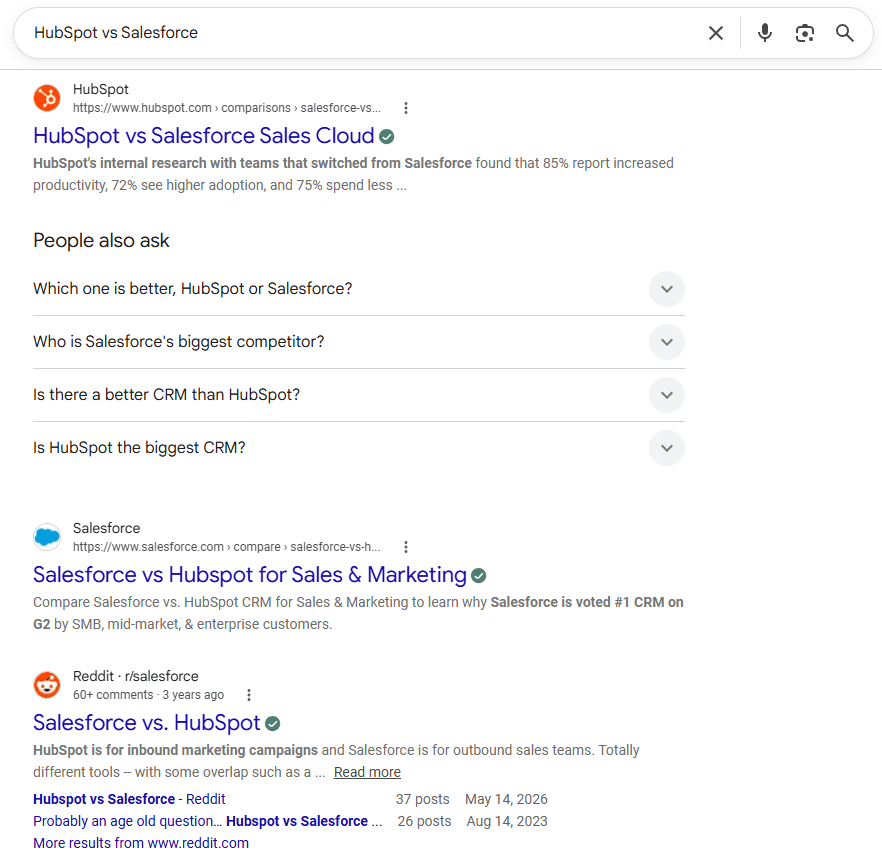
Meanwhile, “buy Salesforce license” signals a different stage again, where a product or sales-oriented destination may be more appropriate.
The same broad topic can therefore require several pages because the underlying purposes are genuinely different.
Navigational and Local Intent
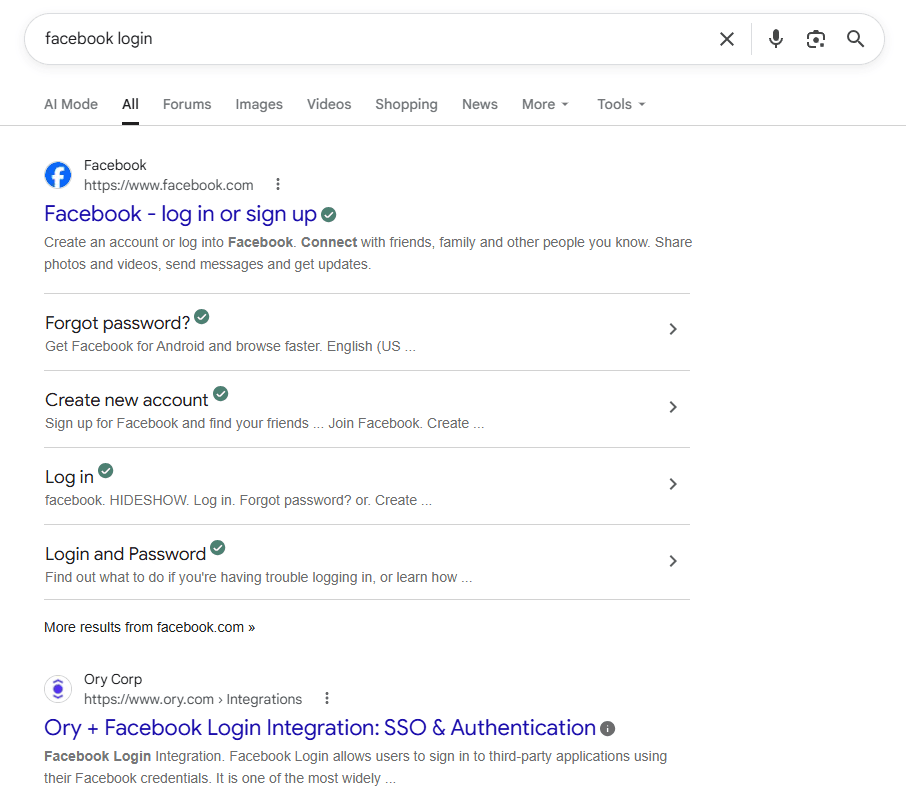
Navigational searches seek a particular destination. Queries such as “Facebook login” or “YouTube Studio” are not primarily asking for explanatory articles.
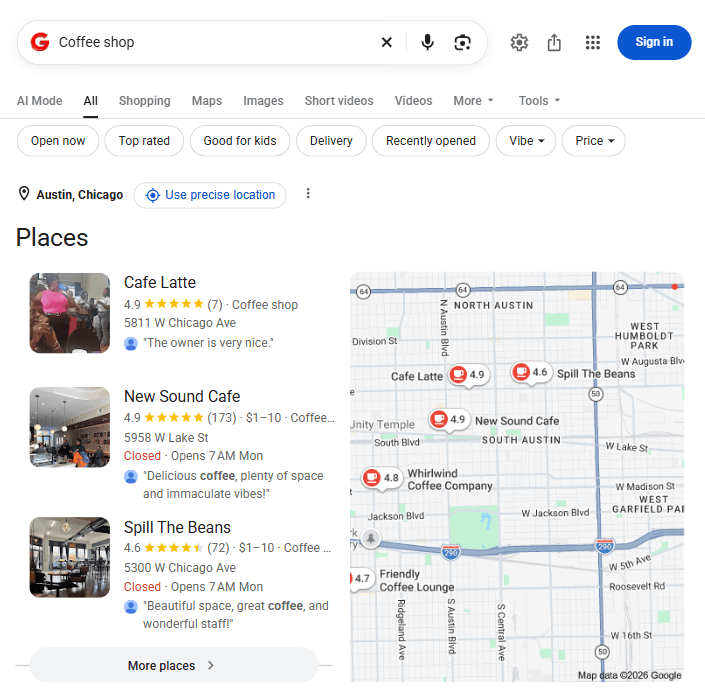
Local intent adds geographic relevance. “Coffee shop” may produce nearby businesses depending on the searcher’s location, while “how to open a coffee shop” is clearly informational. Google states that location can influence relevance and different queries can trigger different result features.
Conversational and Mixed Intent
Conversational searches often use complete questions or natural language:
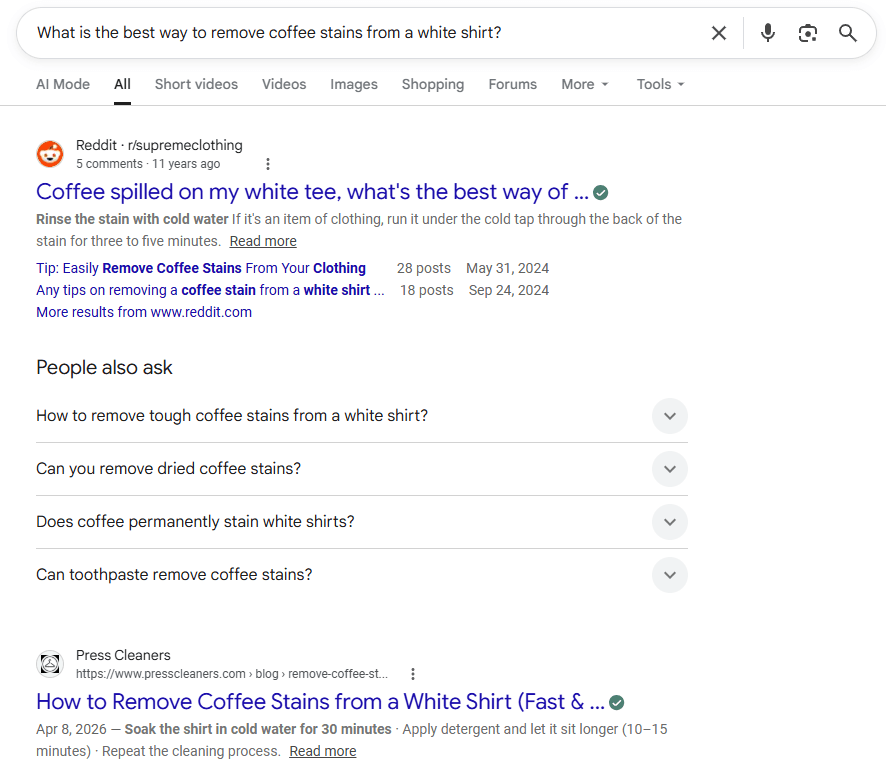
“What is the best way to remove coffee stains from a white shirt?”
The query may contain more context than a short keyword such as “coffee stain removal.” Modern language-understanding systems are particularly useful for interpreting these longer or nuanced searches.
Mixed intent occurs when more than one interpretation is plausible. “Tesla Model 3,” for example, might indicate interest in specifications, prices, reviews, used cars, official information, or recent news. The SERP itself can therefore become valuable evidence when determining what searchers may expect.

Query Interpretation, Fan-Out, and Semantic Discovery
Semantic search becomes even more interesting when one search represents several underlying questions.
Suppose someone asks: “What is the best laptop for video editing under $1,500?”
Answering that properly may require information about:
- Processor and GPU requirements, because editing performance depends heavily on computing capability.
- RAM and storage needs, particularly for large video files and editing applications.
- Display quality, including resolution and color accuracy.
- Battery life and portability, when the laptop will be used away from a desk.
- Software compatibility, because workflows may depend on Windows, macOS, or particular applications.
- Available models and pricing, because the $1,500 limit affects the recommendation.
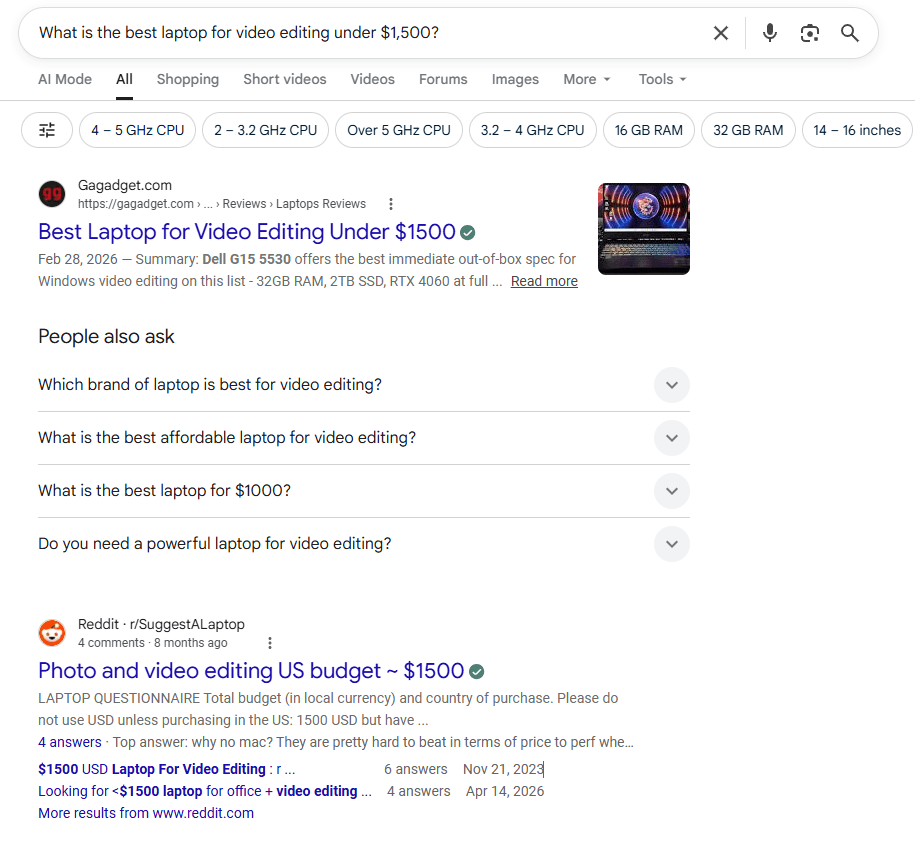
The original question therefore represents a network of related information needs rather than one isolated keyword.
What Is Query Fan-Out?
Query fan-out is an AI search process in which a search system generates several related queries from one original query to explore related information. Instead of relying on a single search, the system can investigate multiple subtopics and use the retrieved information to build a broader response.
Google uses query fan-out in its generative search experiences, including AI Overviews and AI Mode. Its search systems can generate multiple related queries to retrieve additional relevant information.
For example, if someone searches “What is the best laptop for a college student under $1,000?”, the system may explore battery life, portability, performance, reliability, price, and suitable models before combining the findings.
A simpler example would be: “How can I remove weeds from my lawn?”
Related internal searches by Google might examine weed treatments, chemical-free removal, and ways to prevent weeds from returning.
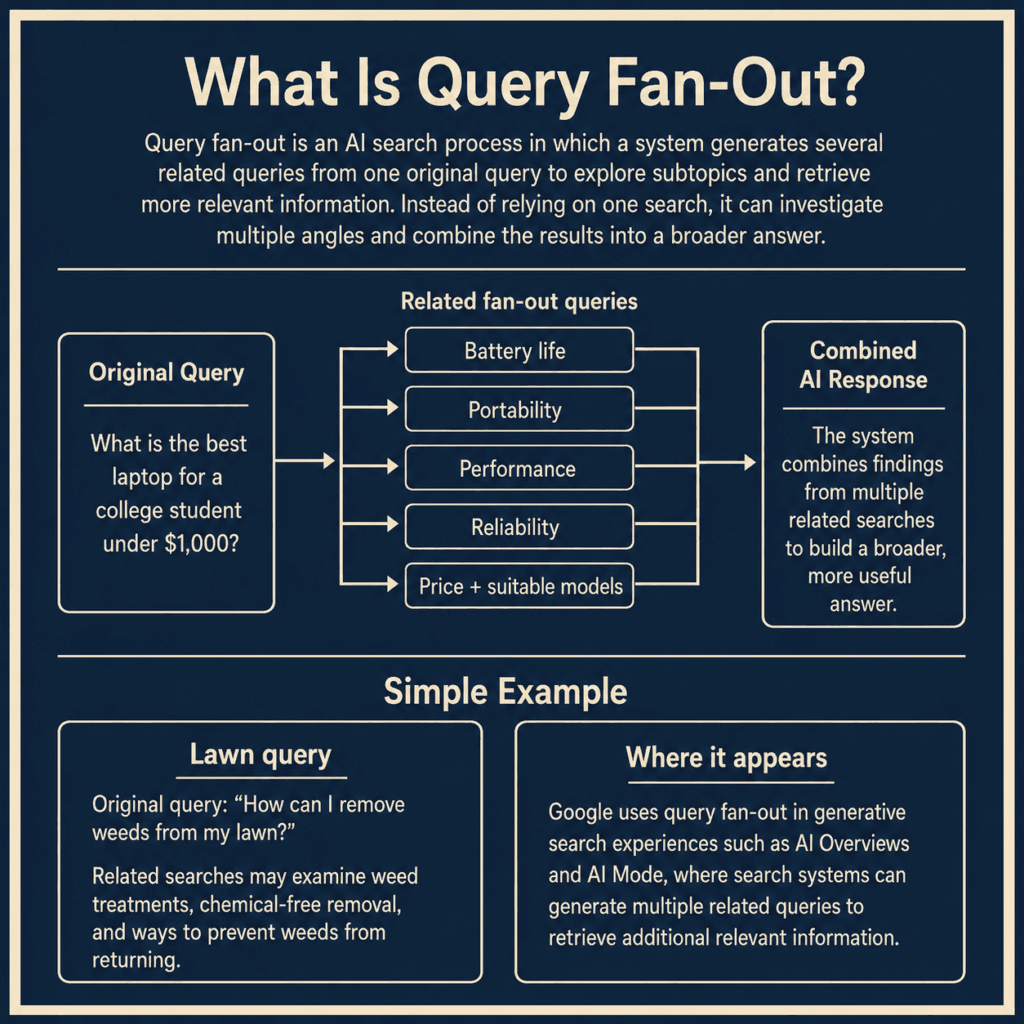
Query fan-out helps AI Overviews and AI Mode answer complex questions that may otherwise require several separate searches. For SEO, however, it does not mean creating a page for every possible fan-out query. The better approach is to create useful content that naturally covers the important subtopics and concepts a reader would need.
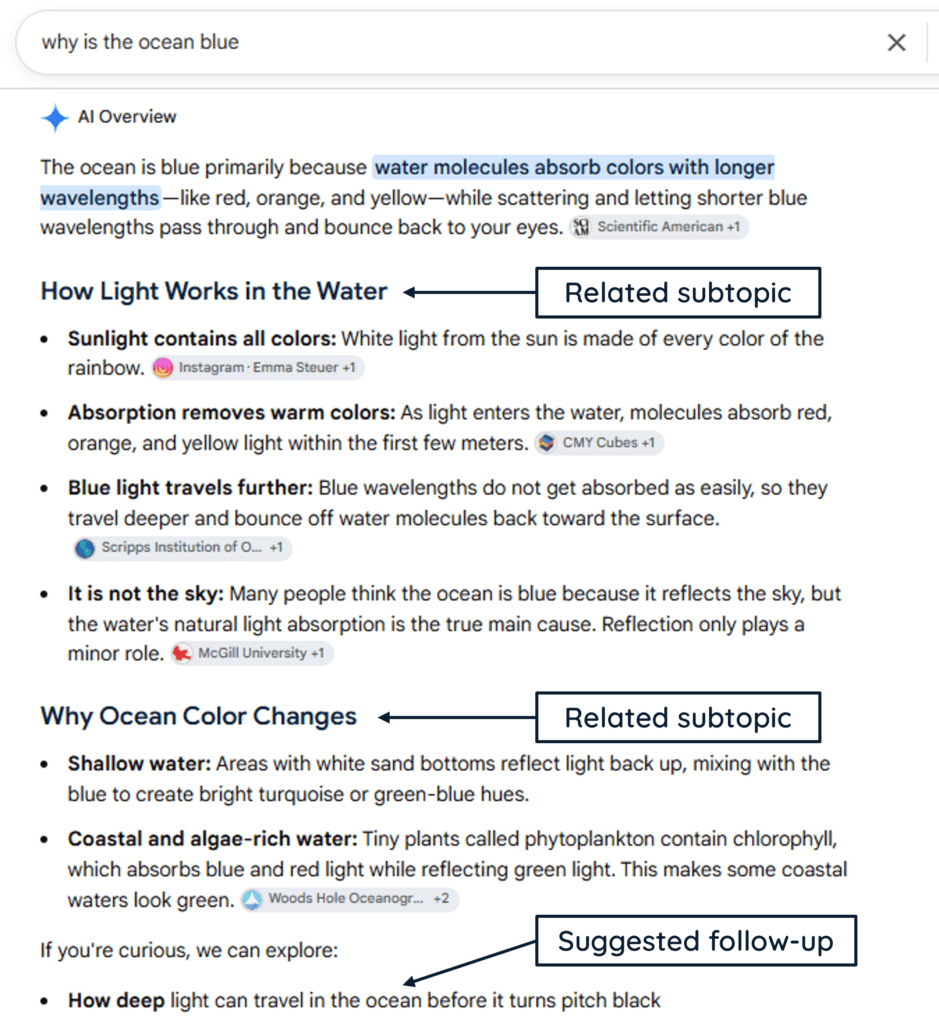
Together, semantic interpretation, intent recognition, and query expansion help search systems move from matching individual words toward understanding the broader information need behind a search.
How to Optimize for Semantic Search and Search Intent
Semantic optimization begins with understanding the query rather than collecting related words.
Map Queries to Intent
An intent map can connect keyword research with actual content decisions:
Mapping prevents a common mistake: targeting several keywords with one page even though those searches require fundamentally different answers.
Review the SERP
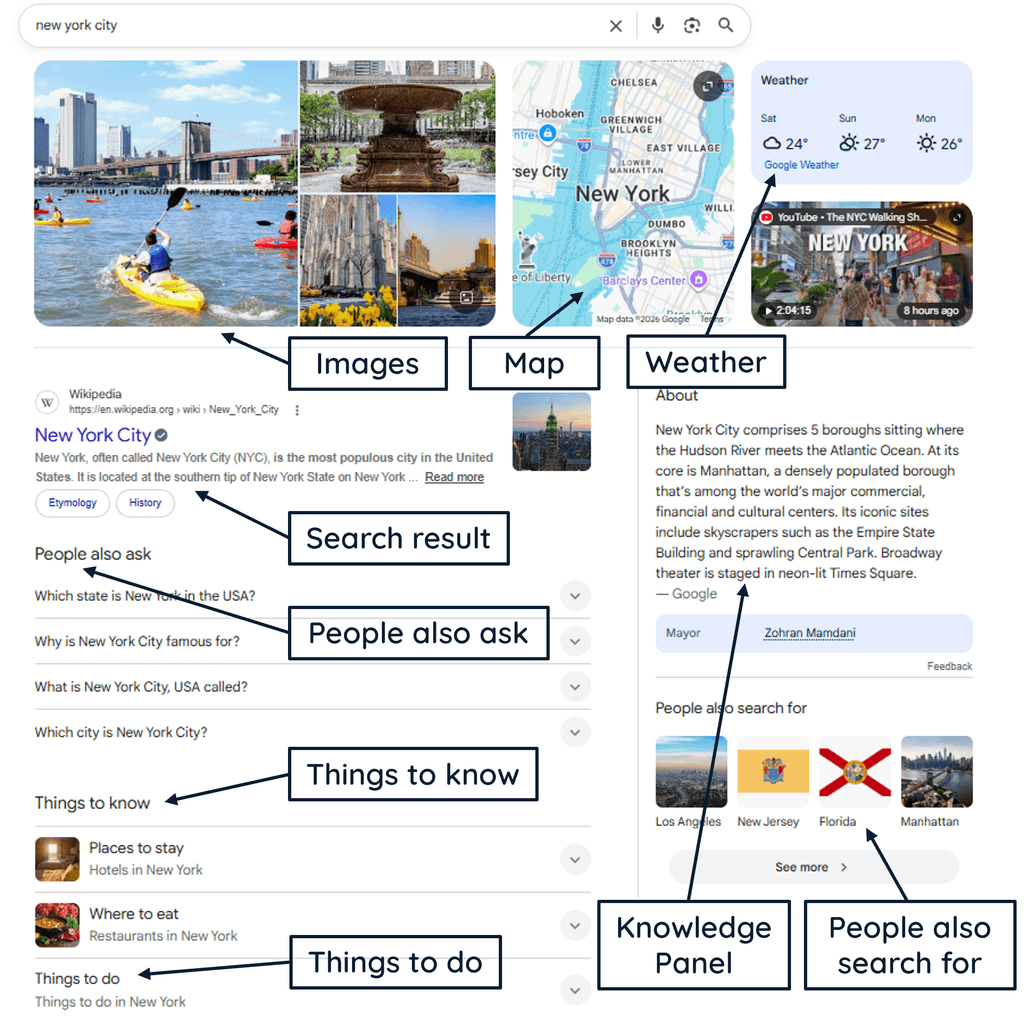
Search results provide useful evidence about likely intent. If a query produces mostly tutorials, videos, and explanatory articles, an ecommerce category page may struggle to satisfy the same need. Similarly, if product listings and retailer pages dominate, an informational article may not be appropriate.
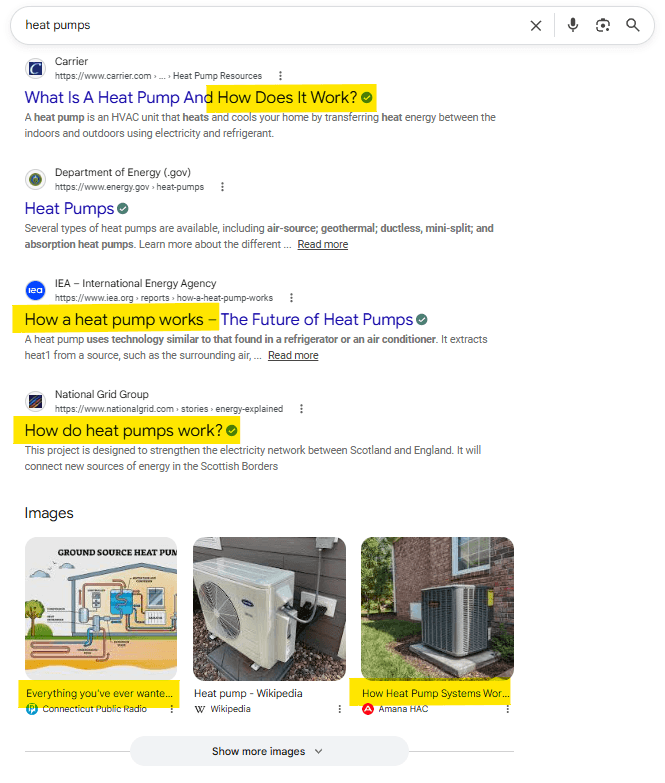
However, SERPs should be interpreted rather than copied. Existing results show how search engines currently understand a query; they do not provide a template that every new page must imitate. Search analytics can then show whether changes in impressions, clicks, or queries support what the SERP review suggests.
Cover Related Concepts Naturally
A page should include the concepts needed to answer the subject thoroughly. For example, an article explaining email deliverability may naturally need to discuss sender reputation, authentication, spam complaints, bounce rates, blocklists, engagement, and inbox placement. Omitting those ideas could leave the explanation incomplete.
This is different from downloading 100 semantically related keywords and forcing them into paragraphs.
Match the Content Format With Intent
Intent influences format as much as wording. Someone searching “how to tie a Windsor knot” may benefit from diagrams or video. A query such as “mortgage calculator” may call for an interactive tool. “Best accounting software for small business” may require a structured comparison table.
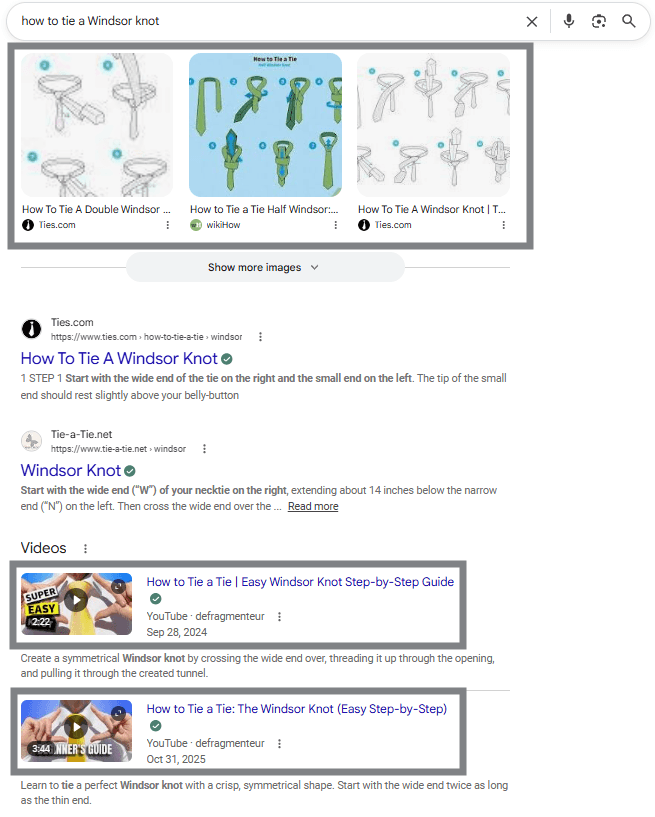
Semantic SEO therefore involves asking not only what information is relevant? but also what presentation best satisfies the need?
Strengthen Internal Relationships
Internal links can connect broader concepts with more specific resources. A semantic-search guide might link to pages about search intent, entities, keywords, ranking systems, and hybrid search because those topics genuinely relate to the reader’s next questions.
The objective is not to create links merely because pages share keywords. Links should reflect meaningful informational relationships.
Search Intent Optimization Checklist
Before publishing or substantially revising a page:
- Identify the dominant purpose behind the target query and determine whether secondary or mixed intents also deserve attention.
- Inspect the current SERP for useful intent signals, including the types of pages, features, media, and commercial elements that appear.
- Choose a content format that fits the searcher’s task rather than assuming every query requires a conventional article.
- Cover important concepts and subquestions naturally without inserting related terms simply to create the appearance of semantic depth.
- Revisit established pages when intent changes, because search behavior, available information, products, terminology, and SERP composition can evolve.
Common Search Intent Mistakes
One common mistake is treating every keyword variation as a different intent. “What is semantic search?” and “semantic search definition” may be different queries but can often be satisfied by the same page.
The opposite mistake is combining genuinely different purposes. A page targeting “what is project management software,” “best project management software,” and “buy project management software” may struggle to serve beginners, comparison shoppers, and purchase-ready users equally well.
Another mistake is treating semantic SEO as keyword expansion. Search engines have become better at understanding meaning precisely because exact textual repetition is not the only way to establish relevance. Google’s RankBrain helps Search return relevant content even when a page does not contain every exact word in the query.
In short, semantic optimization should make content more useful and coherent, not more mechanically “optimized.”
Frequently Asked Questions
What is semantic search?
Semantic search uses meaning, context, concepts, and relationships to help connect queries with relevant information rather than relying only on exact word matches.
How is semantic search different from keyword search?
Keyword search emphasizes textual matching, while semantic search can also consider conceptual meaning and context.
What is search intent?
Search intent is the underlying purpose or need a person is trying to satisfy through a search query.
What are the main types of search intent?
The four commonly used SEO categories are informational, commercial, transactional, and navigational intent.
What is mixed search intent?
Mixed search intent occurs when a query reasonably represents more than one possible user goal.
What is query fan-out?
Query fan-out is a technique used in Google’s AI search experiences to issue multiple related searches across subtopics and data sources.
Do keywords still matter in semantic search?
Yes, keywords remain useful expressions of search demand, but they should be interpreted in the context of meaning and intent.
What is the difference between semantic search and hybrid search?
Semantic search focuses on meaning-based retrieval, while hybrid search combines semantic techniques with lexical or keyword-based retrieval.
How can search intent be identified?
Search intent can be assessed by examining the query language, likely user goal, current SERP, content formats, and related search behavior.
Why does semantic search matter for SEO?
Semantic search matters because SEO content needs to satisfy meaning and user purpose rather than depend primarily on exact keyword repetition.