How to Build an SEO Content Strategy That Works
Key Takeaways
- An SEO content strategy determines what content should exist, whom it serves, how topics connect, and which business goals they support.
- A taxonomy organizes potential subjects into pillars, clusters, and subtopics, while strategy prioritizes coverage based on audience needs, relevance, expertise, and resources.
- Audience research, competitor analysis, search demand, and brand credibility should guide priorities rather than keyword volume alone.
- Effective content planning involves editorial workflows, distribution, performance measurement, audits, and updates to improve over time.
An SEO content strategy is a long-term plan for deciding what a website should publish, who the content should serve, how different topics should connect, when each piece should be created, and how its performance will be measured over time. Content optimization focuses on improving individual pages, while content strategy works one level above that. It decides which pages should exist in the first place and how they contribute to a larger business objective.
Suppose someone wants to build a business website around coffee. It could belong to a neighborhood café, a coffee-bean wholesaler, a specialty roaster, an equipment retailer, or a business supplying cafés with ingredients and accessories. After building the site, the owner decides to add an informational blog. Without a well-thought-out content strategy, publishing isolated articles such as Best Coffee Beans, How to Make Cold Brew, and What Is a French Press may produce useful individual pages, but it does not create a coherent or purposeful content program.
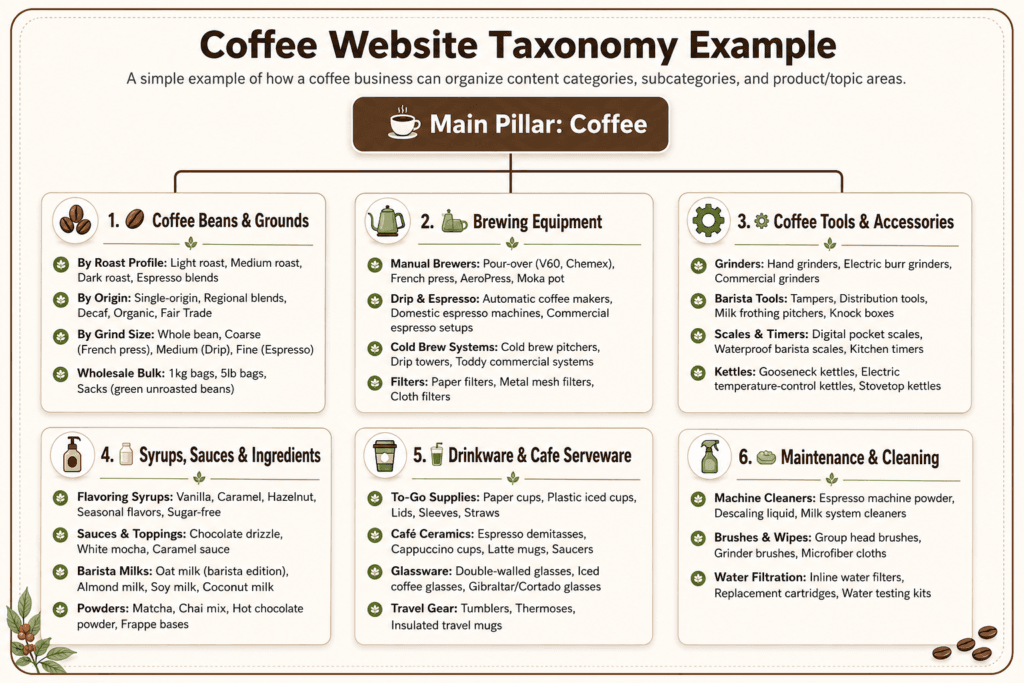
A better starting point is to understand the business and build a taxonomy around the subjects it can genuinely cover. The broad pillar might be Coffee, which could cover major areas such as Coffee Beans & Grounds, Brewing Equipment, Coffee Tools & Accessories, Syrups & Ingredients, Drinkware & Serveware, and Maintenance & Cleaning. Each of these can then be divided further. For example, Coffee Beans & Grounds might include roast profiles, origins, grind sizes, and wholesale formats, while Brewing Equipment might include manual brewers, espresso machines, cold-brew systems, and filters.
That structure immediately gives the business something a list of disconnected keywords cannot: a long-term view of its content universe.
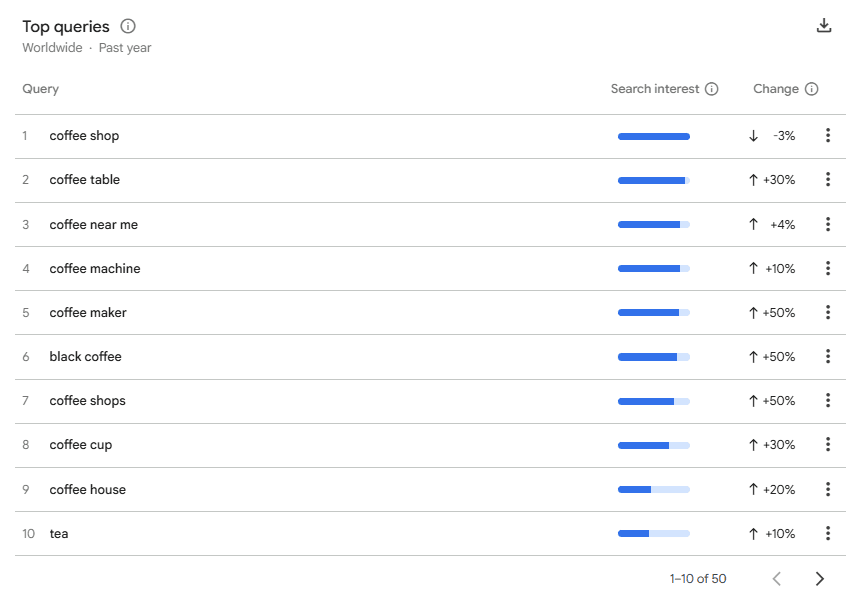
A café does not need to publish everything at once. It might spend two months building useful coverage around coffee beans before moving to brewing methods. A wholesaler may prioritize bulk beans, café supplies, grinders, and commercial equipment. Similarly, a specialty roaster may focus more heavily on origins, processing, roast profiles, tasting, and brewing techniques.
In other words, the taxonomy establishes what could be covered, while the content strategy determines what should be covered first, why it matters, who will create it, and how it will contribute to traffic and business growth. This approach serves many purposes at once:
- Building a clear content hierarchy by organizing broad pillars into categories, clusters, subclusters, and individual topics.
- Developing topics around logical clusters so related content is planned together rather than published randomly.
- Establishing content boundaries so that unnecessary and irrelevant topics are not covered even if they have high search demand.
- Implementing consistent categorization across articles, product pages, guides, and other content types.
- Avoiding unnecessary overlap between topics, titles, search intent, keywords, and articles, which can also reduce the risk of keyword cannibalization.
- Covering topics cluster by cluster to build depth systematically instead of spreading resources across unrelated subjects.
- Creating and maintaining an editorial schedule by turning the taxonomy into a practical publishing roadmap.
- Improving internal linking because the relationships between parent topics, supporting pages, and related content are already defined.
- Identifying content gaps and long-term opportunities by making it easier to see which areas are well covered and which still need attention.
Most importantly, this approach provides a broad view of the entire content landscape at once, helping resolve many day-to-day challenges related to topic selection, editorial planning, and long-term content strategy.
Table of Contents
SEO Content Strategy
An SEO content strategy connects a website’s business goals with the information its audience needs and the subjects for which the business can credibly create useful content. This is different from simply finding keywords with search volume.
A keyword can identify an opportunity, but a content strategy must answer broader questions:
- Does this subject belong on the website?
- Which audience does it serve?
- What business objective does it support?
- Is it part of an existing category or cluster?
- Does another page already address the same need?
- Should it become a commercial page, guide, glossary entry, comparison, video, or another format?
- When should it be published?
- How will it connect with existing content?
- What happens after publication?
Google’s current people-first content guidance encourages publishers to consider whether they have an intended audience, whether their site has a primary purpose or focus, and whether their content demonstrates genuine experience or expertise.
Start With a Content Taxonomy
Consider the taxonomy for the coffee business again.
This information architecture acts as a blueprint for organizing, labeling, and connecting the website’s information. In practical terms, it creates a map showing where major subjects, categories, and supporting topics belong.
Taxonomy and Information Architecture
A taxonomy is not a list of pages that must all be published. It is a map of the subjects a website could cover. The content strategy determines which parts of that map deserve priority based on audience needs, business relevance, available expertise, and publishing resources.
Information architecture is broader than taxonomy: it uses taxonomy, hierarchy, navigation, labeling, and content relationships to determine how that information is structured and accessed across the website.
Content Strategy Is About Prioritization
A complete taxonomy could contain hundreds or thousands of possible pages. But a small café cannot realistically create them all in a month. A well-planned strategy should therefore set priorities at the outset.
Suppose the café wants to attract local customers while also building awareness for its specialty beans.
Its first eight weeks might focus on:
Month 1: Coffee Beans
- What Is Single-Origin Coffee?
- Light vs. Medium vs. Dark Roast
- How Coffee Origin Affects Flavor
- Whole Bean vs. Ground Coffee
- How to Store Coffee Beans
Month 2: Brewing
- How to Make Pour-Over Coffee
- French Press Brewing Guide
- Coffee-to-Water Ratio Explained
- Common Brewing Mistakes
- Best Grind Size by Brewing Method
These pieces can support commercial pages for the café’s beans, brewing equipment, or in-store offerings without every article becoming a sales pitch.
With the whole content map in mind, a wholesaler might prioritize commercial espresso equipment, wholesale pack sizes, café supplies, water filtration, grinder capacity, and cleaning procedures.
Content Strategy Is Not Content Optimization
Content strategy determines what should be created, for whom, why, when, and within which category or cluster.
By contrast, content optimization asks: How can this particular page communicate its subject clearly and perform better?
Content strategy should exist before individual pages are optimized because it provides the larger framework that determines which pages are worth creating, how they fit together, and what role each one should play within the website.
Optimization can involve headings, titles, entities, keywords, images, metadata, internal links, readability, structured information, and many other page-level elements. Those subjects belong primarily to the execution stage and are covered separately in our content optimization guide.
Understand the Audience, Business, and Search Landscape
A content taxonomy provides structure, but structure alone cannot determine what people actually need.
A useful SEO content strategy therefore combines business knowledge, audience research, search behavior, and competitor analysis.
Define the Audience Before the Calendar
A coffee website could serve very different audiences: home coffee drinkers, enthusiasts, café owners, restaurants, office managers, wholesale buyers, baristas, beginners learning to brew, or people shopping for equipment. The same topic may require completely different content depending on the audience being served.
Consider coffee grinders. A home user may want to know whether a $100 burr grinder is worth buying, while a café owner may need to understand burr size, daily capacity, grinding speed, heat generation, consistency, and serviceability. Similarly, a wholesaler may need content explaining commercial specifications to prospective buyers.
Therefore, the first audience question is not simply, “Who searches for coffee grinders?” It is, “Which of those people does this business actually want to help?”
It is therefore important to put the target audience at the beginning of the planning process rather than filling an editorial calendar with topics first.
For each major audience group, document:
- who they are;
- what problems they are trying to solve;
- what level of knowledge they have;
- what questions they ask before buying;
- what prevents them from making a decision;
- which products or services might help them;
- what content formats they prefer;
- where they discover information.
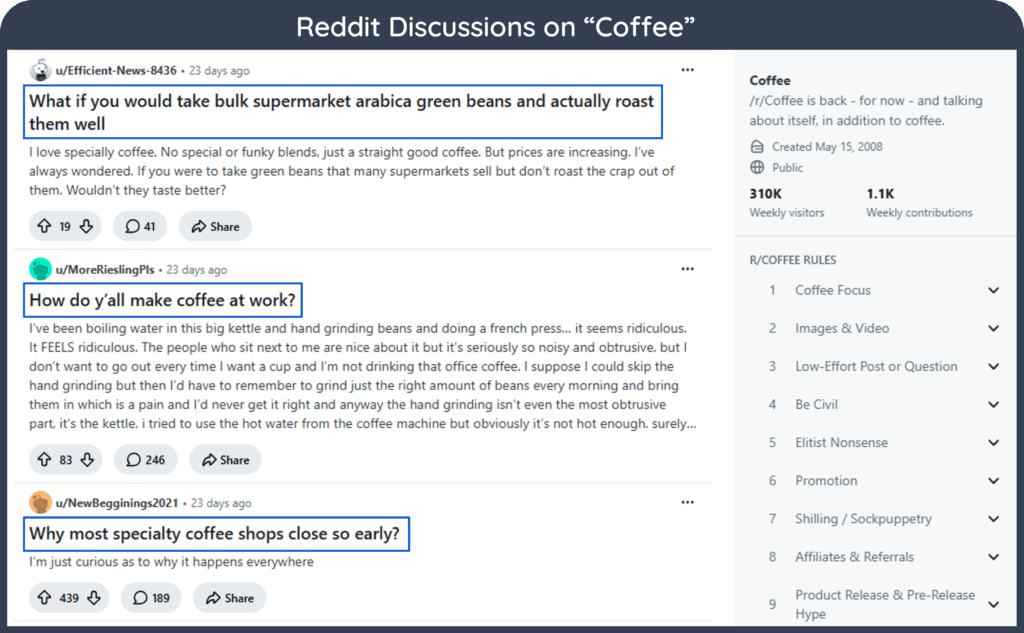
This information can come from search queries, sales calls, customer-support questions, reviews, Reddit discussions, forums, surveys, social media, Search Console, keyword research, and conversations with customers.
Connect Content to Business Goals
An SEO content strategy ultimately needs to contribute to something measurable.
For a coffee shop, possible objectives might include increasing local discovery, bringing more people into the café, selling beans online, increasing repeat orders, promoting coffee subscriptions, attracting wholesale inquiries, building an email list, and increasing brand recognition.
Given these objectives, different content serves different jobs. For example, an article titled How to Make Better Pour-Over Coffee may primarily attract informational traffic. Similarly, a comparison between two grinders may help someone evaluate a purchase, while a guide to choosing beans for office coffee machines could support wholesale lead generation.
It is therefore useful to give every planned piece a primary purpose. When building a content sheet or editorial calendar, you may use labels such as Awareness, Education, Commercial Research, Conversion, Customer Support, Retention, and Brand Authority. These labels stop the editorial team from judging every piece solely by traffic.
Analyze Search Demand Without Letting It Control the Strategy
Keyword research remains useful because it shows how people express demand. Google’s Search Essentials still recommends using the words people use to find content in prominent and descriptive locations.
However, the content strategy should not become a spreadsheet sorted from highest search volume to lowest. For example, suppose coffee has enormous demand, while commercial coffee grinder cleaning receives much less demand.
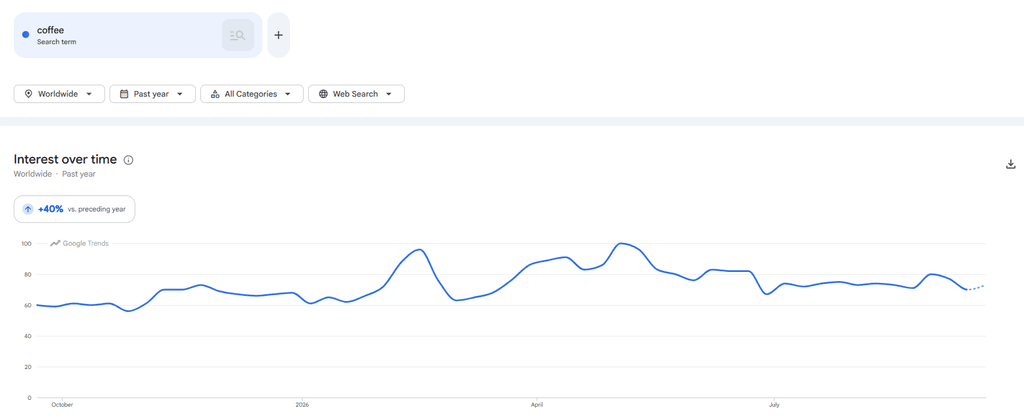
For a wholesale supplier, the second keyword, commercial coffee grinder cleaning, could be vastly more valuable because it relates directly to the intended customer.
Therefore, search volume can help reveal demand, but business relevance should ultimately guide content priorities.
Study Competitors, but Do Not Copy Them
Competitor analysis can reveal topics others cover, categories they emphasize, formats they use, content they neglect, questions they answer poorly, pages that attract links or traffic, and topic areas where the market is already saturated.
However, competitor research should identify opportunities and weaknesses, not create a template for imitation. A useful competitor analysis looks beyond individual keywords and examines the themes and pages driving website traffic. Competitor analysis should therefore include content-level competitor review, rather than focusing only on keyword overlap.
Hence, it is important to ask: What can we explain better?
- Perhaps competitors provide generic descriptions of coffee origins but no tasting demonstrations.
- Perhaps every article about grinder maintenance repeats manufacturer instructions but none includes original photographs showing burr buildup.
- Perhaps local competitors publish menus but offer no educational content explaining the beans they serve.
In short, addressing these gaps can create a meaningful competitive advantage.
Decide What the Brand Can Credibly Cover
A site should also establish boundaries. A café with deep coffee knowledge can legitimately cover beans, brewing, café culture, equipment it uses, recipes, and barista techniques. That does not automatically mean it should publish articles about productivity software, restaurant accounting, or general entrepreneurship simply because those subjects have search demand.
Google’s guidance specifically asks whether a site has a primary purpose or focus and warns against producing content across many unrelated subjects merely in hopes that some pages attract search traffic.
Turn the Taxonomy Into a Content Plan
Once the business, audience, taxonomy, and opportunities are understood, ideas need to become a practical plan.
A content plan answers, “What exactly are we going to create next?” This can be managed in Excel, Google Sheets, Notion, or another project-management system. The software matters less than the information being recorded consistently.
Build a Content Planning Sheet
For a simple website, create columns such as:
This transforms a collection of ideas into an operational system.
Filters can then answer practical questions:
- Which Coffee Beans articles are unfinished?
- Which commercial pages have no supporting content?
- Which cluster has not been updated in six months?
- What is scheduled next week?
- Which articles need graphics?
- Which pages still require internal links?
Build the Same System in Notion
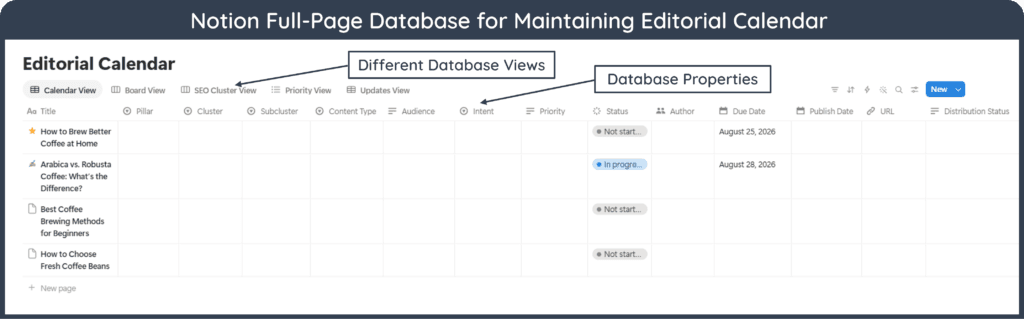
Notion works well when the content plan needs to function as both a database and workflow. Here, you can create a content database and add properties such as Title, Pillar, Cluster, Subcluster, Content Type, Audience, Intent, Priority, Status, Author, Due Date, Publish Date, URL, Distribution Status, and Update Date.
Each article can then have its own page containing brief, outline, sources, screenshots, image requirements, internal-link opportunities, editorial notes, and distribution plan.
Views can show the same database differently. For example:
- Calendar View → upcoming publication dates
- Board View → Idea → Draft → Review → Scheduled → Published
- SEO Cluster View → grouped by pillar or cluster
- Priority View → only high-priority work
- Updates View → pages approaching review dates
This is where content strategy becomes a repeatable working system rather than a document that gets written once and forgotten.
Prioritize Clusters, Not Random Articles
Topic clusters are essentially groups of related pages connected around a broader subject. A common topic cluster framework uses a broad pillar page supported by deeper pages covering related subtopics. Search Engine Journal similarly describes clusters as a way of organizing content around broader subjects and more specific supporting topics.
One of the biggest advantages of taxonomy is the ability to concentrate publishing efforts on related topics. Rather than jumping from espresso in week one to coffee farming, café furniture, cold brew, and café accounting in the following weeks, a business might deliberately spend eight weeks strengthening its Coffee Beans & Grounds cluster.
This editorial strategy helps build momentum because writers remain immersed in related terminology, can reuse research and assets efficiently, and can identify internal-link opportunities more naturally.
Prevent Overlap Before Writing
A content plan should also prevent several writers from unknowingly producing pages that solve the same problem.
For each new idea, ask:
- Does this topic already exist?
- Is it genuinely different from an existing page?
- Is the search intent different?
- Could the information strengthen an existing article instead?
- Would creating another page confuse users or split coverage?
Bing has recently emphasized that duplicate or near-duplicate pages can make it harder for search systems to determine which version best satisfies an intent. Planning addresses these issues beforehand by preventing unnecessary duplication.
Build an Editorial System and Publishing Schedule
A strategy says where the business is going, while an editorial system makes sure the work actually gets there.
Set Editorial Standards
Before producing content at scale, define the standards every article should follow.
These may include US English or UK English, capitalization style, Oxford comma policy, tone and reading level, heading hierarchy, sourcing standards, acceptable source types, image dimensions, alt-text requirements, citation rules, internal-link practices, AI-use policy, review and fact-checking requirements, author bio and byline standards, and update procedures.
This may appear administrative, but inconsistent editorial standards create considerable friction as a website grows.
Without standards, one writer may use e-commerce, while another may go with ecommerce. One might link every statistic, while another may provide no links and sources at all. In other words, a style guide provides consistency, eliminates repeated decisions, and gives the publication a recognizable voice.
Create the Editorial Calendar
The content database contains all possible and planned work, while the editorial calendar determines what will actually be produced and when.
A calendar entry might include article title, content cluster, writer, editor, brief deadline, draft deadline, image deadline, publication date, distribution date, and current status.
A calendar can help organize, manage, and schedule content production and also protect the strategy from unrealistic ambition. A one-person business capable of producing two high-quality articles per week should not schedule ten merely because the taxonomy contains hundreds of opportunities.
Plan in Manageable Publishing Cycles
A useful approach is to work in monthly or quarterly cycles. For example, if the objective is to establish useful coverage around home brewing during the first three months, month one might focus on pour-over and manual brewing, month two on espresso basics, and month three on grind size and grinders.
Within each month, you can schedule specific pieces according to available resources. This makes strategy easier to review.
At the end of the quarter, the business can ask:
- Did we complete the planned cluster?
- Which pages attracted impressions?
- Which generated clicks?
- Which topics produced inquiries or sales?
- Which articles need stronger supporting content?
- Should the next quarter continue this cluster or move elsewhere?
Build a Repeatable Workflow
A simple publishing workflow could be:
Here, each stage should have a clear definition. For example, Draft Complete might mean the article is written but not fact-checked. Ready to publish might mean sourcing, images, metadata, internal links, mobile review, and proofreading are complete.
This prevents the common situation where five people interpret “finished” differently.
Create for Reuse Without Producing Duplicates
A strong content strategy also considers distribution before the article is published. One substantial coffee guide might later support a LinkedIn post, an infographic, several short social posts, a Pinterest graphic, a short video, a newsletter section, a Reddit answer where appropriate, sales-support material, or an FAQ.
However, this does not mean copying the entire article onto every platform. Instead, you can identify ideas within the article that can be adapted to the behavior and format of each channel.
An article explaining roast levels, for example, might become a simple visual comparison showing light, medium, and dark roasts. A section on common mistakes could become a short social post. A detailed brewing process could become a demonstration video.
Therefore, distribution is not something to think about only after publishing. It can be built into the content brief from the beginning.
Measure, Distribute, Audit, and Improve Content
Publishing is the midpoint of content strategy, not the end. Once content is live, real audience behavior begins replacing assumptions.
Define Metrics According to the Page’s Job
Not every article should be measured using the same metric. An informational guide may be evaluated through impressions, clicks, organic visits, engaged sessions, links, and newsletter signups. Similarly, a commercial comparison might be measured through product clicks, inquiries, assisted conversions, revenue, and lead quality.
A brand-authority article may have modest search traffic but receive links, citations, shares, or mentions. This is why defining the purpose of a piece before creating it matters. If its job was never clear, its success cannot be evaluated clearly either.
Use Search Performance to Refine the Plan
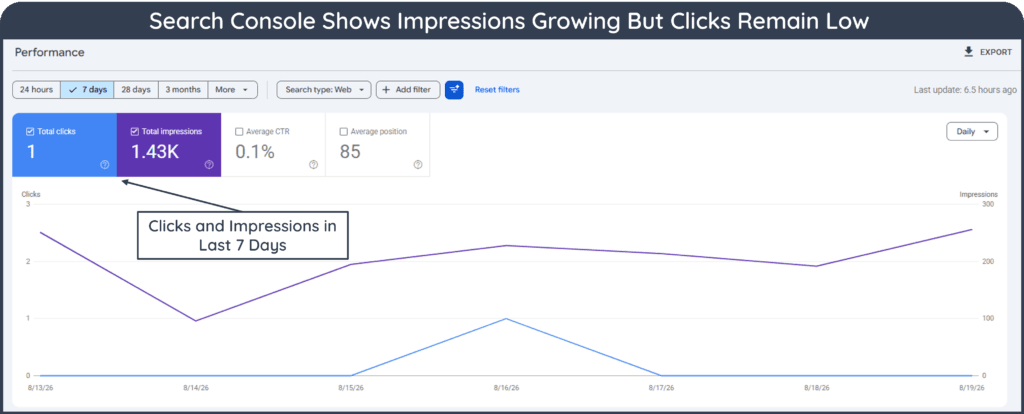
Google Search Console can reveal which queries generate impressions and clicks, while analytics platforms can help evaluate what happens after people arrive. Specialized platforms such as Ahrefs, Semrush, or similar tools can supplement this with competitor data, keyword tracking, backlink information, and content research.
Tools should answer strategic questions rather than create work for their own sake:
- Search Console shows impressions growing but clicks remaining low → Investigate query relevance, ranking position, titles, snippets, and SERP competition.
- A cluster generates traffic but no commercial activity → Review whether the audience and business goal were aligned.
- One article attracts links consistently → Consider whether the format or research approach can be applied elsewhere.
- A product category performs well but lacks supporting informational content → Prioritize that cluster in the next editorial cycle.
Measure Search and AI Visibility Separately
Content discovery is no longer limited to traditional search results.
Bing Webmaster Tools introduced AI Performance reporting in 2026 to show how publisher content is referenced across Microsoft Copilot, Bing AI-generated summaries, and selected partner integrations. Google also introduced generative AI performance reports in Search Console in June 2026, providing dedicated impression data for AI Overviews and AI Mode, with breakdowns by page, country, device, and date. The reports are currently being rolled out to a subset of websites and are not yet available to every Search Console property.
Search Engine Land has similarly argued that modern content teams may need separate measurement views for traditional organic search and AI visibility rather than assuming that traffic alone captures the entire picture. This, however, does not mean rebuilding the entire content strategy around AI citations. It means recognizing another discovery surface and measuring it where useful.
The fundamentals remain familiar: useful information, clear topical focus, credible sourcing, genuine expertise, and content that answers real audience needs.
Audit Existing Content
As the website grows, the strategy should include maintenance. It is important to schedule periodic reviews to identify outdated information, overlapping pages, declining traffic, broken links, weak internal linking, outdated screenshots, missing visuals, old statistics, changing search intent, pages that should be combined, pages that no longer serve a purpose, and new opportunities revealed by search queries.
A content audit should not automatically result in deleting pages that receive little traffic, because some may support customers, explain products, strengthen topical coverage, or simply need more time to gain visibility.
Feed Performance Back Into Strategy
Suppose the coffee business spends two months building its Coffee Beans cluster. Search data then reveals unexpectedly strong interest in grind size and grinder selection.
The original plan called for Syrups & Ingredients next. However, the evidence now suggests that Coffee Tools & Accessories may be more valuable.
A strategy should be structured enough to provide direction but flexible enough to respond to evidence. In short, an editorial calendar should serve the strategy, rather than the strategy becoming a prisoner of the calendar.
Conclusion
An SEO content strategy is not a list of keywords or a schedule of blog posts. It is the system that connects a business, its audience, its knowledge, its website structure, and its publishing resources.
The process begins by understanding what the business can credibly cover and organizing those subjects into a taxonomy. Audience research, competitor analysis, search demand, and business goals can then determine which parts of that taxonomy deserve attention first.
Those priorities become a content plan. The plan becomes an editorial calendar. Editorial standards make production consistent, while a defined workflow helps content move from idea to publication without unnecessary confusion.
However, publication is not the end of the process. Content should be distributed, measured, audited, updated, and sometimes consolidated or retired. The information learned from existing pages should then influence the next planning cycle.
To sum up, an effective content strategy provides both structure and direction. It helps a business know not only what it could publish, but what it should publish next and why.
That is what turns a collection of webpages into a coherent long-term content asset.
Frequently Asked Questions
What is an SEO content strategy?
An SEO content strategy is a long-term plan for researching, organizing, creating, publishing, distributing, and measuring content that serves an audience while supporting search visibility and business goals.
What is the difference between content strategy and content optimization?
Content strategy determines what content should exist, who it should serve, how it fits into the website, and when it should be created. Content optimization focuses on improving an individual page so that its subject, structure, usefulness, and search relevance are communicated effectively.
Why is taxonomy important for content strategy?
A taxonomy organizes the subjects a website can cover into logical pillars, clusters, and subtopics. This makes it easier to identify gaps, plan publishing priorities, maintain consistent terminology, create internal links, and prevent overlapping content.
How do I create a content strategy in Excel or Google Sheets?
Create columns for fields such as topic, pillar, cluster, audience, search intent, business goal, content type, priority, status, owner, publication date, URL, and internal links. Filters and sorting can then turn the spreadsheet into a practical planning and editorial-management system.
Can Notion be used for content strategy?
Yes. A Notion database can connect article ideas with taxonomies, audiences, priorities, statuses, deadlines, sources, internal links, and distribution tasks. Different database views can then function as an editorial calendar, production board, cluster tracker, or update schedule.
How far ahead should a content calendar be planned?
There is no universal period. A small team might plan several weeks ahead, while a larger publication may work quarterly or further in advance. The schedule should provide direction without becoming so rigid that the team cannot respond to changing business priorities, search behavior, or new information.
Should a content strategy focus only on SEO traffic?
No. Search traffic is only one possible outcome. Content can also support sales, leads, customer education, brand authority, retention, email growth, internal linking, social distribution, AI visibility, and other business objectives.
How often should an SEO content strategy be reviewed?
The strategy should be reviewed regularly enough to incorporate performance data, business changes, audience needs, and search trends. Monthly operational reviews and broader quarterly assessments can work well for many teams, although the appropriate cadence depends on publishing volume and the rate at which the market changes.
Should old content be updated or deleted?
Neither action should be automatic. Review the page’s purpose, accuracy, traffic, links, conversions, search intent, overlap with other pages, and usefulness to visitors. Some pages need updates, some should be consolidated, some remain valuable without high traffic, and genuinely obsolete content may eventually be removed or redirected.