
Key Takeaways
- An embedding is a numerical representation, usually a dense vector, designed to preserve useful relationships in the original data.
- Semantically related items tend to occupy nearby regions in embedding space, enabling mathematical comparison beyond exact keyword matches.
- Contextual embeddings adapt to surrounding language, distinguishing different meanings of ambiguous words more effectively than static representations.
- Embeddings support semantic search, RAG, recommendations, multimodal retrieval, multilingual matching, classification, and similarity detection.
A vector is an ordered list of numbers, such as [0.12, -0.47, 0.81, ...]. Machine-learning models ultimately operate on numerical representations, so text, images, audio, and other data are encoded into numerical forms before or during processing.
An embedding is a numerical representation of data, usually stored as a dense vector, that is created so that useful relationships in the original data are reflected in a mathematical space. In natural language processing (NLP), embeddings can represent words, phrases, paragraphs, or entire documents.
Computers do not understand human language in the same way people do. Embeddings help bridge that gap by encoding language and other content into numbers that mathematical operations can compare. More importantly, semantically related concepts tend to be positioned closer together in an embedding space than unrelated concepts. Google describes embeddings as relatively low-dimensional numerical representations that can capture meaningful relationships between items.
This is why embeddings are fundamental to semantic search, recommendation systems, Retrieval-Augmented Generation (RAG), clustering, classification, and many modern AI applications.
Embeddings and Machine Learning
Artificial intelligence (AI) systems use machine learning (ML) models to learn patterns from data and make predictions, classifications, or other decisions. Many machine-learning workflows first convert text, images, products, users, or other complex information into numerical representations that models can process.
An embedding is one such numerical representation, usually expressed as a vector. The model learns or generates embeddings so that meaningful relationships in the original data are preserved, allowing related items to be compared mathematically. In this way, machine learning provides the models, and embeddings provide a numerical representation those models can use.
Mapping Words and Concepts Into Vector Space
A simple way to understand embeddings is to imagine a large three-dimensional room. Every position in that room can be described using three coordinates: X, Y, and Z.
Suppose words were positioned according to their meaning:
- King:
(9, 12, 8) - Queen:
(10, 10, 8) - Apple:
(2, 3, 3)
These coordinates are purely illustrative. The important idea is that king and queen would be positioned relatively close together because they share many semantic relationships, while an unrelated word such as apple might appear much farther away.
The mathematical environment containing these vectors is called an embedding space or vector space. Similar items occupy nearby regions of that space according to the relationships learned by the model.
Similar concepts → nearby vectors
Different concept → farther away
Real embedding systems use far more than three dimensions. There is no standard number. Google’s current Gemini Embedding 2, for example, supports output dimensions ranging from 128 to 3,072, depending on how the model is configured.
Embedding Dimensions
Embedding dimensions do not usually have simple human-readable meanings. A single dimension generally should not be interpreted as representing one concept such as “royalty,” “fruit,” or “color”; useful information is distributed across the vector.
What Can Be Embedded?
Embeddings are not limited to individual words. Many types of data can be converted into vector representations.
- Words: Individual terms can be represented as vectors, as demonstrated by models such as Word2Vec and GloVe.
- Text: Search queries, sentences, paragraphs, articles, documents, and other text can be embedded for semantic search, RAG, clustering, and classification.
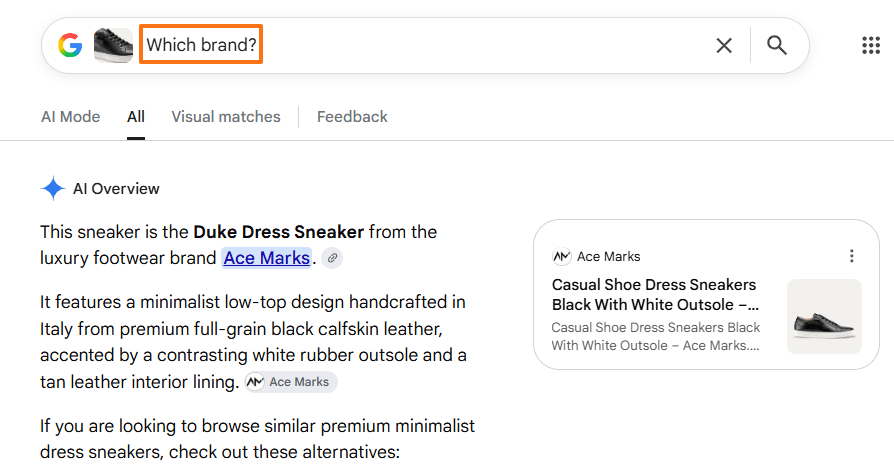
- Images: Visual features can be represented numerically so systems can compare images or connect images with related concepts.

- Audio: Speech, music, and other audio can be embedded for similarity matching, classification, and retrieval.
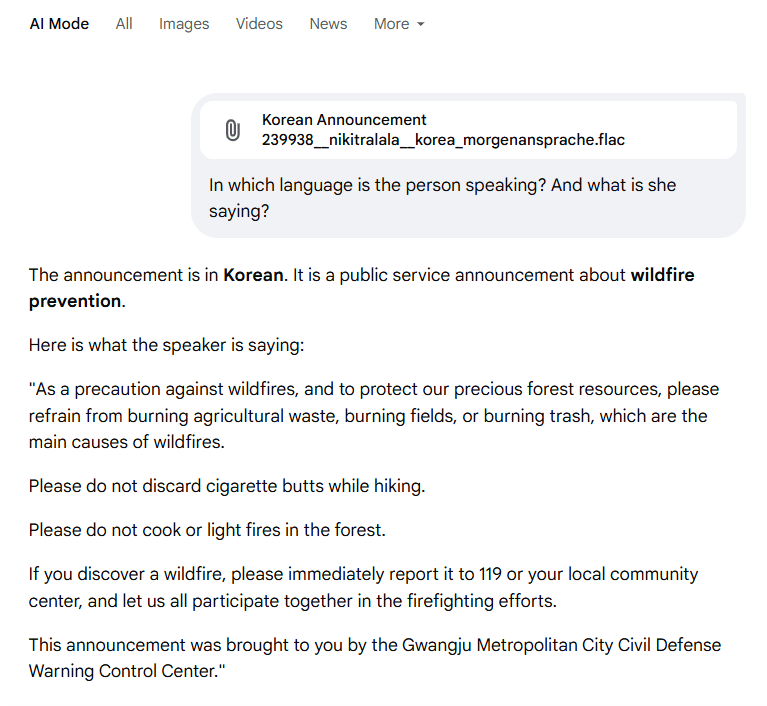
- Video: Video frames and other video information can be represented as embeddings for search, recommendation, and classification.
- Graphs: Nodes, relationships, and other graph structures can also be converted into vector representations for machine-learning tasks.
Modern multimodal embedding models can handle several data types within the same system. Google’s Gemini Embedding 2, for example, maps text, images, video, audio, and PDF documents into a unified embedding space, enabling comparisons and search matches across different media types.
How Embeddings Are Generated
Embedding methods have evolved considerably, particularly in language processing. Two major approaches are static word embeddings and contextual embeddings.
Static Word Embeddings
Earlier approaches such as Word2Vec and GloVe create a relatively fixed vector representation for each word. These models learn from patterns in large collections of text, thereby learning a relatively fixed dictionary of numbers for every word.
Words that frequently appear in similar contexts tend to develop similar representations. Stanford’s GloVe model, for example, learns vectors from statistics describing how often words occur together.
The major limitation of these early approaches is that a word generally keeps the same vector regardless of its meaning in a particular sentence. For example, consider these two sentences:
- “She deposited money at the bank.”
- “They sat beside the river bank.”
A static word embedding may use the same stored representation for bank in both sentences even though the meanings are different.
Contextual Embeddings
Modern transformer-based models such as BERT, RoBERTa, and LLMs can create representations that depend on surrounding context rather than assigning one fixed vector to a word. BERT, for example, uses both left and right context when forming token representations.
In the first sentence above, words such as money and deposited indicate a financial institution, while river and sat beside in the second sentence indicate the edge of a body of water. The resulting contextual representation of bank can therefore differ between the sentences.
Contextual embeddings allow systems to represent language more accurately when the meaning of a word depends on the words around it.
How Embedding Similarity Is Measured
Once items have been represented as vectors, systems need a way to determine how close or similar those vectors are.
Cosine Similarity
Cosine similarity compares the angle between two vectors. Vectors pointing in similar directions receive higher similarity scores.
It is widely used in semantic search because it focuses on the direction of the vectors rather than simply their absolute size.
Dot Product
The dot product multiplies corresponding values from two vectors and combines the results into a single score.
Unlike cosine similarity, the dot product can be affected by vector magnitude. If embeddings have been normalized to the same length, dot-product and cosine rankings can become equivalent.
Euclidean Distance
Euclidean distance measures the straight-line distance between two points in vector space.
A smaller distance means that the vectors are closer together. Google lists cosine similarity, dot product, and Euclidean distance among the common methods used to compare embeddings.
The best comparison method depends on how the embedding model was trained and how its developer recommends using it. OpenAI embeddings, for example, are normalized to length 1, meaning cosine similarity and Euclidean distance produce the same ranking order for those vectors.
Applications of Embeddings
Embeddings are useful whenever a system needs to compare meaning, behavior, or other relationships rather than relying entirely on exact matches.
RAG and Semantic Search
In a RAG system, documents can be divided into smaller text chunks and converted into embeddings. Those vectors are stored in a vector database, which is designed to retrieve vectors that are close to a query vector.
When a user asks a question, the question is also embedded. The system then retrieves nearby document vectors and supplies the corresponding passages to the language model as context.
Recommendation Systems
Embeddings can represent both users and items such as products, songs, films, or videos. Items that appear close to a user’s embedding can become recommendation candidates. Google documents embedding spaces as a common way to represent queries and items for candidate generation.

Multimodal Search
A multimodal embedding model can place different media types into a compatible vector space. For example, an image of a shoe can potentially be compared with text describing shoes because both representations exist in the same mathematical space.

Multilingual Retrieval
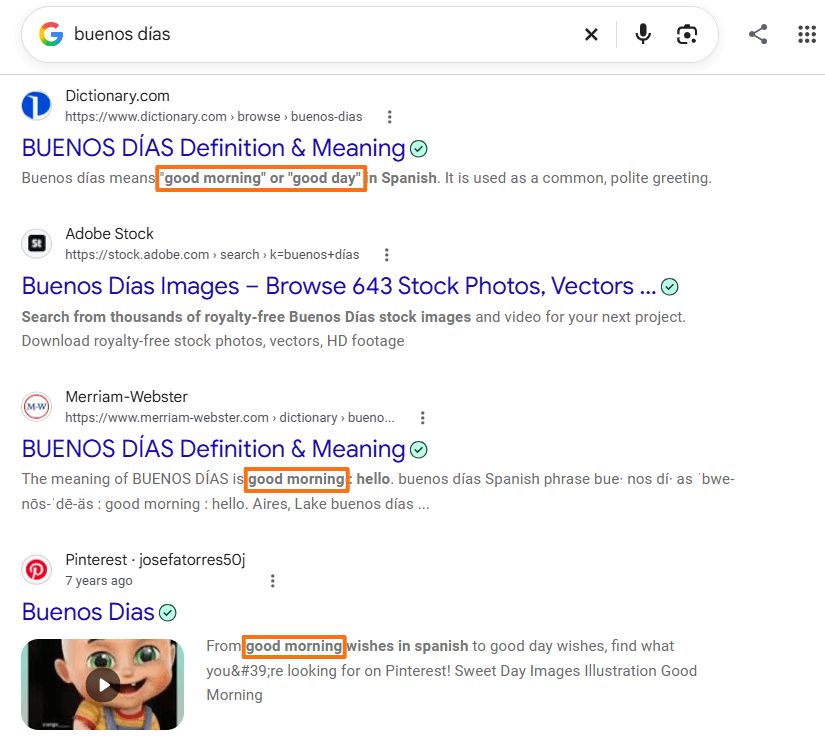
Multilingual embedding models can position phrases with similar meanings in different languages near one another. For example, “Good morning” and “Buenos días” may receive closely related representations.
This enables cross-language search and matching, although embeddings alone do not perform complete machine translation. Translation requires a model capable of generating the translated text.
Anomaly Detection and Fraud Analysis
Behavior such as transaction timing, amount, merchant type, or location can be represented numerically. Embedding-based anomaly systems can identify representations that differ substantially from established patterns and flag them for further analysis.
Embeddings can therefore contribute to anomaly and fraud-detection systems, although they are only one part of the wider detection process.
Content Moderation and Similarity Detection
Contextual embeddings can help classification systems recognize semantic patterns in spam, abusive content, or other text rather than relying only on individual keywords.
They can also help identify semantically similar documents. This is useful for duplicate detection, plagiarism-review tools, and other similarity checks where the wording may have been substantially changed.
Frequently Asked Questions
What is the difference between an embedding and a vector?
A vector is simply an ordered list of numbers. An embedding is typically represented as a vector created or learned to preserve useful relationships in the data. A generic vector, however, is not necessarily an embedding.
How do embedding models handle homonyms that have the same spelling but different meanings?
Static word embeddings such as traditional Word2Vec or GloVe generally assign one stored representation to a word, which makes ambiguous words difficult to distinguish.
Contextual models can use the surrounding sentence to create different representations. For example, bank in “deposit money at the bank” can receive a different contextual representation from bank in “walk along the river bank.”
How are embeddings used in semantic search and RAG?
In semantic search, both the query and the documents are converted into embeddings so the system can retrieve content with similar meaning even when the exact words differ. In RAG, embeddings are commonly used to find relevant passages from a document collection before those passages are supplied to a language model as context.
Can an embedding vector be converted back into its original text?
Not directly. An embedding is not designed as a lossless or reversible encoding of the original text. It preserves information that is useful for comparison or another machine-learning task, but it does not normally retain everything required to reconstruct the exact original words, punctuation, or sentence structure.