Content Lifecycle Management: A Complete Guide
Key Takeaways
- Content lifecycle management treats publication as the beginning of ongoing maintenance, not the end of content work.
- Meaningful reviews preserve accuracy, readability, usability, topical coherence, and search relevance as information, audiences, and websites change.
- Refreshing, repurposing, consolidating, archiving, or retiring content are distinct decisions based on each asset’s value, purpose, and condition.
- Effective lifecycle programs require clear ownership, content inventories, performance evidence, technical checks, and prioritization rather than rigid review schedules.
Content is rarely finished when it is published. Articles become outdated, statistics change, links stop working, products evolve, and information that once answered a reader’s question comprehensively may gradually become incomplete. Content lifecycle management provides a structured way to handle these changes rather than allowing a website’s content library to age without direction.
Content lifecycle management is the process of planning, creating, reviewing, publishing, monitoring, updating, reusing, consolidating, archiving, and eventually retiring content throughout its useful life. The process can apply to articles, landing pages, product pages, videos, reports, documentation, email assets, downloadable resources, and other forms of published information.
Ongoing management becomes increasingly important as a website grows. A large content library can accumulate outdated facts, broken references, inconsistent terminology, duplicate coverage, and pages that no longer support the site’s objectives. A Pew Research Center study found that 25% of webpages sampled from 2013 through 2023 were no longer accessible by October 2023, illustrating how quickly online information can disappear or become unavailable.
Content lifecycle management therefore treats content as a continuing editorial and business asset. Instead of asking only, “What should we publish next?” it also asks, “What should we improve, reuse, consolidate, archive, or retire?”
Table of Contents
What Is Content Lifecycle Management?
Content lifecycle management, often shortened to CLM, is a systematic approach to managing content from its initial idea through creation, publication, maintenance, reuse, and eventual retirement. It combines editorial planning, content operations, governance, analytics, SEO, quality control, and technical maintenance.
The important distinction is that the lifecycle does not end at publication. Publishing is simply the point at which content becomes available to its audience. After that point, its accuracy, usefulness, search performance, internal and external links, formatting, audience relevance, and relationship with other content still need to be evaluated.
For example, imagine that a company publishes a detailed guide to email marketing automation. Over time, software interfaces may change, examples may become dated, external sources may disappear, newer articles may overlap with parts of the guide, and the original page may need stronger internal links.
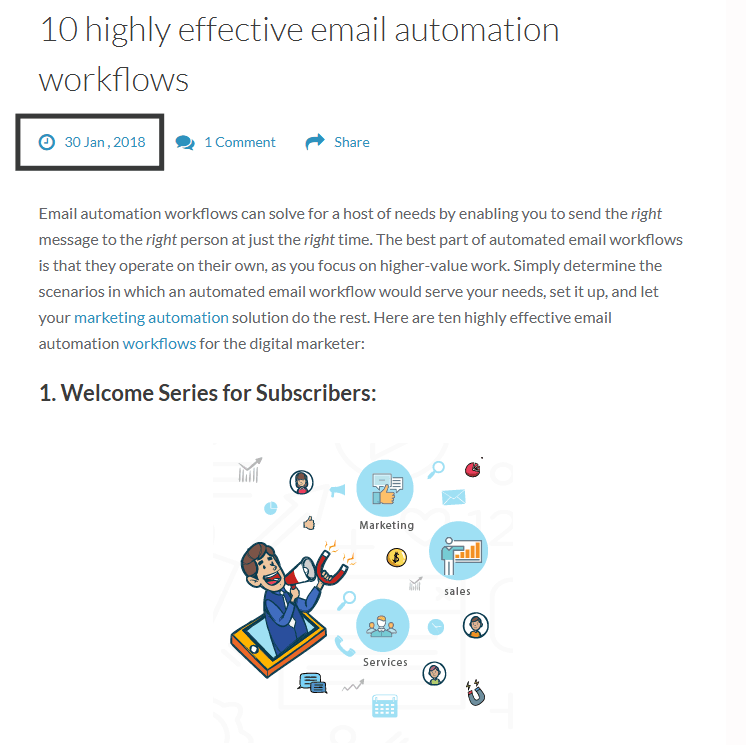
Content lifecycle management provides a process for identifying these issues and deciding what should happen next. In other words, CLM turns content maintenance from an occasional cleanup exercise into an ongoing operational process.
Why Content Lifecycle Management Matters
Without lifecycle management, a website can continue adding new material while the quality of its existing library gradually deteriorates. This can create problems for readers, editors, marketers, search engines, and other teams that depend on the same information.
Maintaining Readability and Usability
Content can become harder to use after years of incremental editing. New sections are added, old explanations remain, paragraphs become overloaded, and terminology may change without being standardized across the page.
Lifecycle reviews create opportunities to simplify these areas. Maintenance should include improvements to paragraph structure, terminology, examples, navigation, and overall clarity rather than focusing only on dates and statistics.
Keeping Content Accurate and Current
Accuracy can deteriorate even when an article was correct when published. Prices change, regulations are revised, product capabilities evolve, companies discontinue services, statistics become outdated, and external references disappear.
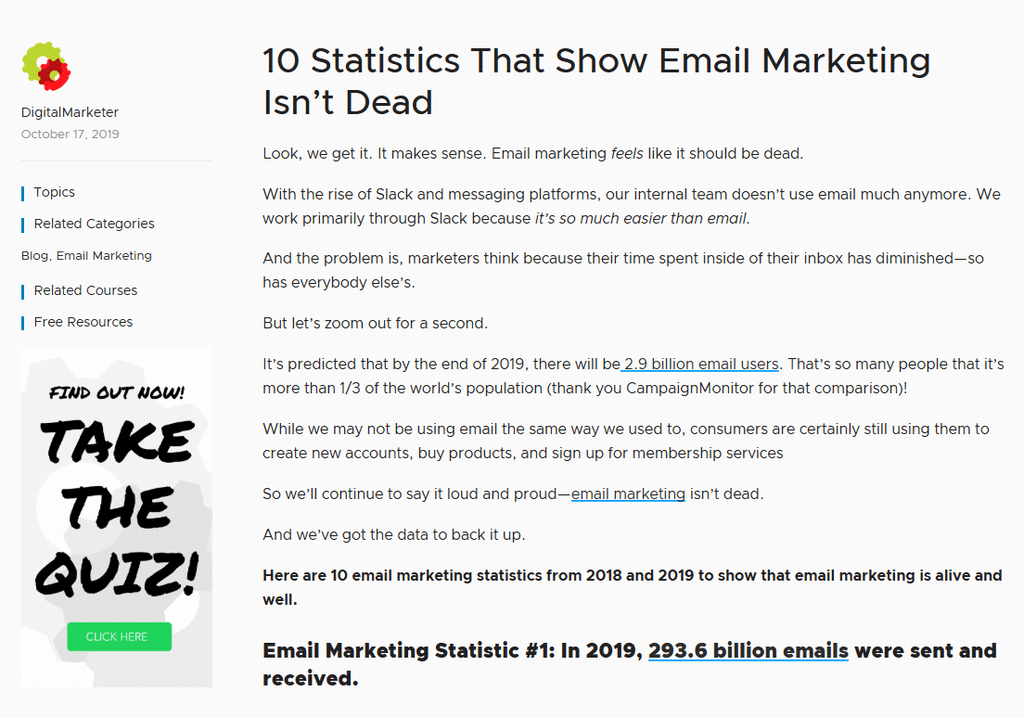
In this image, the title is somewhat ironic: while the article argues that “email marketing isn’t dead,” the content itself needs refreshing. Statistics from 2018 and 2019 may have been useful when published, but a current version should review and replace outdated figures with newer data.
Time-sensitive content may need frequent reviews, while stable definitions or historical material may require less attention. It is therefore important to base review frequency on how quickly the underlying information changes rather than applying the same schedule to every page.
Freshness, however, should not be confused with simply displaying a newer date. Google’s document on helpful content warns against changing page dates when content has not substantially changed and against removing older content merely to make a site appear fresher.
Understanding Freshness Signals
Freshness does not matter equally for every search. Google maintains freshness systems designed to show fresher content for queries where recent information would be expected, such as searches concerning a recently released movie or a recent event.
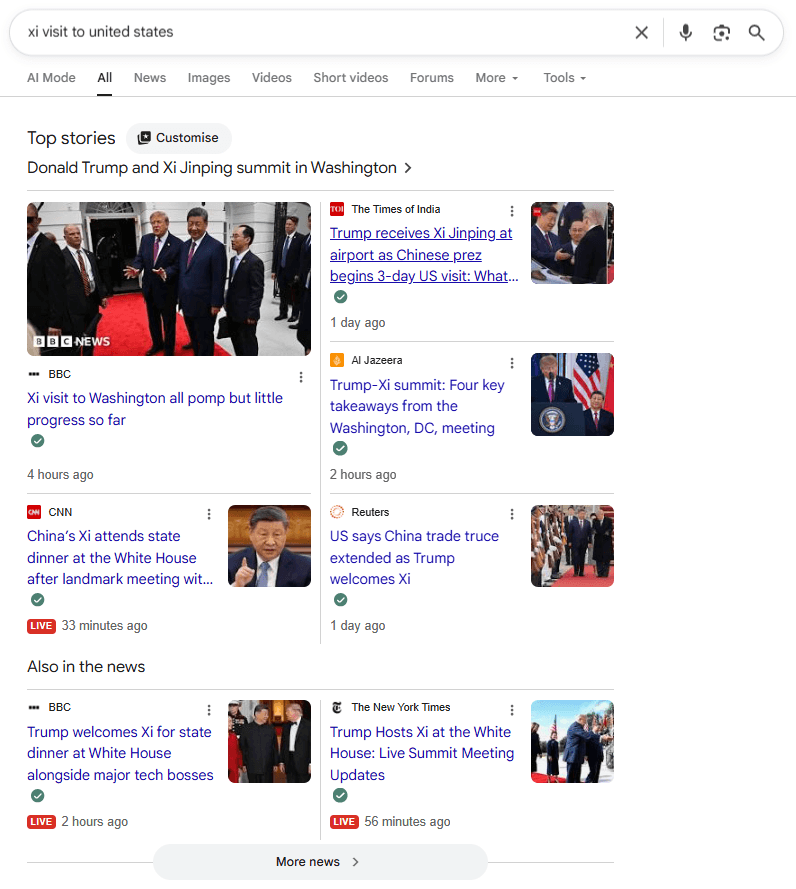
Website owners should not interpret this as a reason to make superficial edits to their webpages. For example, a historical definition may remain useful for years, while a page about current software pricing may become outdated quickly. In short, meaningful freshness depends on whether the subject requires current information and whether the page has actually been improved.
Improving Content Reusability and Efficiency
Strong content often contains ideas that can support more than one format. A research article may provide material for a newsletter, infographic, presentation, webinar, social post, sales resource, video, training document, or downloadable guide.
Lifecycle management helps teams recognize these opportunities instead of recreating similar information from scratch. For example, an original survey can support charts, analytical articles, presentations, email campaigns, and social graphics. This allows the same research to support multiple content formats while being adapted to the needs of different audiences and channels.
Reusability can also improve editorial consistency because teams can work from established definitions, statistics, research, and approved messaging rather than creating new versions independently.
Supporting Content Alignment and Topic Coherence
As websites expand, new pages can gradually move beyond their original editorial boundaries. Similar subjects may be covered repeatedly, while important areas remain underdeveloped.
A defined lifecycle makes alignment part of regular review. With a proper content lifecycle management process in place, creators and website owners can compare existing pages with the website’s taxonomy, content clusters, audience needs, business goals, and editorial strategy. Pages that no longer fit can then be repositioned, consolidated, refreshed, archived, or retired.
This process also supports topic coherence across the website. It ensures that content has a clear relationship with the broader subject and genuinely addresses the needs of the audience.
Supporting SEO Performance Over Time
Organic search performance is not permanently fixed. Competitors publish new resources, search needs change, websites alter their internal structure, and search systems continue to evolve.
Google explains that its search positions are dynamic rather than permanently fixed. Therefore, a page that performed strongly several years ago should not automatically be assumed to remain competitive or complete. The better approach is to determine whether it is still accurate, useful, sufficiently comprehensive for its purpose, and properly connected with the rest of the website.
Stages of Content Lifecycle Management
Organizations may divide the lifecycle differently, but most content moves through a similar sequence. These stages are not completely separate because monitoring an existing page can generate a new content idea, while consolidation may influence future planning.
1. Planning and Prioritization
The lifecycle begins by determining what content should exist and why. Planning connects production with audience needs, business objectives, search demand, products, expertise, and the broader editorial strategy.
It is therefore important to review existing coverage before commissioning something new. An apparently new idea may already be addressed adequately, belong within an existing article, or create unnecessary overlap with another page. Planning should determine the intended audience, purpose, appropriate format, topic relationship, and desired reader outcome before production begins.

2. Research and Content Creation
Once an idea has been approved, research and production begin. Reliable sources should support factual claims, while the structure should reflect what the subject actually requires rather than an arbitrary target length.
During content development, teams should ask whether the content offers original information or analysis and provides substantial or comprehensive coverage. Google also explicitly states that it does not have a preferred word count for content.
Some questions may therefore require only a concise explanation, while complex guides may need several thousand words. Depth should be determined by the amount of information required to answer the question or cover the subject properly.
3. Editorial Review and Approval
Before publication, content should undergo a review appropriate to its importance and potential risk. A general marketing article may require normal editorial review, while medical, financial, legal, technical, or research-heavy material may require additional subject expertise.
Review should consider factual accuracy, source quality, grammar, readability, structure, terminology, links, visual assets, accessibility, metadata, and relevant compliance requirements. Editors should also identify claims that are stronger than the evidence supports.
In short, editorial review is not merely proofreading. It is the quality-control stage that determines whether the content is ready to represent the publication.
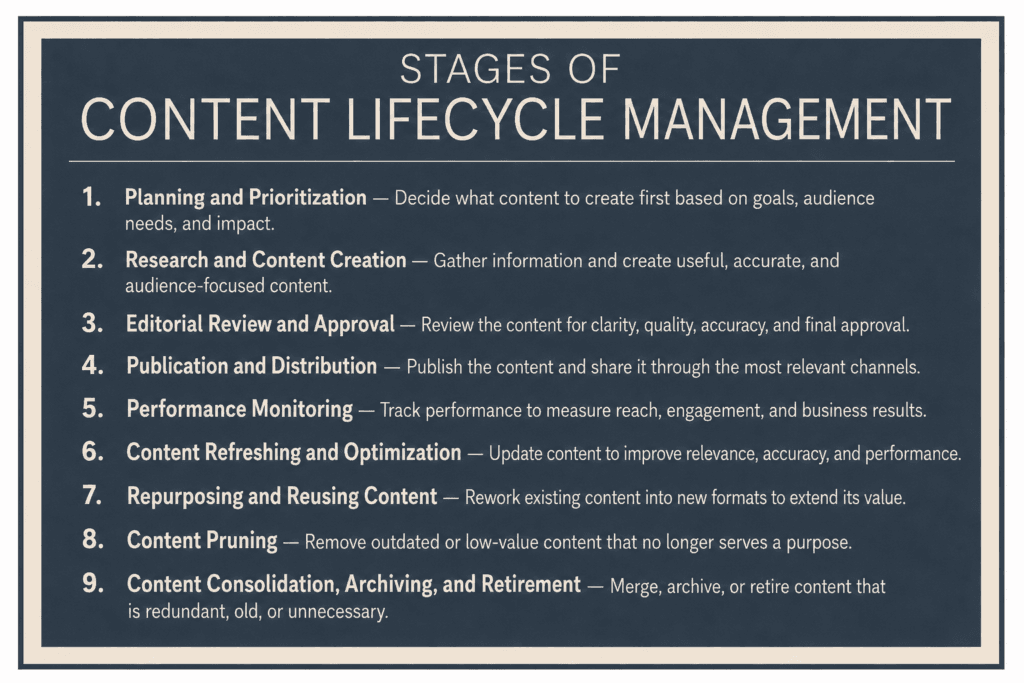
4. Publication and Distribution
Publishing involves much more than simply clicking the Publish button. The page should have an appropriate URL, heading hierarchy, metadata, internal links, images, accessible alternative text where required, and the technical elements needed by the website.
Distribution can then extend the content through email, social media, communities, newsletters, partnerships, paid promotion, or direct outreach where appropriate. Search discovery can form part of the same process. For example, Bing recommends XML sitemaps for broader site discovery and IndexNow for notifying participating search engines when individual URLs are added, updated, or removed.
5. Performance Monitoring
Published content should be monitored according to its purpose. An informational guide may be evaluated through search visibility, readership, backlinks, internal navigation, newsletter subscriptions, or other useful actions, while a commercial page may require greater attention to leads, sales, or assisted conversions.
Search Console provides information about Google Search impressions, clicks, queries, pages, and other dimensions. Google Analytics, by contrast, provides information about what visitors do after reaching a site. The two platforms use different metrics but can be considered together when evaluating search traffic and subsequent user behavior.
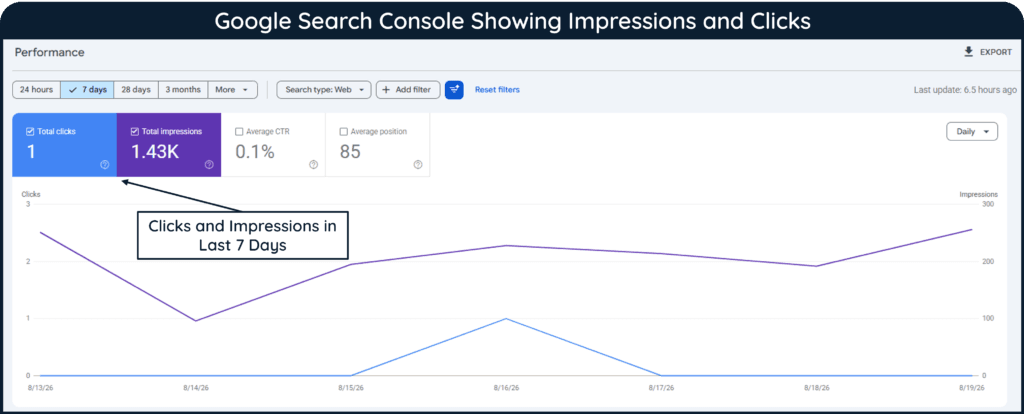
A temporary decline in traffic or rankings does not automatically mean that content needs to be refreshed. Investigate the cause by reviewing the page’s usefulness, search intent, competing results, and longer-term performance before making substantial changes.
6. Content Refreshing and Optimization
Content refreshing involves making meaningful improvements to an existing asset so that it remains accurate, useful, and appropriate for its audience. A refresh may involve replacing outdated statistics, correcting facts, strengthening sources, improving examples, reorganizing difficult sections, repairing links, updating screenshots, or adding useful internal connections.
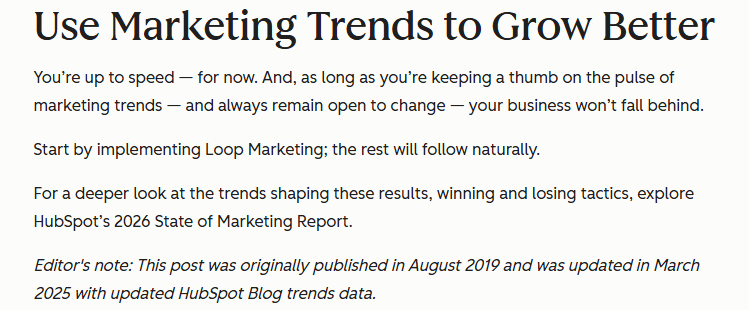
Refreshing should therefore address a genuine content need rather than create the appearance of activity. A page that remains accurate and satisfies its purpose may require little or no change, even when it is several years old.
Optimization can occur alongside refreshing when evidence shows that headings, search intent alignment, internal links, metadata, or presentation can be improved. However, the reader’s experience and the integrity of the information should remain the primary considerations.
7. Repurposing and Reusing Content
Some assets can produce additional value in different formats. A comprehensive guide might become a webinar, slide deck, infographic, email series, podcast discussion, checklist, or social media carousel.
Repurposing works best when the material is adapted rather than merely copied. A long article should not simply be divided mechanically into social posts. Instead, the ideas, examples, graphics, or research should be reorganized according to the expectations of the new format and audience.
8. Content Pruning
Content pruning is the process of reviewing existing material and deciding whether pages that are weak, outdated, redundant, or no longer useful should be refreshed, consolidated, archived, or removed. Pruning should be based on the value and purpose of individual pages rather than an assumption that reducing the number of URLs will automatically improve SEO.
Google specifically cautions against removing large amounts of older content primarily because a publisher believes doing so will make a website appear fresher in Search. Therefore, it is important to treat pruning as a quality and content-management decision rather than a tactic for indiscriminately shrinking a website.
9. Content Consolidation, Archiving, and Retirement
Content consolidation combines pages when several assets address substantially the same need and a stronger unified resource would serve readers better. This may involve moving useful information into one primary page and redirecting obsolete URLs when a clear replacement exists. Consolidation can therefore reduce unnecessary overlap while preserving valuable information and existing navigation paths.
Content archiving serves a different purpose. It preserves material that may retain historical, research, legal, or reference value even though it no longer belongs to the publication’s active content strategy. Archived reports, old announcements, discontinued product documentation, and historical event pages can remain accessible, but readers should be given enough context to understand that the material may not represent current guidance.
Retirement becomes appropriate when content no longer provides meaningful value and has no meaningful reason to remain available. If a removed URL has a clear replacement, a permanent redirect can point users and search engines to that destination. If the page is gone and no suitable replacement exists, Google recommends returning a genuine 404 or 410 response rather than redirecting visitors to an unrelated page.
To sum up, pruning is the review process, while refreshing, consolidation, archiving, and retirement are possible decisions that can follow from that review.
Important Tools for Content Lifecycle Management
No single platform manages every lifecycle stage equally well. Most organizations use a combination of publishing, workflow, analytics, SEO, and asset-management tools.
Content Management Systems
Content management systems such as WordPress, Drupal, Contentful, HubSpot, and Adobe Experience Manager provide environments for creating, publishing, organizing, and maintaining website content.
For lifecycle management, useful capabilities can include revision history, scheduling, permissions, taxonomy management, reusable components, media handling, and URL management. The appropriate system depends on the size and complexity of the publication.
Editorial and Project Management Tools
Platforms such as Notion, Asana, Trello, and Monday.com can help teams manage content status, responsibilities, deadlines, reviews, update schedules, and ownership.
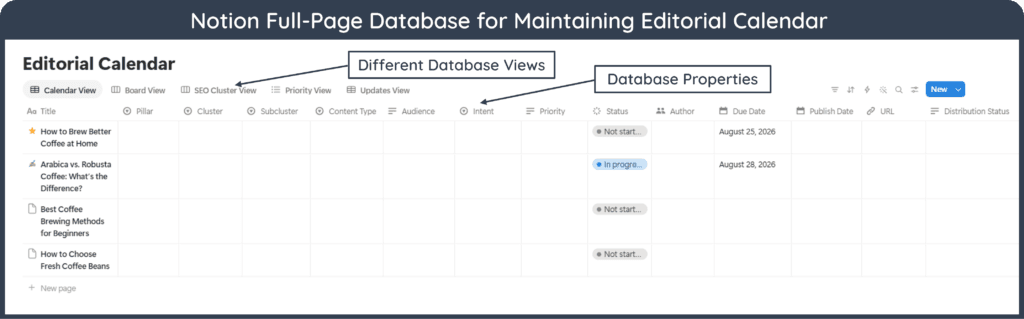
The workflow is more important than the platform. Strategically important assets should have enough information to determine their owner, current status, publication or review history, topic assignment, and next required action.
Analytics, Search, and SEO Tools
Google Search Console and Google Analytics can help evaluate search visibility and subsequent website behavior, while Bing Webmaster Tools provides additional search and indexing information.
SEO platforms such as Ahrefs, Semrush, and Moz can support keyword, backlink, and competitive research, while crawlers such as Screaming Frog can help identify technical issues and broken links. These tools provide evidence, but they should not replace editorial judgment about whether a page should be refreshed, consolidated, archived, or left unchanged.
For larger content libraries, a central content inventory can provide the operational foundation for lifecycle management. Tools such as Notion and Airtable can be used to track the URL or asset, content type, topic or cluster, owner, publication date, last review date, current status, performance indicators, and next required action. Database views, filters, and sorting can then help surface content that requires attention without manually reviewing the entire library each time.
Digital Asset Management Tools
Organizations with extensive collections of images, videos, reports, graphics, or brand files may also use digital asset management systems. Centralized asset management can make approved materials easier to locate and reuse while reducing accidental duplication and the use of outdated versions.
This becomes particularly useful when the same content is adapted across multiple teams and channels.
Challenges Involved in Content Lifecycle Management
The principles behind lifecycle management are straightforward. Maintaining them consistently becomes more difficult as the volume of content, contributors, formats, and business requirements increases.
Unclear Content Ownership
Maintenance often fails because responsibility is ambiguous. Writers may expect editors to update older pages, editors may expect SEO teams to identify problems, and marketing teams may assume someone else is monitoring performance.
Important content should therefore have a clear owner or responsible team. Ownership does not mean one person must complete every task; it means someone is accountable for deciding when action is required.
Managing Content at Scale
Reviewing fifty pages manually is manageable, while reviewing thousands requires prioritization. High-traffic pages, commercially important content, rapidly changing subjects, outdated resources, and pages showing meaningful performance changes may deserve attention before stable evergreen material.
It is therefore more useful for a lifecycle system to identify what requires review than to impose an unrealistic requirement that every page be rewritten on a fixed schedule.
Distinguishing Necessary Updates From Unnecessary Changes
Not every old page is outdated, and not every performance decline indicates that the content needs rewriting. Unnecessary changes can consume editorial resources and may remove information that continues to help readers.
Teams should diagnose the issue before choosing an action. Depending on the evidence, the right decision may be to refresh the page, improve internal links, consolidate overlapping content, change its positioning, archive it, or simply leave it alone.
Preventing Broken Links and Content Decay
External references can disappear even when the page linking to them remains unchanged. Internal links can also break after migrations, URL changes, deletions, or consolidation.
The scale of this problem is measurable. The Pew study found that 23% of sampled news webpages and 21% of sampled government webpages contained at least one broken link. Periodic crawling and link checking are therefore particularly useful for research-heavy resources that depend on external evidence.
Balancing New Production With Existing Content
Publishing teams often place greater emphasis on creating new material than improving existing resources because new output is easy to count. However, continually publishing while neglecting older pages can create an increasing maintenance burden.
A mature content program needs capacity for both production and maintenance. The appropriate balance depends on the size, age, quality, performance, and strategic importance of the existing library.
Conclusion
Content lifecycle management recognizes a simple reality: publishing is not the end of content work. Useful content needs to be planned carefully, created accurately, reviewed thoroughly, monitored after publication, refreshed when necessary, reused when new opportunities emerge, and retired when it no longer serves a meaningful purpose.
A structured lifecycle can improve readability, accuracy, reusability, topical coherence, editorial consistency, and long-term SEO management. Content pruning, refreshing, consolidation, archiving, and retirement are therefore not isolated tactics. They are different decisions within the same broader process of maintaining a useful content library.
Overall, the objective is not to keep every page permanently “fresh” or continually rewritten. It is to ensure that important content remains useful for as long as it deserves to exist and that there is a deliberate decision about what happens when it no longer does.
Frequently Asked Questions
What is content lifecycle management?
Content lifecycle management is the process of planning, creating, reviewing, publishing, monitoring, maintaining, reusing, consolidating, archiving, and retiring content throughout its useful life.
Why is content lifecycle management important?
Content lifecycle management helps organizations maintain accurate, readable, consistent, and useful resources while reducing unnecessary duplication, identifying outdated information, improving content reuse, and supporting ongoing search and business objectives.
What are the main stages of the content lifecycle?
The stages commonly include planning, research and creation, editorial review, publication, distribution, monitoring, refreshing, repurposing, pruning, consolidation, archiving, and retirement. The exact workflow can vary according to the organization and type of content.
What is the difference between content pruning and content deletion?
Content pruning is the broader review process used to decide what should happen to existing content. Deletion is only one possible outcome; a pruned page may instead be refreshed, merged with another resource, archived, redirected, or retained unchanged.
How often should content be reviewed?
There is no universal review interval. Time-sensitive information may require frequent checks, while stable evergreen material can be reviewed less often. The appropriate frequency depends on how quickly the underlying facts change, the importance of the page, its performance, and the consequences of outdated information.
Does refreshing old content improve SEO?
Refreshing content does not automatically improve rankings. Meaningful updates can improve accuracy, completeness, usability, and relevance, but changing dates or making superficial edits simply to create the appearance of freshness is not a reliable content strategy.
Should outdated content be deleted?
Not automatically. An outdated page may be better refreshed, consolidated with a stronger page, archived for historical value, redirected to a genuine replacement, or removed entirely. The correct choice depends on whether the page still serves a useful purpose and whether an appropriate replacement exists.