AI-Assisted Content: Workflows for Better Results
Key Takeaways
- AI-assisted content combines AI efficiency with human research, expertise, fact-checking, judgment, and editorial control.
- AI can accelerate brainstorming, outlining, drafting, editing, repurposing, and SEO exploration, but generated suggestions require validation against reliable data and sources.
- Google permits AI-assisted content, while warning that scaled production intended primarily to manipulate rankings can violate spam policies.
- Strong workflows preserve accuracy, originality, brand voice, audience relevance, and added value through iterative review and final human approval.
Artificial intelligence can now support almost every stage of content production, from brainstorming topics and researching keywords to building outlines, drafting sections, editing language, and checking finished work. However, effective AI-assisted content is not simply content produced faster with an AI tool. The stronger approach combines AI-powered content creation with human research, expertise, judgment, fact-checking, and editorial control.
This distinction matters because generative AI can accelerate routine parts of the workflow without reliably replacing the decisions that determine whether content is accurate, original, useful, and appropriate for its audience. Google specifically identifies topic research and content structuring as useful applications of generative AI. It also states that any website content created with generative AI must continue to comply with its Search Essentials and spam policies.
Research suggests that generative AI can improve productivity for certain writing tasks. In a controlled experiment involving 453 college-educated professionals completing midlevel professional writing assignments, access to ChatGPT reduced average task-completion time by about 40%, while independently evaluated output quality increased by 18%. However, these findings relate to the specific tasks studied and should not be interpreted as evidence that AI automatically improves every type of content.
Table of Contents
What Is AI-Assisted Content?
AI-assisted content is content created through a human-led process in which artificial intelligence supports one or more stages of planning, research, production, editing, optimization, or distribution. A writer might use AI to generate possible article angles, organize research notes, create an initial outline, summarize a source, suggest alternative wording, or identify questions that have not yet been addressed.
The important word here is assisted because humans remain responsible for deciding what should be written, which information is reliable, how arguments should be developed, which sources deserve inclusion, and whether the finished work meets editorial standards. In other words, AI becomes part of the workflow rather than the owner of the workflow.
AI-Generated vs. AI-Assisted Content
AI-generated content is produced primarily by a generative AI system in response to prompts, with the system creating much of the final text, image, audio, or other asset. By contrast, AI-assisted content involves meaningful human contribution before, during, and after the AI-supported stages.

For example, asking an AI system to produce an entire article from a title and publishing the output with little review would be largely AI-generated content.
On the other hand, a writer who performs original research, uses AI to organize the findings, writes or substantially develops the article, checks every factual claim, improves examples, and performs final editing is using an AI-assisted workflow.
IBM emphasizes human oversight and recommends treating AI-generated output as a starting point that requires review, refinement, and fact-checking. Its AI-generated content overview discusses uses ranging from brainstorming and drafting to summarization and content repurposing.
Human-Written vs. AI-Assisted Content
Human-written content is developed predominantly through a writer’s own research, reasoning, composition, and editing process. AI-assisted content introduces generative AI into some of these stages, but the extent of assistance can vary considerably.
One article may use AI only to suggest ten possible headings, while another may use it throughout research organization, outlining, drafting, editing, and repurposing. Therefore, the distinction is better understood as a spectrum of assistance rather than a simple choice between “human” and “AI.”

Google’s current guidance focuses on accuracy, quality, relevance, and added value. It also warns that producing many pages primarily to manipulate search rankings rather than help users can violate its scaled content abuse policy.
Note
Using AI to create content does not, by itself, violate Google’s spam policies. The issue arises when content is produced at scale primarily for manipulating search rankings rather than helping readers. Google refers to this as scaled content abuse, and the policy applies regardless of whether the content is created with generative AI, scraped from other sources, written by humans, or produced through a combination of methods.
What Is Humanized AI Content?
Humanized AI content is an informal term generally used for AI-supported material that has been substantially reviewed and refined so that it reflects genuine expertise, natural language, appropriate tone, audience understanding, and a recognizable editorial voice. Humanization should therefore mean improving the content itself rather than merely changing wording to make machine-generated text appear less detectable.
A useful humanization process may involve rewriting awkward sentences, replacing generic examples with real ones, adding first-hand knowledge, checking claims against primary sources, removing repetitive phrasing, adjusting transitions, and ensuring that the final article genuinely solves the reader’s problem. The objective is useful content with meaningful human judgment, not the circumvention of AI-detection systems.
How AI-Assisted Content Improves Content Workflows
The practical value of AI often appears in smaller, repetitive production tasks that consume considerable time when performed across dozens or hundreds of content assets. Used carefully, AI can support faster execution while leaving editorial decisions with people.
Scaling Content Creation
AI can help content teams handle a larger workload by accelerating repetitive tasks such as generating initial ideas, organizing notes, suggesting outlines, converting existing material into alternative formats, and producing early drafts for further development.
Scaling, however, should not mean publishing more pages simply because automation makes production easier. The purpose is to reduce friction in worthwhile content work while maintaining appropriate research, review, and quality standards.
Improving Productivity and Cost Efficiency
Productivity gains can come from spending less time on mechanical work and more time on analysis, expertise, examples, interviews, fact-checking, and final editing. The previously cited writing experiment found substantial time savings for the professional writing tasks tested, illustrating how AI can shorten some parts of knowledge work when used as an assistant.
However, these productivity gains do not automatically translate into lower costs. AI may reduce the time required for certain tasks, but poor output can create additional editing, verification, or reputational costs. Therefore, faster production is valuable only when quality remains acceptable.
Maintaining Brand Consistency
AI systems can help apply established style instructions across repeated content tasks. For example, a team might provide guidelines covering terminology, sentence length, tone, preferred formatting, prohibited phrases, audience level, and brand vocabulary before requesting edits or new drafts.
Human review remains necessary because consistency involves more than repeating a style prompt. Writers and editors still need to determine whether the language sounds natural and whether the content reflects the brand appropriately in a specific context.
Streamlining Multi-Channel Content Creation
One well-researched resource can support several channels. For example, AI can help adapt a long article into newsletter sections, social posts, infographic concepts, video scripts, presentation notes, FAQs, or summaries for different audiences.
This can reduce the need to restart the creative process for every channel. However, effective repurposing still requires adapting the format, level of detail, tone, and call to action rather than simply copying the same message everywhere.
Identifying SEO Gaps and Opportunities
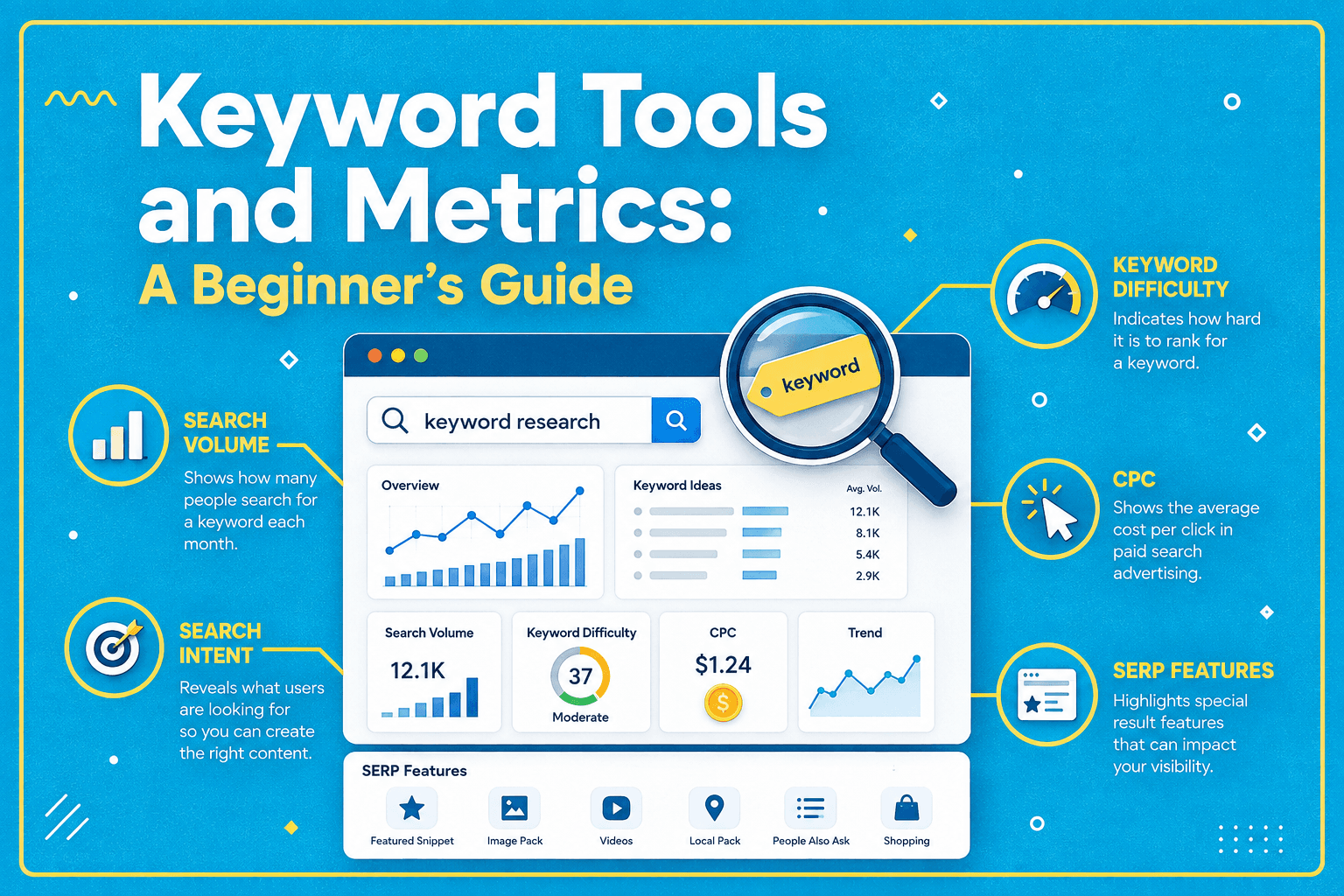
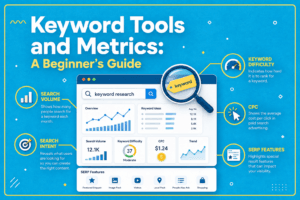
AI can quickly expand a seed topic into related concepts, questions, terminology, search-intent possibilities, and potential subtopics. This makes it useful during early keyword and topic exploration.
These suggestions should then be validated with actual search and audience data. Google’s Search Essentials recommends using words people search for in important descriptive locations, while Google Trends provides aggregated data about real search interest. AI can therefore generate hypotheses, but established research tools should help determine which opportunities deserve attention.
Reducing Time to Market
AI can shorten the period between an approved idea and a usable first version by helping with research organization, outlining, drafting, editing, and repurposing. This can be particularly helpful for time-sensitive campaigns, product launches, newsletters, or rapidly developing topics.
Nevertheless, speed should not remove necessary review. The value of faster time to market disappears if the published information is incorrect, poorly sourced, or inconsistent with the organization’s standards.
AI-Assisted Content Workflow: From Ideas to Publication
A useful AI workflow assigns appropriate tasks to AI while preserving human control over research, judgment, originality, and publication decisions. The stages below can be adapted according to the complexity and risk of the content.
1. Brainstorming New Content Ideas
AI is particularly useful at the beginning of the process, when a broad subject needs to be expanded into possible angles. A prompt can ask for audience questions, pain points, alternative perspectives, comparison ideas, beginner topics, advanced topics, or gaps within an existing cluster.
The output should be treated as a candidate list rather than a publishing calendar. OpenAI describes brainstorming with ChatGPT as a way to expand options and organize ideas before people apply their own context, expertise, and judgment.
2. AI Keyword and Topic Research
AI can convert broad topics into possible seed keywords, long-tail phrases, questions, commercial angles, entities, and related terminology. It can also help group ideas by intent or identify where several keywords may belong on the same page.
However, an AI model should not be treated as a substitute for verified keyword data. Search Console, Google Trends, paid keyword platforms, SERP analysis, customer questions, and internal search data can provide evidence that helps validate AI-generated suggestions.
3. Structuring Content and Building Outlines
Before drafting, AI can help organize the subject into a logical hierarchy of sections and subsections. It can suggest H2 and H3 headings, identify dependencies between ideas, arrange sections from foundational to advanced concepts, and propose a table of contents.
This use closely matches Google’s suggestion that generative AI can be used to add structure to original content. The writer should still determine whether the proposed structure reflects the subject accurately and avoids unnecessary sections.
4. AI-Assisted Drafting
Drafting can range from requesting alternative introductions to developing an initial version of a difficult paragraph. AI can also help turn research notes into connected prose, explain a technical concept at a beginner level, or propose several ways to express the same idea.
In practice, an iterative workflow usually provides greater editorial control. Instead of requesting an entire article and accepting it as finished, writers can work section by section, provide verified context, evaluate each response, and rewrite where necessary.
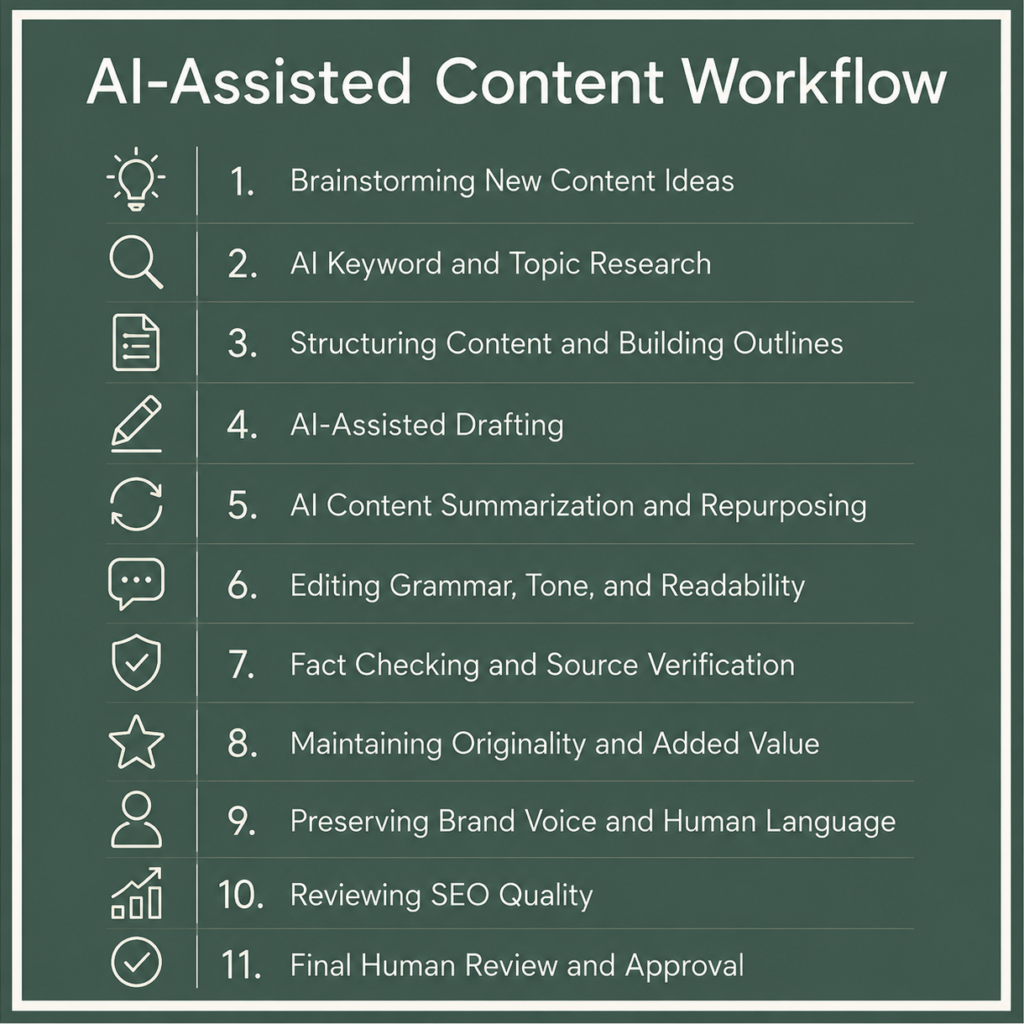
5. AI Content Summarization and Repurposing
AI can condense long research notes, meeting transcripts, reports, or existing articles into shorter working summaries. It can also extract key themes that may later support newsletters, presentations, videos, or social content.
Summaries still need verification against the original material because important qualifications can disappear during compression. Google, for example, states that Gemini can be used for summarization and first-draft creation, but also warns that generative AI responses can contain inaccurate information.
6. Editing: Grammar, Tone, and Readability
AI-assisted editing can identify awkward wording, repetitive sentence patterns, grammar problems, tone inconsistencies, and unnecessarily complicated passages. Writers can ask for alternatives while retaining control over the final wording.
Dedicated editing tools can support this stage as well. Grammarly currently offers grammar assistance and tone suggestions that can help adjust how individual sentences sound, although the editor should decide whether a suggested change fits the intended voice.
7. Fact Checking and Source Verification
AI-generated sentences can sound confident even when the underlying claim is uncertain. Every important statistic, quotation, date, product feature, legal requirement, research finding, and other verifiable claim should therefore be checked directly against a reliable source before publication. Primary documentation, original research, official statistics, standards organizations, and first-party product documentation should be preferred where available. A credible-looking URL is not evidence that the page exists or actually supports the statement being made.
8. Maintaining Originality and Added Value
AI can produce grammatically sound text that remains generic because it draws on common patterns rather than unique experience. Writers should therefore add original analysis, expert interpretation, first-hand examples, proprietary data, interviews, demonstrations, or clearer explanations where appropriate.
The objective is not simply to make generated text different; it is to create content that offers information, insight, or usefulness beyond what readers can already find elsewhere.
Originality review should also consider attribution, copyright, and licensing. Before reusing third-party material, content teams should determine whether the use is covered by a license, permission from the rights holder, an applicable legal exception, or another valid basis for reuse. Attribution requirements should also be followed where applicable.
9. Preserving Brand Voice and Human Language
Brand voice should be reinforced during editing rather than left entirely to the initial prompt. It is therefore important to review sentence rhythm, terminology, transitions, examples, humor, formality, and the way the publication addresses its audience.
Repeated AI constructions should also be removed. Phrases that are technically correct can still make an article feel mechanical when the same patterns appear throughout the page.
10. Reviewing SEO Quality
AI can help check whether important concepts have been covered, headings are descriptive, internal-link opportunities exist, and primary keywords appear naturally. It can also identify possible duplication between sections or suggest related questions worth considering. However, SEO review should not become an instruction to add keywords everywhere.
11. Final Human Review and Approval
The final reviewer should read the content as a reader would, not merely scan for grammar. The review should consider whether the article answers the intended question, flows naturally, contains sufficient evidence, avoids contradictions, preserves the right tone, and provides useful information without unnecessary repetition.
For automatically generated material, Google also suggests considering whether readers would benefit from context about how automation was used. The appropriate level of disclosure depends on the content, audience, and circumstances.
Important AI-Assisted Content Tools
AI-assisted content workflows rarely depend on a single platform. Different tools are better suited to brainstorming, research, writing, SEO analysis, editing, optimization, or final quality control. Combining specialized tools with reliable data sources and human review can produce a more dependable workflow than expecting one AI system to handle every stage.
AI Writing and Research Tools
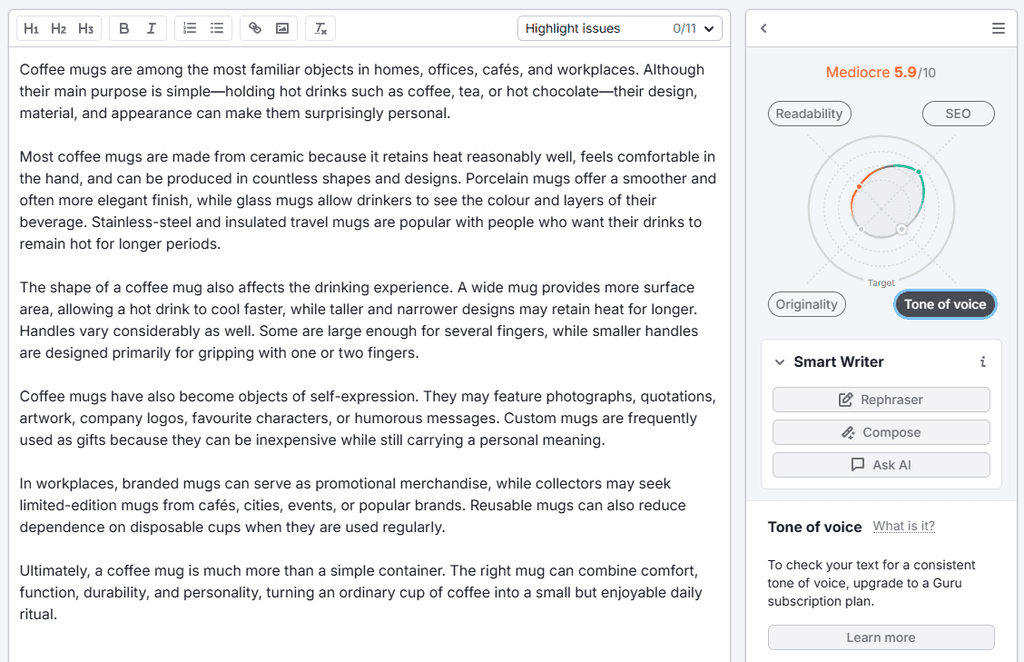
General-purpose AI tools such as ChatGPT, Gemini, and Claude can support brainstorming, research assistance, outlining, drafting, rewriting, summarization, and the organization of source material. Specialized platforms such as Writesonic AI Article Writer, Surfer, Frase, NEURONwriter, and Semrush SEO Writing Assistant can also support AI-assisted drafting, content development, optimization, and search-focused writing workflows. Clear instructions, reliable source material, human review, and appropriate fact-checking remain necessary regardless of the tool.
Keyword and SEO Tools
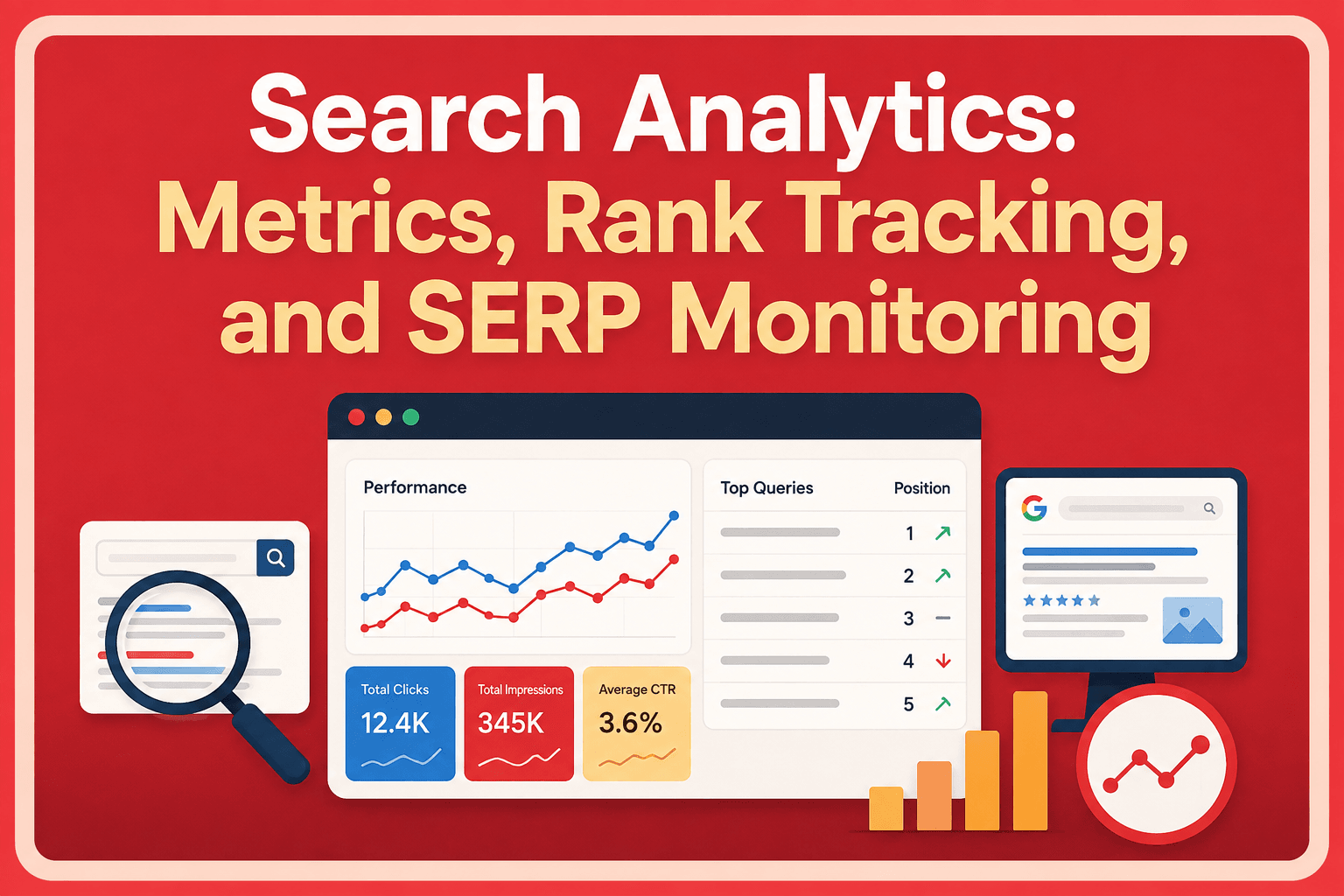
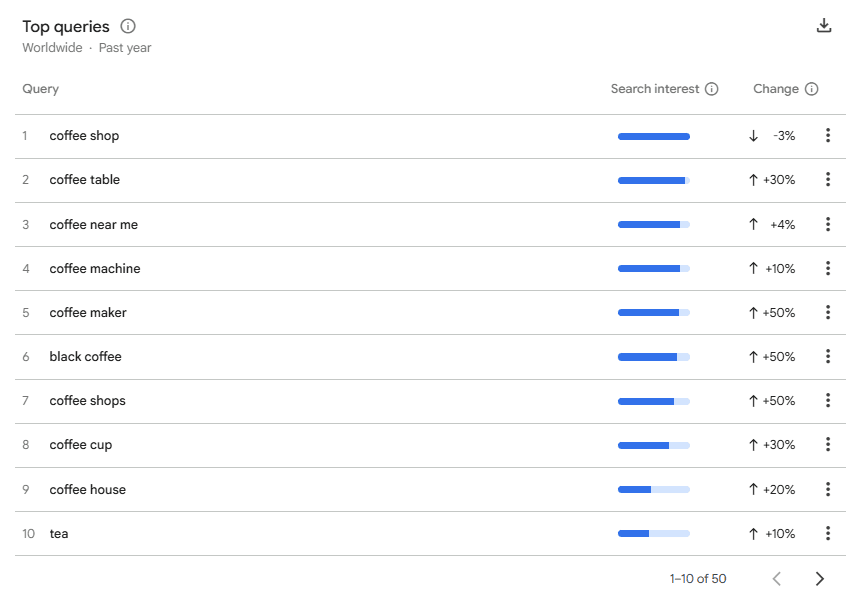
SEO tools provide data that can guide content decisions before and after AI-assisted writing. Platforms such as Semrush, Ahrefs, Moz, and SE Ranking can provide keyword, ranking, backlink, competitor, and other search-related data. Google Search Console can show actual performance in Google Search, while Google Trends can help compare relative search interest and changing demand patterns. AI can then help organize, compare, summarize, or interpret these inputs rather than inventing search volume, rankings, traffic, or other SEO metrics.
Grammar and Editing Tools
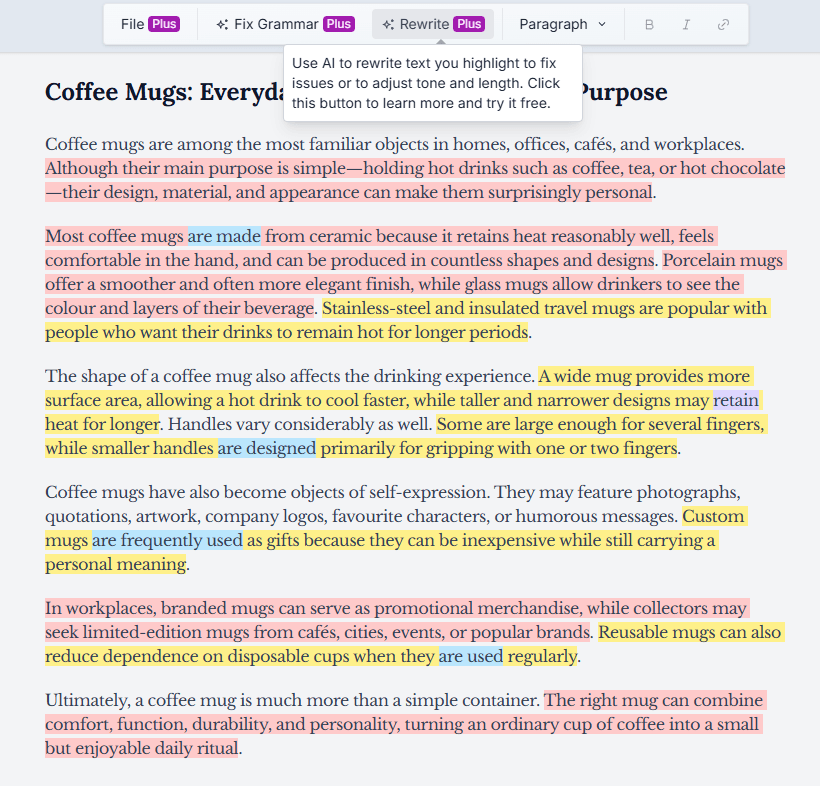
Editing tools can help identify problems that remain after drafting. Grammarly, ProWritingAid, and Hemingway Editor can assist with grammar, sentence clarity, readability, style, and word choice, while QuillBot and general-purpose AI tools can suggest rewrites or alternative phrasing. These tools are most useful when suggestions are reviewed individually rather than accepted automatically, because a grammatically correct edit can still change the intended meaning, voice, or tone.
Content Optimization and Quality Tools
Content optimization platforms such as Clearscope, MarketMuse, Content Harmony, Dashword, Scalenut, TextOptimizer, and Semrush ContentShake AI can help identify possible coverage gaps, related topics, content opportunities, and areas where a draft may need greater depth or clearer structure. Their recommendations should be treated as inputs rather than instructions, because adding every suggested term, topic, or optimization can make content repetitive, unfocused, or unnatural.
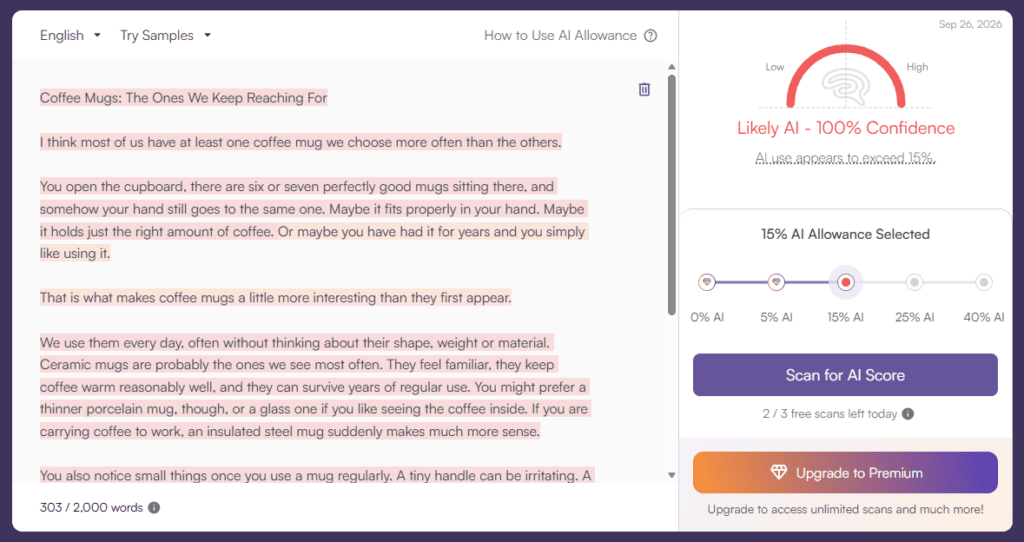
Quality-control tools serve a different purpose. Copyscape can help identify duplicate or closely matching web content, while Originality.ai offers plagiarism checking and AI-content detection signals. Analytics systems and link-checking tools can provide additional evidence about content performance and technical quality. A mature workflow therefore combines generative AI, specialized writing and optimization tools, reliable datasets, quality-control systems, and human editorial judgment.
AI-Assisted Content: Checklist and Mistakes to Avoid
Before publishing AI-assisted content, a final checklist can prevent speed from overtaking quality:
- Confirm that every important factual claim has been checked against a credible source rather than accepted solely because the AI response sounds convincing.
- Ensure that the content adds genuine value through expertise, examples, analysis, data, clearer explanations, or other useful contributions.
- Review the article for natural sentence construction, connected paragraphs, consistent terminology, appropriate transitions, and the intended brand voice.
- Validate AI-generated keyword and topic ideas against actual search data, audience research, SERPs, or other relevant evidence before acting on them.
- Check that summaries accurately represent their original sources and preserve important qualifications or limitations.
- Review headings, metadata, internal links, and keyword use for SEO without forcing repetitive or unnatural optimization.
- Confirm that reused or repurposed material has been adapted to the new audience and channel rather than simply copied into another format.
- Complete a final human review for accuracy, originality, usefulness, legal and compliance concerns, and publication readiness.
Mistakes to Avoid
Several mistakes can weaken an otherwise effective AI-assisted workflow:
- Publishing AI output without review can allow factual errors, weak explanations, and awkward language to reach the final page.
- Over-automating content production can prioritize volume over usefulness; generating many pages primarily to manipulate rankings can violate Google’s scaled content abuse policy.
- Treating AI as a factual authority can introduce incorrect statistics, dates, quotations, or claims.
- Using unverified AI-generated sources can result in weak, irrelevant, or nonexistent references.
- Creating repetitive pages at scale can add unnecessary duplication without improving coverage.
- Losing brand voice through automation can make content sound generic or inconsistent.
- “Humanizing” content superficially does not fix weak research, generic ideas, or factual uncertainty.
Conclusion
AI-assisted content works best when technology supports the workflow while people remain responsible for accuracy, judgment, expertise, and final quality. The objective is not to automate every stage simply because automation is available, but to identify where AI genuinely reduces repetitive work or improves the creative process.
Overall, the strongest workflows combine the speed of AI-powered content creation with the context, accountability, and editorial judgment that people provide.
Frequently Asked Questions
What is AI-assisted content?
AI-assisted content is content produced through a human-led workflow in which artificial intelligence helps with tasks such as brainstorming, research organization, outlining, drafting, summarization, editing, or quality review. Humans remain responsible for the final content and publication decisions.
Is AI-assisted content the same as AI-generated content?
No. AI-generated content is primarily produced by an AI system, while AI-assisted content involves meaningful human involvement throughout the process. The distinction depends on how much responsibility is delegated to AI rather than whether an AI tool was used at all.
Does Google allow AI-assisted content?
Google does not prohibit content simply because generative AI was used. However, using automation to produce content primarily to manipulate search rankings can violate its spam policies, including the policy on scaled content abuse.
Can AI help with keyword research?
Yes, AI can suggest seed terms, questions, variations, entities, search-intent possibilities, and topic relationships. However, these ideas should be validated using tools and data that reflect actual search behavior rather than treating generated estimates as verified keyword metrics.
Can AI improve content quality?
AI can help identify grammar problems, unclear wording, missing topics, repetitive passages, structural weaknesses, and possible inconsistencies. Quality still depends on the source material, prompt, human expertise, and the rigor of the final review.
Should AI-assisted content be fact-checked?
Yes. AI-generated information can contain inaccurate, incomplete, or unsupported claims, so important facts should be verified against authoritative sources before publication. This is particularly important for statistics, quotations, research findings, legal information, product details, and other claims that readers may rely on.