How to Evaluate and Improve Content Quality for SEO
Key Takeaways
- Content quality combines accuracy, originality, expertise, trustworthiness, readability, structure, sourcing, and practical value rather than relying on one SEO metric.
- Originality depends on the value a page adds through experience, research, examples, analysis, updated information, or useful frameworks—not merely unique wording.
- A repeatable audit should progress from structural editing and fact-checking through source, originality, language, formatting, SEO, and final human review.
- AI can identify editorial and consistency issues, but human judgment remains essential for verifying claims, assessing usefulness, and preserving expertise and brand voice.
Content quality is often discussed as though it were a vague combination of “good writing” and SEO best practices. In practice, it is much broader. A high-quality page needs accurate information, clear writing, credible sourcing, consistent formatting, useful examples, a recognizable editorial voice, and enough original value to justify its existence.
For SEO, this matters because Google’s systems are designed to prioritize helpful, reliable, people-first content rather than content created primarily to manipulate rankings. Google’s people-first content guidance asks publishers to consider factors such as original information or analysis, expertise, factual accuracy, writing quality, and the overall usefulness of the content.
However, content quality is not only about satisfying search engines. It is also about whether a reader can trust the page, understand it easily, and leave with something useful that was not obvious before.
Table of Contents
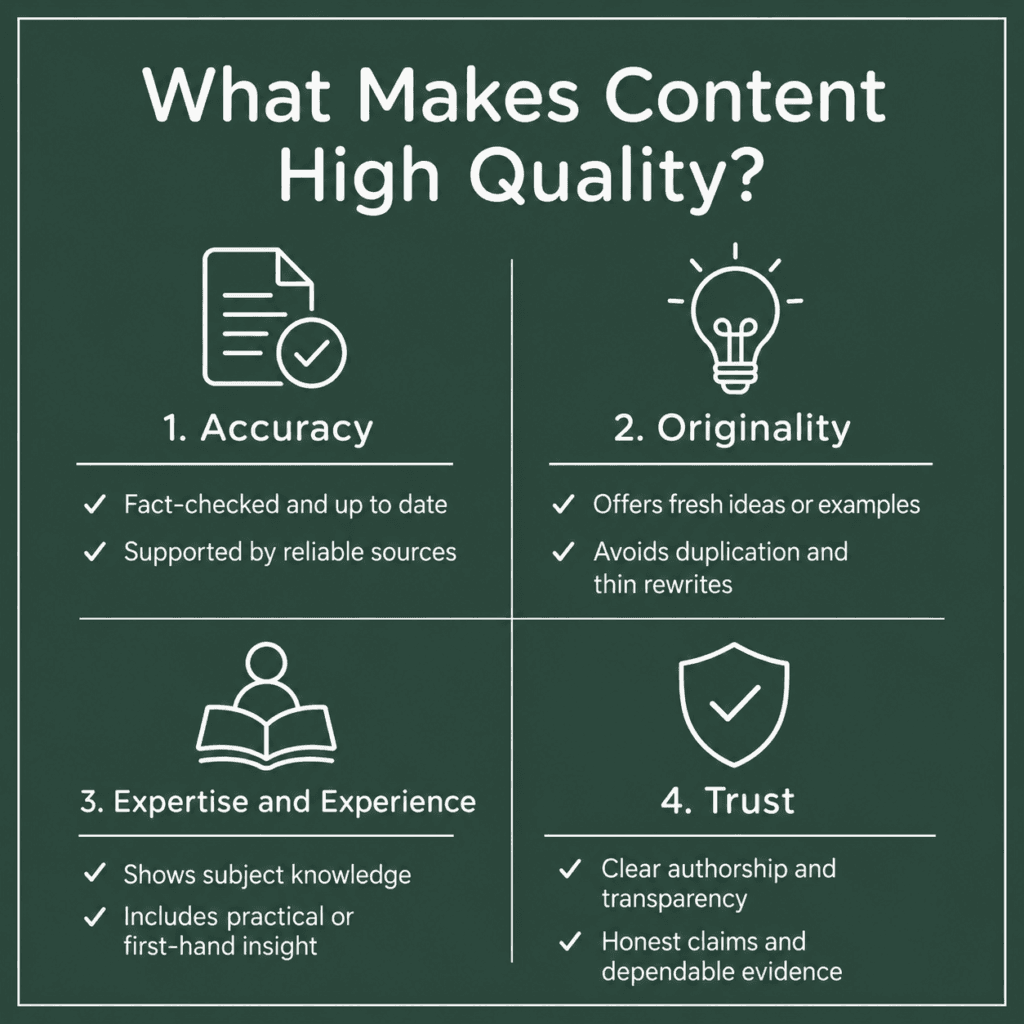
What Makes Content High Quality?
Content quality is the combined result of several editorial and informational factors working together.
A page can be grammatically perfect and still be weak if it merely summarizes information already available elsewhere. Similarly, a highly original article can lose credibility if it contains factual errors, misleading claims, poor sources, or inconsistent writing. A useful content quality audit should therefore consider several dimensions at once.
Note
Content quality is not a single SEO score or checklist item. A page can be grammatically polished but still be weak if it is inaccurate, derivative, poorly sourced, or offers little practical value. Quality should therefore be evaluated across several dimensions rather than judged by one metric alone.
Accuracy
Every factual statement should be reasonably verifiable. Statistics, dates, technical claims, research findings, product features, legal requirements, health information, and rapidly changing information deserve particular attention.
A sentence can sound authoritative and still be wrong. It is therefore important to distinguish between established facts, estimates, opinions, examples, observations, predictions, and illustrative scenarios.
If a claim is uncertain or contextual, the wording should reflect that uncertainty. For example, rather than making the absolute claim that “long-tail keywords always convert better,” it is more accurate to say that “long-tail queries can have higher conversion potential when their specificity reflects stronger purchase intent.”
Here, the second version communicates the idea as a tendency without presenting it as a universal rule.
Originality
Original content does not necessarily mean publishing information that has never appeared anywhere on the internet.
Originality can come from first-hand experience, original research, new examples, testing, data analysis, screenshots, comparisons, expert interpretation, practical workflows, original graphics, a distinctive framework, or by combining established facts in a genuinely useful way.
Google specifically asks whether content provides original information, research, analysis, or substantial additional value rather than simply copying or rewriting other sources.
In short, originality is often about what the page adds, not simply whether its sentences are unique.
Expertise and Experience
A good article should demonstrate that the writer understands the subject rather than merely compiling definitions. For example, an article about espresso-machine maintenance becomes more valuable when it includes observations from actual cleaning, common failures, before-and-after photographs, or explanations of mistakes the writer has seen in practice.
Google’s guidance also asks whether content demonstrates first-hand expertise and depth of knowledge where relevant. This is especially important when dozens of pages already explain the basic facts.
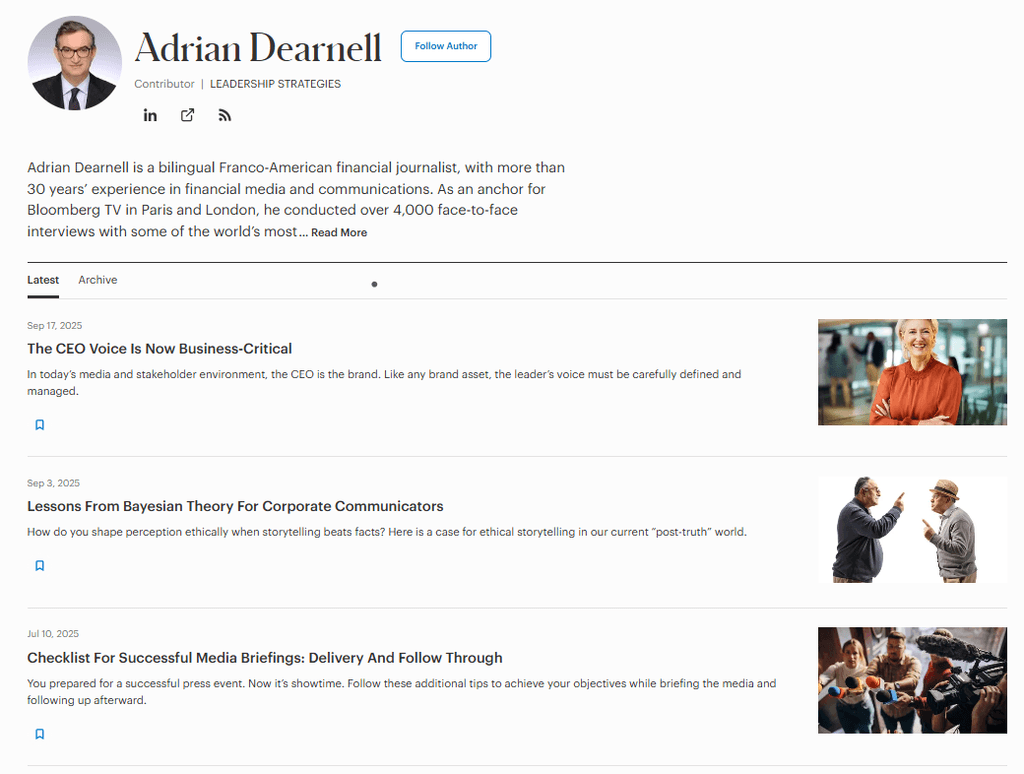
Websites can reinforce these signals through clear author bios and dedicated author pages that show relevant qualifications, professional background, practical experience, and links to other work by the same author.
Trust
Trust is built through several smaller signals. These include accurate statements, credible sources, transparent authorship, reasonable claims, clear corrections, up-to-date information, appropriate citations, no deceptive wording, and consistency between titles and content.
If an article promises “10 proven ways to double traffic” but provides no evidence that the methods are proven or capable of doubling traffic, the problem is not merely style. It is a trust issue.
Audit Accuracy, Sources, Originality, and Expertise
A content quality audit should begin with the substance of the page before moving to grammar and formatting. This is because polished writing has little value if the underlying information is inaccurate or misleading.
Fact-Check Important Claims
As you audit content quality, read the article specifically for factual statements rather than general flow. When reviewing factual claims, ask questions such as:
- Is this fact still current?
- Is the wording more certain than the evidence supports?
- Does the source actually support the sentence?
- Is a statistic missing its date or context?
- Has a product, platform, law, feature, or algorithm changed?
- Am I confusing correlation with causation?
- Is an example being presented as a universal rule?
Facts that can change quickly deserve more frequent checking than stable definitions. For example, a definition of an HTTP status code is relatively stable. But a claim about a current Google Search feature, software interface, pricing plan, or advertising policy may change much more quickly.
Evaluate Source Quality
Not all citations provide the same level of credibility, so source quality should be evaluated as part of the content review. Whenever possible, prioritize official documentation, original research, government or academic sources, recognized industry publications, and strong secondary analysis.
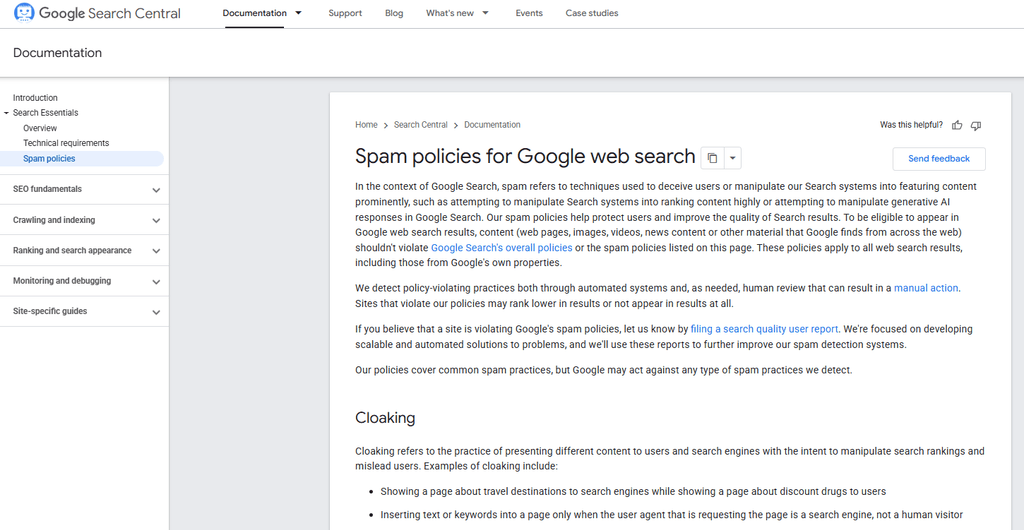
A secondary source may explain a concept more clearly than the original source, but important factual claims should ideally be traceable to the underlying evidence. This is particularly important when citing surveys or industry research. If a third-party article cites an industry study, trace the claim back to the original report whenever possible. This makes it easier to verify the methodology, sample size, publication date, and exact findings rather than relying on a secondary interpretation.
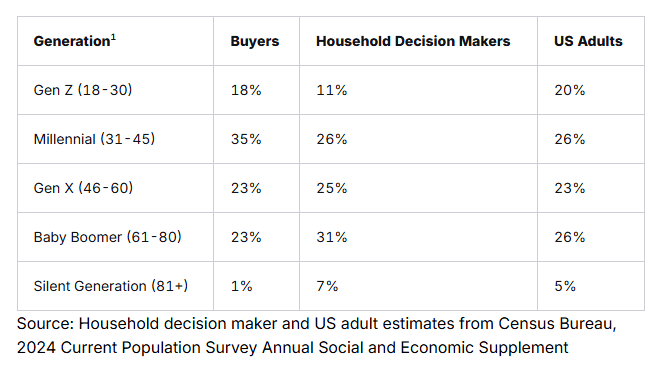
At the same time, it is also worth checking whether the source is still current and applicable. An excellent article from 2018 may no longer support a claim about how a platform works in 2026.
Check Whether the Anchor Text Helps the Reader
The link itself is only part of the quality issue. The anchor text should explain what the reader can expect after clicking. Google recommends that anchor text be descriptive, reasonably concise, and relevant to both the current page and the destination page.
For example, instead of using vague anchor text such as “Read more here,” use descriptive wording such as “Google’s anchor text guidance suggests …”
The second version tells readers what they can expect before they click the link.
Check for Plagiarism and Excessive Paraphrasing
Plagiarism is not limited to copying an entire paragraph word for word. Problems can also arise when a writer:
- closely follows another article’s sentence structure;
- reproduces a distinctive example without attribution;
- rewrites sources mechanically;
- combines several sources without adding original analysis;
- copies tables or frameworks too closely.
A plagiarism checker can help identify suspicious overlap, but it should not replace human review. The more important question is:
⇒ Does this article sound like an independent piece of work, or like a rearranged version of existing pages?
Look for Thin or Commodity Content
In SEO, “thin content” generally refers to content that provides little useful or original value, not merely content with a low word count. A 500-word page can be excellent if it completely solves a narrow problem. A 3,000-word page can still be thin if it repeats obvious statements without adding depth.
Google’s current generative AI guidance warns that generating many pages without adding value for users may violate its scaled content abuse policy. A useful test is to ask:
⇒ What would the reader lose if this page disappeared from the web?
If the answer is “almost nothing because twenty other pages say exactly the same thing,” the article probably needs more original value.
Improve Writing, Readability, and Editorial Consistency
Once the information is accurate and useful, the next layer is editorial quality.
Check Grammar and Sentence Construction
Grammar errors can weaken trust, but the audit should go beyond obvious mistakes. It is therefore important to look for sentence fragments, run-on sentences in which two or more independent clauses are joined incorrectly, missing articles, subject-verb agreement errors, repeated words, inconsistent tense, misplaced modifiers, unclear pronouns, unnecessary passive voice, and awkward transitions.
For example, instead of writing several short, mechanical sentences such as “Content quality is important. It improves trust. It improves readability. It also helps SEO,” combine the related ideas into a more natural sentence: “Content quality improves trust and readability while also making the page easier for search engines and readers to understand.”
The goal is not to make every sentence longer, but to create rhythm, connect related thoughts, and maintain a natural flow.
Check Natural Flow
Poorly edited AI-assisted writing often has a recognizable pattern:
- every paragraph begins with a transition;
- every section has exactly three points;
- sentences have nearly identical length;
- ideas are repeated using different words;
- phrases such as “In today’s digital landscape” appear without adding meaning;
- conclusions restate the introduction almost mechanically.
Human writing, by contrast, usually has more variation. A page should therefore move naturally from one idea to another rather than feeling assembled from independent blocks.
Transitions such as however, therefore, in other words, for example, in short, and similarly are useful when they reflect a genuine relationship between ideas. They should not be inserted merely to make writing appear smoother.
Maintain Brand Voice
Content quality should also be consistent with the publication. A financial publication, a coffee blog, a technical documentation site, and a lifestyle magazine should not all sound identical.
A brand voice guide can define formality, sentence length, preferred terminology, use of first person, level of technical detail, humor, contractions, tone toward beginners, and preferred calls to action. Consistency helps multiple writers sound like contributors to the same publication.
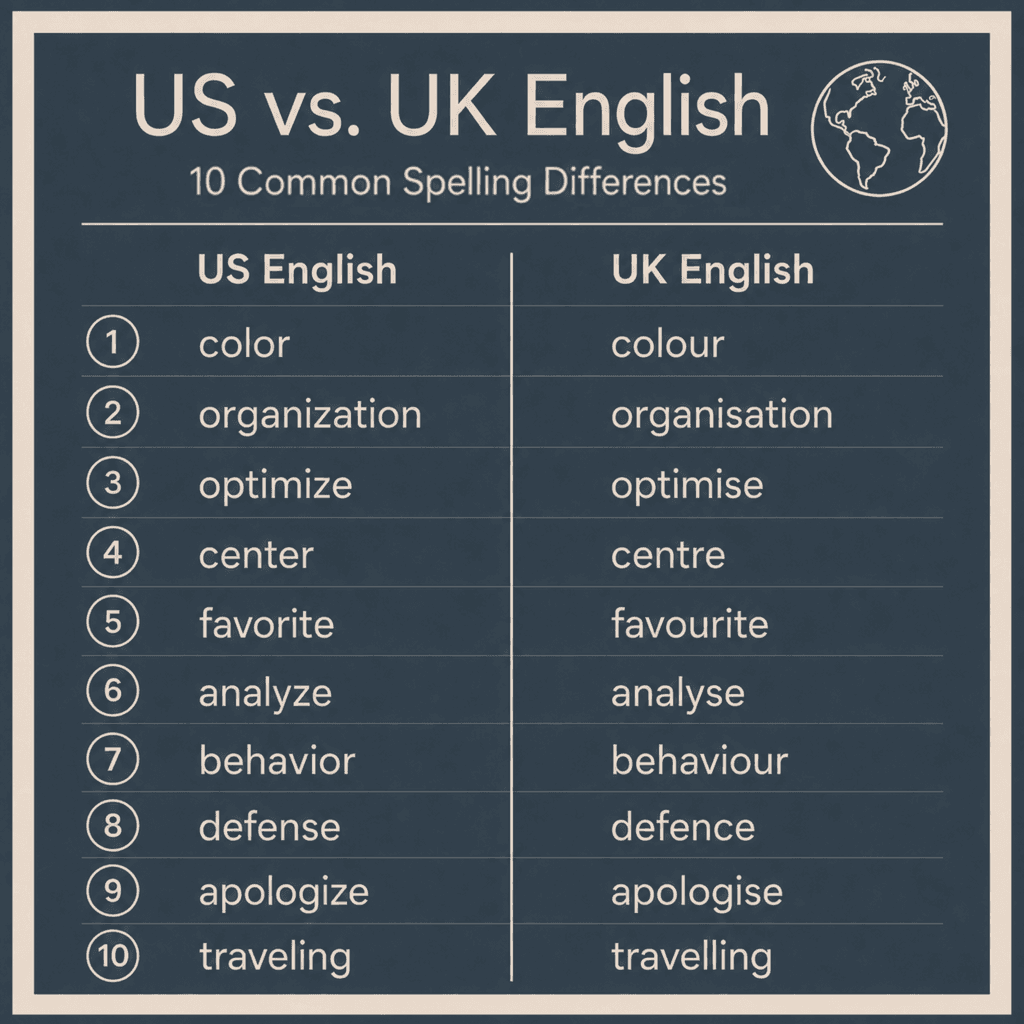
Choose US or UK English
A site should normally choose one language convention and apply it consistently. For example:
- US English: color, organization, optimize, center
- UK English: colour, organisation, optimise, centre
Neither style is inherently better for SEO. The problem arises when both styles appear randomly across the same publication.
Standardize Punctuation
Small punctuation inconsistencies are easy to overlook but become noticeable across a large website. An editorial standard should decide:
For example, if a publication spells out abbreviations such as search engine optimization (SEO) at first mention, the same convention should be followed consistently across articles. Consistency matters more than adopting one supposedly universal style.
Check Formatting Errors That Are Easy to Miss
Some quality issues are technically tiny but visually distracting. These include a bold period, an italicized comma, an unmatched quotation mark, a heading with an extra space, inconsistent bullet indentation, one H3 styled as an H2, a list item without punctuation when all others have it, broken Markdown, and accidental duplicate spaces.
These are exactly the kinds of problems that AI tools can help detect during a final editorial pass.
Evaluate Structure, Examples, Links, and Information Gain
Content quality also depends on how easily readers can use the information.
Use Clear Headings and Sections
Headings should describe what the following section actually contains. Therefore, avoid vague headings such as Important Things, More Information, Other Factors, and Things to Know. Instead, you may use headings such as How to Fact-Check Content, How to Evaluate Source Quality, Common Readability Problems, and Content Quality Audit Checklist.
A descriptive heading improves scanning and helps readers understand the page before reading every paragraph.
Build Proper Paragraphs
A paragraph should usually develop one connected idea. Too many one-sentence paragraphs can make an article feel fragmented, while very long paragraphs can make dense information difficult to follow.
There is no universal paragraph length. Instead, ask whether the sentences belong together and whether the reader gets a natural pause before the next idea begins.
Use Practical Examples
Examples often separate useful content from generic content. To make a concept easier to understand, instead of simply advising readers to “use authoritative sources,” explain how source quality differs by comparing a primary source, a secondary industry article, an anonymous blog, and an unsupported AI-generated claim.
Similarly, rather than telling readers to “improve readability,” show a mechanical sentence followed by a clearer revision.
In short, practical examples can help convert abstract advice into something a beginner can easily apply.
Information Gain
Information gain can be understood editorially as the additional value a page contributes beyond what a reader can already find elsewhere. That value might include a new example, first-hand observations, original screenshots, better categorization, a practical checklist, updated information, a new comparison, original data, a clearer explanation, or a useful workflow.
Google’s guidance for generative AI search similarly encourages publishers to provide a unique point of view, first-hand experience, and non-commodity content rather than simply recycling information already available elsewhere.
It is therefore useful to ask during an audit:
What does this article add that the competing pages do not?
Review Internal and External Links
Links should support the reader rather than merely satisfy an SEO checklist. Internal links can help readers move to prerequisite concepts, deeper explanations, related guides, commercial pages, and definitions.
External links are useful when they provide evidence, original documentation, research, or additional context. However, they should be added only where they genuinely support the reader rather than being inserted simply to increase the number of outbound links.
Build a Repeatable Content Quality Audit Workflow
The easiest way to maintain quality is to turn review into a repeatable process. A practical workflow can look like this:
Here, each stage of a content quality audit serves a different purpose.
1. Structural Edit
Begin by reviewing the overall structure of the article. Check whether it answers the intended question and whether any important sections or ideas are missing.
Also check whether information appears in a logical order and whether any ideas are unnecessarily repeated. At the same time, make sure the headings clearly describe their sections and that the introduction is proportionate to the length and purpose of the article.
2. Fact-Check
Next, review every important factual claim in the article. Check whether each claim is accurate, current, and expressed with an appropriate level of certainty.
Do not assume that a citation automatically proves the statement. Open the source and confirm that it actually supports the wording used in the article.
3. Source Review
Evaluate the quality and suitability of the sources used throughout the article. Check whether they are authoritative, current, and directly relevant to the claims they support.
Where possible, determine whether a stronger primary source is available. Also make sure the anchor text describes the destination clearly and that every important link still works.
4. Originality Review
Review the article for originality and independent value. Check for plagiarism, excessive paraphrasing, generic summaries, and examples that add little practical value.
At the same time, look for opportunities to strengthen the article with first-hand experience, original examples, visuals, data, analysis, or practical observations. The goal is not simply to make the wording unique, but to ensure that the article contributes something useful of its own.
5. Language Edit
Review the article at the sentence and paragraph level. Check grammar, spelling, punctuation, sentence construction, and natural flow.
Also look for unnecessary repetition and excessive similarity in sentence structure or length. Make sure US or UK English is used consistently and that the writing remains aligned with the publication’s established brand voice.
6. Formatting Check
Inspect the article for formatting consistency. Check the H1–H4 hierarchy, bullets, tables, quotation marks, spacing, and links.
At the same time, review the use of bold and italic text, captions, and alt text. Make sure similar elements follow the same editorial and punctuation conventions throughout the article.
7. SEO Review
Finally, review the article from an SEO perspective. Check whether the primary topic is clear and whether headings describe the subject naturally.
Also make sure internal links are useful and relevant and that the title and meta description accurately represent the page. Check whether the content satisfies the likely search intent and, importantly, whether optimization has made any sentence sound unnatural or forced.
In short, SEO should be the final refinement of good content, not a substitute for it.

How AI and Tools Can Improve Content Quality
AI tools are particularly useful in content quality control because they can review the same article repeatedly from different perspectives.
Google itself notes that generative AI can be useful for research and for adding structure to original content, while warning that using automation to generate large amounts of low-value content can violate its spam policies.
In other words, AI can be used as an effective editorial assistant, while genuine expertise and original contribution should remain the foundation of the content.
Use AI as a Second Editor
A writer can ask ChatGPT, Claude, Gemini, or another capable model to review an article for factual claims requiring verification, minor punctuation issues, US/UK English inconsistencies, awkward sentences, repeated ideas, weak transitions, missing context, overly absolute claims, formatting problems, and lack of first-hand value.
Used this way, AI can reveal problems that are surprisingly difficult to spot after reading the same article repeatedly.
Ask AI to Rate the Article
One useful workflow is to ask the model to score the article for overall content quality. Although the score is inherently subjective and should not be treated as an objective measure, it can still be useful for comparing different versions of the same article and identifying areas that need improvement.
If an article receives an overall assessment of 5.5/10, ask:
“What specific changes would be required to improve this article to approximately 9/10?”
The resulting task list may identify problems such as unsupported claims, missing examples, repetitive paragraphs, weak sourcing, poor structure, thin explanations, inconsistent punctuation, or a lack of practical experience. After making the recommended revisions, run the audit again to see whether the article has improved and whether any important issues remain.
The goal is not to chase an arbitrary score such as 9.6/10 instead of 9.3/10. Rather, the score provides a simple feedback mechanism for comparing revisions and turning broad editorial criticism into a structured improvement process.
A Practical AI Content Quality Prompt
A content quality prompt does not need to be long. Shorter prompts can often produce more focused reviews, especially when the task is clearly defined.
Version 1: Full Quality Audit
Review this article for factual accuracy, source quality, originality, grammar, punctuation, US English, readability, structure, repetition, thin content, practical value, and SEO over-optimization. Rate the article out of 10, identify the most important issues, and recommend specific fixes.
Version 2: Editorial Review
Act as a senior content editor. Check this article for grammar, punctuation, sentence quality, natural flow, readability, consistency, repeated ideas, weak examples, and formatting issues. Rate it out of 10 and show the exact sentences or sections that need improvement.
Version 3: SEO and Fact-Check Review
Audit this article for factual accuracy, unsupported claims, source authority, anchor text, originality, information gain, search intent, practical expertise, and SEO quality. Rate it out of 10 and provide a prioritized list of changes needed to make it publication-ready.
These prompts can also be run separately at different stages of editing. This often produces more useful feedback than asking the model to evaluate every possible quality factor in a single review.
Use AI for Micro-Level Formatting Checks
AI can also detect small editorial mistakes that human reviewers easily miss. For example, AI can help identify an accidentally italicized comma, a bold period, inconsistent heading capitalization, a single bullet that uses different punctuation from comparable bullets, or a mixture of US and UK spellings.
These issues may not affect rankings directly, but they affect editorial polish.
Human Review Still Matters
AI should not be given final authority over factual claims because models can misunderstand sources, flag correct statements as errors, overlook subtle inaccuracies, or recommend stylistic changes that weaken the writer’s voice.
For this reason, a strong content workflow should combine human expertise, AI-assisted editing, primary-source verification, and clear editorial standards. AI can make the review process faster and more systematic, but human judgment is still needed to determine whether a statement is accurate, useful, original, and genuinely supported by experience or expertise.
Human review is also needed to judge whether the article fits the publication’s broader standards, voice, audience, and existing content rather than merely passing an isolated page-level check.
Frequently Asked Questions
What is content quality in SEO?
Content quality in SEO refers to the accuracy, usefulness, originality, readability, trustworthiness, structure, sourcing, and practical value of a page.
Does better grammar improve SEO rankings?
Good grammar does not guarantee rankings, but clear and professionally edited writing contributes to readability, trust, and overall content quality.
What is thin content?
Thin content is content that provides little useful or original value relative to the topic, regardless of its word count.
How can I check whether content is original?
Review plagiarism, source dependence, examples, analysis, experience, and whether the page contributes information or perspective beyond existing sources.
What is information gain in content?
Information gain is the additional useful value a page provides through original examples, experience, data, analysis, explanations, or perspectives.
Can AI improve content quality?
Yes, AI can help identify grammar, potential factual issues, repetition, readability, structure, formatting, and consistency issues, but important claims should still be verified by humans.
Should every factual statement have a source?
No, but hard facts, statistics, research claims, changing information, and statements readers may reasonably question generally should be supported by reliable sources.
How often should content quality be audited?
Content should be reviewed whenever important information changes and periodically according to the topic’s volatility, traffic, business importance, and publishing standards.