Best Content Optimization Tools for Better Search Visibility
Key Takeaways
- Content optimization tools support distinct workflow stages, including research, writing, source management, editing, plagiarism checks, readability, and SEO analysis.
- Proprietary content scores and readability grades provide editorial guidance, but they are not Google ranking scores or guarantees of improved visibility.
- Specialized platforms often work better together because research, citation, editing, originality, readability, and optimization tools solve different problems.
- Human review remains essential for judging factual accuracy, originality, search intent, usefulness, and whether automated recommendations genuinely improve content.
Creating useful content involves much more than writing a first draft. Research, topic selection, source management, editing, plagiarism checks, readability, SEO review, and final optimization all influence the quality of the finished page. Content optimization tools can support different stages of this process, but few tools perform every task equally well.
Their role is also easy to misunderstand. A high content score or readability score, for example, does not guarantee stronger search rankings.
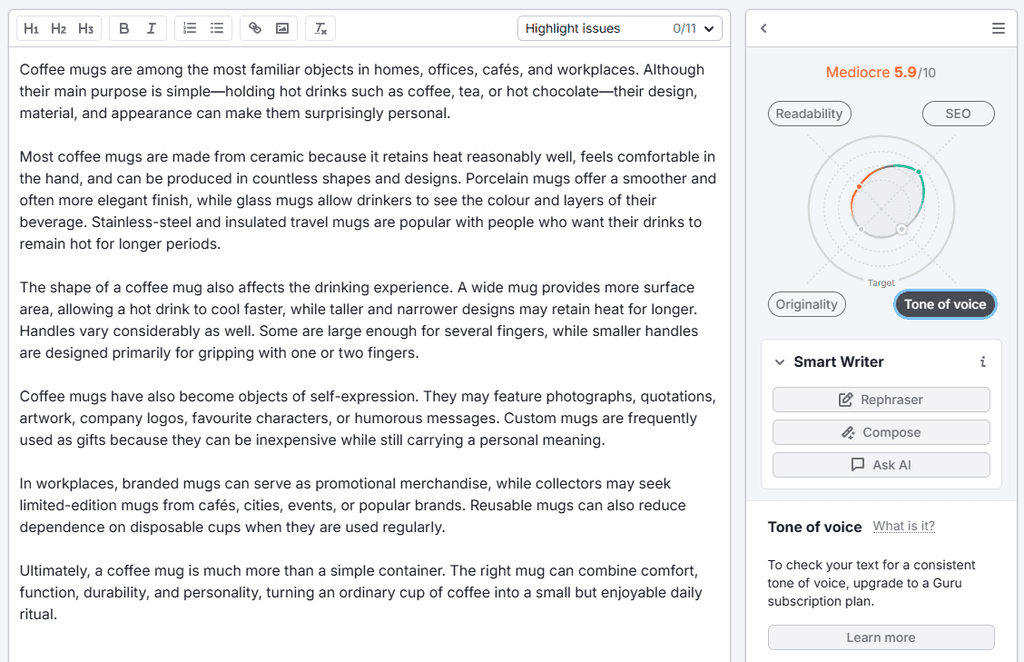
Google states in its SEO Starter Guide that there are no techniques that automatically rank a website first. Its people-first content guidance also emphasizes creating useful, reliable content primarily for readers. Therefore, optimization tools are most useful when their recommendations support editorial judgment rather than replace it.
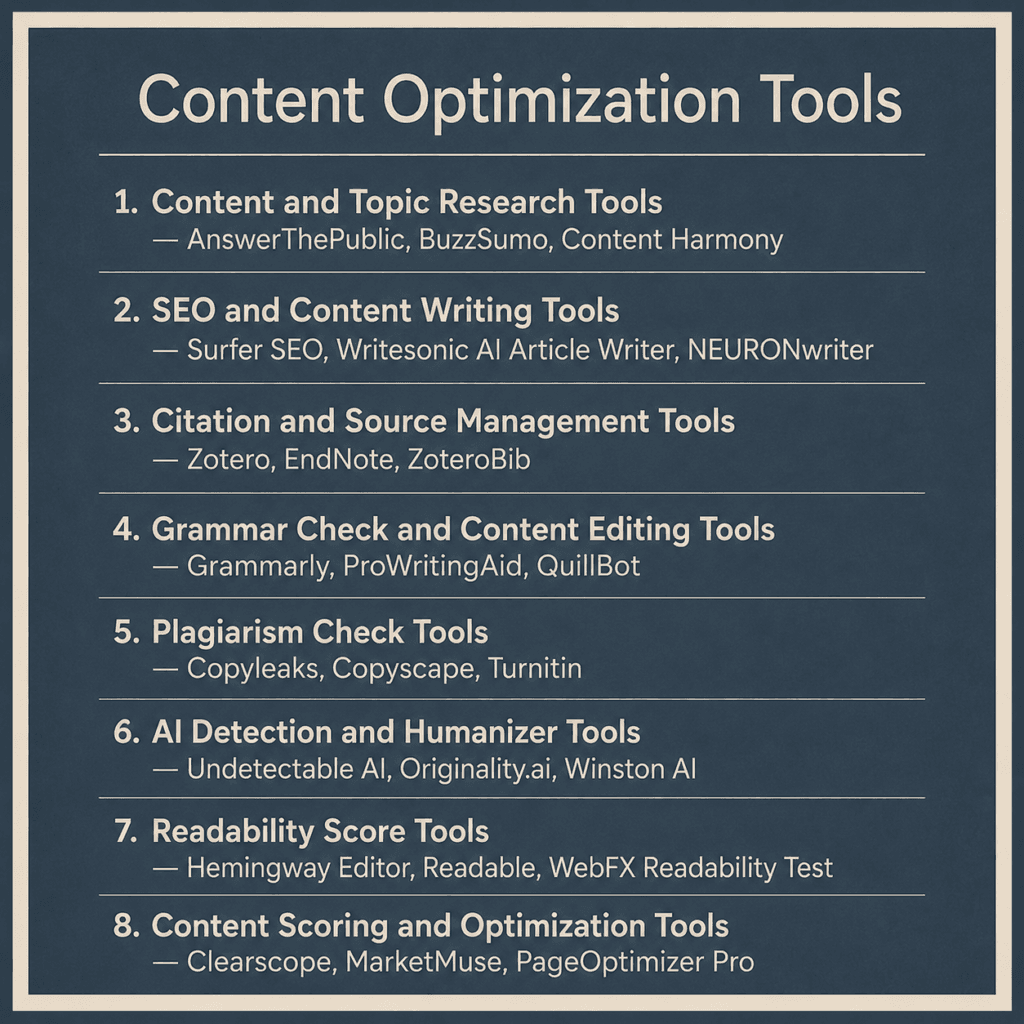
Different platforms solve different problems. AnswerThePublic and BuzzSumo assist with research, Surfer SEO and Frase analyze competing search results, Zotero manages sources, Grammarly improves writing, Copyscape checks originality, and Hemingway evaluates readability. In practice, an effective workflow may use several specialized tools rather than relying on a single platform.
Table of Contents
How Content Optimization Tools Help Production Workflows
Content optimization tools can support a page from the earliest research stage through publication and later updates. Topic research platforms help determine what audiences are asking about, while SEO tools provide search results and competitor data that can inform briefs, headings, and topical coverage. Writing and editing platforms then help improve grammar, clarity, tone, and consistency.
Other tools perform narrower quality-control functions. Citation managers organize research, plagiarism checkers identify textual matches, readability tools evaluate linguistic complexity, and content scoring platforms compare drafts against their own optimization criteria. In other words, these tools solve different editorial problems rather than providing a single universal measure of content quality.
The table below summarizes the main types of content optimization tools and the tasks they are commonly used for.
Content and Topic Research Tools
Research tools can help turn a broad subject into questions, subtopics, keywords, competitive insights, and potential content angles. They are particularly useful before an outline is finalized because they can reveal areas that might otherwise be overlooked.
AnswerThePublic
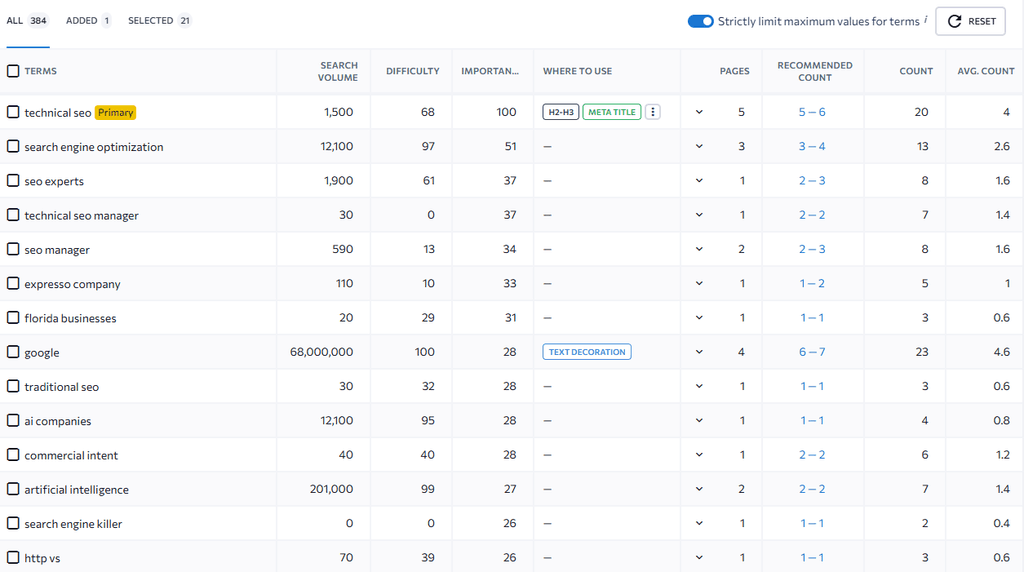
AnswerThePublic is a search-listening and keyword-discovery platform designed to surface the language and questions associated with a topic.
Key Features
- It surfaces search queries, questions, and related keyword ideas that can help identify audience interests, content gaps, and possible long-tail topics.
- Its monitoring features can track emerging suggestions and changes around selected subjects, which can support ongoing content planning.
BuzzSumo
BuzzSumo combines content discovery with engagement, trend, competitor, and question research.
Key Features
- Its Content Analyzer and discovery tools allow marketers to examine popular articles, engagement patterns, content formats, competitor performance, and historical trends.
- Topic, keyword, question, and trend tools can uncover related ideas and audience discussions from sources including forums and social platforms.
Content Harmony
Content Harmony is built around a research-to-brief workflow rather than simple keyword generation.
Key Features
- Keyword Reports combine search intent, topical analysis, competitor outlines, questions, authoritative sources, and other SERP-related research.
- Teams can convert selected research into customizable content briefs and later evaluate drafts through the platform’s Content Grader.
MarketMuse
MarketMuse supports topic research, content planning, briefs, competitive analysis, and optimization.
Key Features
- Its analysis can examine topical coverage, content inventory, keyword and intent relationships, competing pages, and opportunities to create or improve content.
- MarketMuse Content Briefs can provide structures, related topics, questions, intent information, and recommendations for either new or existing pages.
Frase
Frase combines SERP research, drafting, briefs, and optimization.
Key Features
- Frase analyzes top-ranking pages to identify topics, questions, content gaps, and structural patterns that can inform the research and briefing process.
- Existing URLs or drafts can be imported and compared with current search competitors before recommendations are applied.
Scalenut
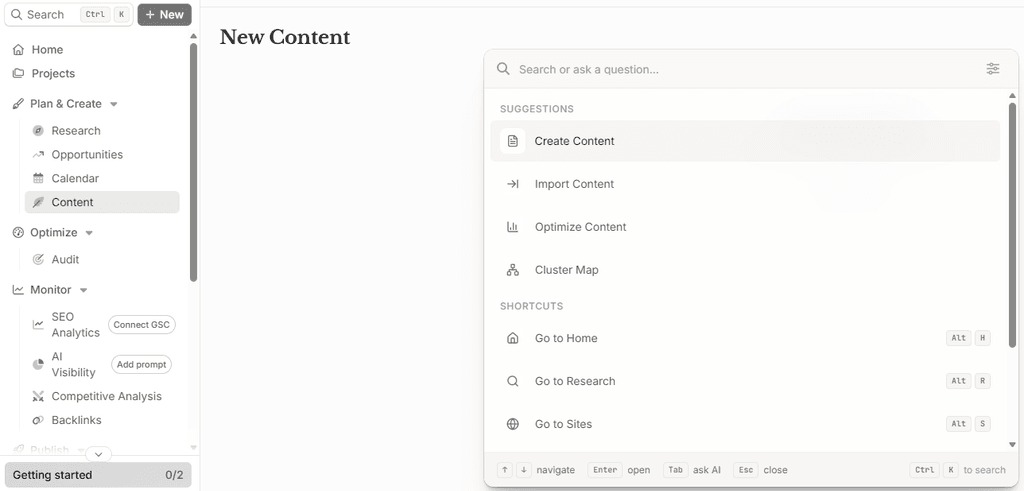
Scalenut provides research and optimization features for both new and existing content.
Key Features
- Its tools examine competing pages, semantic terms, content gaps, headings, and related prompts to guide topic coverage.
- Existing URLs can be analyzed against ranking competitors to identify missing sections, terminology, and other potential improvements.
SE Ranking Content Marketing Tool
The SE Ranking platform brings keyword research, competitive analysis, briefing, writing, optimization, and monitoring into one content workflow.
Key Features
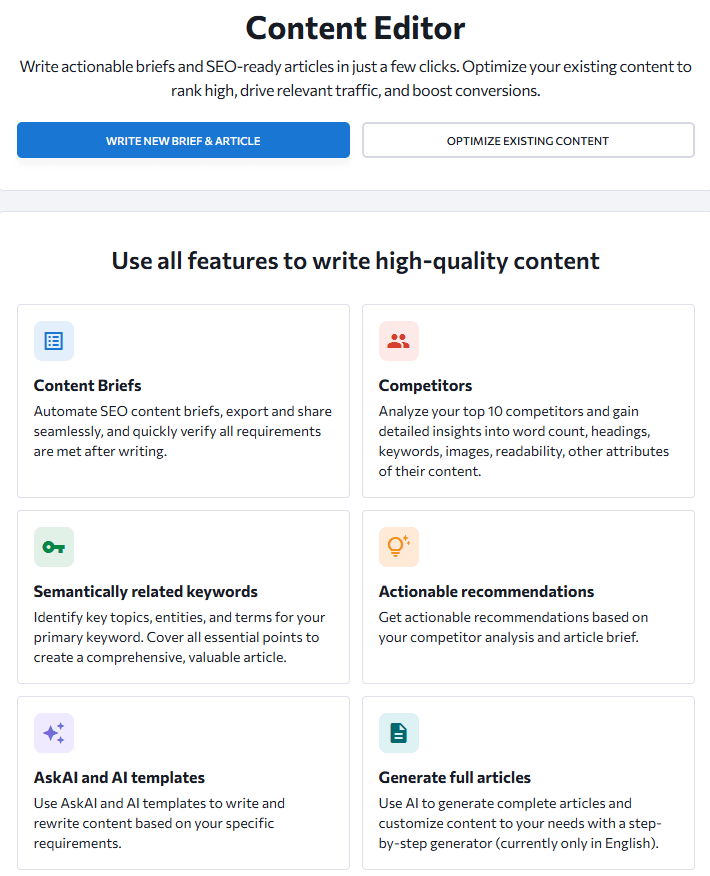
- Content Editor uses SERP information to suggest content parameters, keywords, structure, questions, and media considerations for a brief.
- Its wider content toolkit includes AI writing, Content Score, readability and quality checks, content planning, and performance monitoring through connected Search Console data.
SEO and Content Writing Tools
SEO content writing tools combine drafting assistance with search-oriented research or recommendations. However, the recommendations generated by these platforms are proprietary signals rather than Google ranking scores and should therefore be interpreted as editorial guidance.
Surfer SEO
Surfer SEO centers its writing workflow on SERP analysis and its Content Editor.
Key Features
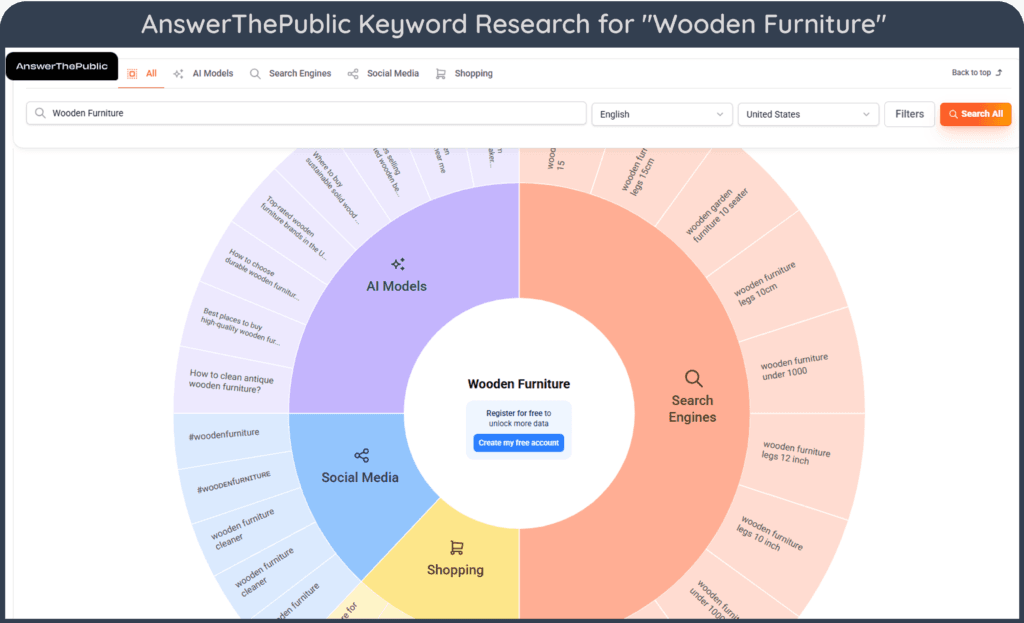
- Content Editor provides suggested terms, structural guidance, competitor outlines, topic ideas, and real-time Content, SEO, and AI Search scores.
- Writers can import existing pages, create outlines from competing results, collaborate on drafts, and use Auto-Optimize to apply selected recommendations.
Jasper
Jasper is an AI marketing platform designed for content creation across multiple channels.
Key Features
- It can assist with ideation, long-form content, campaigns, repurposing, research, and other marketing formats rather than focusing solely on blog articles.
- Brand Voice, knowledge resources, and marketing-oriented workflows help organizations apply established brand context across generated content.
Writesonic AI Article Writer
Writesonic offers an AI-driven long-form article workflow that combines research, outlining, drafting, and source use.
Key Features
- Its current article workflow can incorporate SERP and competitor research, keyword data, source material, outlines, citations, brand voice, and internal links.
- Generated articles can include FAQs, metadata, schema, visuals, and CMS export options, although every generated element should still receive editorial review.
Byword
Byword is oriented toward scalable AI article production from keywords or predefined titles.
Key Features
- It performs search research, develops an outline, and generates long-form articles while allowing editors to modify headings and provide custom instructions.
- Optional capabilities include live research, internal linking, tables of contents, AI images, brand voice controls, and competitor insights.
NEURONwriter
NEURONwriter combines competitive SERP analysis, semantic recommendations, AI writing, and content scoring.
Key Features
- It analyzes ranking pages, headings, semantic terms, entities, readability, word count, and optimization balance when developing content recommendations.
- Its editor includes Content Score and AI-oriented evaluation alongside internal-linking suggestions and integrations such as WordPress and Search Console.
Semrush SEO Writing Assistant
SEOWritingAssistant evaluates writing while it is being created or edited.
Key Features
- The tool scores content across SEO, readability, originality, and tone of voice while offering recommendations based on target keywords and competing results.
- AI features can rephrase, simplify, expand, summarize, or generate text, and integrations are available for platforms including Google Docs and WordPress.
Frase and Scalenut also belong in this category, but they were covered under research because their workflows span both stages.
Citation and Source Management Tools
Citation tools become especially useful when articles depend on research papers, statistics, technical documents, or a large collection of sources. They reduce the administrative work involved in collecting references and maintaining bibliographies.
Zotero
Zotero is a free reference manager for collecting, organizing, annotating, citing, and sharing research.
Key Features
- Sources can be stored with bibliographic metadata, files, notes, tags, collections, saved searches, and PDF annotations.
- Integrations with Word, Google Docs, and LibreOffice can insert citations and automatically generate bibliographies in more than 10,000 available citation styles.
EndNote
EndNote is a reference-management platform particularly suited to academic and research-heavy workflows.
Key Features
- It manages reference libraries, full-text documents, citations, bibliographies, collaborative libraries, and Cite While You Write workflows.
- EndNote 2025 also includes AI-assisted document summaries, document Q&A, translation, reference updates, and tools for identifying potential journals.
ZoteroBib
ZoteroBib is a lightweight option for writers who need a bibliography without maintaining a complete research library.
Key Features
- Users can create references from URLs, DOIs, ISBNs, PubMed IDs, titles, or manually entered information without installing software or creating an account.
- Completed references can be formatted into thousands of citation styles and copied into documents or exported for other uses.
Grammar Check and Content Editing Tools
Editing platforms are useful after the substantive research and writing have been completed. They can identify potential problems, but editors still need to decide whether a suggestion improves the meaning and voice of the sentence.
Grammarly
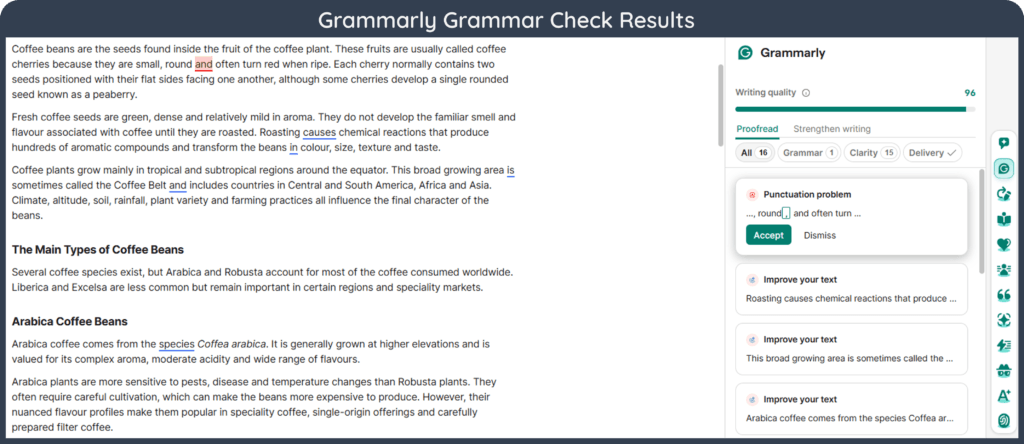
Grammarly provides real-time assistance for grammar, spelling, punctuation, clarity, word choice, and tone.
Key Features
- It identifies language and mechanical issues while providing suggestions intended to improve clarity, readability, and writing style.
- Grammarly also includes rewriting, plagiarism, citation, and AI-related functionality, making it useful across several editorial stages.
ProWritingAid
ProWritingAid goes beyond basic proofreading with detailed writing reports.
Key Features
- Its reports examine grammar, style, readability, repeated words, sentence structure, transitions, consistency, clichés, pacing, and other writing characteristics.
- Custom rules and style guides allow organizations or individual writers to evaluate content against their own editorial standards.
QuillBot
QuillBot is primarily known for paraphrasing but also offers broader writing assistance.
Key Features
- Its Paraphraser provides different rewriting modes for changes in fluency, formality, simplicity, length, vocabulary, and style.
- Writers can control the extent of vocabulary changes and review alternative word choices rather than accepting one fixed rewrite.
Plagiarism Check Tools
Plagiarism tools identify textual similarities rather than independently determining whether plagiarism has occurred. Turnitin, for example, explains that its Similarity Report must be interpreted in context because matched material may include quotations, citations, references, or other legitimate similarities.
Copyleaks
Copyleaks checks content against web and other indexed sources.
Key Features
- Reports can identify exact matches, modified text, paraphrasing, and potential source relationships while linking findings back to detected sources.
- It supports document reports, integrations, APIs, multilingual checks, and source-code plagiarism detection.
Copyscape
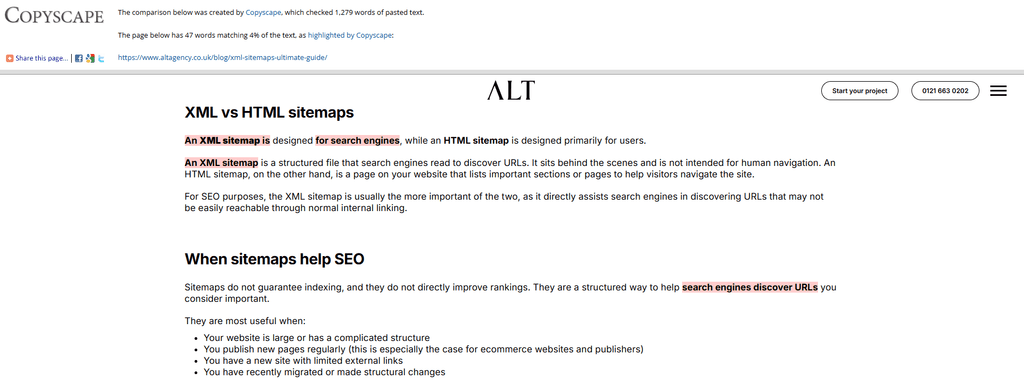
Copyscape Premium is focused strongly on web-content originality.
Key Features
- Writers can check pasted text, uploaded files, individual web pages, or batches of URLs for copies and similarities across the web.
- Its API, Private Index, and Batch Search capabilities can support larger publishing workflows. Copyscape also offers Copysentry, a separate service that monitors the web for new copies of published content.
Turnitin
Turnitin Similarity is primarily designed for educational and research-integrity environments.
Key Features
- Submitted work can be compared with internet sources, scholarly publications, and previously submitted material to create a Similarity Report.
- Reports highlight matching passages, identify sources, and provide filters and match categories to assist human interpretation.
Originality.ai
Originality.ai combines plagiarism checking with several other editorial-quality tools.
Key Features
- Its plagiarism system highlights matched passages, identifies sources, detects some forms of paraphrasing, and produces shareable or downloadable reports.
- The wider platform also includes fact-checking functionality, making it relevant to several quality-control stages.
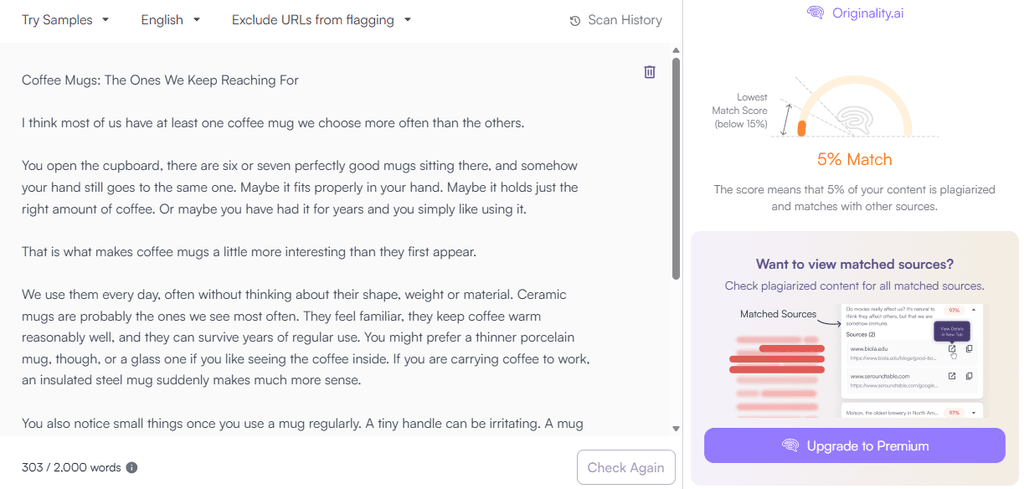
Grammarly also offers plagiarism checking and can flag matching material while providing source and citation assistance.
AI Detection and Humanizer Tools
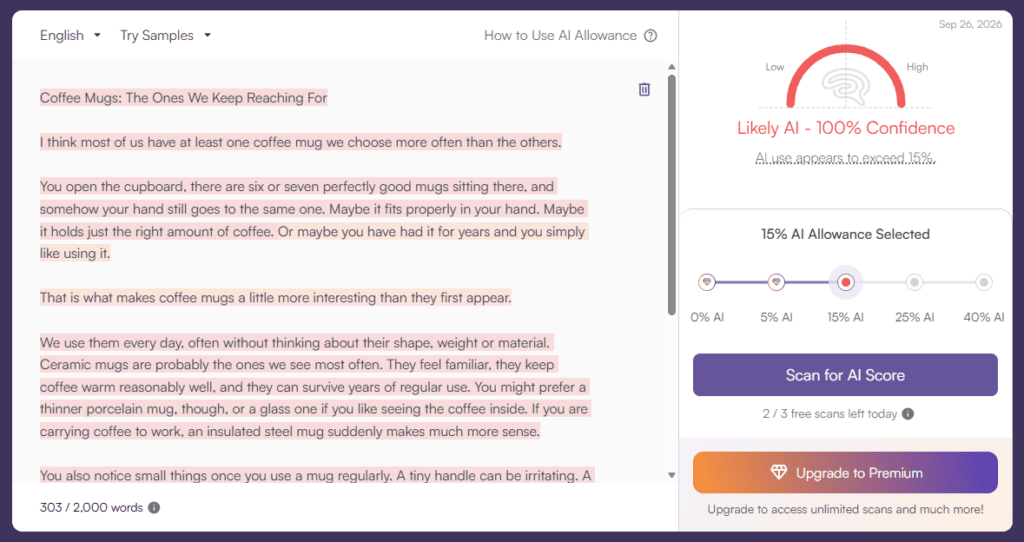
AI detectors analyze linguistic patterns to estimate whether text may have been machine-generated. However, they do not establish authorship and their results require careful interpretation.
A large-scale detector audit of AI Generated text detection systems documented considerable false positives, while broader detector benchmarking has found substantial variation in performance across models, domains, and adversarial conditions.
Undetectable AI
Undetectable AI combines AI-text detection with rewriting and humanization tools.
Key Features
- Its detector evaluates text for patterns associated with multiple generative AI systems and provides an AI-related assessment.
- Its Humanizer is designed to rewrite submitted material by changing wording, sentence structure, vocabulary, and tone.
Originality.ai
Originality.ai AI Checker provides AI detection alongside plagiarism and fact-checking tools.
Key Features
- Reports highlight portions of a document that the model considers more likely to be AI-generated and can be saved or shared.
- Multiple detection models and multilingual support allow the platform to address different editorial workflows.
Winston AI
Winston AI provides AI-content analysis with sentence-level reporting.
Key Features
- Its Human Score and prediction map estimate whether text resembles human or AI-generated writing while highlighting specific passages for review.
- Additional functionality includes plagiarism checks, document and URL scanning, readability information, writing feedback, and shareable reports.
These tools are more appropriate as review signals than as final arbiters of who or what wrote a passage.
Readability Score Tools
Readability tools estimate linguistic complexity using factors such as sentence and word length. Their scores can help editors identify dense writing, but the appropriate reading level depends on the audience and subject matter.
Hemingway Editor
Hemingway Editor emphasizes clarity and readable sentence construction.
Key Features
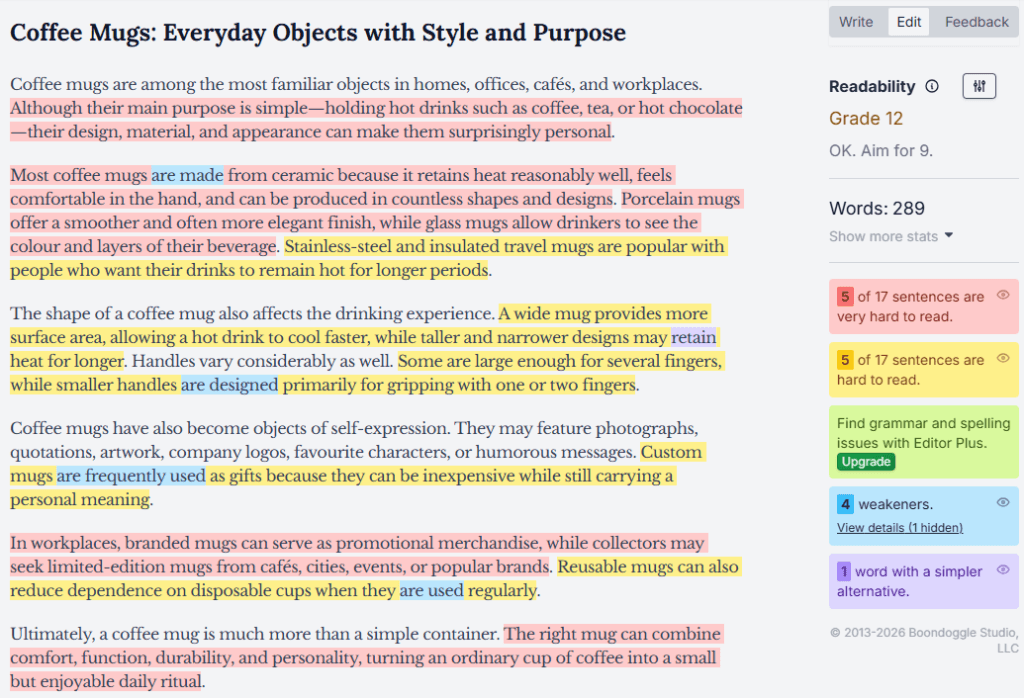
- The editor provides a readability grade while highlighting potentially difficult sentences and other writing patterns that may deserve revision.
- It also reports document statistics such as words, sentences, paragraphs, and estimated reading time.
Readable
Readable provides multiple readability formulas rather than relying on a single score.
Key Features
- It combines recognized readability formulas with its own A–E Readable Grade and audience-oriented metrics.
- Writers can use its scores to compare linguistic complexity and establish readability standards across larger content teams.
WebFX Readability Test
The WebFX Readability Test is a free tool for quickly evaluating text or web pages.
Key Features
- It calculates several measures, including Flesch-Kincaid, Gunning Fog, Coleman-Liau, Automated Readability Index, and SMOG.
- Content can be evaluated by pasting text, entering a URL, or uploading supported documents, with additional sentence and word statistics provided.
Grammarly and ProWritingAid also assess readability, making some crossover between editing and dedicated readability tools unavoidable.
Content Scoring and Optimization Tools
Content scoring platforms convert their own analyses into numerical or letter-based scores. These scores can help prioritize improvements, but they should not be confused with measurements used directly by Google’s ranking systems.
Note
A content score is a proprietary metric created by the individual software platform. It is not a Google ranking score, and achieving a particular score does not guarantee higher search rankings.
Clearscope
Clearscope analyzes content relative to top-ranking results and provides real-time optimization feedback.
Key Features
- Its editor provides a Content Grade alongside recommended terms, readability information, word-count guidance, and research insights.
- The grading system evaluates topical relevance and comprehensiveness against the content analyzed for the target query.
MarketMuse
MarketMuse’s optimization layer combines its topic models with measurable targets.
Key Features
- Content Score, Target Content Score, word count, topical coverage, and competitor comparisons help identify potential coverage gaps.
- Its Optimize application can be used for both new drafts and existing pages while updating scores as content changes.
PageOptimizer Pro
PageOptimizer Pro focuses on on-page SEO recommendations and content briefs.
Key Features
- Its Content Brief provides guidance around important terms, variations, page sections, word count, NLP suggestions, and an Optimization Score.
- More advanced analysis exposes individual on-page signals for users who prefer to make their own optimization decisions rather than follow a simplified brief.
Surfer SEO, NEURONwriter, Semrush SEO Writing Assistant, Frase, and SE Ranking also provide proprietary content scores. Therefore, comparing a score of 80 in one tool with a score of 80 in another is generally not meaningful because each platform evaluates content differently.
Conclusion
Content optimization tools are most effective when each tool is used for the problem it is designed to solve. Research platforms can uncover ideas and competing content, writing tools can improve language, citation managers can organize evidence, plagiarism and readability tools can support quality control, and SEO platforms can provide optimization guidance.
However, no proprietary score or automated recommendation should replace factual accuracy, originality, search intent, useful structure, and editorial judgment. The strongest workflow combines specialized tools with human review rather than trying to maximize every available metric.
Frequently Asked Questions
What are content optimization tools?
Content optimization tools are software platforms that help research, create, edit, evaluate, or improve digital content. Depending on the product, they may provide keyword research, competitor analysis, writing assistance, readability scores, plagiarism checks, source management, or content optimization recommendations.
Do content optimization tools improve Google rankings?
They can help identify useful improvements, but no tool can guarantee higher rankings. Google states that its systems prioritize helpful, reliable, people-first content, and there is no single optimization score that determines whether a page will rank.
Which content optimization tool is best for SEO?
The appropriate choice depends on the workflow. Surfer SEO, Clearscope, Frase, MarketMuse, NEURONwriter, SE Ranking, Semrush, and PageOptimizer Pro provide different forms of SERP analysis and content scoring, while tools such as Grammarly or Copyscape address separate editorial needs.
Should content writers follow every optimization recommendation?
No. Recommendations should be reviewed in context because competitor-derived terms, word-count targets, content scores, and structural suggestions are not universal requirements. Editorial judgment, search intent, factual accuracy, originality, and usefulness remain more important than maximizing a proprietary score.
Are readability scores important for SEO?
Readability scores can help identify unnecessarily difficult writing, but there is no universal reading grade that every web page should target. Technical, academic, medical, beginner, and general-audience content naturally require different levels of complexity.
Can AI detectors reliably identify AI-written content?
AI detectors can provide useful signals, but they are not infallible. Research has documented both false positives and false negatives, so detection scores should be considered alongside the writing process, source evidence, editorial history, and human review rather than treated as definitive proof.