Best Content Formats for SEO, Engagement, and Conversions
Key Takeaways
- The best content format depends on the audience’s goal, search intent, subject, and page’s role in the customer journey.
- Different website types need different format combinations, with ecommerce, publishers, local businesses, SaaS companies, and institutions serving distinct user needs.
- Longer content is not inherently better for SEO; guides should provide only the depth necessary to answer questions completely and usefully.
- Reviews, comparisons, product pages, landing pages, and case studies support conversions by providing evidence, decision criteria, practical details, and clear next steps.
Choosing a content format is not simply a design decision. A how-to guide, product page, case study, comparison article, video, and research report can all contain excellent information, but they serve different reader needs. The best format therefore depends on what the audience wants to accomplish and what role the page plays in the customer journey.
Google’s guidance does not prescribe one universally superior content format for Search. Instead, its people-first content guidance focuses on whether content serves an intended audience, demonstrates appropriate experience or expertise, and helps readers accomplish their goals.
A practical content strategy therefore uses different formats for different purposes. Educational articles may build search visibility and awareness, comparisons can support evaluation, case studies can provide evidence, and landing or product pages can help turn interest into action. Choosing the right format can also strengthen content optimization by presenting information in a way that better matches what readers expect and need from the page.
In this guide, “content format” broadly covers editorial formats such as guides and list posts, page formats such as product and landing pages, and media formats such as videos, infographics, and interactive tools.
Table of Contents
Content Formats and Websites
Different websites need different combinations of content. An ecommerce store may depend heavily on product and category pages, while a publisher may generate most of its value through articles, reports, explainers, and timely coverage. Likewise, a local business usually needs strong service and location information before it needs a library of opinion articles.
The following table provides a useful starting point.
The table should not be treated as a rigid template. A strong website usually combines several formats because users rarely remain at the same stage of awareness or decision-making throughout their visit.
Best Content Formats for SEO and Conversions
The most useful content formats are those that match a recognizable user need. Some work particularly well for discovery and education, while others are better suited to commercial investigation or conversion. It is therefore more useful to ask “What is the reader trying to accomplish?” than “Which content type performs best?”
In-Depth Guides and Educational Articles
In-depth guides are particularly useful when a subject requires explanation rather than a short definition. They can introduce a topic, explain its components, connect related concepts, answer supporting questions, and direct readers to more specialized pages.
For SEO, a guide works best when the breadth is justified by the topic. A 3,000-word guide should not exist simply because longer articles appear comprehensive. If a question can be answered completely in 600 words, adding another 2,400 words of repetition does not necessarily make the page more useful.
Google does not specify a preferred word count for content, so breadth should reflect what the topic genuinely requires.
Educational guides are particularly valuable for broad informational queries, complex products, technical subjects, professional services, and topics where readers need context before taking action. They can also function as hub or pillar resources that connect more specialized content through internal links.
How-To Guides and Tutorials
How-to content is designed around completing a task. It therefore works best when the reader has moved beyond asking “What is this?” and wants to know “How do I do it?”
A strong tutorial establishes the intended outcome, explains prerequisites, presents the process in a logical order, and deals with likely problems close to the steps where they occur. Screenshots, examples, demonstrations, code samples, or short videos can be added when they make an instruction easier to follow.
How-to content can serve both SEO and conversion goals. A software company, for example, might publish a tutorial explaining how to solve a problem using its product. The article still needs to solve the reader’s problem genuinely rather than functioning as a disguised sales pitch.
List Posts and Resource Lists
List posts work well when readers genuinely benefit from seeing several ideas, tools, strategies, examples, or resources in one place.
However, the format becomes weak when the list itself is the only value. A page titled 25 SEO Tools provides little help if each entry contains only a product name and a generic sentence. A stronger resource list explains why each option was selected, what it is useful for, who might benefit from it, and any important limitations.
Lists can therefore support discovery and engagement because readers can scan them selectively. They are particularly useful for collections of tools, recommendations, examples, techniques, ideas, statistics, resources, and alternatives.
Recommendation and resource lists can also support affiliate monetization when the listed products are genuinely useful, independently evaluated, and accompanied by enough original information to help readers choose.
Product and Service Reviews
Reviews sit much closer to a purchase decision. Someone searching for a product review is often trying to determine whether the product is suitable, whether its strengths justify its weaknesses, and how it compares with alternatives.
Google’s guidance on reviews for products and services recommends demonstrating knowledge, providing evidence of first-hand experience where appropriate, discussing advantages and disadvantages, explaining important decision factors, comparing alternatives, and supporting recommendations with evidence.
Therefore, a useful review should go beyond rewriting a manufacturer’s specification sheet. Screenshots from testing, photographs, measurements, realistic use cases, limitations, comparisons, and explanations of who should or should not buy the product make the format considerably more valuable.
Reviews can serve SEO, engagement, and conversion simultaneously because they address informational needs while helping readers make a commercial decision.
Reviews also have strong affiliate value because they allow publishers to recommend relevant products or services while helping readers evaluate a purchase. For audiences subject to US advertising rules, the FTC requires relevant material connections to be clearly and conspicuously disclosed. For Google Search, affiliate links should also be qualified with rel="sponsored".
Comparison Articles
Comparison content serves readers who have already narrowed their options.
A Mailchimp vs. ConvertKit page, for example, should not merely provide two separate product summaries. The real value lies in comparing the same decision criteria across both products, such as pricing, automation, ease of use, integrations, reporting, audience suitability, and important limitations.
The strongest comparison pages also recognize that there may not be one universal winner. One option may suit a beginner, while another works better for an established ecommerce business. Comparison pages are therefore especially valuable for commercial investigation queries because they reduce the amount of research readers need to perform before deciding.
Comparison articles can also work well as affiliate content because readers are already evaluating competing products or services, allowing relevant purchase options to be introduced naturally after the comparison.
Product Pages
For an ecommerce store, the product page is one of the most commercially important content formats.
A useful product page needs more than a name, image, and purchase button. Depending on the product, readers may need specifications, dimensions, materials, compatibility information, photographs, pricing, availability, shipping information, returns information, usage guidance, FAQs, reviews, or demonstrations before they feel confident enough to buy.
Compatibility depends on the capabilities of the device’s USB-C port.
Google recommends product structured data to help it understand product information and make eligible pages available for richer Search experiences that may display details such as price, availability, ratings, shipping, and returns.
However, structured data does not replace good product content. It simply helps machines understand information already represented on the page.
Category and Collection Pages
Category pages help users navigate a group of related products or services. They sit between broad informational content and individual item pages.
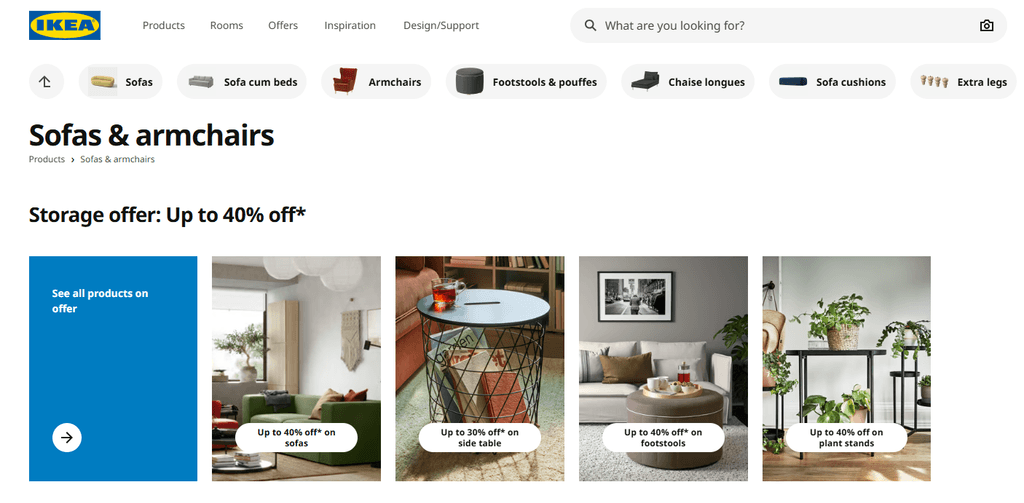
An ecommerce category such as Men’s Running Shoes may need useful filters, clearly presented products, understandable category labels, and enough supporting information to help visitors understand the range without burying the products beneath a long essay.
The same principle can apply outside ecommerce. A software website may have a collection of integrations, while a publisher may organize articles around a topic hub.
Category pages are especially useful when visitors need to explore rather than immediately choose one item.
Landing Pages and Service Pages
Landing pages are designed around a specific action. That action might be requesting a quote, booking a consultation, downloading a resource, beginning a trial, registering for an event, or purchasing a service.
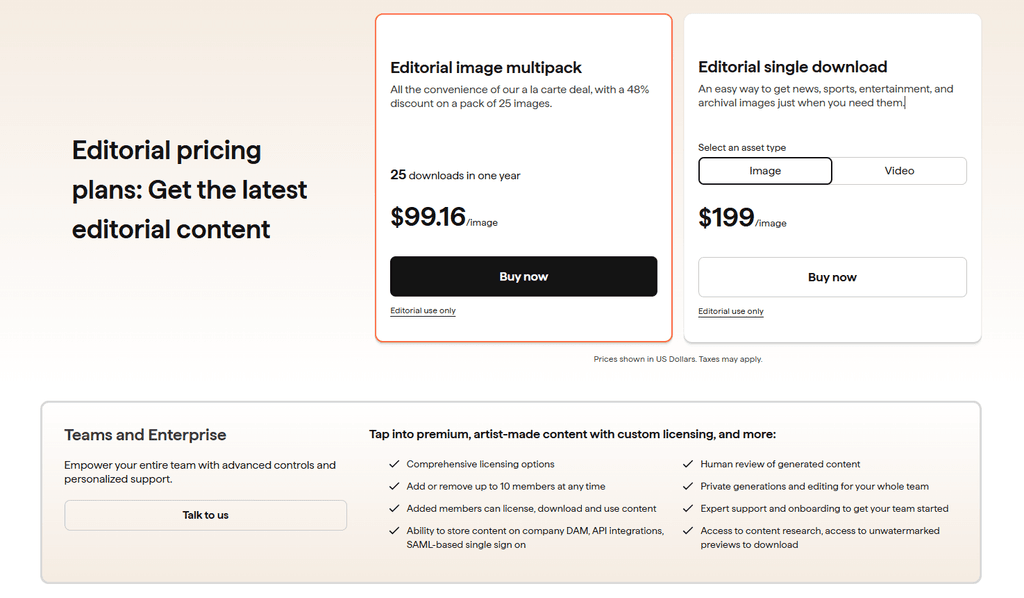
Because the visitor is usually closer to conversion, the page should address practical decision-making questions. It may need to explain the offer, benefits, audience, process, evidence, pricing or pricing context, common objections, and the next step.
A local plumber’s emergency plumbing page and a SaaS company’s enterprise demo page may look very different, but both need to connect the visitor’s problem with a clear solution and action.
The mistake is treating conversion content as permission to remove useful information. A short landing page may work for a simple offer, while a complex or expensive service may require much more explanation.
Case Studies
Case studies convert claims into evidence. Instead of saying, Our process improves conversion rates, a case study can explain the starting problem, the approach taken, the implementation, the result, and the factors that may have influenced that result.
The strongest case studies distinguish between what happened and what can reasonably be concluded from it. One successful project does not prove that every customer will receive the same result.
For service providers, agencies, SaaS companies, consultants, and B2B businesses, case studies can be particularly useful because they demonstrate how expertise is applied in a real situation.
Original Research, Surveys, and Reports
Original research can give a website information that other publishers may find worth referencing rather than simply repeating.
Depending on the organization, this may include survey data, experiments, industry analysis, benchmarking studies, proprietary platform data, customer research, or academic-style research.
Research content requires more editorial discipline than a normal article. Methodology, sample size, limitations, dates, definitions, and the distinction between correlation and causation all matter because readers may reuse the findings elsewhere.
Its strongest advantage is originality. Google’s guidance emphasizes unique and non-commodity content, including first-hand perspectives and information that goes beyond recycling what is already available online.
Statistics and Data Pages
Statistics pages organize useful numbers around a subject, such as ecommerce adoption, social-media usage, advertising costs, or search behavior.
They can be extremely useful resources when each statistic includes a reliable source, publication date, context, and clear wording. However, they need maintenance because numbers can become outdated while continuing to attract links and citations.
A statistics page also becomes more useful when it does more than collect figures. Grouping data into meaningful categories, comparing periods, explaining methodological differences, or visualizing trends can add genuine editorial value.
Checklists
Checklists convert a process into something readers can apply.
An SEO audit checklist, website-launch checklist, accessibility checklist, or campaign-launch checklist works best when the reader already understands at least some of the subject and needs a structured way to ensure that nothing important has been missed.
A checklist can appear inside a broader article or exist as a dedicated resource. Downloadable versions may also support lead generation when the download provides additional convenience rather than unnecessarily locking basic information behind a form.
Templates
Templates reduce the amount of work required to begin a task. Examples include content briefs, outreach emails, editorial calendars, reporting dashboards, project plans, marketing plans, and content audit worksheets.
Templates can support conversions because they provide immediate practical value and can introduce readers to a related product, service, subscription, or resource. Someone who finds a template genuinely useful may be more willing to subscribe, explore a related product, or return to the website.
However, a template should normally be accompanied by enough explanation for readers to understand how and when to use it.
Glossaries and Definition Pages
Glossary entries serve narrow informational intent. A reader searching for what is a canonical tag? or what is click-through rate? may need a concise explanation rather than a complete guide to SEO or analytics.
A well-developed glossary can also support a larger content architecture by providing dedicated destinations for important concepts referenced throughout other articles.
The key is avoiding empty dictionary-style pages created only to produce more URLs. Definitions become more useful when they include context, examples, distinctions from related concepts, and practical implications where appropriate.
FAQ and Question-Led Content
FAQ content works best when real questions deserve direct answers.
Frequently asked questions can appear at the end of a broader article, on service pages, within product content, or on dedicated support pages. They help when readers commonly need clarification that does not justify a full standalone section.
However, an FAQ should not become a container for dozens of loosely related keywords. Questions should belong naturally to the subject and provide genuine additional value.
Content Formats and Structured Data
Some content formats can use structured data that helps Google understand what a page represents and may make it eligible for richer Search appearances. For example, articles can use Article structured data; ecommerce product pages can use Product structured data; eligible product-review content can use Product with Review or AggregateRating; video-led pages can use VideoObject; and pages that publish genuine datasets can use Dataset markup. Editorial product-review pages may also be eligible for product snippets containing information such as ratings, price, availability, or even pros and cons when the relevant requirements are met.
However, the type of page or content format and the structured data used on that page are two different things. For example, a comparison article does not automatically have a special “comparison” rich result, and a case study does not have a special “case study” rich result. Instead, structured data is added only when the page contains information that matches a supported type.
A comparison page about two products, for instance, might contain product information that can be marked up with Product structured data, while an article with an embedded video might also use VideoObject markup. Google may then use that structured data to understand the page and determine whether it is eligible for a supported search feature. Eligibility does not guarantee that a rich result will appear.
There are also important exceptions. FAQPage still exists as a structured data type, but Google generally limits FAQ rich results to well-known, authoritative government and health websites. Google discontinued How-to rich results in Search in 2023, so a how-to article should not be marked up with HowTo merely in expectation of receiving a special Google rich result.
Other Common Content Formats
Not every useful format needs to be the primary structure of a page. Multimedia and timely formats can complement the formats above or sometimes become the main content experience themselves.
Videos and Video-Led Pages
Video works particularly well for demonstrations, interviews, walkthroughs, product use, physical processes, software interfaces, and subjects where movement matters.
A cooking technique, software configuration, or equipment repair may be easier to understand when viewers can see the process rather than reconstruct it from text alone.
For accessibility, W3C guidance explains that audio and video may require captions, transcripts, and other alternatives depending on the type of media and the information it contains.
A video-led page can still include written context, key steps, supporting links, and other information that helps readers who cannot or do not want to watch the entire video.
Infographics and Visual Explainers
Infographics are useful when a process, framework, timeline, hierarchy, or group of statistics benefits from visual organization.
However, an important idea should not become inaccessible merely because it appears inside an image. W3C’s image accessibility guidance explains that informative graphics need text alternatives, while complex diagrams and charts may require a more complete textual equivalent of the information they present.
The surrounding article can therefore expand on the infographic rather than simply repeat it.
Charts, Tables, Calculators, and Interactive Tools
Some information is easier to use than to read.
Charts can reveal trends, comparison tables can show differences across several options, calculators can personalize an answer, and selectors or interactive tools can help users narrow choices.
These formats can support engagement because the reader actively works with the information. However, interactivity should solve a real problem. A calculator that merely converts information already obvious from a paragraph adds little value.
News and Timely Updates
News content is appropriate when freshness is central to the reader’s need. Algorithm changes, regulations, product launches, market developments, research publications, company announcements, and industry events may all justify timely coverage.
Such content usually has a shorter period of peak usefulness than an evergreen guide. Therefore, publishers need to decide whether an older news article should remain as a historical record, be updated, or point readers toward a newer resource.
Opinion and Thought-Leadership Articles
Opinion content gives experts room to interpret developments rather than merely report them.
A strong opinion article establishes a clear position, provides reasoning and evidence, acknowledges significant counterarguments where relevant, and contributes a perspective that readers would not obtain from a neutral summary.
Thought leadership becomes much weaker when it consists of broad predictions or fashionable claims without evidence or experience.
Interviews and Expert Contributions
Interviews can surface knowledge that the publisher does not possess directly. They are especially useful when the guest has first-hand experience, technical expertise, unusual access, or a distinctive perspective.
Expert roundups can serve a similar purpose, but gathering ten generic quotations around a broad question rarely creates the same depth as a carefully developed interview or focused expert contribution.
Podcasts and Webinars
Podcasts and webinars allow longer conversations, demonstrations, discussions, and educational sessions that may be difficult to reproduce naturally in an article.
They can also generate supporting content. A webinar may later become a video, transcript, FAQ, tutorial, short clips, newsletter content, or an expanded article.
In other words, one strong piece of source material can support several formats when each adaptation is created for the needs of its audience rather than copied mechanically.
Mistakes to Avoid: A Brief Checklist
Choosing the right format is only the beginning. Content can still underperform when the format does not match the reader or when execution is weak.
- Do not choose a format simply because competitors use it. Determine whether the format actually matches the query, audience, and objective before copying the structure of ranking pages.
- Do not assume longer content is automatically better. The necessary depth depends on the subject and what readers need to accomplish.
- Do not publish reviews without meaningful evaluation. Original experience, evidence, comparisons, limitations, and decision criteria are more useful than rewritten specifications.
- Do not turn every collection of ideas into a list post. If the points belong together as an explanation, normal paragraphs may provide better flow.
- Do not use charts, videos, or infographics merely for decoration. Each element should explain, demonstrate, compare, summarize, or otherwise improve understanding.
- Do not force informational content to convert too early. A reader learning the meaning of a term may not be ready for an aggressive sales message.
- Do not separate SEO from the reader’s objective. A format that attracts a click but fails to answer the underlying need is a poor long-term content choice.
- Do not publish thin affiliate content. Product reviews, comparisons, and recommendation pages should add original evaluation, testing, useful comparisons, or other value rather than reproducing merchant descriptions.
- Do not reuse the same template for every page type. Reviews, tutorials, case studies, landing pages, and research reports need different structures because readers use them differently.
Frequently Asked Questions
What is the best content format for SEO?
There is no universally best format for SEO because the most appropriate format depends on the query, audience, subject, and information needed to satisfy the reader.
Which content formats are best for engagement?
Interactive tools, useful guides, videos, visual explainers, research, and other practical formats can encourage engagement when they match how the audience wants to consume or use the information.
What content format is best for conversions?
Product pages, service pages, landing pages, reviews, comparisons, and case studies are often useful for conversions because they address readers who are closer to evaluating an offer or making a decision.
Are long-form articles always better for SEO?
No, article length should reflect the depth required to satisfy the topic rather than an arbitrary word-count target.
Can one page combine several content formats?
Yes, a page can combine prose, tables, screenshots, video, charts, FAQs, checklists, and other formats when each element contributes to the reader’s understanding or decision-making.