



Creating a mobile app is only the beginning of building an app business. With millions of apps available across the Google Play Store and Apple App Store, the biggest challenge for developers is often not development—it is visibility. A great app cannot generate users if people cannot discover it.
This is where app store ranking factors become important. Just like search engines decide which websites appear at the top of search results, app stores use ranking systems to decide which apps users see first when they search or browse.
The good news is that app store rankings are not based on some mysterious formula that developers cannot understand. App stores use signals that are connected to common sense: Is the app relevant to what users search for? Do people click and download it? Are users satisfied? Do they continue using it?
Understanding these signals helps developers, marketers, and businesses improve app visibility, increase organic downloads, and build sustainable mobile growth.
Table of Contents
- App Store Ranking Factors and Algorithms
- App Store Optimization (ASO): The Foundation of App Visibility
- Google Play Store Ranking Factors
- Apple App Store Ranking Factors
- Visual Assets, Ratings, Reviews, and Conversion Signals
- Downloads, Retention, Engagement, and Growth Signals
- App Visibility and App Ranking Trackers
- Common App Ranking Mistakes and Future Trends
- Conclusion
- Frequently Asked Questions
App Store ranking factors and Algorithms
App Store ranking factors are the signals that app marketplaces use to decide how apps appear in search results, category rankings, recommendations, and discovery sections.
In simple words:
App store ranking factors determine which apps get more visibility and which apps remain difficult for users to discover.
When someone searches:
“photo editing app”
the app store does not randomly display applications.
It evaluates different signals and tries to show the apps most likely to satisfy that user.
How App Store Algorithms Work
Many people hear the word “algorithm” and imagine something extremely technical.
An algorithm is simply a set of steps a system follows to make decisions.
For example, an app store algorithm may work like this:
User Searches for an App
↓
App Store Finds Relevant Apps
↓
Checks Keywords, Quality, and User Signals
↓
Ranks Apps Based on Multiple Factors
↓
Shows Results to User
The goal is simple:
Help users find useful apps while helping high-quality apps gain visibility.
How App Stores Decide App Visibility
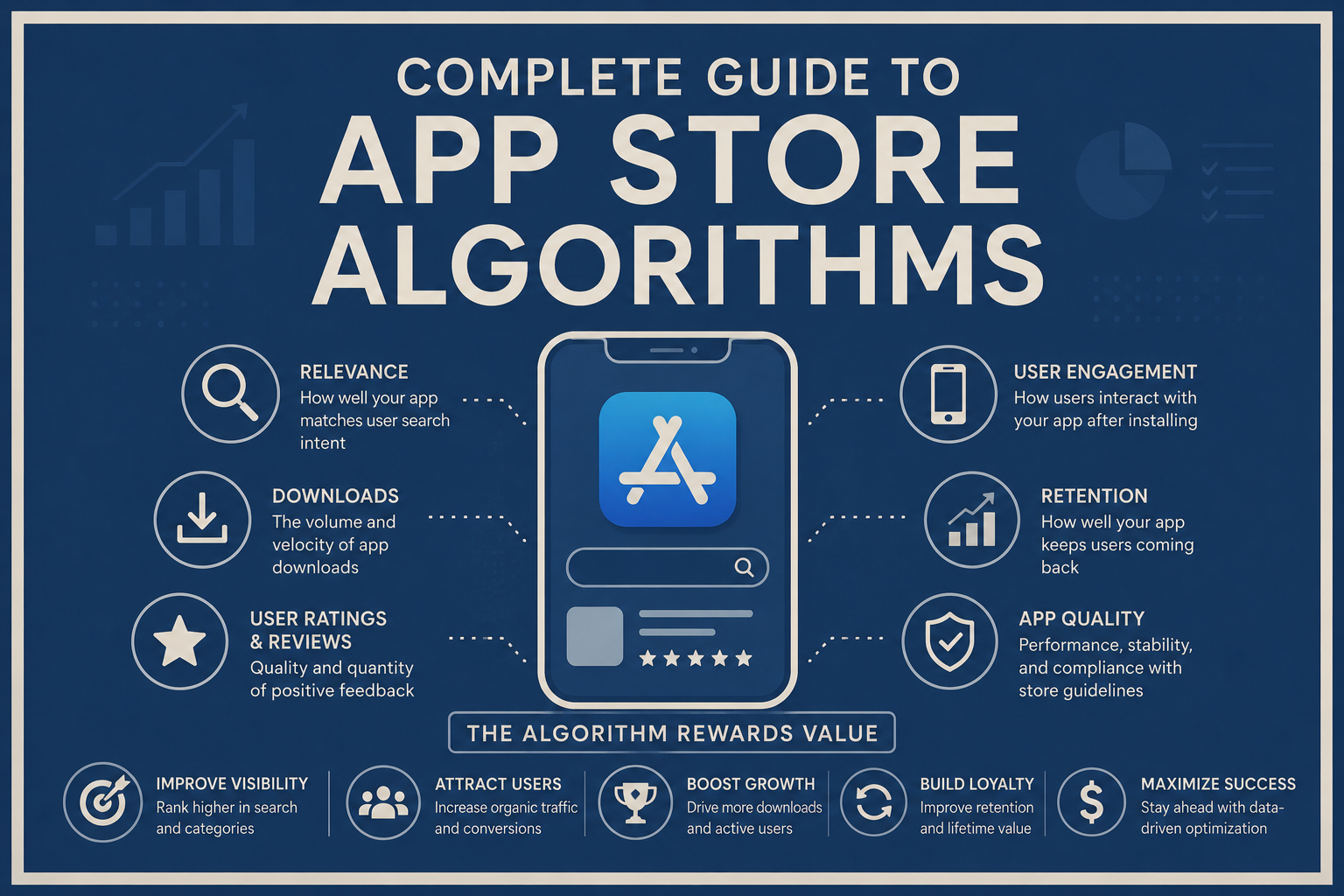
Both Google Play and Apple App Store consider different signals, including:
- App relevance
- Keywords
- Downloads
- Ratings
- Reviews
- User engagement
- Retention
- App quality
- Updates
No single factor guarantees a high ranking.
A successful app usually performs well across multiple areas.
App Store Ranking vs Traditional Search Ranking
App store ranking is similar to search engine ranking, but the environment is different.
Traditional SEO focuses on ranking webpages.
Example:
A blog ranking on Google for:
“best project management tools”
App Store Optimization focuses on ranking applications.
Example:
A project management app appearing when users search:
“task management app”
The difference is that app stores are focused on app discovery and downloads.
Why Rankings Matter for App Growth
Higher rankings create more opportunities for:
- Organic downloads
- Brand visibility
- Lower customer acquisition costs
- More users
- Better market position
Most users do not browse thousands of apps.
They usually choose from:
- Top search results
- Recommended apps
- Highly rated applications
Better rankings increase the chance of being discovered.
App Store Optimization (ASO): The Foundation of App Visibility
App Store Optimization (ASO) is the process of improving an app’s visibility and conversion performance inside app marketplaces.
In simple terms:
ASO is SEO for mobile apps.
Just like websites optimize pages for search engines, apps optimize listings for app stores.
How ASO Improves App Discoverability
ASO helps apps appear for relevant searches by improving:
- Keywords
- App titles
- Descriptions
- Visual assets
- Ratings
- Conversion elements
Example:
A meditation app may optimize for searches like:
- Meditation
- Sleep sounds
- Stress relief
This increases the chances of reaching users interested in those solutions.
ASO vs App Store Ranking Factors
ASO focuses on improving the elements developers can control.
Examples:
- Metadata
- Keywords
- Screenshots
- Descriptions
App store ranking factors include ASO elements plus user behavior signals.
Examples:
- Downloads
- Retention
- Engagement
- Reviews
ASO helps improve rankings, but rankings also depend on how users respond to the app.
Keyword Research for Apps
Keywords are one of the most important parts of app visibility.
Users search app stores using specific words.
Example:
Someone searching:
“budget planner”
may discover apps optimized around:
- Budget app
- Expense tracker
- Money management
Finding App Store Keywords
Developers can find keywords through:
- App store suggestions
- Competitor analysis
- Customer reviews
- Keyword research tools
- Search trends
Good app keywords usually have:
- User relevance
- Search demand
- Reasonable competition
App Title Optimization
The app title is one of the strongest visibility elements.
A good title should:
- Explain the app purpose
- Include important keywords naturally
- Be easy to remember
Example:
Weak:
“FitPro”
Better:
“FitPro: Home Workout & Fitness”
Subtitle and Description Optimization
Descriptions should explain:
- Main benefits
- Features
- Problems solved
- Why users should choose the app
Avoid writing only for algorithms.
The description should convince real users.
Keyword Placement Strategy
Keywords can appear in:
- App title
- Subtitle
- Description
- Keyword fields
However, keyword stuffing can harm readability and user trust.
Localization and Multilingual Keywords
Apps targeting global users should consider localization.
This includes:
- Translating descriptions
- Adapting keywords
- Using local search behavior
A fitness app in the US and Japan may require different keyword strategies.
Google Play Store Ranking Factors
Google Play is the largest Android app marketplace and uses various signals to rank applications.
How Google Play Ranking Works
Google Play evaluates:
- App relevance
- Quality
- User satisfaction
- Performance
- Engagement
The goal is to recommend useful apps to Android users.
Google Play Algorithm Signals
Important signals include:
- App title
- Description
- Keywords
- Downloads
- Ratings
- Reviews
- Retention
- App stability
App Title and Metadata
Google Play considers app information when understanding what an app does.
Important elements:
- App title
- Short description
- Full description
These help Google understand relevance.
Downloads and Download Velocity
Download volume matters, but consistent growth is also important.
An app receiving regular downloads signals demand.
Sudden artificial download spikes may not create sustainable growth.
Ratings and Reviews
Positive reviews influence:
- User trust
- Conversion rate
- App reputation
High-quality apps usually receive better long-term rankings.
Engagement and Retention Signals
Google values apps that users continue using.
Important signals include:
- Active users
- Session frequency
- Retention
- Low uninstall rates
App Quality and Updates
Apps with:
- Fewer crashes
- Better performance
- Regular improvements
often create stronger user experiences.
Apple App Store Ranking Factors
The Apple App Store has its own ranking system and optimization approach.
How Apple App Store Ranking Works
Apple considers factors related to:
- Relevance
- User engagement
- Downloads
- Ratings
- Quality
App Store Algorithm Signals
Important signals include:
- App name
- Subtitle
- Keywords
- Reviews
- Ratings
- Downloads
- User activity
App Title and Subtitle Optimization
Apple provides specific fields for app discovery.
Strong titles should:
- Communicate value
- Include relevant terms
- Avoid unnecessary wording
Keyword Field Optimization
Apple allows developers to add keyword information.
This helps the App Store understand search relevance.
Ratings and Reviews
Reviews strongly influence user decisions.
Users often compare:
- Star rating
- Number of reviews
- Recent feedback
before downloading.
Downloads and Engagement
Apps with strong user adoption often gain more visibility.
However, long-term success depends on keeping users engaged.
Visual Assets, Ratings, Reviews, and Conversion Signals
Ranking is not only about appearing in search results. Apps also need to convert visitors into downloads.
App Icons
The app icon creates the first impression.
A strong icon should be:
- Recognizable
- Simple
- Relevant to the app
Screenshots
Screenshots show users what the app experience looks like.
Good screenshots highlight:
- Features
- Benefits
- User interface
Preview Videos
Videos can demonstrate:
- App functionality
- Key features
- User experience
Conversion Rate Optimization
A high-ranking app with poor conversion will struggle.
Improving conversion involves:
- Better visuals
- Clear messaging
- Strong reviews
Downloads, Retention, Engagement, and Growth Signals
Modern app rankings depend heavily on user behavior.
Download Velocity
Download velocity refers to how quickly an app gains downloads.
Consistent growth indicates strong demand.
User Engagement
Engagement signals include:
- How often users open the app
- How long they use it
- Which features they use
Retention Metrics
Retention measures whether users continue using the app.
A high-quality app usually keeps users longer.
Reducing Uninstall Rates
Frequent uninstalling can indicate problems such as:
- Poor experience
- Bugs
- Misleading descriptions
App Visibility and App Ranking Trackers
Tracking performance helps developers understand whether optimization efforts are working.
Measuring App Visibility
Important metrics include:
- Search impressions
- Page views
- Conversion rate
- Downloads
- Rankings
App Ranking Trackers
App ranking tools help monitor:
- Keyword positions
- Competitor rankings
- Visibility changes
ASO Tools
ASO tools help with:
- Keyword research
- Competitor analysis
- Ranking tracking
- Market research
Common App Ranking Mistakes and Future Trends
App growth requires avoiding shortcuts and focusing on sustainable improvements.
Common App Ranking Mistakes
Many app developers make ranking mistakes by focusing only on downloads while ignoring important App Store Optimization (ASO) factors such as keyword relevance, user ratings, reviews, retention, and engagement. Other common errors include targeting overly competitive keywords, using misleading app descriptions, and failing to update app listings regularly.
Ignoring keyword research
Poor listing quality
Not monitoring reviews
Neglecting updates
Keyword Stuffing
Adding excessive keywords can make listings unnatural and reduce user trust.
Buying Fake Downloads
Artificial downloads may create short-term numbers but do not build real growth.
Ignoring User Experience
A poor app experience leads to:
- Bad reviews
- Uninstalls
- Lower engagement
Ranking Myths
Common misconceptions include:
- More keywords automatically mean higher rankings
- Downloads are the only ranking factor
- Rankings never change
App visibility depends on multiple signals.
Future of App Store Optimization
AI is changing how users discover apps.
Future trends may include:
- AI-powered recommendations
- Smarter search understanding
- Personalized app discovery
- More advanced analytics
Developers will increasingly need to focus on user value, not only optimization tactics.
Conclusion
App store ranking factors determine how easily users discover mobile applications. While algorithms differ between Google Play and Apple App Store, both platforms focus on a similar goal: connecting users with apps that provide value.
Successful app growth requires more than simply publishing an application. Developers need to optimize keywords, improve listings, collect positive reviews, increase engagement, and continuously improve user experience.
ASO and app ranking optimization are ongoing processes. As app stores become smarter and AI-driven discovery grows, apps that understand users and deliver strong experiences will have the greatest opportunity to succeed.
Frequently Asked Questions
What is app store ranking?
App store ranking refers to the position an app appears in search results, categories, or recommendations inside app marketplaces.
How do app store algorithms determine rankings?
App store algorithms evaluate signals such as relevance, keywords, downloads, ratings, reviews, engagement, retention, and app quality.
What are the most important app store ranking factors?
Important factors include keyword optimization, downloads, ratings, reviews, user engagement, retention, and app quality.
How can I improve my app ranking?
You can improve app ranking by optimizing metadata, improving visuals, increasing positive reviews, improving retention, and delivering a better user experience.
What affects app visibility?
App visibility is affected by keywords, ranking signals, conversion rates, user behavior, reviews, and marketplace optimization.
What is ASO?
ASO (App Store Optimization) is the process of improving app visibility and downloads through better optimization of app listings.
How do app store keywords work?
App store keywords help marketplaces understand what searches an app should appear for.
How can I increase app downloads organically?
Organic downloads can increase through ASO, better ratings, strong screenshots, improved user experience, and effective app marketing.
What is the difference between Google Play and Apple App Store ranking?
Both use ranking systems, but their optimization fields and ranking signals differ. Google Play relies heavily on app quality and user behavior, while Apple uses factors such as metadata, downloads, and engagement.
Do reviews affect app rankings?
Yes. Reviews and ratings influence user trust, conversion rates, and overall app performance signals.