



The way people create, consume, and monetize content has changed dramatically. Earlier, becoming a media personality often required access to traditional platforms like television, publishing houses, or large organizations. Today, an individual with a smartphone, knowledge, and a loyal audience can build a business around their ideas, skills, and content.
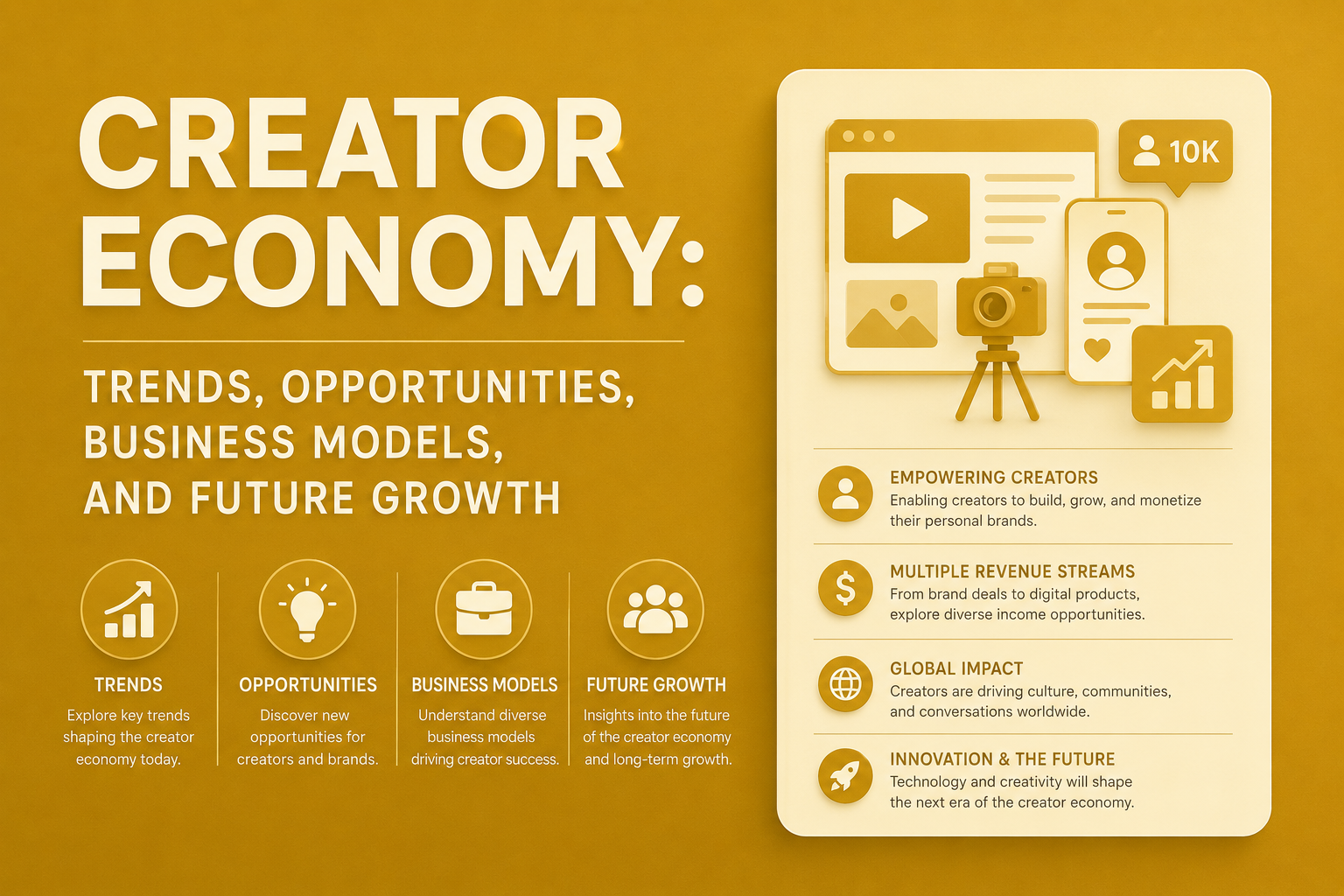
This shift has created what we now call the Creator Economy — a growing digital ecosystem where creators produce content, build communities, and generate income through platforms, brands, and direct relationships with audiences.
A YouTube creator teaching technology, a blogger reviewing products, a fitness coach selling online programs, or an influencer collaborating with brands are all examples of the Creator Economy in action.
The Creator Economy is not only about becoming famous online. It represents a larger change in how businesses, audiences, and individuals create value. Creators are becoming entrepreneurs, brands are investing in creator partnerships, and audiences are increasingly building relationships with individuals they trust.
Table of Contents
- What is Creator Economy? Understanding the Rise of Digital Creators
- How Creator Economy Works: Creators, Platforms, Brands, and Audiences
- Evolution and Growth of the Creator Economy
- Creator Economy Trends in 2026 and Beyond
- Creator Business Models: How Creators Build Businesses and Earn Money
- Creator Platforms, Tools, and the Creator Ecosystem
- Creator Economy: Opportunities and Challenges
- Conclusion
- Frequently Asked Questions
What Is Creator Economy? Understanding the Rise of Digital Creators
Creator Economy refers to the ecosystem of individuals who create content, build audiences, and earn income through digital platforms, communities, and online businesses.
In simple words:
Creator Economy is an economy built around people turning their knowledge, creativity, personality, or skills into businesses.
Creators can earn money by:
- Creating videos
- Writing blogs
- Teaching online
- Building communities
- Selling products
- Partnering with brands
- Offering services
Creator Economy Explained with a Simple Analogy
Think of a traditional newspaper.
A newspaper company creates content, attracts readers, and earns money through advertisements and subscriptions.
The Creator Economy works similarly, but the individual creator becomes the publisher.
A YouTube creator becomes the “channel.”
A blogger becomes the “publication.”
A social media personality becomes the “brand.”
The difference is that modern creators can directly connect with audiences without needing a traditional media company.
Types of Creators in the Creator Economy
Creator Economy includes many types of creators.
Content Creators
These creators produce content around specific topics.
Examples:
- Educational creators
- Entertainment creators
- Technology creators
- Finance creators
Video Creators
Video platforms have played a major role in creator growth.
Examples:
- YouTube creators
- Short-form video creators
- Streaming creators
Bloggers and Writers
Bloggers build audiences through written content.
Examples:
- Industry experts
- Review websites
- Newsletter creators
Influencers
Influencers build communities around their personality, lifestyle, expertise, or interests.
They often collaborate with brands.
Creator Entrepreneurs
Some creators go beyond content and build businesses.
Examples:
- Online courses
- Digital products
- Software businesses
- Consulting services
Why the Creator Economy Has Become a Major Industry
Several factors have contributed to creator growth:
- Easy access to publishing platforms
- Growth of social media
- Increasing trust in individual voices
- Direct audience relationships
- New monetization opportunities
Today, creators are not only content producers.
They are becoming:
- Educators
- Entrepreneurs
- Community builders
- Brand partners
How Creator Economy Works: Creators, Platforms, Brands, and Audiences
The Creator Economy works through a relationship between four major groups:
Creators + Platforms + Brands + Audiences
Each group plays an important role.
Role of Creators
Creators produce value through:
- Information
- Entertainment
- Education
- Inspiration
- Community
Their main asset is not only content.
It is audience trust.
Creator Platforms
Platforms provide the infrastructure where creators publish and grow.
Examples:
- Video platforms
- Social networks
- Newsletter platforms
- Community platforms
Platforms help creators:
- Reach audiences
- Distribute content
- Monetize their work
Role of Brands and Businesses
Brands use creators to:
- Reach specific audiences
- Build awareness
- Promote products
- Generate trust
Many consumers trust creator recommendations because they feel more personal than traditional advertising.
Audiences and Communities
Audiences are the foundation of the Creator Economy.
A creator’s value comes from:
- Attention
- Engagement
- Trust
- Community
A smaller but loyal audience can sometimes be more valuable than a large inactive audience.
How Attention Becomes Economic Value
The Creator Economy follows a simple flow:
Create Content
↓
Build Audience
↓
Develop Trust
↓
Create Opportunities
↓
Generate Revenue
Creators first build attention, then convert that attention into business opportunities.
Evolution and Growth of the Creator Economy
The Creator Economy did not appear overnight.
It evolved as technology changed how people communicate.
From Traditional Media to Digital Creators
Earlier:
- Television controlled entertainment
- Publishers controlled information
- Brands controlled advertising
Today:
- Individuals can publish directly
- Communities form around creators
- Brands collaborate with individuals
Rise of Social Media Platforms
Platforms like YouTube, Instagram, TikTok, and newsletters changed content creation.
Anyone could:
- Publish content
- Find an audience
- Build a personal brand
Growth of Online Creators and Digital Businesses
Creators now operate like businesses.
They manage:
- Content strategy
- Audience growth
- Monetization
- Partnerships
Creator Economy Market Growth
The Creator Economy has become a significant digital industry, attracting investment from platforms, brands, and technology companies.
Growth is driven by:
- More creators entering the space
- Increased brand spending
- Better monetization tools
- Growing audience demand
Why Brands Invest in Creators
Creators offer something traditional advertising often struggles to provide:
Trust.
A creator recommending a product can feel more like a personal recommendation than an advertisement.
Creator Economy Trends in 2026 and Beyond
The Creator Economy continues to evolve as technology and audience behavior change.
Growth of Short-Form Video
Short videos continue to dominate attention.
Creators are increasingly using:
- Short clips
- Reels
- Shorts
- Quick educational content
AI Tools and Creator Workflows
AI is changing how creators work.
Creators can use AI for:
- Content ideas
- Editing assistance
- Research
- Productivity
However, originality and human connection remain important.
Rise of Niche Creators
Large audiences are not the only path.
Niche creators with specialized knowledge can build strong communities.
Examples:
- A creator focused only on personal finance
- A creator teaching a specific software tool
Personal Brands and Audience Ownership
Creators are increasingly focusing on owning their audience.
Examples:
- Email newsletters
- Communities
- Membership platforms
This reduces dependence on a single platform.
Community-Driven Businesses
Many creators are building businesses around communities.
Examples:
- Paid communities
- Courses
- Coaching
- Events
Creator-Led Products and Services
Creators are moving beyond sponsored content.
They are launching:
- Products
- Digital resources
- Brands
- Services
Creator Business Models: How Creators Build Businesses and Earn Money
Creators can generate income through multiple revenue streams.
Successful creators often combine several models.
Advertising Revenue
Platforms share advertising revenue with creators.
Example:
YouTube creators earning from video advertisements.
Brand Sponsorships
Brands pay creators to promote products or services.
Income depends on:
- Audience size
- Engagement
- Niche
- Influence
Affiliate Marketing
Creators recommend products and earn commissions when audiences purchase through their links.
Examples:
- Product reviews
- Tutorials
- Buying guides
Memberships and Subscriptions
Creators can build recurring revenue through:
- Paid communities
- Exclusive content
- Subscriber memberships
Courses and Digital Products
Many creators monetize expertise through:
- Online courses
- Templates
- Guides
- Workshops
Merchandise
Creators with strong communities may sell:
- Clothing
- Products
- Brand merchandise
Consulting and Services
Creators can turn expertise into services.
Examples:
- Coaching
- Consulting
- Freelancing
Building Creator-Owned Businesses
The most successful creators often move from:
Content creator → Business owner
They build assets beyond social platforms.
Creator Platforms, Tools, and the Creator Ecosystem
Creators depend on platforms and tools to create, distribute, and monetize content.
Content Platforms
Examples include:
- Video platforms: YouTube
- Blogging platforms: CMS
- Social networks: Facebook
These help creators reach audiences.
Newsletter and Community Platforms
Email and communities allow creators to build direct relationships.
Benefits:
- Audience ownership
- Better communication
- Long-term connection
Creator Monetization Platforms
These platforms help creators earn through:
- Memberships
- Payments
- Digital products
Content Creation Tools
Creators use tools for:
- Video editing
- Graphic design
- Writing
- Planning
Analytics and Growth Tools
Creators track:
- Views
- Engagement
- Audience growth
- Revenue
Data helps improve content decisions.
Creator Economy: Opportunities and Challenges
The Creator Economy creates opportunities for individuals and businesses, but it also comes with challenges.
Creator Economy as a Career Path
Many people explore content creation as:
- Full-time careers
- Side hustles
- Business opportunities
Success usually requires consistency, patience, and audience understanding.
Opportunities for Businesses
Businesses can use creators for:
- Brand awareness
- Product launches
- Community building
- Customer trust
Building a Personal Brand
Creators can build strong personal brands by focusing on:
- Expertise
- Consistency
- Authenticity
- Audience relationships
Challenges Creators Face
Common challenges include:
- Platform dependency
- Competition
- Unpredictable income
- Content burnout
Maintaining Trust and Authenticity
As the Creator Economy grows, audiences value authenticity more.
Creators need to maintain:
- Transparency
- Honest recommendations
- Genuine relationships
Future Growth Opportunities
The future Creator Economy will likely include:
- More AI-assisted creation
- More creator-owned businesses
- Stronger communities
- New monetization models
Creators who build trust and valuable audiences will have the strongest opportunities.
Conclusion
The Creator Economy represents a major shift in how individuals create value, build businesses, and connect with audiences. What started as social media publishing has evolved into a global ecosystem involving creators, platforms, brands, and communities.
Creators today are not limited to earning through advertisements or sponsorships. They can build businesses through memberships, products, services, communities, and direct audience relationships.
As technology continues to evolve, the Creator Economy will create new opportunities for individuals and businesses. The creators who focus on trust, consistency, and delivering real value will be best positioned for long-term growth.
Frequently Asked Questions
What is meant by Creator Economy?
The Creator Economy refers to the ecosystem where individuals create content, build audiences, and earn income through digital platforms and online businesses.
How does the Creator Economy work?
Creators produce content, platforms distribute it, audiences engage with it, and businesses collaborate with creators to generate value.
What are the different types of creators?
Types include video creators, bloggers, influencers, educators, digital entrepreneurs, and creators who build products or services.
How do creators earn money?
Creators earn through advertisements, sponsorships, affiliate marketing, memberships, courses, products, merchandise, and services.
Why does Gen Z trust influencers?
Many younger audiences trust influencers because they often feel more personal, relatable, and community-driven compared with traditional advertising.
Is the Creator Economy a good career option?
It can be, but success requires consistency, audience understanding, valuable content, and strong business strategy.
What are the biggest Creator Economy trends in 2026?
Major trends include AI tools, niche creators, audience ownership, community businesses, and creator-led products.
What platforms do creators use?
Creators use platforms such as video platforms, social networks, newsletters, and community platforms.
How do YouTube creators earn money?
YouTube creators can earn through advertisements, sponsorships, memberships, affiliate links, and selling products or services.
How can beginners start in the Creator Economy?
Beginners should choose a topic, create valuable content consistently, understand their audience, build a community, and gradually explore monetization options.