


Pay-per-click advertising has become one of the most important ways businesses attract customers online. Unlike organic marketing channels where results often take time, PPC allows businesses to appear in front of potential customers when they are actively searching, comparing, or showing interest in a product or service.
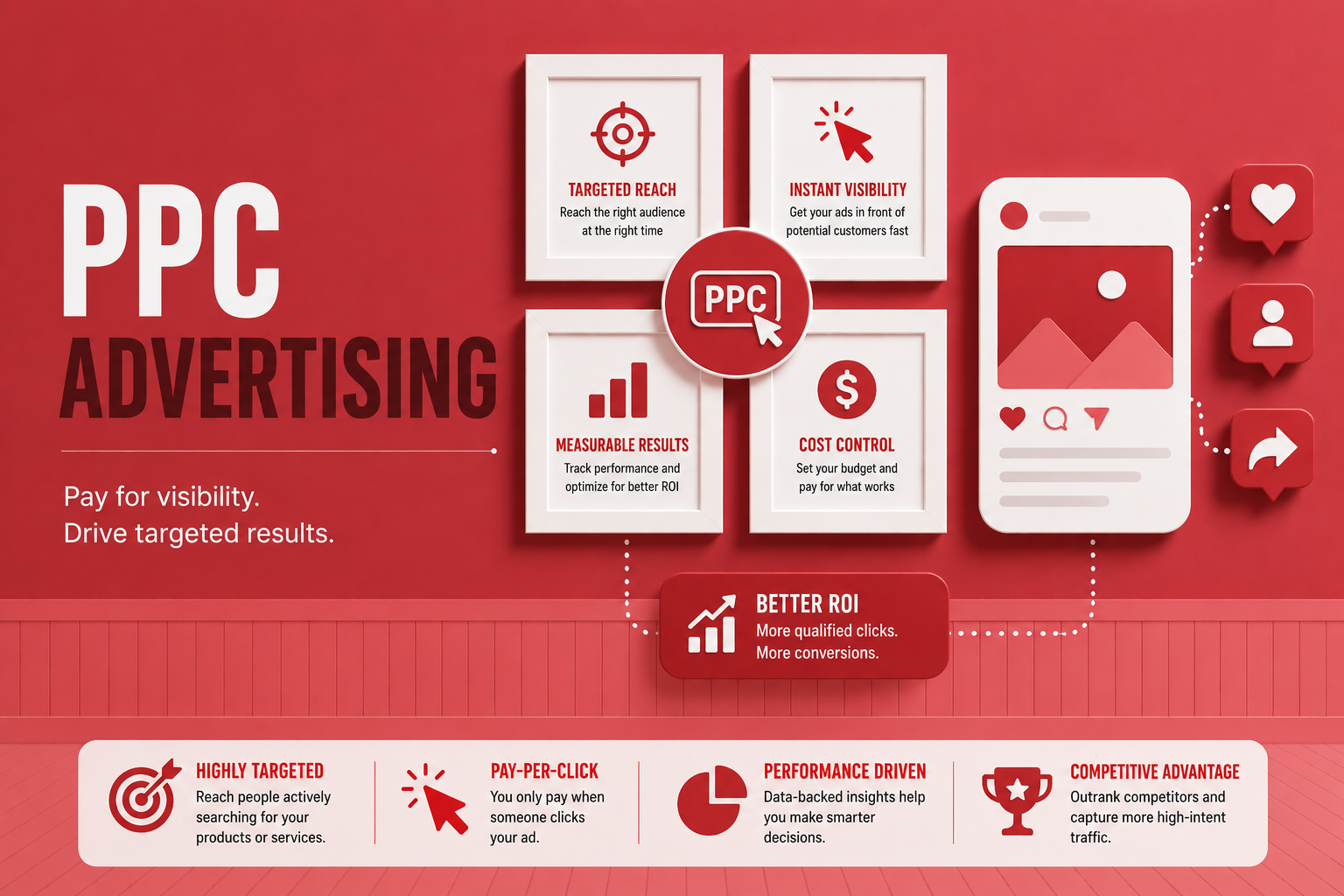
However, successful PPC is not simply about paying for clicks. A profitable PPC campaign requires understanding how advertising auctions work, choosing the right keywords, targeting the right audience, creating relevant ads, optimizing landing pages, and measuring business outcomes.
This guide explains PPC from the foundation to advanced optimization strategies, helping beginners and professionals understand how to create campaigns that generate meaningful results instead of wasting advertising budgets.
Table of Contents
- What Is PPC (Pay-Per-Click) Advertising?
- Google Ads Campaign
- How PPC Auctions and Ad Ranking Work
- PPC Campaign Structure: Building Campaigns That Perform
- Keyword Research, Search Intent, and Targeting in PPC
- PPC Bid Strategies and Budget Management
- Audience Targeting, Remarketing, and Conversion Optimization
- PPC Metrics, Best Practices and Future Trends
- Conclusion
- Frequently Asked Questions
What Is PPC (Pay-Per-Click) Advertising? Understanding Pay-Per-Click Marketing
PPC (Pay-Per-Click) advertising is a digital advertising model where advertisers pay a fee every time someone clicks on their advertisement.
In simple words:
PPC allows businesses to pay for targeted visits to their website, landing page, or product page.
Instead of waiting for customers to discover a business organically, PPC helps businesses appear where potential customers are already looking.
Example:
A person searches:
“best accounting software for small businesses”
A software company running PPC ads may appear at the top of the search results.
If the user clicks the advertisement, the company pays for that click.
PPC Analogy: Renting Attention Instead of Buying Space
Traditional advertising is often like renting a billboard.
You pay to display your message and hope the right people see it.
PPC is more targeted.
It is like placing your advertisement in front of people who are already asking:
“I need this product.”
The advertiser pays only when someone shows enough interest to click.
How Does PPC Work?
The basic PPC process looks like this:
Business Creates Ad
↓
Chooses Keywords or Audience
↓
Platform Runs Advertising Auction
↓
User Searches or Matches Criteria
↓
Ad Appears
↓
User Clicks Advertisement
↓
Business Pays for Click
PPC vs Organic Traffic
PPC and SEO both help businesses gain visibility, but they work differently.
PPC
- Faster visibility
- Requires advertising budget
- Immediate traffic potential
- Easier to target specific audiences
SEO
- Long-term traffic growth
- Requires content and optimization
- Builds organic authority
- Results usually take longer
Many businesses use both together.
PPC can generate immediate traffic while SEO builds sustainable visibility.
Google Ads Campaign
Is PPC Just Google Ads?
Many people associate PPC only with Google Ads, but PPC is a broader advertising model.
PPC includes advertising on platforms such as:
- Google Ads
- Microsoft Ads
- Meta Ads
- LinkedIn Ads
- Amazon Ads
- Other advertising networks
However, Google Ads remains one of the most important PPC platforms because millions of users actively search for products, services, and information every day.
Google Ads and Its Role in PPC Advertising
Google Ads is Google’s advertising platform that allows businesses to show ads across Google’s ecosystem.
It is one of the most widely used PPC platforms because it captures high-intent searches.
A person searching:
“emergency plumber near me”
already has a problem and may be ready to hire a service.
Google Ads allows businesses to appear at that exact moment.
Google Ads Campaign Types
Google Ads includes different campaign formats.
Search Ads
Search ads appear when users search on Google.
Example:
Search:
“best CRM software”
A company offering CRM software can appear as an advertisement.
Display Ads
Display ads appear across websites, apps, and Google’s partner network.
They are often used for:
- Awareness
- Remarketing
- Brand visibility
Shopping Ads
Shopping ads show product information directly in search results.
They are useful for ecommerce businesses because users can see:
- Product image
- Price
- Store information
Video Ads
Video ads appear on platforms such as YouTube.
Businesses use them for:
- Brand awareness
- Product education
- Customer acquisition
Example of a Google Ads PPC Campaign
Imagine a local fitness studio.
Goal:
Get new membership inquiries through Google Search Engine Results Page.
Campaign:
“Gym membership near me”
Target audience:
People searching for fitness options nearby.
Ad:
“Join Our Local Fitness Center — Free Trial Available”
Landing page:
Membership details and signup form.
Success measurement:
- Clicks
- Leads
- Cost per lead
- New customers
How PPC Auctions and Ad Ranking Work
A common misconception is that the highest bidder always gets the top position.
PPC platforms use advertising auctions to decide which ads appear and where.
Advertising Auction Explained
Every time someone performs a search, an auction happens.
The platform evaluates advertisers competing for that search.
The system considers factors such as:
- Bid amount
- Ad quality
- Relevance
- Expected user experience
Bid Amount vs Actual Performance
A higher bid does not automatically guarantee success.
An advertiser with a lower bid can sometimes outrank a competitor if their ad is more relevant.
Example:
Company A bids $5 but has a poor landing page.
Company B bids $3 but has highly relevant ads and better user experience.
Company B may achieve better placement.
Quality Score
Quality Score is a Google Ads concept that evaluates the quality and relevance of ads.
Factors include:
- Expected click-through rate
- Ad relevance
- Landing page experience
A higher-quality ad can often achieve better performance at a lower cost.
Landing Page Experience
The page users reach after clicking an ad matters.
A strong landing page should:
- Match the advertisement message
- Load quickly
- Explain benefits clearly
- Make conversion easy
PPC Campaign Structure: Building Campaigns That Perform
A well-organized campaign structure improves control and optimization.
Campaigns, Ad Groups, and Ads
A PPC account is usually organized into levels:
Campaign
↓
Ad Group
↓
Keywords and Ads
Campaign Level
Campaigns define:
- Budget
- Goal
- Targeting
- Advertising type
Example:
Campaign:
“Online Course Sales”
Ad Group Level
Ad groups organize related keywords and ads.
Example:
Ad Group:
“Digital Marketing Course”
Keywords:
- Digital marketing training
- Marketing course online
Types of Campaigns
Search Campaigns
Search campaigns target users actively looking for information or solutions.
They are often effective for high-intent searches.
DisplayCampaigns
Display campaigns focus more on visibility and awareness.
They are useful for:
- Remarketing
- Brand exposure
Shopping Campaigns
Shopping campaigns are designed for ecommerce products.
They help businesses promote products directly in search results.
Keyword Research, Search Intent, and Targeting in PPC
Keywords determine when advertisements appear.
Choosing the wrong keywords can waste budget.
Finding PPC Keywords
Good PPC keywords usually have:
- Clear intent
- Customer relevance
- Conversion potential
Example:
“buy running shoes online”
shows stronger purchase intent than:
“what are running shoes”
Search Intent in PPC
Understanding intent helps advertisers match ads with user needs.
Informational
User wants information.
Example:
“How does email marketing work?”
Commercial
User is comparing options.
Example:
“Best email marketing software”
Transactional
User is ready to act.
Example:
“Buy email marketing software”
Keyword Match Types
Match types control how closely searches must match keywords.
Common types include:
- Broad match
- Phrase match
- Exact match
They help balance reach and control.
Negative Keywords
Negative keywords prevent ads from appearing for irrelevant searches.
Example:
A premium software company may exclude:
“free”
to avoid low-intent clicks.
PPC Bid Strategies and Budget Management
Bid strategies determine how advertisers compete in auctions.
What Is a Bid Strategy?
A bid strategy is the approach used to decide how much to bid for advertising opportunities.
Manual vs Automated Bidding
Manual Bidding
Advertisers control bids directly.
Useful when:
- Testing campaigns
- Having specific control needs
Automated Bidding
Platforms use machine learning to optimize bids.
Examples:
- Maximize conversions
- Target CPA
- Target ROAS
Cost Per Click (CPC)
CPC is the amount paid for each click.
Lower CPC is not always better.
A cheap click that never converts may be less valuable than an expensive click that generates sales.
Reducing Wasted Ad Spend
Businesses can improve efficiency by:
- Removing irrelevant keywords
- Improving targeting
- Testing ads
- Improving landing pages
Audience Targeting, Remarketing, and Conversion Optimization
Modern PPC is not only keyword-based.
Businesses can also target audiences.
Audience Targeting
Advertisers can use:
- Demographics
- Interests
- Location
- Customer behavior
- Previous interactions
Remarketing Campaigns
Remarketing targets people who previously interacted with a business.
Examples:
- Website visitors
- Previous customers
- Cart abandoners
Landing Page Optimization
A good landing page improves conversions.
Important elements:
- Clear headline
- Strong value proposition
- Simple form
- Clear call-to-action
Conversion Tracking
Tracking helps businesses understand whether ads generate results.
Conversions may include:
- Purchases
- Leads
- Signups
- Calls
PPC Metrics, Best Practices and Future Trends
Running ads is only the beginning.
The goal is understanding performance and improving profitability.
Important PPC Metrics
CTR (Click-Through Rate)
Measures how many people click after seeing an ad.
CPC (Cost Per Click)
Shows the cost of each click.
CPA (Cost Per Acquisition)
Measures the cost of gaining a customer or lead.
ROAS (Return on Ad Spend)
Shows revenue generated compared to advertising spend.
Attribution Models
Attribution helps businesses understand which marketing touchpoints contributed to conversions.
A customer may interact with:
- Search ad
- Social media
- Website
before purchasing.
Improving PPC ROI
Businesses improve ROI by:
- Targeting better keywords
- Improving ads
- Reducing wasted clicks
- Improving conversion rates
- Scaling successful campaigns
PPC Best Practices
PPC continues evolving with automation and artificial intelligence.
Test and Improve Continuously
Successful PPC requires ongoing optimization.
Test:
- Headlines
- Ad copy
- Keywords
- Landing pages
Use Automation Carefully
AI-powered bidding can improve efficiency, but human strategy remains important.
Businesses still need to understand:
- Customers
- Goals
- Messaging
Common PPC Mistakes
Common problems include:
- Targeting broad irrelevant keywords
- Ignoring landing pages
- Not tracking conversions
- Focusing only on clicks instead of business results
AI and Future of PPC
AI is increasingly helping with:
- Bid optimization
- Audience prediction
- Ad creation
- Campaign management
Future PPC strategies will combine automation with better audience understanding and creative strategy.
Conclusion
PPC advertising is one of the most powerful ways businesses can reach customers with high purchase intent. However, successful PPC is not simply about increasing budgets or getting more clicks.
The strongest campaigns combine:
- Smart keyword selection
- Strong campaign structure
- Effective bidding
- Relevant ads
- Optimized landing pages
- Accurate measurement
As PPC platforms become more automated and AI-driven, businesses that understand customer intent and continuously optimize campaigns will have the biggest advantage.
Frequently Asked Questions
What does PPC mean?
PPC means Pay-Per-Click, an advertising model where businesses pay whenever someone clicks their advertisement.
How does PPC work?
PPC works through advertising auctions where platforms match advertisements with users based on keywords, audiences, bids, and relevance.
Which is better: PPC or SEO?
PPC provides faster visibility, while SEO builds long-term organic traffic. Many businesses use both together.
Is PPC just Google Ads?
No. Google Ads is one of the largest PPC platforms, but PPC also includes advertising on platforms such as Meta, LinkedIn, Amazon, and others.
What is a PPC campaign in marketing?
A PPC campaign is a structured advertising effort designed around specific goals such as traffic, leads, sales, or brand awareness.
What are good PPC keywords?
Good PPC keywords usually have strong relevance, clear search intent, and potential to generate conversions.
What are PPC bid strategies?
PPC bid strategies are methods advertisers use to control how platforms compete in advertising auctions.
How do you optimize PPC campaigns?
PPC campaigns can be optimized by improving keywords, ads, targeting, landing pages, bidding, and conversion tracking.
What is Quality Score in PPC?
Quality Score measures the relevance and quality of ads, keywords, and landing pages, especially in Google Ads.
How can businesses improve PPC ROI?
Businesses can improve PPC ROI by reducing wasted spend, improving targeting, increasing conversion rates, and focusing on profitable campaigns.