Category: Glossary
Browse digital marketing glossary terms with clear definitions, examples, and related concepts.
-

Heading Tags (H1–H6)
Heading tags, more precisely HTML heading elements, define headings and subheadings on a webpage using six levels from <h1> through <h6>.…
-
Meta Description
A meta description is a concise summary of a webpage supplied through the HTML <meta name=”description”> element. Search engines may use…
-

Title Tag
A title tag, technically the HTML <title> element, assigns a concise, descriptive title to a webpage. It is intended to provide…
-
404 Error
A 404 error is a standard HTTP status code that indicates a requested webpage or resource cannot be found on the…
-
301 Redirect
A 301 redirect is an HTTP response that permanently sends requests from one URL to another. It tells web browsers and…
-
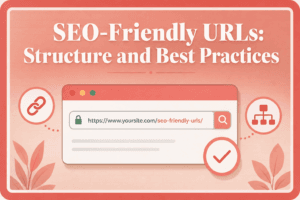
URL Slug
A URL slug is a human-readable part of a web address that helps identify a specific page, post, product, category, or…
-

Plagiarism
Plagiarism is the act of presenting another person’s words, ideas, research, creative work, or original expression as one’s own without proper…
-

XML Sitemap
An XML sitemap is a file listing important URLs and other resources on a website and provides search engines with information…
-

E-E-A-T
E-E-A-T, or Experience, Expertise, Authoritativeness, and Trustworthiness, is a set of quality concepts used in Google’s Search Quality Rater Guidelines to…
-

Topic Cluster
A topic cluster is an SEO and content-organization strategy that groups related subtopic pages around a central pillar page covering the…