



Social media algorithms often sound more complicated than they actually are. Many creators and businesses imagine algorithms as hidden formulas that require advanced technical knowledge to understand, but the reality is much simpler. You do not need to decode a secret mathematical system to improve your reach. At a basic level, social media platforms are trying to show people content they are likely to find useful, interesting, entertaining, or valuable.
Understanding algorithms is less about chasing every update and more about observing what works. At the end of the day, it’s all about common sense.
You must look at what successful creators and brands are posting, notice which formats receive attention, understand what your audience responds to, and focus on creating better interactions. Sometimes meaningful conversations in comments, helpful replies, and genuine community building can matter more than constantly worrying about algorithm changes.
This guide explains how social media algorithms work, how they influence visibility and engagement, and what businesses and creators can do to create content that performs better.
Table of Contents
- What Are Social Media Algorithms?
- How Social Media Algorithms Work
- Engagement Signals and Social Ranking Factors
- How Different Social Platforms Use Algorithms
- Content Relevance, Organic Reach and Algorithmic Growth
- How to Optimize Content for Social Media Algorithms
- Common Social Media Algorithm Mistakes and Misconceptions
- Conclusion
- Frequently Asked Questions
What Are Social Media Algorithms?
Social media algorithms are systems used by platforms to decide which content appears in a user’s feed and in what order. Before understanding how algorithms work in social media, we first understand what algorithms are about.
What Is an Algorithm?
An algorithm is a set of rules or steps that a system follows to complete a task or make a decision.
In simple words:
An algorithm is like a decision-making process that tells a system what to do based on different inputs and signals.
For example, imagine a food delivery app algorithm:
User searches for pizza → Algorithm checks location, preferences, past orders, ratings, and availability → System recommends suitable restaurants
The algorithm is not “thinking” like a human. It is following programmed rules and using available data to make a useful recommendation.
Simple Algorithm Flow:
Input Data
↓
Analyze Information
↓
Apply Rules/Signals
↓
Make a Decision
↓
Show Result
Algorithms for Social Media
User watches marketing videos
↓
Algorithm notices interest signals
↓
Finds similar content
↓
Ranks relevant posts higher
↓
Shows more marketing content in the feed
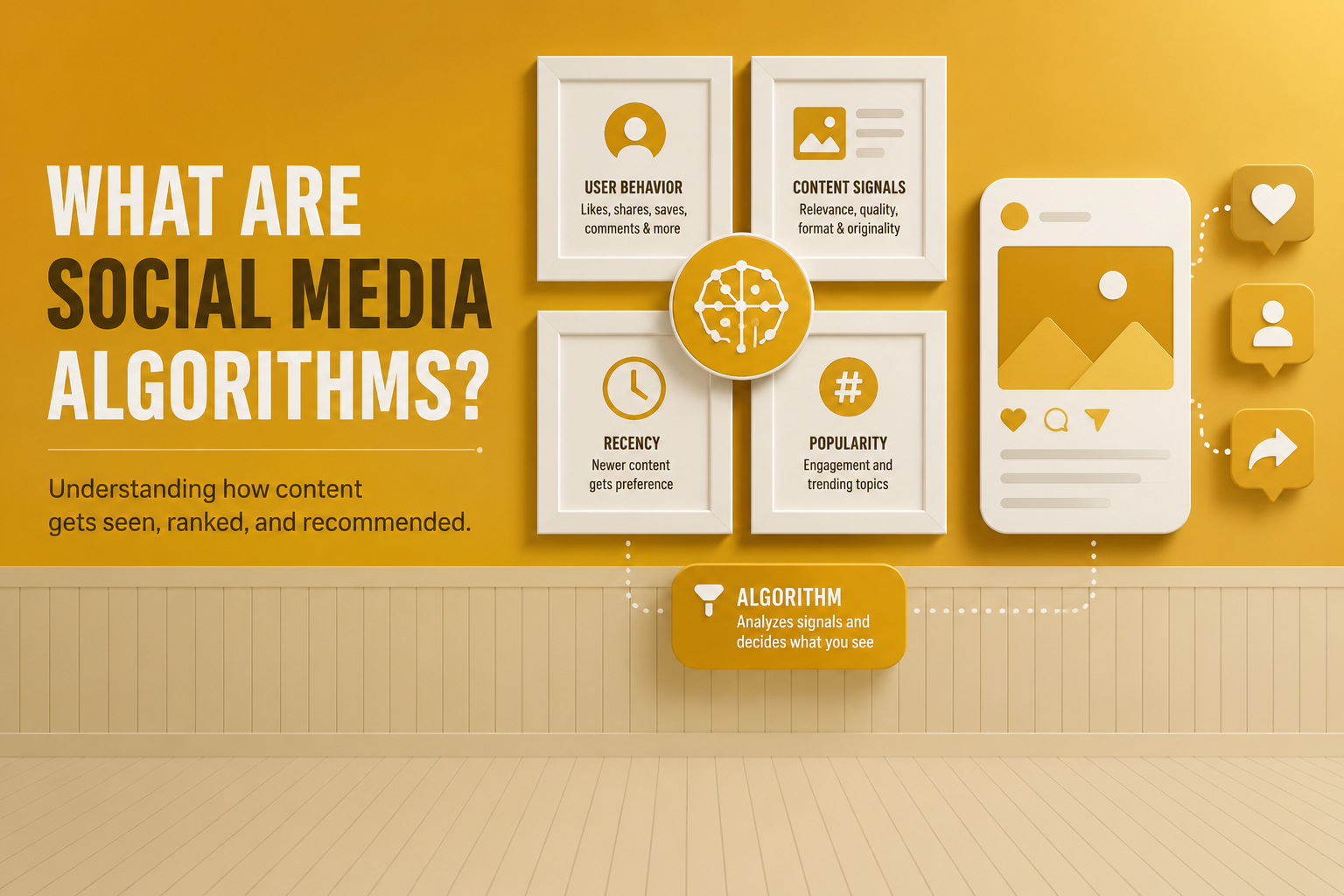
Social media algorithms work in a similar way, using user behavior and content signals to decide what content people are more likely to engage with.
In simple words:
A social media algorithm is a recommendation system that decides what content a person is most likely to engage with.
Every day, millions of posts, videos, images, and updates are published. It would be impossible for users to see everything.
Instead of showing posts only in chronological order, platforms analyze different signals to decide:
- What content should appear first
- Which posts are relevant to a person
- Which creators or brands should receive more visibility
Social Media Algorithm Analogy: Think Like a Personal Assistant
Imagine having a personal assistant who knows your interests.
If you always read marketing articles, watch business videos, and interact with entrepreneurship content, the assistant will likely recommend more of the same.
Social media algorithms work similarly.
They observe:
- What you watch
- What you like
- What you comment on
- What you share
- How long you spend on content
Then they use these signals to personalize your experience.
Why Do Social Media Platforms Use Algorithms?
The main purpose of algorithms is to improve user experience.
Platforms want users to:
- Spend more time on the platform
- Discover interesting content
- Engage with communities
- Return regularly
If users constantly see irrelevant content, they are less likely to use the platform.
Therefore, platforms use recommendation systems to show more relevant content.
What Businesses and Creators Need to Know About Algorithms
Businesses and creators do not need to think of algorithms as something they must “beat.”
The goal is not tricking the algorithm.
The goal is creating content that people genuinely find valuable.
Strong algorithm performance usually comes from:
- Understanding your audience
- Creating useful content
- Encouraging conversations
- Maintaining consistency
- Learning from performance data
The algorithm follows audience behavior.
If people enjoy your content, interact with it, and spend time with it, platforms receive signals that the content is valuable.
How Social Media Algorithms Work?
Although every platform has its own system, most social media algorithms follow similar principles.
A simplified process looks like:
Content Published → Algorithm Analyzes Signals → Predicts User Interest → Ranks Content → Shows to Audience
Content Analysis
When content is uploaded, platforms analyze different characteristics.
These may include:
- Topic
- Format
- Text
- Images
- Video information
- Previous performance
For example, a platform may understand that a video is about fitness, cooking, marketing, or entertainment.
User Behavior Signals
Algorithms learn from how people interact with content.
Signals include:
- What users click
- What they watch
- What they ignore
- What they save
- What they share
These behaviors help platforms predict future interests.
Relevance and Personalization
Two users can open the same platform and see completely different feeds.
Why? Because algorithms personalize content based on individual behavior.
A photographer may see:
- Camera content
- Editing tutorials
- Photography creators
A marketer may see:
- Advertising content
- Business advice
- Marketing discussions
Social Media Feeds Explained
A social media feed is the stream of content users see when they open a platform.
Instead of simply showing every new post, algorithms rank content based on predicted relevance.
This is why a post from yesterday may appear before a post published minutes ago.
Engagement Signals and Social Ranking Factors
Engagement signals are actions users take that indicate interest in content.
These signals help platforms understand whether content is valuable.
Likes, Comments, Shares, and Saves
Different interactions provide different information. A like may show basic interest. A comment shows deeper interaction. A share suggests the content was valuable enough for someone to send to others. A save often indicates that users want to return to the content later.
Watch Time and Retention
For video platforms, watch behavior is extremely important.
Examples:
- How long people watch
- Whether they complete videos
- Whether they replay content
A video that keeps viewers watching sends a strong quality signal.
Clicks and Interactions
Algorithms also consider actions such as:
- Clicking profiles
- Opening links
- Exploring more content
These actions show interest beyond a simple reaction.
Why Some Signals Matter More Than Others
Not every interaction has the same value.
For example:
A person watching a 10-minute video completely may provide a stronger signal than someone quickly liking a post.
Platforms generally prioritize actions that indicate meaningful interest.
How Different Social Platforms Use Algorithms
Every platform has different goals and user behaviors.
However, the core principles remain similar: relevance, engagement, and user satisfaction.
Instagram Algorithm
Instagram focuses heavily on:
- Engagement
- Content relevance
- Relationships
- User interests
- Time spent with content
Signals can include:
- Likes
- Comments
- Shares
- Saves
- Story interactions
- Reels watch time
Facebook Algorithm
Facebook prioritizes content that encourages meaningful interactions.
Important signals include:
- Conversations
- Comments
- Sharing
- Relationships between users
Content from people or communities users regularly interact with may receive more visibility.
YouTube Recommendation Systems
YouTube relies heavily on:
- Watch time
- Audience retention
- Click-through rate
- Viewer satisfaction
The platform wants to recommend videos viewers are likely to continue watching.
LinkedIn Algorithm
LinkedIn focuses on professional relevance.
Signals include:
- Engagement quality
- Industry relevance
- Discussions
- Professional networks
Posts that create meaningful conversations often perform better.
Content Relevance, Organic Reach and Algorithmic Growth
Algorithms ultimately reward content that matches audience interests.
Creating content that people want to consume is the foundation of organic growth.
Matching Content with Audiences
A common mistake is creating content only based on what a business wants to say.
Successful content starts with:
- Audience problems
- Questions
- Interests
- Needs
Example:
A software company should not only post product updates.
It can also share:
- Tutorials
- Industry insights
- Customer stories
- Solutions to common problems
Content Relevance
Relevant content answers:
“Why should this audience care?”
Strong content usually provides:
- Entertainment
- Education
- Inspiration
- Solutions
Viral Content Principles
Viral content is not always predictable, but many successful posts share common characteristics.
They often create:
- Strong emotions
- Curiosity
- Relatability
- Discussion
- Sharing behavior
Virality is usually a result of audience response, not a simple algorithm trick.
Building Sustainable Organic Reach
Long-term growth comes from:
- Understanding your audience
- Testing content formats
- Improving quality
- Building relationships
A single viral post can create attention, but consistent value creates communities.
How to Optimize Content for Social Media Algorithms
Optimizing for algorithms means improving content quality and audience response.
Choose the Right Content Format
Different platforms favor different formats.
Examples:
- Short videos
- Educational carousels
- Discussions
- Stories
- Long-form videos
Understand what works for your audience.
Create Strong Openings
Especially for videos, the beginning matters.
A strong opening should:
- Capture attention
- Explain value
- Encourage viewers to continue
Encourage Meaningful Engagement
Instead of asking only:
“Like this post.”
Create discussions.
Examples:
- Ask questions
- Share opinions
- Encourage experiences
Analyze Performance
Use platform analytics to understand:
- Which posts perform well
- Which topics attract attention
- Which formats generate engagement
Improve based on data.
Optimize Without Chasing Algorithm Tricks
Avoid focusing only on:
- Hashtag hacks
- Posting-time myths
- Artificial engagement
The strongest strategy remains:
Create useful content for real people.
Common Social Media Algorithm Mistakes and Misconceptions
Many businesses struggle because they misunderstand how algorithms work.
“The Algorithm Is Against My Account”
Algorithms are not designed to punish specific accounts.
Usually, low reach means content signals indicate limited audience interest.
The solution is improving relevance and engagement.
Chasing Every Algorithm Update
Platforms constantly change.
Trying to follow every small update can distract from the basics.
Focus on:
- Audience
- Content quality
- Engagement
Creating Content Only for Reach
Content designed only for visibility may attract views but fail to build relationships.
Strong brands balance:
- Attention
- Value
- Trust
Ignoring Community Building
Social media is not only about publishing.
Comments, replies, and conversations are important parts of growth.
Conclusion
Social media algorithms are recommendation systems designed to help users discover content they are likely to enjoy. While each platform uses different signals, most algorithms focus on similar factors: relevance, engagement, user behavior, and content quality.
Businesses and creators do not need to obsess over hidden formulas. The strongest approach is understanding audiences, creating valuable content, encouraging genuine interaction, and learning from performance data.
As platforms continue becoming more personalized and AI-driven, the importance of understanding user behavior will continue growing. The brands and creators that focus on building real connections will be better positioned for long-term organic growth.
Frequently Asked Questions
What are algorithms on social media?
Social media algorithms are systems that analyze content and user behavior to decide which posts, videos, and updates appear in people’s feeds.
How do social media algorithms work?
Social media algorithms work by analyzing signals such as engagement, user interests, content relevance, and viewing behavior to recommend content.
What are engagement signals on social media?
Engagement signals are actions such as likes, comments, shares, saves, clicks, and watch time that show how users interact with content.
What are ranking signals?
Ranking signals are factors algorithms use to decide how visible content should be, such as relevance, engagement, and user satisfaction.
What is a social media feed?
A social media feed is the stream of posts and content shown to users when they open a platform.
How does the Instagram algorithm work?
The Instagram algorithm ranks content based on factors such as user interests, engagement, relationships, watch behavior, and content relevance.
How can I increase engagement on social media?
You can increase engagement by creating valuable content, understanding your audience, encouraging conversations, and consistently interacting with followers.
How can I reach more people on social media?
You can increase reach by creating relevant content, improving engagement, using suitable formats, and building stronger audience relationships.
How do I optimize social media content?
Optimize social media content by creating audience-focused posts, using effective formats, improving quality, analyzing performance, and encouraging meaningful interactions.
What affects social rankings?
Social rankings are affected by factors such as content relevance, engagement signals, audience behavior, watch time, and overall user satisfaction.