



Search or information retrieval is the process of finding and presenting relevant information from a large collection of data based on a user’s query. Traditional search systems focused on matching words and phrases, while modern systems use machine learning and language understanding to identify the most useful information.
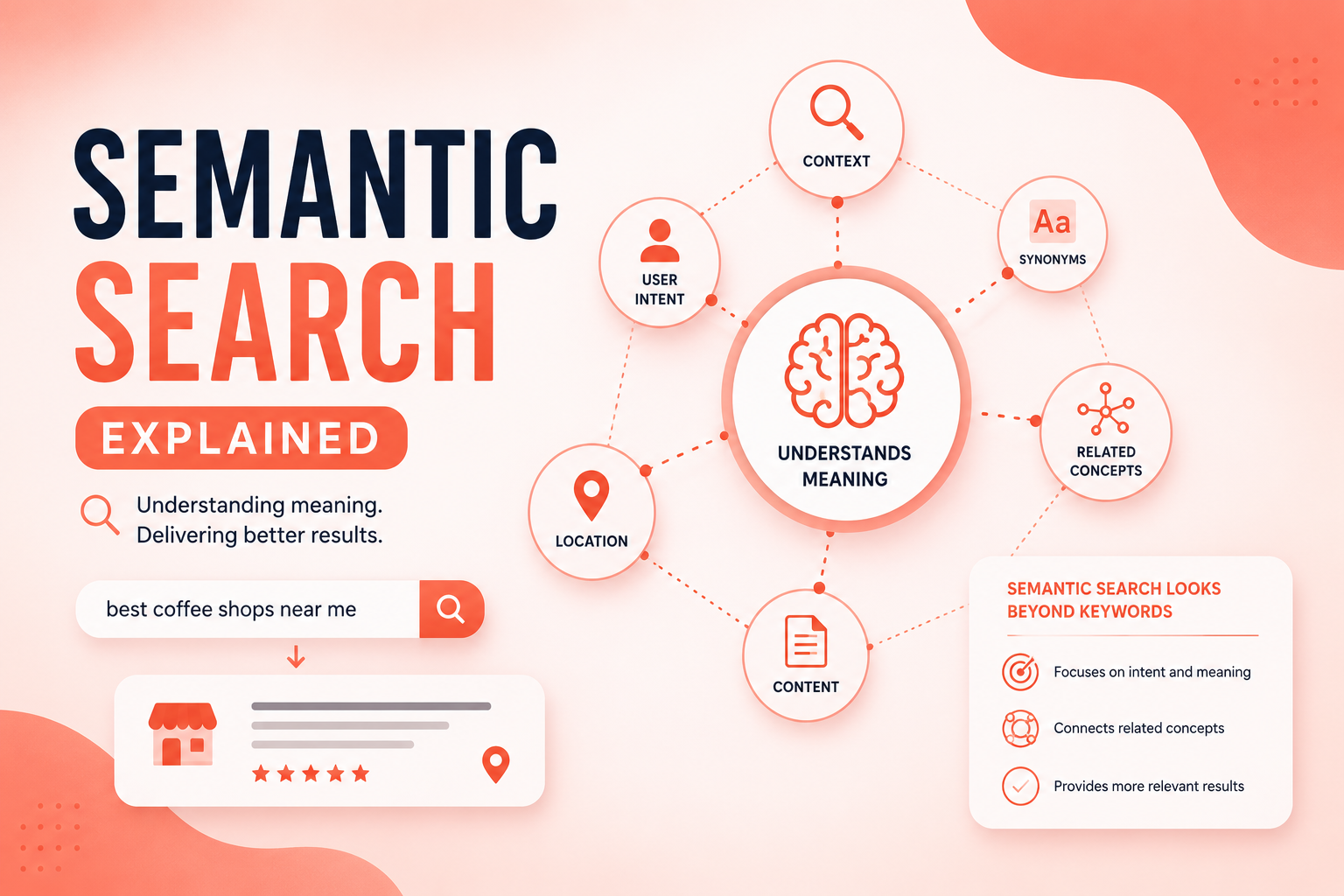
Keyword-based search mainly relies on matching specific terms between a query and webpage content, which can sometimes miss the actual meaning behind a search. Semantic search goes beyond exact keywords by understanding context, relationships, and user intent to provide more relevant results.
Table of Contents
- Semantic Search: Meaning, Context, and the Evolution of Search
- Semantic Search vs Keyword Search
- Information Retrieval, AI Systems, and Generative AI
- Search Intent, Contextual Search and Natural Language Search
- Optimization Content for AI Search Systems
- Conclusion
- Frequently Asked Questions
Semantic Search: Meaning, Context, and the Evolution of Search
Semantic search refers to the way search engines understand the meaning, context, and intent behind a search query instead of only matching the exact words entered by a user.
In simple words:
Semantic search helps search engines understand what users mean, not just what they type.
For example, if someone searches:
“best places to eat near me”
a traditional keyword-based system may focus on matching words like “places” and “eat.”
A semantic search system understands that the user likely wants:
- Restaurants
- Nearby locations
- Food recommendations
- Highly rated places
- Local options
The goal is to provide results that match the user’s actual need.
Semantic Search: Understanding Search Like Humans
Humans rarely communicate by matching exact words.
We understand meaning through:
- Context
- Previous knowledge
- Relationships
- Situations
If someone says:
“Who is the richest person in the world?”
a human understands they are asking about a person, wealth, ranking, and current information.
Search engines increasingly work in a similar way.
They try to understand:
- What the user wants
- Why they are searching
- What information is relevant
Semantic Search Analogy: Moving From Words to Meaning
Imagine asking a friend:
“I need something to help me work faster.”
Your friend would not simply search for the exact phrase.
They would ask:
- What work do you do?
- What problem are you facing?
- Are you looking for software, equipment, or advice?
Semantic search works similarly.
It tries to understand the situation behind the query.
Why Did Search Move Beyond Keyword Matching?
In the early days of search engines, rankings were heavily influenced by keywords.
If a webpage contained a search term multiple times, it had a better chance of appearing for that query.
However, this created problems.
A page could include many keywords but still provide poor information.
For example:
A page about “best smartphones” could repeat the phrase many times without actually comparing phones.
Modern search engines focus more on:
- Meaning
- Relevance
- Context
- User satisfaction
How Search Engines Understand Meaning
Search engines analyze multiple signals to understand queries.
These include:
- Words and phrases
- Related concepts
- User behavior
- Search history
- Context
- Content relationships
This allows search engines to connect queries with the most relevant information.
Semantic Search vs Keyword Search
The difference between semantic search and keyword search represents the evolution of how search engines understand information.
What Is Keyword-Based Search?
Keyword search focuses mainly on matching words between a user query and webpage content.
Example:
User searches:
“email marketing tools”
A keyword-based system looks for pages containing those words.
Limitations of Keyword Search
Keyword matching alone cannot always understand:
- Different meanings
- User intent
- Context
- Related concepts
For example:
Search:
“apple benefits”
Could mean:
- Benefits of eating apples
- Benefits of Apple products
Context is required to understand the correct meaning.
How Semantic Search Is Different
Semantic search focuses on understanding:
- Meaning
- Relationships
- Intent
Example:
Search:
“how to increase website visitors”
A semantic search system understands this may relate to:
- SEO
- Content marketing
- Search rankings
- Website optimization
- Traffic growth
It does not require every related phrase to appear exactly.
Semantic SEO vs Keyword SEO
Keyword SEO focuses on optimizing for specific search terms.
Example:
Target keyword:
“technical SEO audit”
Semantic SEO focuses on covering the broader topic.
Related concepts:
- Website crawling
- Indexing
- Site speed
- Technical issues
- SEO tools
Both approaches work together.
Keywords still help search engines identify topics, but semantic understanding helps determine relevance.
Information Retrieval, Semantic Search, AI Systems, and Generative AI
Modern search is built on information retrieval systems that help search engines find and organize relevant information.
Traditional retrieval systems focused heavily on matching words.
Modern systems combine:
- Semantic understanding
- Machine learning
- Natural Language Processing
- Artificial intelligence
How Modern Information Retrieval Works
Information retrieval is the process of finding relevant information from a large collection of data.
Search engines process:
- Billions of webpages
- User queries
- Content signals
They attempt to identify:
“What information best answers this question?”
Role of Natural Language Processing (NLP)
Natural Language Processing helps machines understand human language.
It allows systems to understand:
- Sentence meaning
- Relationships between words
- Language patterns
- User intent
For example:
Search:
“restaurants open late near me”
A system understands:
- Restaurants are businesses
- Open late refers to operating hours
- Near me refers to location
Semantic Search and AI Systems
AI-powered systems use semantic understanding to provide more conversational answers.
Instead of only showing links, AI systems can:
- Summarize information
- Compare options
- Explain concepts
- Answer follow-up questions
Examples include:
- ChatGPT
- Google AI Overviews
- Perplexity
- Claude
Generative AI and Search Experiences
Generative AI has changed search from a “find information” model to an “understand and answer” model.
Traditional search:
User → Query → Results page
AI search:
User → Question → Generated response
This makes content quality, clarity, and authority even more important.
Search Intent and Semantic Search
Search intent refers to the reason behind a search query.
Understanding intent is one of the biggest advantages of semantic search.
A search engine does not only ask:
“What words did the user type?”
It asks:
“What does this person actually want?”
Four Types of Search Intent
Informational Intent
The user wants information.
Examples:
“What is semantic search?”
“How does SEO work?”
Navigational Intent
The user wants a specific website or destination.
Example:
“Facebook login”
Commercial Intent
The user is researching before making a decision.
Examples:
“Best SEO tools”
“Semrush vs Ahrefs”
Transactional Intent
The user wants to complete an action.
Examples:
“Buy running shoes online”
“Subscribe to SEO software”
Why Search Intent Matters
A page can rank only when it matches what users expect.
Example:
Keyword:
“best laptops for students”
The user expects:
- Comparisons
- Recommendations
- Features
- Pricing
A basic definition page would not satisfy the intent.
Contextual Search
Semantic search has made search more conversational and human-like. This has increased the importance of contextual search and natural language search.
Contextual search means understanding a search query based on surrounding information.
Context can include:
- Previous searches
- Location
- User behavior
- Search patterns
When a user searches “weather”, the system understands they likely want weather for their location.
Contextual Search Example
Imagine someone searches:
“best restaurants”
Then searches:
“which ones are open now?”
The second search depends on the first.
A contextual system understands the connection.
What Is Natural Language Search?
Natural language search allows users to search using normal conversation.
Instead of typing:
“SEO benefits”
Users may ask:
“How can SEO help my small business get more customers?”
AI search systems are designed to handle these conversational queries.
Voice Search and AI Search
Voice assistants increased the use of natural language queries.
AI search systems are continuing this trend by making searches more conversational.
Optimizing Content for AI Search Systems
Semantic search is becoming the foundation of AI-driven search experiences. To improve visibility, businesses need to create content that is easy for both humans and AI systems to understand.
Creating content for semantic search requires focusing on topics, meaning, and user needs.
Cover Topics, Not Just Keywords
Instead of creating one page for every keyword variation, create comprehensive resources.
Example:
Keyword:
“email marketing”
A stronger article covers:
- What email marketing is
- Benefits
- Strategies
- Tools
- Examples
- Best practices
Use Related Concepts
Semantic search understands relationships between concepts.
Include related topics naturally.
For example:
A page about SEO may include:
- Keywords
- Search intent
- Rankings
- Technical optimization
- Content strategy
Build Topic Clusters
Topic clusters organize related content.
Example:
Main topic:
Digital Marketing
Supporting topics:
- SEO
- PPC
- Email Marketing
- Social Media Marketing
This helps search engines understand expertise.
Improve Content Depth
Modern search engines reward content that provides complete answers.
Improve depth through:
- Examples
- Explanations
- Data
- Practical advice
Avoid Keyword Stuffing
Repeating keywords unnaturally does not improve semantic relevance.
Instead:
- Write naturally
- Answer questions
- Explain concepts clearly
Create Answer-Focused Content
AI systems prefer content that provides direct answers.
Use:
- Clear definitions
- Step-by-step explanations
- FAQs
- Examples
Strengthen Authority Signals
AI systems need reliable information.
Important signals include:
- Expertise
- Accurate information
- Trusted sources
- Consistent brand presence
Improve Content Structure
Make information easier to understand through:
- Clear headings
- Short paragraphs
- Lists
- Tables
- Logical flow
The future of optimization is not only ranking for keywords. It is becoming a trusted source for answers.
Conclusion
Semantic search represents the shift from search engines matching words to understanding meaning, context, and user intent.
Instead of asking:
“Does this page contain the keyword?”
Modern search systems ask:
“Does this page provide the best answer for what the user needs?”
This evolution has changed SEO from keyword placement to creating useful, comprehensive, and context-rich content.
As AI-powered search systems continue growing, semantic understanding will become even more important. Businesses and creators that focus on topics, intent, and valuable information will be better positioned to succeed in the future of search.
Frequently Asked Questions
What is semantic search?
Semantic search is a search approach where engines understand the meaning, context, and intent behind queries instead of only matching exact keywords.
How does semantic search work?
Semantic search works by using technologies like Natural Language Processing, machine learning, and AI to understand relationships between words, concepts, and user intent.
What is an example of semantic search?
A search for “best phone for photography” is an example because the system understands the user wants camera quality, features, and recommendations rather than only pages containing those exact words.
What is the difference between semantic search and keyword search?
Keyword search focuses on matching specific words, while semantic search focuses on understanding meaning, context, and relationships.
Does ChatGPT use semantic search?
AI systems like ChatGPT use semantic understanding to interpret questions and generate relevant responses, although their exact processes may differ depending on the system and tools used.
Is Google a semantic search engine?
Google uses semantic search technologies to better understand queries, context, entities, and user intent.
What is contextual search?
Contextual search is when a system uses additional information such as previous searches, location, or user behavior to better understand a query.
What is the difference between contextual search and semantic search?
Semantic search focuses on understanding meaning, while contextual search focuses on using surrounding information to improve understanding.
What is natural language search?
Natural language search allows users to search using normal conversational language instead of short keyword phrases.
What is search intent?
Search intent is the reason or goal behind a user’s search query, such as learning something, finding a website, comparing options, or making a purchase.