



YouTube provides creators with a powerful opportunity to reach global audiences, build communities, and grow brands through video content. However, many creators struggle to gain visibility because of increasing competition, poor discoverability, weak audience retention, and a lack of optimization. YouTube SEO helps overcome these challenges by improving how channels and videos appear in search results and recommendations.
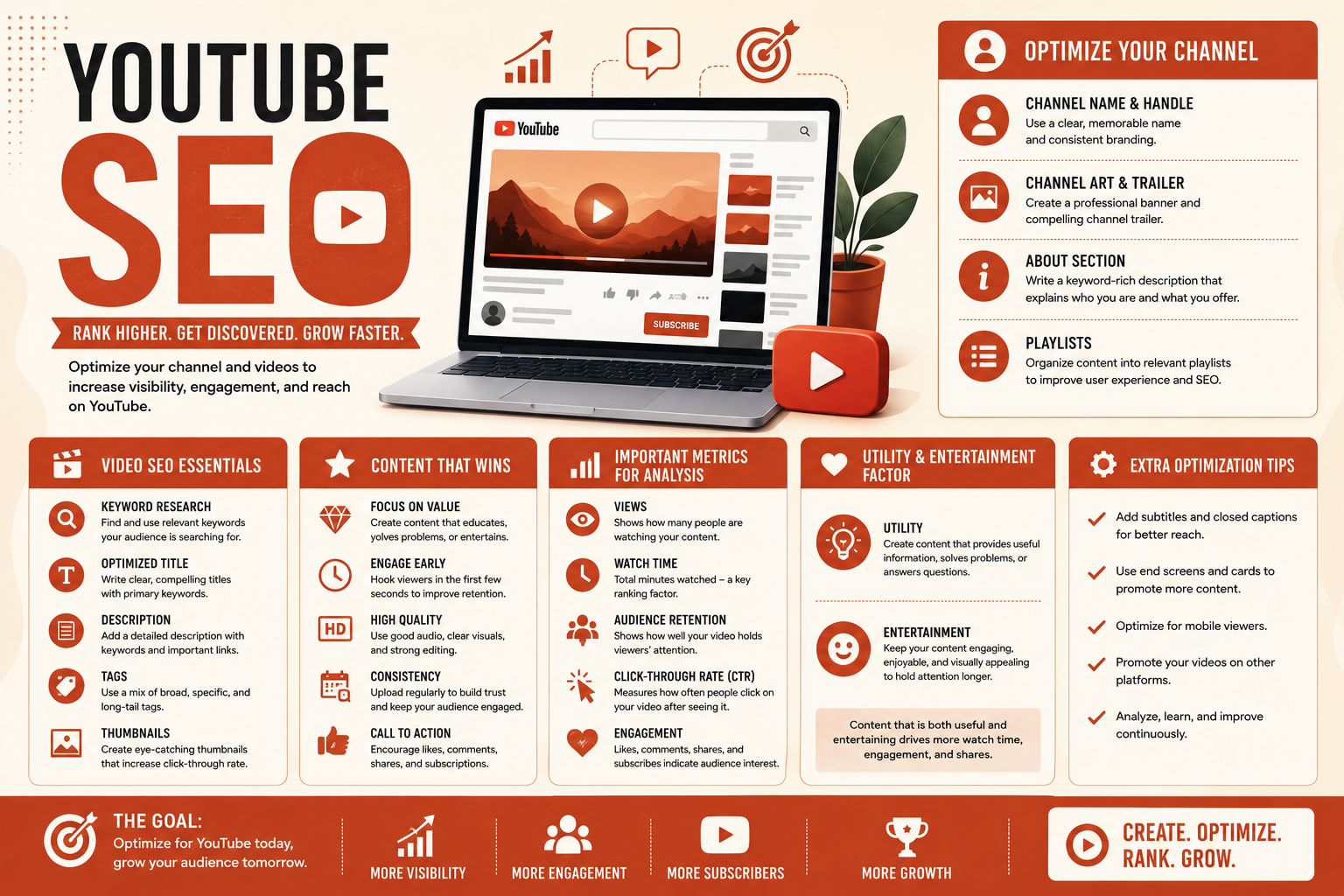
A successful YouTube SEO strategy involves optimizing video titles, descriptions, keywords, thumbnails, content quality, and engagement signals. Understanding audience intent, improving watch time, and analyzing performance metrics help creators create content that attracts and retains viewers. By combining valuable content with consistent optimization, creators can improve visibility, grow subscribers, and achieve long-term channel growth.
Table of Contents
- What Is YouTube SEO?
- How the YouTube Algorithm Works?
- YouTube Channel and Videos Optimization
- YouTube Keyword and Topic Research
- Audience Retention and Engagement
- YouTube Growth and Monetization Strategies
- YouTube SEO Tools, Analytics, and Performance Tracking
- YouTube SEO Checklist
- Conclusion
- Frequently Asked Questions
What Is YouTube SEO?
YouTube SEO is the process of optimizing your YouTube channel and videos so they can be discovered more easily through YouTube search results, recommendations, and other discovery features.
In simple words:
YouTube SEO helps YouTube understand what your videos are about and helps the right viewers find them.
Just like Google uses SEO to rank webpages, YouTube uses optimization signals to decide:
- Which videos appear in search results
- Which videos are recommended
- Which videos reach new audiences
Examples of YouTube SEO include:
- Researching video keywords
- Optimizing titles
- Creating better thumbnails
- Writing useful descriptions
- Improving audience retention
- Organizing your channel
YouTube as a Search Engine and Recommendation Platform
Many people think of YouTube only as a video-sharing platform.
However, YouTube is also one of the largest search engines in the world.
People use YouTube to search for:
- Tutorials
- Reviews
- Product comparisons
- Educational content
- Entertainment
- Solutions to problems
For example:
Someone searching:
“How to create a website”
is actively looking for information.
A creator who optimizes their video around this topic has an opportunity to appear in front of that audience.
YouTube SEO Analogy: Think Like a Publisher
Imagine you are running a magazine.
Publishing a great article is not enough.
You also need:
- A clear headline
- Attractive cover design
- Correct category placement
- Understanding of your readers
YouTube works similarly.
Your:
- Title helps viewers understand the topic
- Thumbnail attracts attention
- Description provides context
- Engagement signals tell YouTube whether viewers enjoy the content
YouTube SEO connects good content with the right audience.
Why Does YouTube SEO Matter?
Millions of videos are uploaded every day.
Without optimization, even high-quality videos may struggle to get discovered.
YouTube SEO helps creators and businesses:
- Increase video visibility
- Reach new viewers
- Grow subscribers
- Build authority
- Generate leads
- Create business opportunities
For businesses, YouTube can become a powerful marketing channel.
A company can create:
- Product demonstrations
- Educational videos
- Customer stories
- Tutorials
and attract people searching for solutions.
How the YouTube Algorithm Works
The YouTube algorithm determines which videos users see.
It does not simply promote videos with the most views.
Instead, it tries to answer:
“Which video is most likely to satisfy this viewer?”
YouTube evaluates different signals to understand viewer interest.
YouTube Search vs Recommended Videos
YouTube discovery mainly happens through two systems:
YouTube Search
Users actively search for topics.
Example:
“best camera for beginners”
YouTube ranks videos based on relevance and quality.
Recommended Videos
YouTube suggests videos based on viewer behavior.
Signals include:
- Previous watch history
- Similar videos watched
- Viewer interests
- Engagement patterns
A video can grow even without ranking first in search if YouTube recommends it to the right viewers.
YouTube Ranking Factors
Important YouTube ranking factors include:
Relevance
Does the video match what the viewer searched for?
Watch Time
How much time do people spend watching the video?
A video watched for longer periods often signals value.
Audience Retention
Do viewers continue watching or leave quickly?
A strong introduction and engaging structure improve retention.
Engagement
Signals include:
- Likes
- Comments
- Shares
- Subscriptions
Engagement shows that viewers found the video valuable.
Utility and Entertainment Factor
YouTube SEO requires creating content that provides value while keeping viewers engaged through useful information, storytelling, or entertainment. Videos that solve problems, answer questions, or capture audience interest are more likely to improve watch time, engagement, and overall visibility.
A video may get many clicks but perform poorly if viewers leave quickly.
YouTube Channel and Videos Optimization
A successful YouTube presence requires optimizing both:
- Your channel
- Individual videos
Channel optimization helps YouTube understand your overall topic.
Video optimization helps individual videos reach viewers.
YouTube Channel Setup and Branding
A professional channel creates trust.
Important elements include:
Channel Name
Your channel name should be:
- Easy to remember
- Relevant to your topic
- Consistent with your brand
Channel Description
The About section should explain:
- What your channel covers
- Who it helps
- What viewers can expect
Example:
“A channel helping small businesses learn SEO, digital marketing, and online growth strategies.”
Channel Organization
Organize videos using:
- Playlists
- Categories
- Featured sections
This improves the viewing experience.
YouTube Keywords
YouTube keywords help the platform understand your content.
Keywords can appear in:
- Titles
- Descriptions
- Video topics
- Spoken content
For example:
A video about SEO tools may naturally include:
- SEO software
- Keyword research tools
- Website optimization
Video Titles
Titles are one of the first things viewers see.
A strong title should:
- Explain the topic
- Include the main keyword naturally
- Create curiosity
Example:
Weak:
“My SEO Tips”
Better:
“10 SEO Tips to Improve Google Rankings”
Thumbnails
Thumbnails influence clicks.
A good thumbnail should:
- Be clear
- Communicate value
- Create curiosity
- Match the video topic
The goal is not clickbait.
The goal is attracting the right viewer.
Video Descriptions
Descriptions help YouTube understand the video.
A useful description can include:
- Video summary
- Important links
- Related resources
- Relevant keywords
Tags and Metadata
Tags are less important than other ranking factors today, but they can still provide context.
Focus should remain on:
- Topic relevance
- Viewer satisfaction
- Content quality
Video SEO Optimization
Video optimization includes improving:
- Titles
- Thumbnails
- Descriptions
- Chapters
- Captions
- Engagement
Together, these improve video discoverability.
YouTube Keyword and Topic Research
Creating videos around the right topics is one of the most important parts of YouTube growth.
A great video idea combines:
- Audience demand
- Search interest
- Your expertise
Finding YouTube Keywords
YouTube keyword research helps identify what people are searching for.
Methods include:
- YouTube search suggestions
- Competitor analysis
- Keyword tools
- Audience questions
Example:
Typing:
“email marketing”
may show:
- Email marketing tutorial
- Email marketing strategy
- Email marketing tools
These suggestions reveal audience interest.
Understanding YouTube Search Intent
Different searches represent different needs.
Example:
“what is SEO”
The viewer wants education.
“best SEO tools”
The viewer wants comparison.
“Semrush tutorial”
The viewer wants guidance.
Understanding intent helps create better videos.
Choosing a YouTube Niche
A niche helps viewers understand why they should subscribe.
Examples:
Instead of:
“Marketing”
A clearer niche:
“Digital marketing tutorials for small businesses”
A focused channel often grows faster because it attracts a specific audience.
Creating a Video Content Strategy
A strong strategy balances:
- Search-based videos
- Educational videos
- Trending topics
- Audience questions
Search videos help discovery.
Community-focused videos help loyalty.
Audience Retention and Engagement
Getting clicks is only the beginning.
Successful YouTube channels keep viewers watching.
Watch Time
Watch time refers to the total amount of time viewers spend watching your videos.
A video with strong watch time signals value.
Audience Retention
Audience retention shows where viewers continue watching or leave.
Improving retention requires:
- Strong openings
- Clear structure
- Avoiding unnecessary introductions
- Delivering value quickly
The First 30 Seconds Matter
Many viewers decide quickly whether to continue.
A strong introduction should:
- Explain what viewers will learn
- Create interest
- Deliver early value
Engagement Signals
Encourage meaningful interaction through:
- Questions
- Discussions
- Comments
A community-focused approach creates stronger audience relationships.
YouTube Growth and Monetization Strategies
Growing on YouTube requires consistency and understanding your audience.
There is no guaranteed shortcut to success.
Long-term growth comes from improving content quality and building relationships.
Content Consistency
A consistent publishing schedule helps:
- Build audience expectations
- Improve learning through experimentation
- Create more opportunities for discovery
Consistency does not mean uploading low-quality content frequently.
Quality remains important.
Community Building
Successful creators build relationships.
Ways to engage include:
- Responding to comments
- Creating community posts
- Asking viewers questions
- Understanding audience feedback
Growing Subscribers
Subscribers usually come when viewers believe future videos will provide value.
Increase subscriptions by:
- Creating consistent topics
- Building trust
- Providing useful content
YouTube Monetization Opportunities
YouTube monetization can include:
YouTube Partner Program
Creators can earn through advertisements after meeting eligibility requirements.
Sponsorships
Brands may pay creators to feature products or services.
Affiliate Marketing
Creators can recommend products and earn commissions.
Business Growth
Businesses can use YouTube to generate:
- Leads
- Brand awareness
- Customer trust
YouTube SEO Tools, Analytics, and Performance Tracking
Analytics help creators understand what works.
YouTube Studio
YouTube Studio provides data about:
- Views
- Watch time
- Audience
- Traffic sources
- Engagement
Important YouTube Metrics for Analysis
Important YouTube metrics help analyze video performance, audience behaviour, and channel growth by tracking factors such as views, watch time, retention, engagement, impressions, and click-through rate.
Monitoring these metrics helps creators understand what content performs well and optimize future videos for better reach and audience engagement.
Click-Through Rate (CTR)
Measures how often people click after seeing your video.
A stronger title and thumbnail can improve CTR.
Watch Time
Shows how much total time viewers spend watching.
Audience Retention
Shows where viewers stay or leave.
Traffic Sources
Shows where viewers discover videos:
- Search
- Suggested videos
- External sources
YouTube SEO Tools
Useful tools include:
TubeBuddy
Helps with:
- Keyword research
- Optimization
- Channel management
VidIQ
Helps analyze:
- Keywords
- Competitors
- Video opportunities
Google Trends
Helps identify topic interest.
YouTube SEO Checklist
Optimizing YouTube channel and videos requires a focus on relevant keywords, engaging titles, compelling thumbnails, quality content, audience retention, and consistent publishing to improve visibility and reach.
Channel Optimization
- Create a clear channel identity so viewers immediately understand your topic and value.
- Optimize your channel name, description, and branding for your target audience.
- Organize videos into playlists to improve viewer navigation.
- Add relevant channel information and links.
- Maintain consistent visual branding across videos.
Video Optimization
- Research topics before creating videos to understand audience demand.
- Use relevant YouTube keywords naturally in titles and descriptions.
- Create clear and compelling video titles.
- Design thumbnails that communicate value quickly.
- Add detailed descriptions that help viewers understand the video.
- Use chapters to improve video navigation.
- Add captions where possible to improve accessibility.
Growth Optimization
- Create content around audience problems and questions.
- Maintain a consistent publishing schedule.
- Analyze retention data and improve future videos.
- Improve your first 30 seconds to reduce viewer drop-off.
- Encourage meaningful engagement.
- Study successful competitors in your niche.
- Experiment with different formats and topics.
- Build relationships with your audience through comments and community features.
Long-Term Strategy
- Track performance regularly through YouTube Analytics.
- Update older videos when information becomes outdated.
- Repurpose successful topics into new content formats.
- Create series-based content to increase returning viewers.
- Focus on audience satisfaction rather than shortcuts.
Conclusion
YouTube SEO is about helping the platform understand your videos and connecting them with the right viewers.
A successful YouTube strategy combines:
- Keyword research
- Video optimization
- Strong thumbnails
- Audience retention
- Engagement
- Consistent improvement
Growing on YouTube is not only about creating more videos.
It is about creating videos that solve problems, keep viewers interested, and build trust over time.
As YouTube continues evolving with AI-powered recommendations and changing viewer behavior, creators and businesses will need to focus even more on understanding audiences and creating valuable experiences.
Frequently Asked Questions
What is YouTube SEO?
YouTube SEO is the process of optimizing YouTube channels and videos so they can rank better in search results and get discovered by more viewers.
How does YouTube SEO work?
YouTube SEO works by improving signals such as video relevance, keywords, titles, thumbnails, watch time, and audience engagement.
How does the YouTube algorithm work?
The YouTube algorithm recommends videos based on viewer behavior, satisfaction, relevance, watch history, and engagement signals.
How do I grow on YouTube?
You can grow on YouTube by choosing a clear niche, creating valuable videos, optimizing content, improving retention, and consistently engaging with your audience.
What are YouTube ranking factors?
Important ranking factors include watch time, audience retention, relevance, engagement, viewer satisfaction, and video optimization.
How do I optimize my YouTube channel?
You can optimize your channel by improving branding, descriptions, playlists, keywords, video organization, and consistency.
What are the best YouTube SEO tools?
Popular YouTube SEO tools include TubeBuddy, VidIQ, Google Trends, and YouTube Studio analytics.
What are YouTube SEO best practices?
Best practices include creating useful videos, researching keywords, optimizing titles and thumbnails, improving retention, and analyzing performance.
What is video optimization?
Video optimization involves improving elements such as titles, descriptions, thumbnails, keywords, structure, and engagement to improve discoverability.
How can I get 1000 subscribers on YouTube fast?
There is no guaranteed shortcut. The best approach is to create valuable content consistently, understand your audience, improve video quality, and build genuine engagement over time.