


Paid advertising is like renting a billboard on the busiest street in a city. You pay for the space, and in return, thousands of people see your message instantly. Unlike organic marketing, which takes time to build momentum, paid advertising lets businesses place their products, services, or ideas directly in front of the right audience, exactly when they want attention.
Every click, impression, or conversion can be measured, making paid advertising one of the most controllable forms of marketing. Whether it’s a small local shop or a global brand, businesses use paid ads to accelerate visibility, attract customers, and achieve results faster than waiting for word-of-mouth alone.
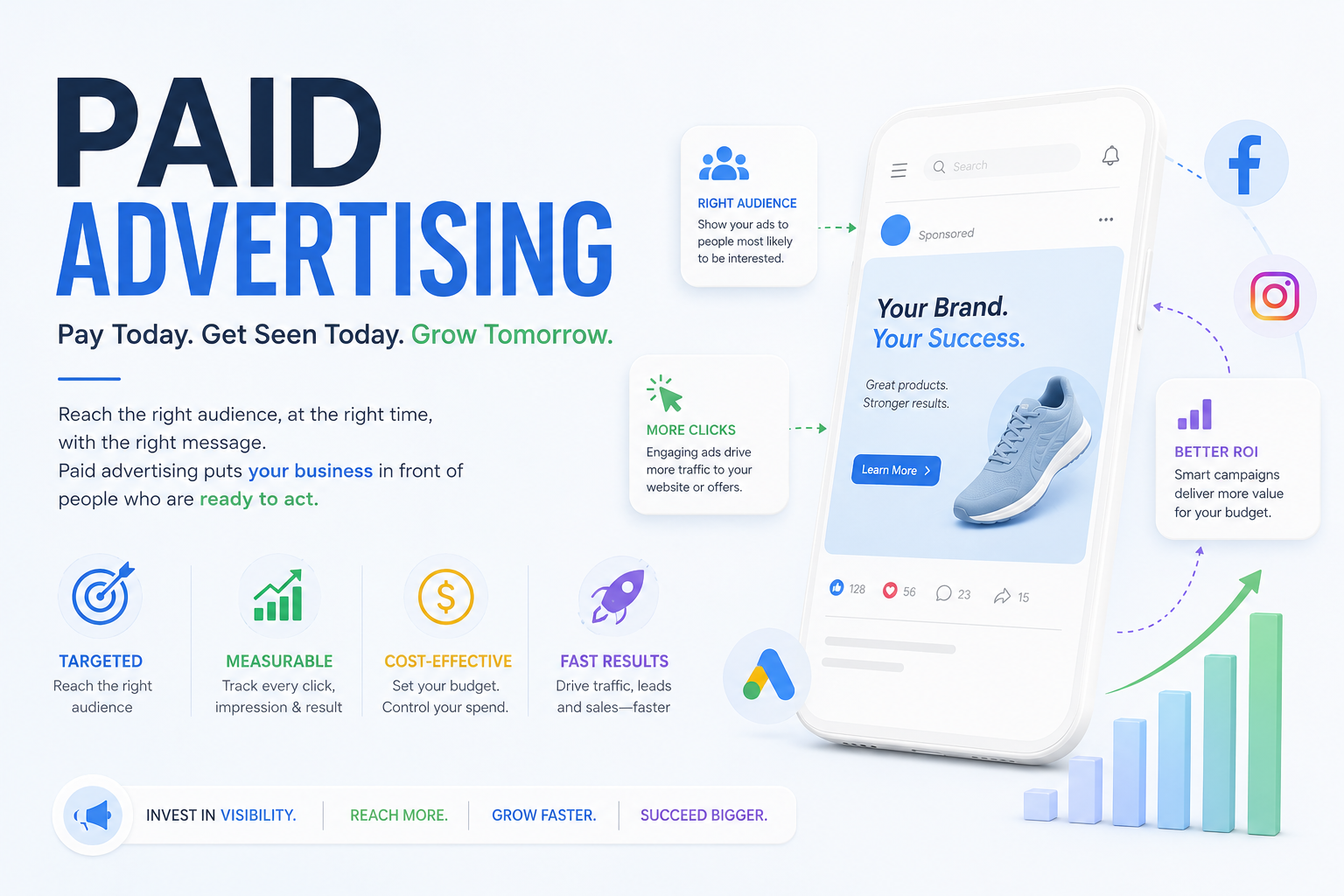
Table of Contents
- What Is Paid Advertising?
- Why Businesses Use Paid Advertising
- How Paid Advertising Works
- Major Advertising Platforms Explained
- Lead Generation and Landing Pages
- Advertising Budgets, ROI, and Metrics
- Common Advertising Mistakes
- Scaling Successful Advertising Campaigns
- Frequently Asked Questions
What Is Paid Advertising?
Paid advertising is the process of paying online platforms to show your business, products, or services to potential customers.
Instead of waiting for people to discover your business naturally, you pay to place your message in front of the right audience.
Every day, businesses compete for attention. Some rely entirely on word-of-mouth, referrals, and organic marketing. Others accelerate growth through advertising.
The simplest way to understand paid advertising is this:
Paid advertising turns money into attention, attention into leads, and leads into revenue.
Imagine opening a restaurant in a large city.
You have two choices.
Option 1: Wait
You hope people discover your restaurant.
Growth is slow.
Option 2: Advertise
You place billboards around the city.
Thousands of people notice your restaurant immediately.
Paid advertising is similar to renting billboards—but much smarter.
Instead of showing your advertisement to everyone, modern advertising platforms try to show it only to people who are most likely to become customers.
That is why businesses of every size use advertising.
From local shops to global brands, advertising helps businesses reach customers faster than organic marketing alone.
Why Businesses Use Paid Advertising
Most businesses face similar challenges:
- Not enough leads
- Slow sales growth
- Limited brand awareness
- Difficulty reaching new customers
- Unpredictable revenue
Paid advertising helps solve these problems.
Faster Visibility
Organic marketing often takes months.
Advertising can generate visibility immediately.
A business can launch a campaign today and begin receiving visitors within hours.
Predictable Lead Generation
Advertising creates a repeatable system.
Instead of hoping customers appear, businesses actively seek them out.
Better Targeting
Traditional advertising often wastes money.
A newspaper ad reaches many people who are not interested.
Online advertising allows businesses to focus on specific audiences.
Easier Scaling
When a campaign becomes profitable, businesses can increase spending to generate more leads and sales.
This makes advertising one of the most powerful growth tools available.
3. How Paid Advertising Works
At first glance, advertising appears simple.
A business creates an ad.
Customers click it.
Sales happen.
In reality, there is a process behind the scenes.
The Basic Flow
Business
↓
Advertisement
↓
Potential Customer
↓
Website or Landing Page
↓
Lead
↓
Customer
↓
Revenue
Advertising platforms act as matchmakers.
They connect businesses with people who may be interested in what they offer.
How Advertising Platforms Find Customers
Advertising platforms collect enormous amounts of information about user behavior.
For example:
- What people search for
- What videos they watch
- What topics they follow
- What websites they visit
- What products they browse
Using this information, platforms attempt to show relevant advertisements.
A fitness equipment company might advertise to people interested in exercise.
A software company might advertise to business professionals.
A local dentist might advertise to people living nearby.
The goal is simple:
Show the right message to the right person at the right time.
When this happens consistently, advertising becomes profitable.
Customer Intent: Understanding When People Buy
One of the most important concepts in advertising is customer intent.
Customer intent refers to how close someone is to making a purchase.
Not every person who sees an advertisement is ready to buy.
Some are simply curious.
Others are actively looking for a solution.
The Intent Journey
Problem
↓
Interest
↓
Research
↓
Comparison
↓
Purchase
Let’s look at an example.
Person A is watching random videos online.
Person B searches:
“Best accounting software for small businesses.”
Which person is more likely to become a customer?
Person B.
Why?
Because they already have a problem and are actively seeking a solution.
This is high intent.
High Intent vs Low Intent
High Intent:
- Searching for products
- Comparing solutions
- Requesting quotes
- Looking for reviews
Low Intent:
- Browsing social media
- Watching entertainment content
- Reading unrelated articles
Understanding intent helps businesses choose the right advertising platform and strategy.\
Customer Journey
Many beginners assume advertising works like this:
Advertisement
↓
Customer
Sometimes it does.
Most of the time, it does not.
Customers usually move through a journey before making a purchase.
Understanding this journey helps businesses create more effective advertising campaigns.
A customer journey is the path people take from discovering a business to becoming customers.
A typical journey looks like this:
Stranger
↓
Sees Advertisement
↓
Visits Website
↓
Learns About Business
↓
Becomes Lead
↓
Evaluates Options
↓
Purchases
↓
Becomes Customer
For expensive products or services, this journey can take weeks or even months.
For low-cost products, it may happen in minutes.
The key lesson is simple:
Most advertisements start conversations rather than close sales.
What Is an Advertising Funnel?
An advertising funnel is a way of visualizing how potential customers move toward a purchase.
Imagine a real funnel.
Many people enter at the top.
Only a smaller number emerge at the bottom.
The same thing happens in advertising.
A Simple Advertising Funnel
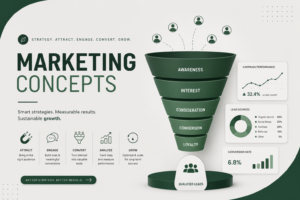
Awareness
↓
Interest
↓
Consideration
↓
Purchase
Awareness: People discover your business. This is often their first interaction with your brand.
Interest: They learn more about your products or services. They may visit your website or social media pages.
Consideration: They compare alternatives. They evaluate pricing, reviews, and features.
Purchase: Some prospects become paying customers. Not everyone completes the journey. That is normal. The goal of advertising is to move as many people as possible through the funnel.
Why Funnels Matter
Consider two businesses.
Business A
Runs advertisements directly to a sales page.
Business B
Runs advertisements to educational content, collects leads, follows up, and nurtures prospects.
Business B often achieves better results because it supports customers throughout their buying journey.
Advertising works best when it matches how people naturally make decisions.
Remarketing: Following Up With Interested Customers
Many customers do not buy during their first visit.
Remarketing helps businesses reconnect with them.
Example:
A person visits an online furniture store.
They browse products.
They leave without purchasing.
Later, advertisements from that furniture store appear while they browse other websites or social media platforms.
This is remarketing.
The process looks like this:
Visitor
↓
Leaves Website
↓
Sees Follow-Up Ads
↓
Returns
↓
Purchases
Remarketing often produces some of the highest returns because it focuses on people who already showed interest.
4. Major Advertising Platforms Explained
Different advertising platforms serve different purposes.
Choosing the right platform is often more important than creating the perfect advertisement.
Google Ads
Google Ads primarily captures existing demand.
People search because they already want something.
Example:
“Emergency plumber near me”
The customer already needs help.
Google Ads is often effective for businesses seeking immediate leads.
Meta Ads
Meta includes platforms such as:
Meta Ads help create demand.
Instead of responding to searches, they introduce products and services to potential customers.
These platforms are excellent for:
- Brand awareness
- Lead generation
- E-commerce
- Local businesses
LinkedIn Ads
LinkedIn specializes in professional audiences.
Businesses use LinkedIn to reach:
- Executives
- Managers
- Business owners
- Decision-makers
It is particularly useful for B2B marketing.
YouTube Ads
YouTube combines education and advertising.
Businesses often use video to:
- Demonstrate products
- Build trust
- Explain solutions
- Generate awareness
Video can be especially powerful for complex products and services.
Display Advertising
Display advertisements appear across websites, apps, and online publications.
They function like digital billboards.
Display advertising is often used for:
- Brand awareness
- Remarketing
- Staying visible during long buying cycles
5 Lead Generation and Landing Pages
Advertising creates attention.
Attention alone does not grow a business.
Businesses need leads.
What Is a Lead?
A lead is a potential customer who has expressed interest in a business.
Examples include:
- Filling out a contact form
- Requesting a quote
- Scheduling a consultation
- Downloading a guide
- Joining an email list
At this stage, the person is not yet a customer.
They are simply showing interest.
The Lead Generation Process
Most lead generation campaigns follow this structure:
Advertisement
↓
Click
↓
Landing Page
↓
Lead Form
↓
Lead
↓
Sales Follow-Up
↓
Customer
Every stage matters.
A weak step can reduce results dramatically.
What Is a Landing Page?
A landing page is a focused webpage designed for a specific advertising campaign.
Unlike a normal website, a landing page has one primary goal.
Examples:
- Book a consultation
- Request a demo
- Download a guide
- Join a webinar
- Get a quote
Think of a website as a shopping mall.
Visitors can explore many different stores.
A landing page is more like a guided sales conversation.
It directs visitors toward a single action.
What Makes a Good Landing Page?
Clear Headline: Visitors should immediately understand what is being offered.
Strong Value Proposition: Explain why the offer is valuable.
Simple Design: Too many choices create confusion.
Trust Signals: Examples include:
- Testimonials
- Reviews
- Case studies
- Certifications
Clear Call to Action: Tell visitors exactly what to do next. Examples:
- Schedule a Call
- Get a Free Quote
- Download the Guide
- Start Free Trial
Why Many Advertising Campaigns Fail
Many businesses blame advertising platforms.
In reality, the problem often lies elsewhere.
Common scenario:
Great Advertisement
↓
User Clicks
↓
Poor Landing Page
↓
No Leads
The advertisement succeeded.
The landing page failed.
Advertising performance depends on the entire system, not just the advertisement.
6. Advertising Budgets and Metrics
One of the most common questions businesses ask is:
“How much money do I need to start advertising?”
The answer depends on:
- Industry
- Competition
- Geography
- Product price
- Customer value
However, many businesses can begin testing with relatively modest budgets.
The goal is not to spend as much as possible.
The goal is to spend profitably.
Thinking About Advertising Like an Investment
Many beginners view advertising as an expense.
Successful businesses often view it as an investment.
Example:
Advertising Spend = ₹10,000
↓
20 Leads
↓
4 Customers
↓
Revenue = ₹40,000
In this scenario, advertising produced more revenue than it cost.
That is the objective.
Important Advertising Metrics
You do not need dozens of metrics.
Focus on a few important numbers.
Leads Generated: How many prospects did the campaign produce?
Cost Per Lead: How much did it cost to generate each lead?
Customers Acquired: How many leads became customers?
Revenue Generated: How much revenue came from the campaign?
Return on Investment (ROI): ROI compares profit to advertising costs.
Simple concept:
Investment
↓
Revenue
↓
Profit
If advertising consistently produces profitable customers, it is working.
Why Conversion Tracking Matters
Without measurement, advertising becomes guesswork.
Businesses need to know:
- Which advertisements generate leads
- Which campaigns generate sales
- Which platforms produce the best results
Conversion tracking provides these answers.
It helps businesses invest more confidently and avoid wasting money.
Starting With a Small Budget
A common mistake is spending large amounts immediately.
A better approach:
Small Budget
↓
Test Campaign
↓
Measure Results
↓
Improve Campaign
↓
Increase Budget
This reduces risk and improves learning.
Advertising is often a process of testing and improvement rather than instant success.
7. Common Advertising Mistakes
Many businesses assume advertising is the problem when campaigns fail.
In reality, poor results are often caused by mistakes in strategy, targeting, messaging, or follow-up.
Avoiding a few common mistakes can dramatically improve results.
Mistake 1: Advertising Without Clear Goals
Some businesses launch campaigns without deciding what success looks like.
Examples of goals include:
- Generate leads
- Increase sales
- Book consultations
- Grow email subscribers
- Build brand awareness
Without a clear objective, it becomes difficult to measure performance.
Always start with the question:
“What action do I want people to take?”
Mistake 2: Targeting Everyone
Many businesses believe:
“Everyone can be my customer.”
In reality, broad targeting usually wastes money.
Imagine selling accounting software.
Showing advertisements to school students is unlikely to produce results.
Showing advertisements to business owners is much more effective.
The more clearly you understand your audience, the more effective your advertising becomes.
Mistake 3: Choosing the Wrong Platform
Different platforms serve different purposes.
For example:
Google Ads: Best when people are actively searching for solutions.
Meta Ads: Best for discovering and engaging potential customers.
LinkedIn Ads: Best for reaching professionals and business decision-makers.
YouTube Ads: Best for education, demonstrations, and brand awareness.
A great advertisement on the wrong platform often performs poorly.
Mistake 4: Weak Advertisements
Many advertisements focus on the business rather than the customer.
Customers care about their own problems.
Instead of saying:
“We are the leading company in our industry.”
Try:
“Reduce your bookkeeping time by 50%.”
Focus on benefits rather than features.
Mistake 5: Poor Landing Pages
Advertising gets visitors.
Landing pages convert visitors into leads.
If visitors arrive on a confusing page, many will leave immediately.
Remember:
Advertisement
↓
Click
↓
Landing Page
↓
Lead
A weak landing page can destroy an otherwise successful campaign.
Mistake 6: Stopping Too Early
Many campaigns need time to gather data.
Some businesses stop advertising after only a few days.
Successful advertisers often test:
- Different audiences
- Different headlines
- Different offers
- Different landing pages
Improvement usually comes through iteration rather than perfection.
Mistake 7: Ignoring Follow-Up
Many leads do not become customers immediately.
Businesses that follow up consistently often outperform competitors.
Example:
Lead
↓
Email
↓
Phone Call
↓
Meeting
↓
Customer
Advertising generates opportunities.
Follow-up converts opportunities into revenue.
8. Scaling Successful Advertising Campaigns
Once an advertising campaign becomes profitable, businesses naturally ask:
“How do I generate more results?”
The answer is scaling.
Scaling means increasing results without destroying profitability.
What Scaling Really Means
Many people think scaling means spending more money.
That is only part of the process.
True scaling looks like this:
Profitable Campaign
↓
More Leads
↓
More Customers
↓
More Revenue
↓
Continued Profitability
The goal is not simply more traffic.
The goal is more profitable growth.
Step 1: Identify Winning Campaigns
Before increasing spending, determine which campaigns already work.
Ask:
- Which ads generate leads?
- Which campaigns generate customers?
- Which platforms produce the highest ROI?
Scale winners.
Do not scale everything.
Step 2: Increase Budget Gradually
Many businesses make a sudden jump in spending.
For example:
₹1,000 per day
↓
₹10,000 per day
This can create problems.
A safer approach is:
₹1,000
↓
₹1,500
↓
₹2,000
↓
₹3,000
Gradual increases allow businesses to maintain control and monitor performance.
Step 3: Improve Conversion Rates
Scaling does not always require more traffic.
Sometimes improving conversions creates better results.
Example:
Current Situation:
1,000 Visitors
↓
20 Leads
Improved Landing Page:
1,000 Visitors
↓
40 Leads
Traffic stayed the same.
Results doubled.
This is often one of the most profitable ways to scale.
Step 4: Expand to New Audiences
Once a campaign succeeds with one audience, businesses can test similar audiences.
Example:
Current Audience:
- Small business owners
Expanded Audience:
- Startups
- Freelancers
- Consultants
- Agencies
New audiences can unlock additional growth opportunities.
Step 5: Expand Across Platforms
A business succeeding on one platform may eventually expand to others.
Example:
Google Ads
↓
Meta Ads
↓
YouTube Ads
↓
LinkedIn Ads
Diversification reduces dependence on a single traffic source.
The Scaling Formula
A simple growth model looks like this:
Better Targeting
+
Better Advertisements
+
Better Landing Pages
+
Better Follow-Up
More Revenue
Most successful advertisers improve the entire system rather than focusing on a single element.
9. Frequently Asked Questions
What is paid advertising?
Paid advertising is the practice of paying online platforms to show advertisements to potential customers in order to generate awareness, leads, and sales.
How does paid advertising work?
Businesses create advertisements and pay platforms to show them to relevant audiences.
When users interact with the advertisement, they may visit a website, submit a lead form, or make a purchase.
Which advertising platform is best?
There is no single best platform.
- Google Ads works well for capturing demand.
- Meta Ads work well for creating demand.
- LinkedIn Ads work well for B2B marketing.
- YouTube Ads work well for education and awareness.
The best choice depends on the audience and business goals.
How much money do I need to start advertising?
Many businesses begin with modest testing budgets.
The goal is not to spend large amounts immediately but to learn what works and scale gradually.
What is a lead?
A lead is a potential customer who has shown interest in a product or service.
Examples include someone requesting a quote, scheduling a consultation, or submitting a contact form.
What is a landing page?
A landing page is a focused webpage designed to encourage visitors to take a specific action, such as booking a call or requesting information.
What is remarketing?
Remarketing involves showing advertisements to people who have already interacted with a business but have not yet become customers.
How long does it take to see results?
Some campaigns generate results quickly, while others require testing and optimization.
Advertising is often an ongoing process rather than a one-time activity.
Why are my ads not generating leads?
Possible reasons include:
- Wrong audience
- Weak offer
- Poor advertisement
- Weak landing page
- Inadequate follow-up
The problem is often the overall system rather than the advertisement itself.
Can small businesses use paid advertising?
Absolutely.
Many local businesses, freelancers, consultants, and startups use advertising successfully to attract customers and grow revenue.
Conclusion
Every business needs customers.
The challenge is finding those customers consistently and efficiently.
Paid advertising helps solve that challenge by placing your business in front of people who are most likely to be interested in what you offer.
The process can be summarized in a simple flow:
Money
↓
Attention
↓
Website Visitors
↓
Leads
↓
Customers
↓
Revenue
That is the fundamental purpose of advertising.
The most successful advertisers understand that advertisements alone do not create growth. Growth comes from combining the right audience, the right message, the right landing page, and the right follow-up process.
Remember the central idea of this guide:
Paid advertising turns money into attention, attention into leads, and leads into revenue.
Businesses that understand this principle can build predictable systems for lead generation, customer acquisition, and long-term growth.