Types of Organic Search Traffic: Segments, Sources, and Insights
Key Takeaways
- Organic search traffic should be segmented because overall visit totals conceal differences in audiences, search behavior, landing pages, and business value.
- Branded and non-branded queries distinguish existing brand awareness from broader discovery through topics, products, problems, or services.
- Landing page, device, location, and new-versus-returning segments reveal which audiences arrive, where they enter, and how they behave.
- Seasonality and attribution limitations require year-over-year comparisons and engagement analysis.
Organic search traffic is often reported as one number, but that number can hide very different types of visitors and search behavior. Ten thousand organic visits may include people searching directly for a brand, first-time visitors discovering a business through non-branded queries, returning readers, mobile users, seasonal shoppers, and visitors entering through very different landing pages.
It is therefore more useful to treat organic search traffic as a collection of segments rather than a single channel metric. Segmentation helps explain where search demand comes from, which pages attract it, who is visiting, and whether that traffic contributes to meaningful business outcomes.
At the same time, marketers need to understand attribution limitations. Not every visit is classified perfectly, and organic search may influence a customer journey even when another channel receives the final conversion credit.
Table of Contents
Understanding Organic Search Traffic
Organic search traffic refers to visits generated through unpaid search results rather than paid search advertisements. In Google Analytics, Organic Search is one of several default channel groups used to classify how users reach a website, alongside channels such as Direct, Referral, Paid Search, Organic Social, and Email. Google explains how Analytics uses rule-based channel definitions to categorize traffic.
A typical organic search journey begins when a user enters a query and clicks an unpaid search result. The user then arrives on the website, where they may continue exploring additional pages, products or services.
However, the analytical value begins after that click is segmented.
Organic Traffic vs. Paid and Direct Traffic
Organic, paid, direct, and referral traffic describe different acquisition paths.
The distinction between organic and paid search is relatively clear because one involves unpaid search results while the other involves advertising. Direct traffic requires more caution.
Google Analytics classifies traffic as (direct) / (none) when it cannot identify another traffic source or referrer. This can include people entering a URL directly, as well as visits affected by missing campaign information, redirects, offline documents, URL shorteners, or certain tracking limitations.
Note
Direct traffic does not always mean that someone manually typed a website address into a browser. If analytics cannot identify where a visitor came from or which campaign generated the visit, the session may be classified as direct traffic.
This is important because channel reports should be interpreted as measurement classifications rather than perfect records of every user’s actual journey.
Why Segment Organic Search Traffic?
Segmentation of organic traffic can answer questions such as:
- Whether growth comes from branded or non-branded queries, which can indicate very different levels of existing brand awareness.
- Which landing pages are attracting new search demand, rather than simply receiving visits from established users.
- Whether mobile and desktop audiences behave differently, particularly when conversions depend on the device experience.
- Which countries or regions generate valuable traffic, rather than assuming that every visit has the same commercial significance.
- Whether a traffic decline reflects seasonality or an SEO problem, which can lead to very different responses.
Segmentation therefore turns traffic volume into information that can guide content, SEO, conversion, and business decisions.
Branded, Non-Branded, New, and Returning Organic Traffic
Two of the most useful organic-search distinctions concern what users search for and whether they have interacted with the website before.
Branded Organic Search Traffic
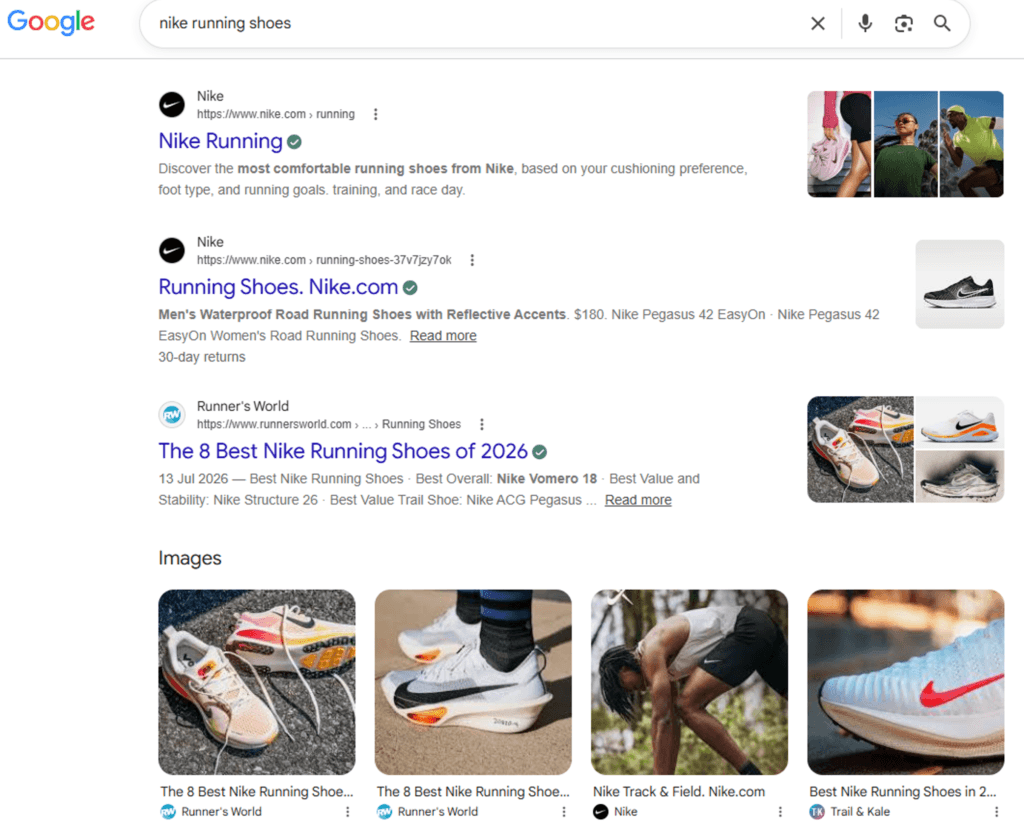
Branded organic traffic comes from searches that include or clearly refer to a particular brand, business, product, or recognized brand variation.
Examples branded searches include:
- “Nike running shoes”
- “Semrush pricing”
These searches often involve people who already know the organization or have encountered it elsewhere.
Google Search Console provides a branded query filter that can separate branded and non-branded Search performance for eligible properties. Google notes that the classifications are informational and may occasionally categorize queries incorrectly.
Non-Branded Organic Search Traffic
Non-branded organic search traffic comes from queries that do not depend on the searcher knowing the brand.
Examples of such queries include:
- “best running shoes for beginners”
- “keyword research tools”
- “how does email marketing work”
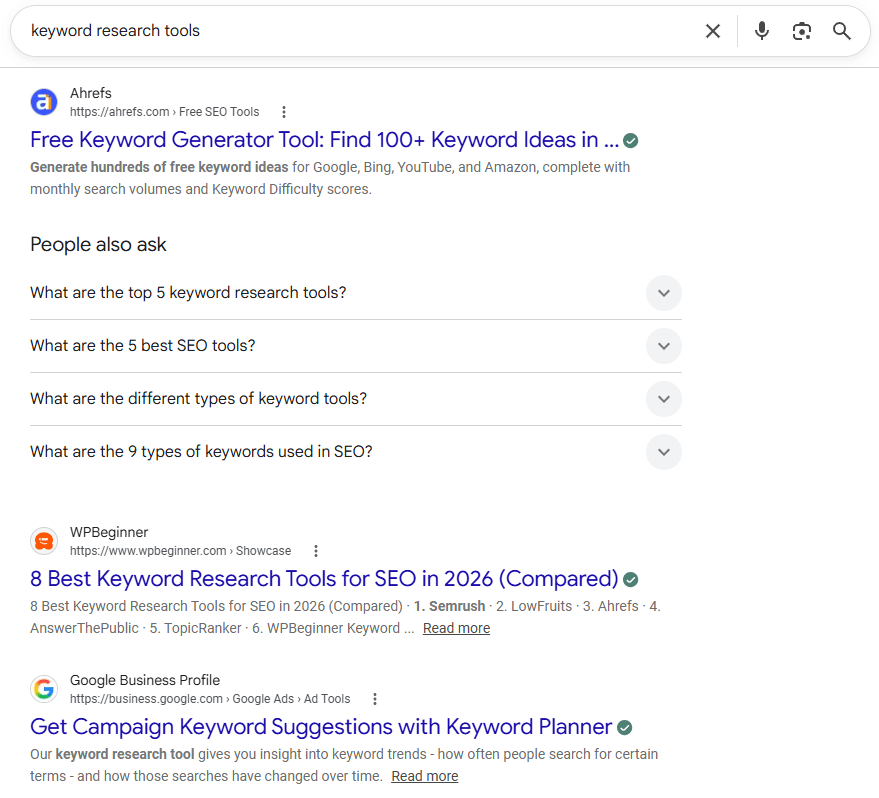
Non-branded search is particularly useful for evaluating whether a website can reach people who are searching for a topic, product, problem, or service rather than for the organization itself.
A company could therefore experience rising organic search traffic without gaining much new discovery if almost all of the increase comes from branded queries.
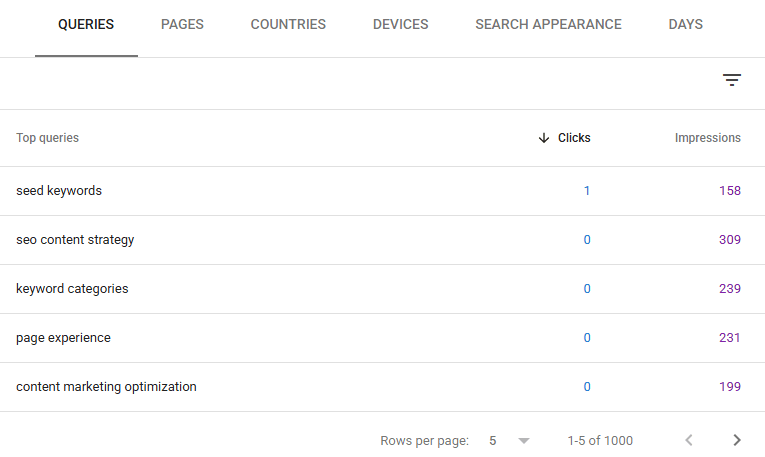
Analyzing Branded and Non-Branded Search
Search Console can filter and compare data by query, page, country, and device, making these segments more useful when combined. For example, a marketer could compare branded mobile searches in the United States with non-branded desktop searches in the same market using its advanced filtering options.
New vs. Returning Organic Visitors
Query type answers what brought the visitor, while new-versus-returning segmentation asks whether the person has visited before.
Google Analytics defines new users as people interacting with a site or app for the first time and returning users as people who have initiated at least one previous session.
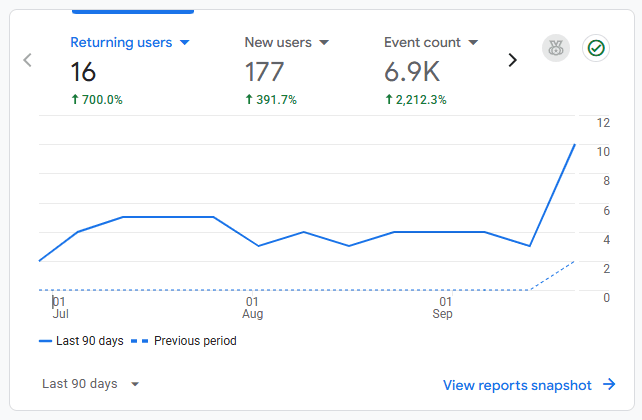
For example, someone who discovers an article through “what is technical SEO” may be a new organic visitor. If that person later searches for another SEO topic and returns through Google, the second organic visit may come from a returning user.
The distinction can reveal whether organic search is primarily acquiring new audiences, re-engaging previous visitors, or doing both.
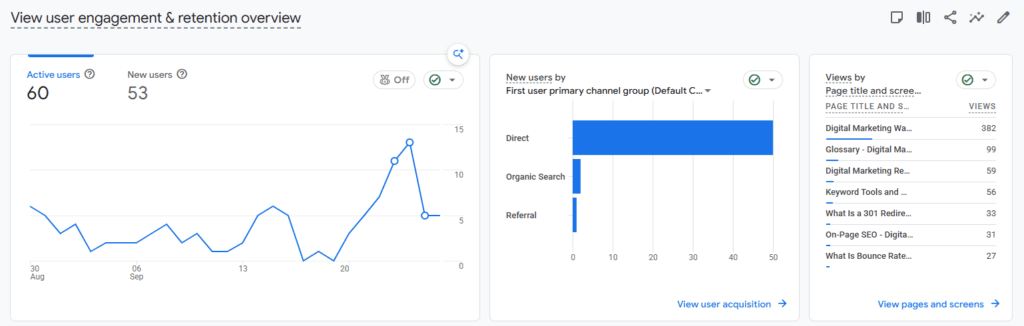
Organic Search Traffic by Landing Page, Device, and Location
Organic traffic can also be segmented according to where users enter the website and the circumstances surrounding the search.
Organic Search Traffic by Landing Page
A landing page is the page where a session begins. Google Analytics defines the landing page dimension as the page path and query string associated with the first pageview of a session. The Landing page report can therefore help identify the pages that start user journeys.
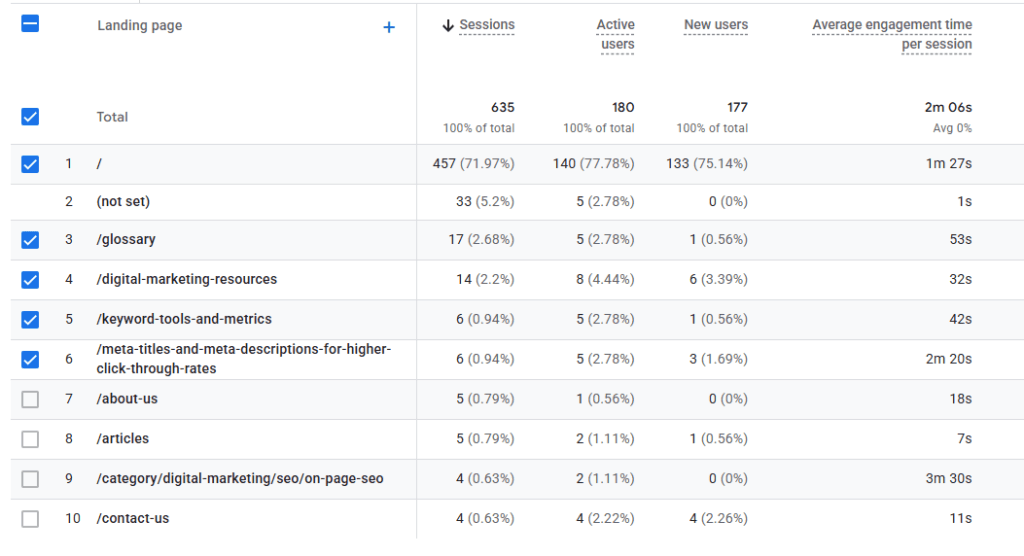
Suppose a website receives 50,000 monthly organic sessions. The total becomes more useful when the marketer discovers that:
- Beginner guides attract most new organic users, suggesting that educational content is functioning as an acquisition channel.
- Product comparison pages generate fewer visits but more key events, indicating stronger commercial intent.
- Several older articles still attract traffic but produce weak engagement, creating opportunities for content updates.
- One landing page accounts for a large share of organic sessions, which may create dependence on a small number of rankings.
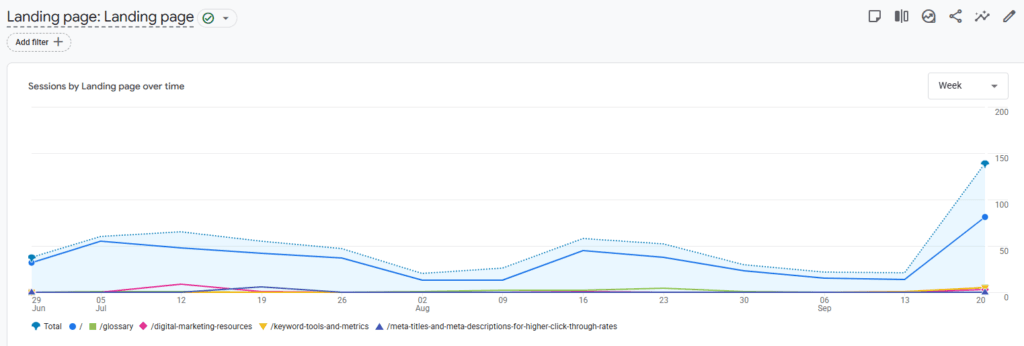
Landing-page segmentation therefore connects search visibility with actual website entry points.
Organic Search Traffic by Device
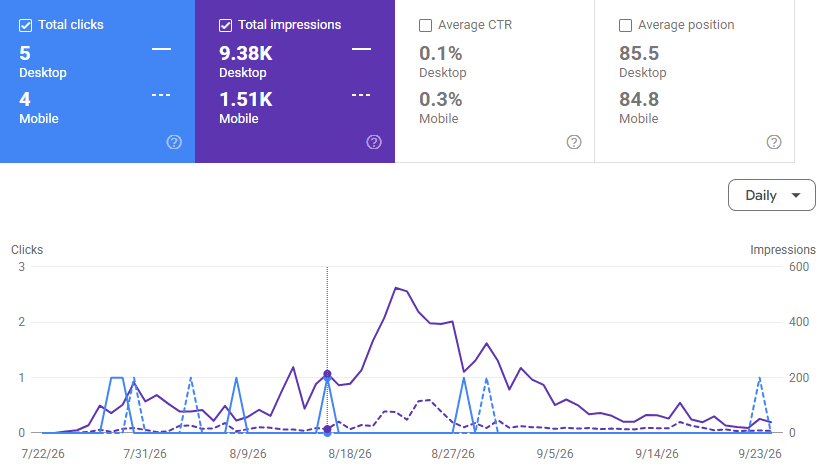
Device behavior can differ substantially. Search Console groups Search data into desktop, mobile, and tablet, allowing marketers to compare clicks, impressions, CTR, and position across device categories through its device dimensions.
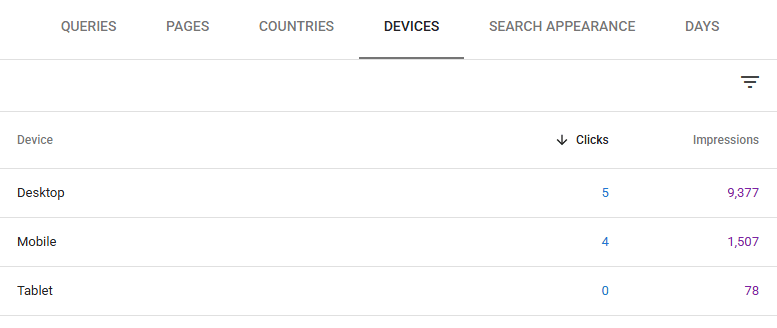
For example, a recipe site may receive most searches on mobile devices, while a complex B2B software comparison could attract a larger desktop share.
Users may also compare impressions and clicks by devices and compare them side-by-side using the compare feature in Google Search Console.
Organic Search Traffic by Location
Location segmentation can reveal where a site’s organic search traffic originates. Search Console groups performance by the country where the search occurred, while Google Analytics can provide country and other geographic dimensions.
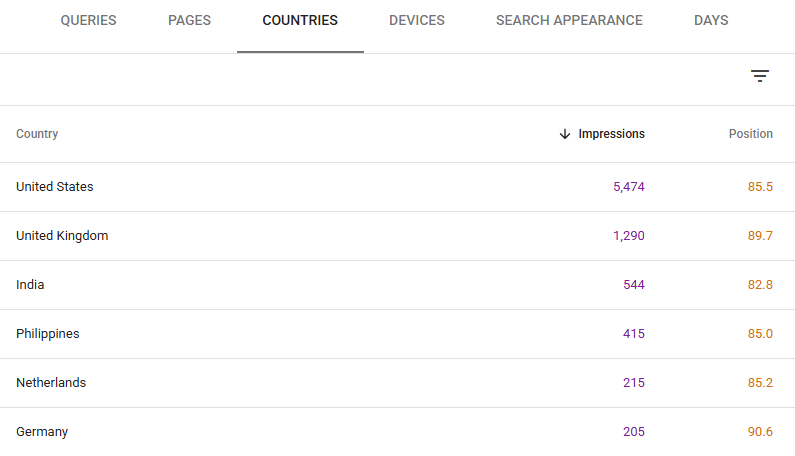
The real analytical value comes from combining these dimensions rather than studying each in isolation.
Traffic Seasonality and Changing Organic Search Patterns
Organic search traffic naturally changes over time. A decline is therefore not automatically evidence that rankings have deteriorated.
What Is Traffic Seasonality?
Traffic seasonality is a recurring pattern in search demand associated with predictable periods, events, weather conditions, buying cycles, holidays, or annual activities.
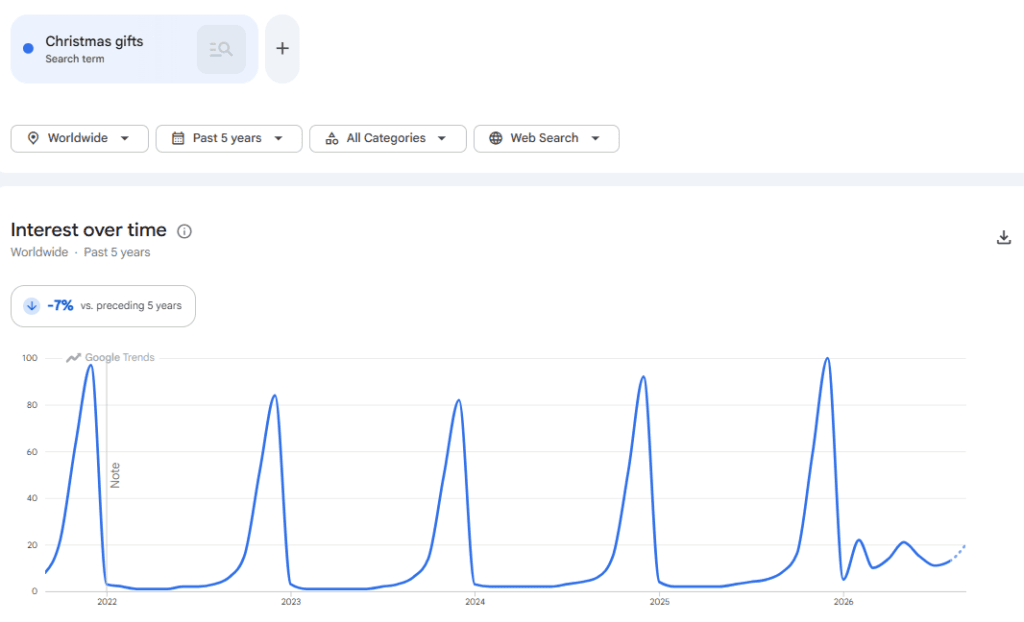
For example:
“Christmas gifts” typically becomes more relevant before Christmas.
“tax filing deadline” rises around tax season.
“school supplies” may increase before a new school year.
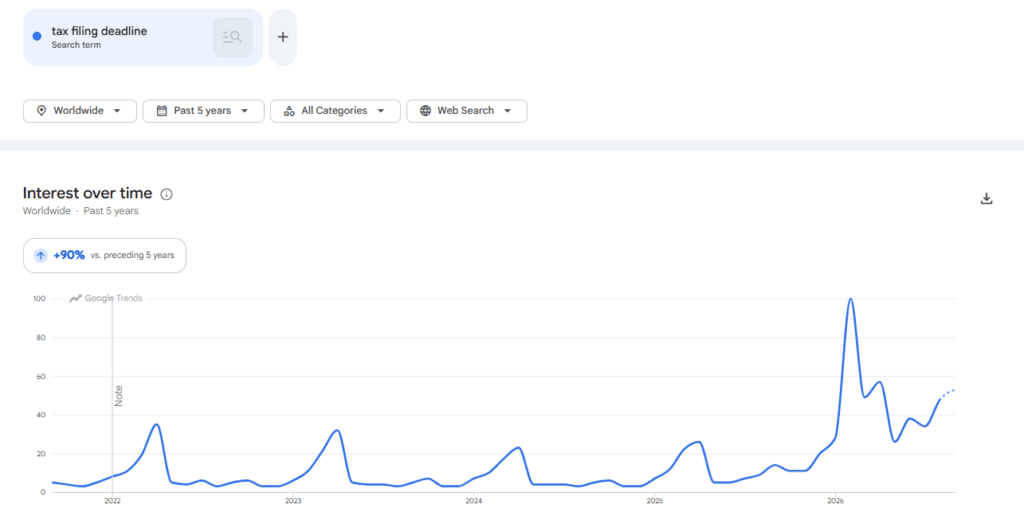
Google explicitly identifies seasonality and changing interests as possible causes of organic search traffic declines. It recommends comparing performance with similar periods and using Google Trends to determine whether demand changed across the wider web.
Seasonal Organic Traffic Patterns
A seasonal pattern becomes easier to identify when several signals agree:
- Clicks and impressions decline at approximately the same time each year, suggesting a recurring demand pattern rather than an isolated ranking problem.
- Google Trends shows falling interest in the same topic, indicating that fewer people may be searching overall.
- Average positions remain relatively stable while impressions fall, which can suggest shrinking demand rather than substantially weaker rankings.
- Comparable pages within the same seasonal category move together, which makes a page-specific technical problem less likely.
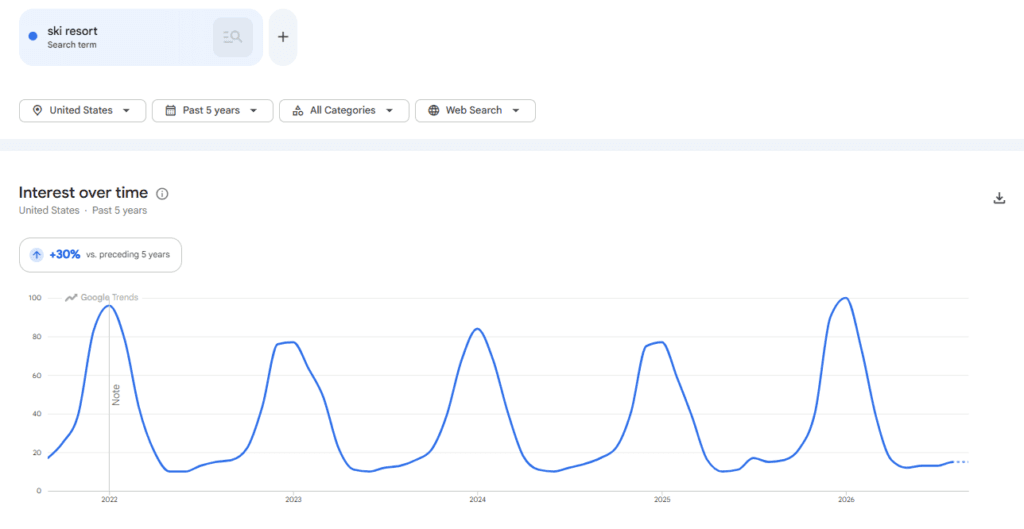
For this reason, year-over-year comparisons are often more informative for seasonal businesses than comparing one month directly with the immediately preceding month.
A ski-resort website, for example, should not interpret lower July traffic than January traffic as an SEO failure without considering normal seasonal demand.
Organic Traffic Attribution and Analysis
Organic traffic segmentation becomes more useful when several dimensions are analyzed together. For example, a marketer could examine new mobile users arriving through non-branded informational searches and compare their behavior with returning desktop users arriving through branded searches on product pages.
Both groups are part of organic traffic, but they represent different audiences, search contexts, and stages of the customer journey.
Organic Traffic Attribution
Organic search can influence a customer journey without being the final interaction before conversion. For example:
In this case, organic search introduced the content, but the eventual conversion may appear under a different source because the referral information was lost.
Another journey might look like this:
Here, email may receive the final conversion credit, even though organic search originally acquired the visitor and contributed to the conversion path.
These examples show why organic search should not be evaluated only by last-click conversions. Attribution analysis can help reveal how organic search contributes to discovery, consideration, and later conversions across several interactions in the customer journey.
Dark Traffic and Dark Social
Dark traffic is not a type of organic search traffic; it describes visits whose true source cannot be identified accurately.
For example, referral information may be lost when someone follows an untagged link from a private message, document, or other difficult-to-measure source, causing the visit to appear as direct traffic. Therefore, an increase in direct traffic does not always represent stronger direct brand demand. When this attribution problem involves private sharing through messaging apps, personal email, or similar channels, it is often described as dark social.
Therefore, a practical organic search traffic review should:
- Measure Search Console clicks and impressions alongside website analytics, because Search Console explains performance in Google Search while Analytics describes what visitors do after arrival.
- Separate branded from non-branded queries, particularly when evaluating audience discovery and SEO growth.
- Compare new and returning users, rather than assuming all organic visits represent new customer acquisition.
- Break traffic down by landing page, device, and location to uncover differences hidden by site-wide totals.
- Compare seasonal periods year over year before interpreting every traffic decline as an SEO problem.
- Review attribution paths and multi-touch attribution reports where available, especially when users commonly interact through several channels before converting.
- Treat direct and dark traffic cautiously, because incomplete attribution can hide the actual source of some visits.
A strong analysis explains who arrived, what they searched for, where they landed, which device they used, where they were located, whether demand was seasonal, and what role organic search played in the wider journey.
Tools for Analyzing Organic Search Traffic
No single tool provides every organic traffic insight. Search Console and GA4 provide first-party data for a website, while SEO platforms can add keyword, competitor, ranking, and market-level context.
- Google Search Console measures Google Search impressions, clicks, CTR, and average position and allows performance to be segmented by queries, pages, countries, devices, and search appearance.
- Google Analytics 4 shows how organic visitors behave after arriving, including acquisition, engagement, users, and conversion-related activity.
- Semrush Organic Rankings analyzes organic keywords, ranking changes, estimated traffic, top pages, and competitors, while Organic Traffic Insights can combine GA4 and Search Console data.
- Ahrefs Site Explorer estimates organic traffic and identifies ranking keywords, top-performing pages, competitors, and historical search trends.
- Moz Pro provides rank tracking, keyword research, competitive analysis, Search Visibility metrics, and site-level SEO monitoring.
- SE Ranking provides competitive organic traffic estimates, keyword rankings, traffic distribution, competitor research, and page-level search insights.
- Similarweb is useful for benchmarking estimated traffic against competitors and comparing organic, paid, branded, non-branded, geographic, and other traffic patterns.
Third-party traffic figures should be treated as estimates rather than replacements for first-party data. For owned websites, Search Console and GA4 should therefore remain the primary measurement sources, while SEO tools are particularly useful for competitive analysis and opportunity discovery.
Frequently Asked Questions
What is organic search traffic?
Organic search traffic consists of visits generated when users click unpaid search engine results.
What is branded organic search traffic?
Branded organic search traffic comes from searches that include or clearly relate to a particular brand or recognized brand variation.
What is non-branded organic traffic?
Non-branded organic traffic comes from searches based on topics, products, problems, or needs rather than a specific brand.
What is the difference between organic and direct traffic?
Organic traffic has an identifiable unpaid search source, while direct traffic generally lacks a clear referral source or is classified as direct by the analytics platform.
Can direct traffic include misattributed visits?
Yes, missing referral or campaign information can cause some visits to be reported as direct even when another source originally generated them.
What is organic search traffic segmentation?
Organic search traffic segmentation divides search visitors into meaningful groups based on characteristics such as queries, landing pages, devices, locations, or user status.
What causes seasonal organic traffic changes?
Seasonal changes occur when search demand rises or falls predictably because of holidays, events, weather, buying cycles, or recurring interests.
What is dark traffic?
Dark traffic describes visits whose actual acquisition source cannot be identified accurately through available analytics data.
What is dark social?
Dark social refers to visits generated through private or difficult-to-measure sharing environments where referral information may be unavailable.
What is an assisted conversion from organic search?
An assisted conversion occurs when organic search contributes to the path toward a conversion even though another touchpoint may receive final credit.
Should organic traffic be analyzed by landing page?
Yes, landing-page analysis helps identify which pages attract search visitors and how those entry points contribute to engagement and conversions.
Why compare mobile and desktop organic traffic?
Device comparison can reveal differences in search demand, visibility, user behavior, and conversion performance between mobile and desktop audiences.