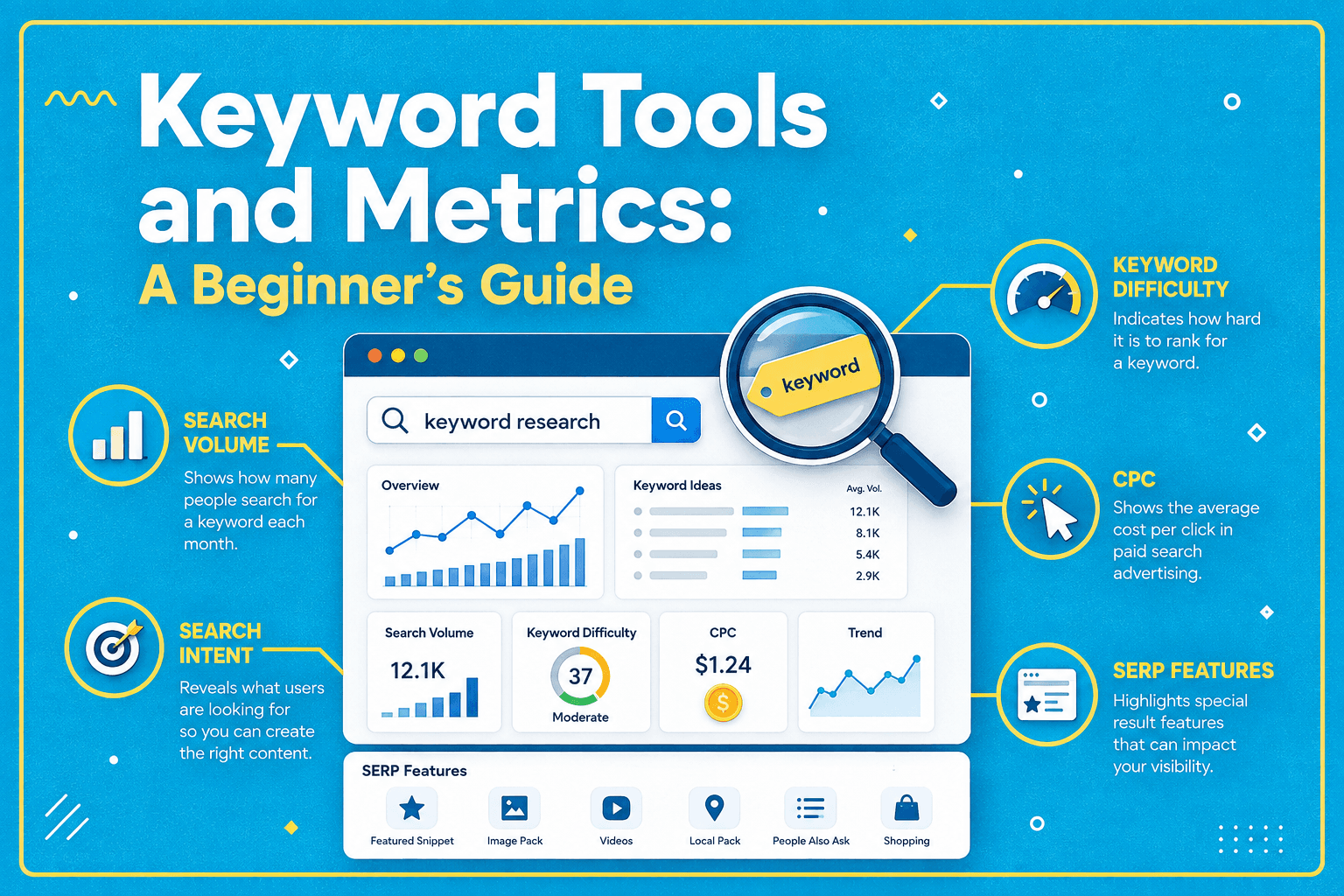
A seed keyword is the starting point of research rather than the final destination of an SEO strategy. Its real value lies in the related topics, questions, clusters and search opportunities it helps uncover.
Used properly, seed keywords can support a logical content architecture and guide the creation of pillar pages, clusters and supporting articles. However, when they are too broad or poorly selected, they may generate large lists of unrelated terms that offer little strategic value.
Ahrefs describes seed keywords as the starting inputs used by keyword tools to unlock larger sets of ideas. It also recommends treating them as broad topics and moving from those broad inputs toward more specific, realistic keywords that a website can target.
Semrush calls seed keywords the foundation of keyword research and advises choosing broad, distinct terms that represent a business’s core offerings. It also recommends expanding those seeds into related terms, long-tail keywords and competitor opportunities before deciding what content to create.
Google Keyword Planner treats the seed as a starting input rather than a final recommendation. Google advises using words or phrases related to the business, then refining the generated ideas for relevance and campaign suitability.
Table of Contents
What are Seed Keywords
Seed keywords are short, broad terms that define the main subject of a business, website or content niche and provide the starting point for keyword research. They are often one or two words long, although some seed keywords may contain slightly longer phrases when a broader term would produce irrelevant results.
In other words, seed keywords capture the basic idea behind what a business offers or what a website covers. A coffee website might begin with seed keywords such as coffee, coffee beans or coffee makers, while an SEO website might use SEO, keywords or backlinks.
At the same time, seed keywords act as the root system of a larger keyword strategy. When they are entered into keyword research tools, they can generate hundreds or thousands of related searches, questions, subtopics and long-tail keywords. For example, the seed keyword coffee makers may lead to more specific phrases such as best espresso machine for beginners, coffee maker with grinder or how to clean a coffee maker.
Seed keywords are not always the final terms a website should target. Their main purpose is to open the research process, reveal important topic areas and support the development of a clear content architecture. This way, they can influence everything from pillar pages and clusters to supporting articles and internal-linking plans.
Why Are They Called “Seed” Keywords?
The term seed keyword is used because one broad idea can grow into many related keywords, questions and content topics. In other words, the seed begins the research process, while the expanded terms become the branches of a larger keyword and content structure.
A simple model is:
Seed keyword → related keywords → grouped topics → individual pages
For example, the seed keyword email marketing may expand into topics such as:
- email campaigns
- email automation
- email platforms
- email subscribers
- email content
- email compliance
- email analytics
- email monetization
Each of these topics can then produce more specific article ideas. For example, email automation may lead to articles about welcome sequences, abandoned-cart emails, lead nurturing and automated campaign workflows.
It is important to note that a seed keyword is not always the best term to target directly. Its main purpose is often to begin discovery, reveal important topic areas and help organize more focused keywords into useful pages.
Seed Keywords, Primary Keywords and Focus Keywords
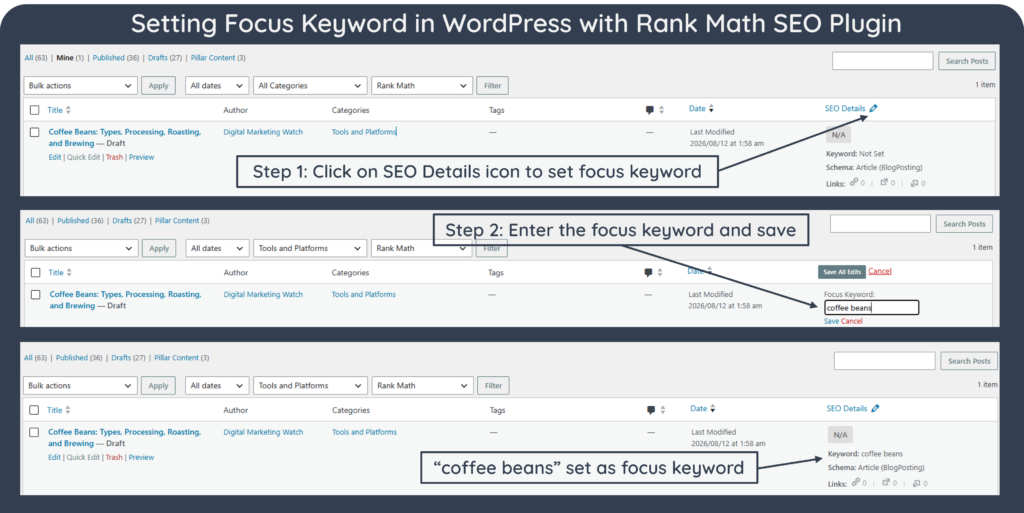
Seed keywords, primary keywords and focus keywords can sometimes use the same phrase, but each term describes a different role within keyword research and page optimization. A seed keyword begins the discovery process, while a primary keyword becomes the main search term targeted by a specific page. Similarly, a focus keyword is the main search term a page is being optimized around. SEO plugins such as Rank Math allow this term to be entered as a focus keyword so that the plugin can perform optimization checks.
| Keyword Type | Main Purpose |
|---|---|
| Seed keyword | Starts the keyword-discovery process |
| Primary keyword | Main search query targeted by a specific page |
| Focus keyword | Keyword entered into an SEO plugin for optimization checks |
| Secondary keywords | Closely related queries supporting the primary topic |
Here are two examples of how seed keywords can be used to develop content around related topics:
Seed Keyword: technical SEO
Article Title: How to Fix Redirect Chains Without Losing Rankings
Primary Keyword: redirect chains
Focus Keyword in Rank Math: redirect chains
Secondary Keywords: redirect loop, 301 redirect chain, how to fix redirect chains
In another case, the seed and primary keyword may be identical:
Seed keyword: keyword research
Article Title: Keyword Research: A Complete Beginner’s Guide
Primary keyword: keyword research
Focus Keyword in Rank Math: keyword research
Secondary Keywords: how to do keyword research, keyword research for SEO, keyword research process
The difference is based on function, not the wording itself. A seed keyword describes how the term is being used during research. A primary keyword describes how it is being used on an individual page.
Finding Seed Keywords
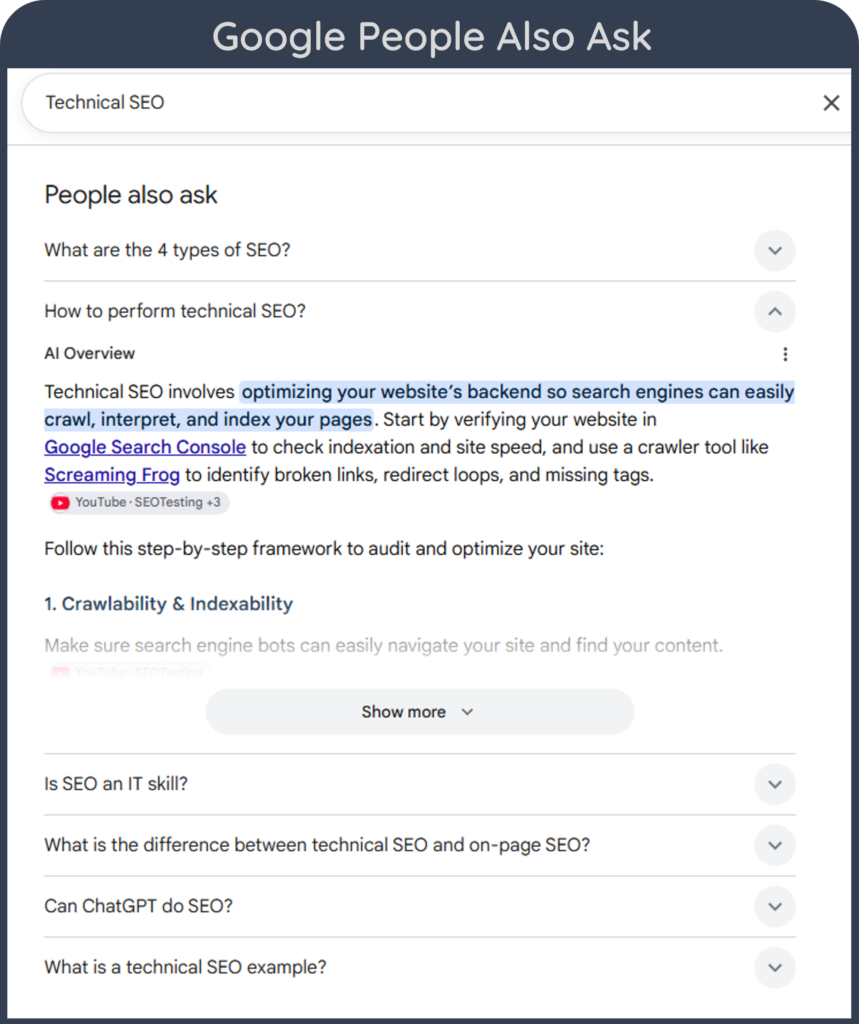
Seed keywords can be identified from your products, services, customer questions, website categories, competitor pages, industry glossaries and existing Search Console queries. You can then expand these starting ideas through Google autocomplete, People Also Ask, Keyword Planner, Ahrefs, Semrush, forums, sales conversations and subject-matter experts.
1. Internal Brainstorming
- Product Descriptions: Look at what the business sells and describe each major offering with a simple, broad term or phrase.
- Customer Vocabulary: Note the words customers naturally use to describe their products, problems and needs.
2. Digital Platforms & Real-World Search Data
- Google Autocomplete: Type your basic niche into Google and look at the immediate, broad suggestions.
- Wikipedia Tables of Contents: Search your industry on Wikipedia to view its subcategories and root concepts.
- Reddit & Quora: Browse popular subreddit titles in your niche to identify core themes.

3. Core SEO Tool Starters
- Seed Entry: Enter the brainstormed terms into tools such as Google Keyword Planner or Ahrefs Free Keyword Generator to uncover related keyword ideas and more specific variations.
Useful sources include:
| Source | What It Can Reveal |
|---|---|
| Your products or services | Core commercial subjects |
| Website navigation | Existing pillars and categories |
| Customer questions | Problem-led and beginner topics |
| Google Search Console | Queries already connected to your site |
| Google Keyword Planner | Related keyword ideas, estimated searches and Google Ads data |
| Google autocomplete | Search predictions and related phrasing |
| People Also Ask | Questions and supporting subtopics |
| Competitor websites | Important industry categories |
| Competitor keyword data | Topics attracting organic traffic |
| Forums and communities | Natural language and recurring problems |
| Sales and support teams | Purchase objections and pain points |
| Industry glossaries | Core concepts and entities |
| Books and course curricula | Logical topic progression |
| Academic and market reports | Emerging and specialist terminology |
A strong seed list usually combines internal knowledge, customer language and external search data.
Use of Seed Keywords
Seed keywords can appear naturally as text or anchor links on the homepage, in navigation menus, and within broad hub or pillar articles that define the website’s main subject areas. They are also used as starting points for keyword research, content planning and building a logical content architecture of pillars, clusters, subclusters and supporting pages.
Where to Use Seed Keywords
Seed keywords are primarily research inputs, but the same phrase may later become a primary keyword when it accurately represents the topic and search intent of a broad hub, pillar or other page.
Important Note: Using Seed Keywords
The term ‘seed keyword’ describes a keyword’s role during research. It is not a special on-page optimization category or placement signal. However, a seed keyword can later become the primary keyword for a broad hub or pillar article when that term accurately represents the page’s main topic. In that case, its appearance in the title, introduction, headings, URL or other important locations follows normal primary-keyword optimization, not a separate rule for seed keywords.
Homepage Copy
Seed keywords can appear naturally in homepage copy to explain what the entire website or business is about. For example, a digital marketing website may mention SEO, paid advertising, social media marketing and email marketing as its main areas of coverage.
Main Navigation Categories
Seed keywords can also help shape main navigation categories because they often represent the website’s broadest subjects. However, menu labels should remain clear and useful for visitors rather than being chosen only for keyword purposes.
Hub and Category URLs
Seed keywords may be used in the URLs of major hubs, pillar pages or category sections. For example:
https://www.example.com/seo
Here’s another example:
https://www.example.com/email-marketing
At the same time, the URL should remain short, readable and consistent with the website’s content structure.
Hub and Pillar Articles
Seed keywords are often most suitable for broad hub or pillar articles because these pages cover a major subject in depth. They may appear naturally in the title, opening paragraphs, important headings and conclusion when they accurately describe the article.
It is important to note that seed keywords should not be forced into every section. In other words, they should support the page’s topic and architecture, while more specific primary and secondary keywords guide individual cluster and supporting articles.
Seed Keywords for Research and Planning
Seed keywords are mainly used during research and planning, not automatically inserted throughout an article.
They can be used in:
- keyword research tools;
- competitor-analysis tools;
- content architecture planning;
- topic maps;
- pillar and cluster development;
- editorial calendars;
- keyword-gap analysis;
- PPC keyword discovery;
- social and marketplace search research.
A seed keyword may eventually become:
- a pillar-page keyword;
- a category name;
- a cluster topic;
- the primary keyword for a broad guide;
- merely a research input that is never directly targeted.
For example, coffee might be an effective seed keyword for discovering thousands of ecommerce queries, but it may be too broad and competitive for a small retailer to target with one page.
It is therefore important not to force the seed keyword into every title, heading or paragraph. Once research is complete, the page should be optimized around its chosen topic and search intent.
Building Content Architecture with Seed Keywords
Semrush specifically notes that seed-keyword research can support the creation of pillar pages and cluster pages, while keyword clustering groups terms with the same or closely related intent so they can be targeted together appropriately.
However, seed keywords should not determine the architecture alone. You must also evaluate search intent, business relevance, audience needs, SERP overlap and whether each topic genuinely deserves a separate page.
Seed keywords are especially useful when planning the structure of a large website because they reveal the major subjects that should sit beneath a broader pillar or content category. For a digital marketing website, the seed keyword SEO may uncover important thematic areas such as:
- Keywords
- Content Optimization
- Search and Traffic
- On-Page SEO
- Off-Page SEO
- Technical SEO
- Local SEO
- YouTube SEO
- Entity SEO
You can then use one of these broader areas as another seed keyword to discover narrower subjects. For example, content optimization may lead to:
- content strategy
- content structure
- content readability
- content formats
- images and videos
- content freshness and lifecycle
- AI-assisted content
- content optimization tools
One possible content hierarchy is:
Hub → Pillar → Cluster → Subcluster → Supporting Article
Internal linking is particularly important because Google analyzes a website’s link structure to understand how pages are connected. It therefore recommends creating a logical site structure and linking important pages from other relevant pages.
The hub should link to its main pillar pages, each pillar should connect to its major clusters, and cluster pages should direct readers to relevant subclusters and supporting articles. At the same time, supporting pages should link back to their parent topics where the connection is useful.
In other words, internal linking turns a collection of separate articles into an organized network of related content. This helps readers move from broad explanations to detailed answers, while also helping search engines understand which pages introduce a subject, which pages cover its major divisions and which articles provide deeper supporting information.
Page titles, H1 headings, breadcrumbs and anchor text should reinforce the same relationships. For example, an article about keyword clustering should clearly indicate that it belongs within the Keywords cluster under SEO. It may also link to a broader guide on keyword research and to closely related articles about search intent, keyword mapping and keyword cannibalization.
Therefore, seed keywords help shape content architecture by:
- identifying broad areas that deserve dedicated sections;
- revealing related concepts that users expect to find together;
- supporting hub, pillar and cluster planning;
- preventing random or disconnected article selection;
- exposing gaps in topical coverage;
- helping organize internal links;
- distinguishing broad master articles from narrower supporting pages.
Seed keywords can therefore act as a blueprint for organizing the website. A simple example might look like this:
Seed keyword: coffee — broad market or website subject
↓
Major subtopic: coffee makers — cluster or pillar page
↓
Specific keyword: best espresso machine — supporting article
The seed keyword helps define the broad market, while the major subtopic groups related content beneath it. More specific keywords can then be assigned to individual supporting articles based on their search intent.
It is important to note that seed keywords do not create an effective architecture by themselves. Their value comes from how they are researched, grouped and connected. Used properly, they can guide the creation of pillar pages, support topic clustering and establish a clean internal-linking structure that makes the website easier for both users and search engine crawlers to navigate.
How to Research Seed Keywords
You do not need complex tools to find seed keywords; they come from foundational industry knowledge. A useful seed keyword should ideally be:
- relevant to the business or website;
- broad enough to generate multiple topics;
- specific enough to avoid mostly irrelevant results;
- distinct from the other seeds in the list;
- expressed in language the audience or industry actually uses;
- connected to a product, problem, goal, concept or audience need.
It is important to avoid beginning with only one extremely broad term. For example, instead of beginning only with the broad term marketing, a digital marketing website might use seeds such as SEO, paid advertising, social media marketing and email marketing.
Similarly, avoid creating dozens of nearly identical seeds, such as:
- keyword tool
- keyword tools
- SEO keyword tool
- keyword research tool
- tools for keyword research
These may all belong to one seed family rather than five distinct starting subjects.
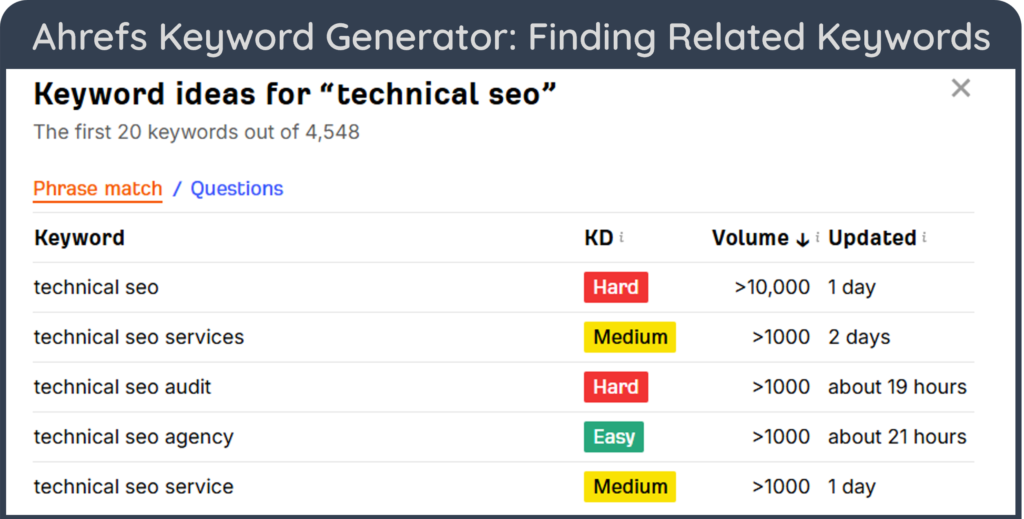
Seed-keyword research should begin with broad ideas and gradually move toward specific topics and search queries. For example, coffee may be the initial seed keyword, coffee makers may emerge as a major subtopic, and best espresso machine for beginners may become a long-tail keyword suitable for a focused article.
1. Start With Your Main Business or Website Topics
Begin by listing the broad subjects your website, business or publication must cover. These should represent important products, services, audience interests or areas of expertise.
For a coffee website, possible starting seeds could include:
- coffee
- coffee beans
- coffee makers
- espresso
- coffee brewing
- coffee recipes
These terms are broad enough to generate many related ideas, although they are still specific to the website’s subject.
A possible progression might be:
Seed keyword: coffee
Subtopic: coffee makers
Long-tail keyword: best espresso machine for beginners
2. List Your Products, Services or Solutions
Consider the products, services or solutions the business provides because each major offering can become a seed keyword.
An online coffee retailer might list:
- whole bean coffee
- ground coffee
- espresso machines
- coffee grinders
- French presses
- coffee subscriptions
Entering coffee grinder into a keyword tool might reveal more focused queries such as:
- best burr coffee grinder
- manual vs electric coffee grinder
- coffee grinder for espresso
- how to clean a coffee grinder
Google recommends beginning Keyword Planner research with words or phrases closely related to the business, product or service rather than using vague terms that may generate irrelevant suggestions.
3. Consider the Customer’s Problems and Goals
People do not always search using the formal name of a product or subject. They may search for a problem they want to solve or an outcome they want to achieve.
For example:
| Product-Led Seed | Problem- or Goal-Led Seed |
|---|---|
| coffee beans | bitter coffee |
| espresso machine | home espresso |
| coffee grinder | coarse coffee grounds |
| cold-brew maker | low-acid coffee |
| milk frother | milk frothing |
A problem such as bitter coffee could uncover supporting articles about water temperature, grind size, brewing time and bean freshness. These natural-language ideas are particularly useful for tutorials, troubleshooting articles and FAQ content.
4. Examine Competitor Websites
Review established websites in the same industry to identify broad topics they consistently cover.
Look at their:
- navigation menus
- product categories
- buying guides
- resource centers
- glossary pages
- recurring article themes
- pages that attract search traffic
For example, several coffee publications may organize their content around beans, brewing methods, equipment, recipes and café culture. These recurring themes can suggest useful seed categories, although you should not copy a competitor’s architecture without evaluating whether it suits your own audience and objectives.
Competitor keyword tools can also reveal terms for which competing websites already rank. Ahrefs recommends reviewing competitor pages and search terms to uncover seed ideas that may not emerge from internal brainstorming alone.
5. Use Your Existing Search Data
Websites already receiving search impressions can use Google Search Console to identify queries for which their pages are appearing in Google Search.
Suppose a coffee blog receives impressions for:
- espresso grind size
- coffee-to-water ratio
- French press brewing time
- light roast vs dark roast
These queries can reveal larger seed areas such as:
- espresso brewing
- coffee measurements
- French press
- coffee roasts
The broader terms can then be entered into keyword tools to uncover additional clusters and long-tail searches. Ahrefs recommends using existing organic-search data as a source of seed ideas because it reflects topics for which the website is already gaining some visibility.
6. Use Keyword-Research Tools
Enter your seed keywords into tools that can expand them into related phrases, questions and keyword clusters.
Useful options include:
- Google Keyword Planner
- Ahrefs Keywords Explorer
- Semrush Keyword Magic Tool
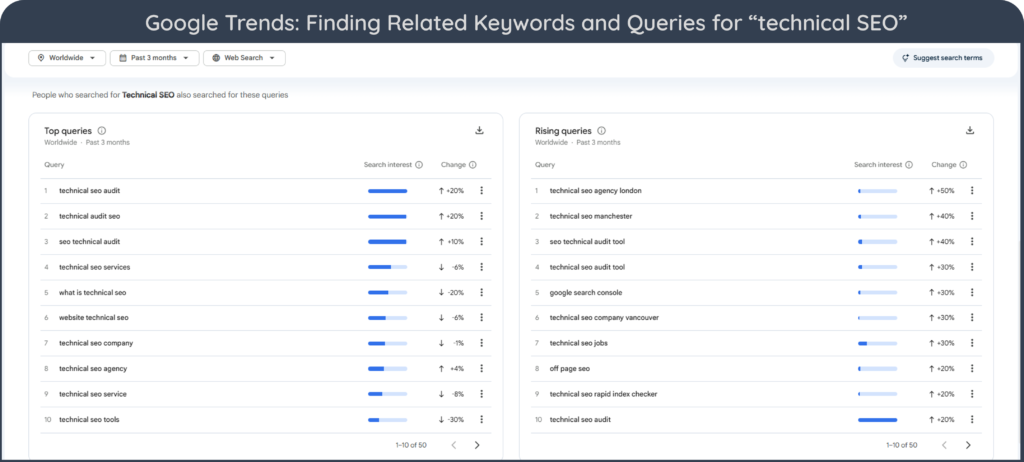
- Google Trends
- Google autocomplete
- People Also Ask
- YouTube search
- Amazon search for product-focused topics
Entering coffee maker may produce terms such as:
- best coffee maker
- single-serve coffee maker
- coffee maker with grinder
- drip coffee maker
- how to clean a coffee maker
You can then evaluate the suggestions according to relevance, search intent, demand, competition and the type of page required.
Google Keyword Planner allows users to enter words, phrases or websites related to a business to discover new keyword ideas and estimated search activity. Ahrefs similarly explains that one or more seed keywords can generate thousands of related suggestions, while Semrush can organize seed-derived terms into topical clusters for content planning.
7. Interview Customers and Subject Experts
Customers, sales teams, support staff and subject-matter experts often use language that keyword tools do not immediately reveal.
A coffee-equipment seller might repeatedly hear questions such as:
- Which coffee machine is easiest to clean?
- Do I need a separate grinder for espresso?
- Why is my espresso watery?
- Which coffee beans work best with a French press?
- Is a pod machine cheaper than an espresso machine?
These questions can produce new seeds such as espresso troubleshooting, coffee-machine maintenance, coffee grinders and coffee-machine comparison.
Similarly, a barista or coffee roaster may identify specialist topics such as extraction, roast profiles, grind consistency and water mineral content. Combining this expert vocabulary with genuine customer language produces a more balanced seed list than relying on keyword-tool data alone.
Example of the Full Research Progression
A single broad seed can develop through several levels:
Seed keyword: coffee
Major topic: coffee equipment
Subtopic: coffee makers
Keyword cluster: espresso machines
Primary keyword: best espresso machine
Long-tail keyword: best espresso machine for beginners
Supporting question: What features should a beginner espresso machine have?
The seed keyword begins the discovery process, but the final article is usually built around the more specific keyword and its search intent. After collecting the ideas, group related terms according to topic, intent and SERP similarity so that each cluster can be assigned to the most appropriate page rather than creating a separate article for every slight keyword variation. Semrush specifically recommends clustering seed-derived keywords into pillar and supporting pages based on shared topic and search intent.
Conclusion
Seed keywords provide the starting point for discovering the topics, questions and search opportunities connected to a business or website. Although they are usually broad and may not always be suitable for direct targeting, they can guide keyword research, content planning and the development of a clear hierarchy of hubs, pillars, clusters and supporting articles.
It is important to use seed keywords strategically rather than treating them as final SEO targets. When they are relevant, distinct and closely connected to audience needs, they can reveal valuable long-tail keywords and content gaps; however, overly broad or repetitive seeds may produce large lists of unrelated terms. Therefore, the real value of a seed keyword lies in what it helps you discover and how effectively those findings are organized into useful webpages.
Frequently Asked Questions
What is the difference between a seed keyword and a focus keyword?
A seed keyword is used at the beginning of keyword research to generate related ideas, while a focus keyword is usually the main phrase entered into an SEO plugin for a specific page. The same phrase can sometimes perform both roles, but their purpose is different.
Is a seed keyword the same as a primary keyword?
Not always. A seed keyword helps uncover possible topics and search terms, whereas a primary keyword is the main query targeted by an individual page. A broad seed such as coffee makers may lead to a primary keyword such as best espresso machine for beginners.
Where should seed keywords be used?
Seed keywords can be used in keyword research tools, content-planning documents and website architecture. They may also appear naturally on homepages, navigation menus, hub pages and pillar articles when they accurately represent the website’s main subject areas.
What tools can be used to find seed keywords?
Useful tools include Google Keyword Planner, Google Trends, Google autocomplete, People Also Ask, Ahrefs Keywords Explorer and Semrush Keyword Magic Tool. Website owners can also find seed ideas through Search Console, competitor websites, forums, customer questions and industry glossaries.
What are some examples of seed keywords?
Examples include SEO, email marketing, coffee makers, Google Ads, running shoes and dental implants. The best seed keywords depend on the business, audience and subject being researched.
How many seed keywords should I start with?
There is no fixed number, but most projects benefit from several broad and distinct seed keywords rather than one extremely general term. Start with the main products, services, problems and topics connected to the website, then remove duplicates and close variations.
Can long-tail keywords be used as seed keywords?
Yes. Although seed keywords are often broad, a longer phrase can be used when a short term produces too many irrelevant suggestions. For example, how to make espresso at home may be a better seed than coffee for a highly focused website or article series.
Do seed keywords improve rankings directly?
Seed keywords do not improve rankings simply because they are added to a page. Their main value lies in helping you discover relevant topics, choose realistic target keywords and build a stronger content structure that can support search visibility over time.