



Search engines have evolved from simply matching keywords to understanding the meaning, context, and relationships behind those keywords. In the early days of SEO, websites could improve rankings by focusing heavily on exact-match keywords and repeating search terms across pages. However, this approach did not always create the best experience because a page could contain keywords without actually answering the user’s question. Modern search engines now use semantic search to understand intent, context, entities, and the connections between different topics.
With semantic search, search engines try to understand what a user is looking for rather than only matching the words they type. For example, a search for “best phone for photography” is not just about finding pages containing those exact words; it is about understanding products, camera features, user needs, comparisons, and recommendations. This shift has made concepts like topical authority, entity optimization, structured data, and helpful content increasingly important.
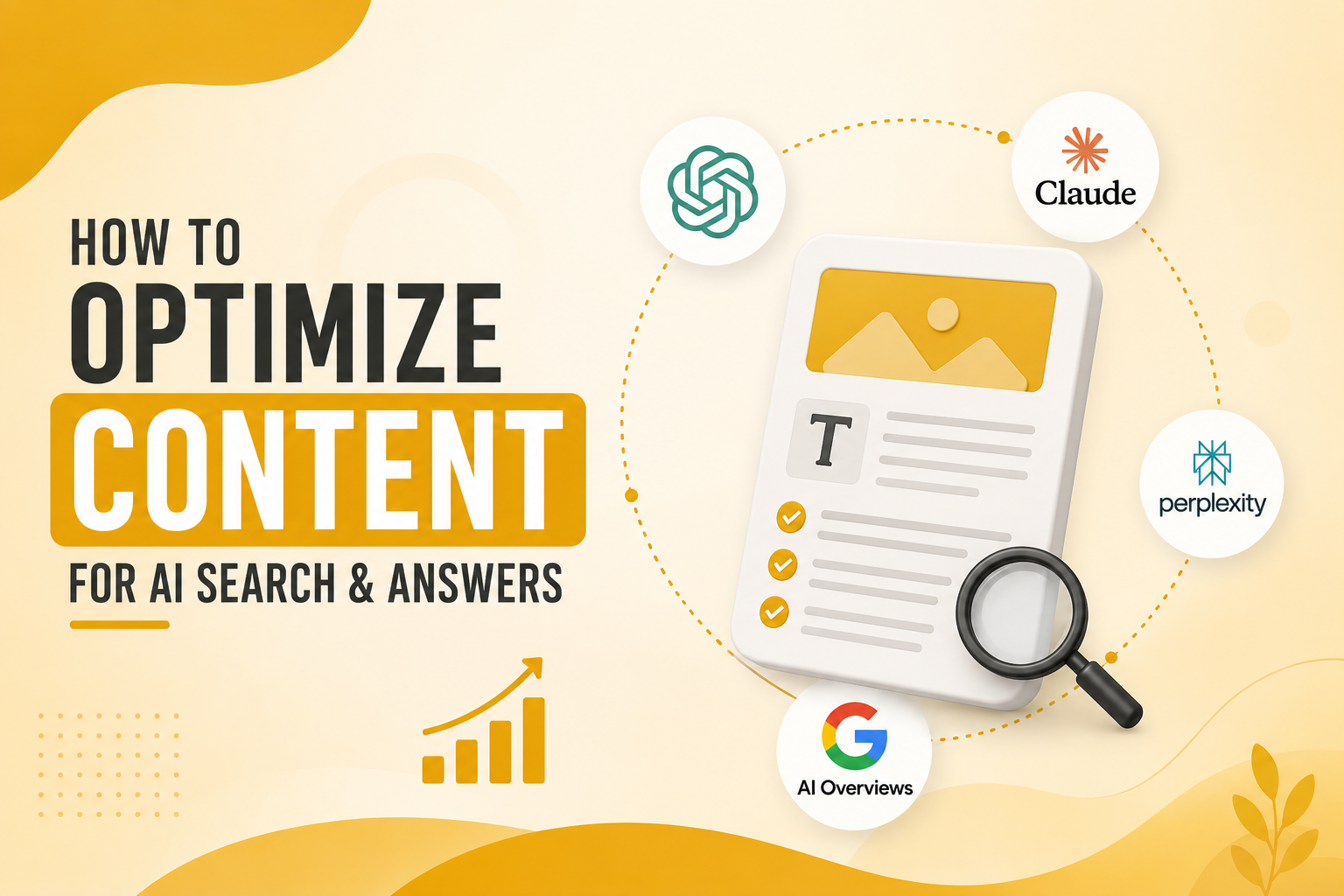
AI-powered search systems are taking this evolution further by generating direct answers instead of only displaying ranked links. Platforms like ChatGPT, Claude, Perplexity, and Google AI Overviews analyze information from multiple sources to provide responses, recommendations, and summaries. As search continues changing, businesses need to optimize not only for rankings but also for being understood, trusted, and referenced by intelligent systems.
Table of Contents
- What Are Generative Engine Optimization (GEO) and AI Search Optimization (AIO)?
- How AI Search Engines Choose and Reference Content
- How to Optimize Content for ChatGPT and AI Assistants
- How to Optimize Content for Claude, Perplexity, and Other Emerging AI Search Systems
- How to Optimize Content for Google AI Overviews and Search Experiences
- AI Search Optimization Tools and Metrics to Measure Success
- Practical AI Search Optimization Checklist
- Conclusion
- Frequently Asked Questions
What are Generative Engine Optimization (GEO) and AI Search Optimization (AIO)?
The way people search for information is changing.
For years, businesses focused on ranking webpages on traditional search engines. The goal was simple:
Appear higher in search results → get clicks → generate traffic.
However, AI-powered search systems are changing how users discover information.
Instead of showing only a list of links, tools like ChatGPT, Claude, Perplexity, Grok, and Google AI Overviews can provide direct answers by combining information from multiple sources.
This creates a new challenge:
How can businesses make their content visible inside AI-generated answers?
This is where Generative Engine Optimization (GEO) and AI Search Optimization (AIO) become important.
What Is Generative Engine Optimization (GEO)?
Generative Engine Optimization is the process of improving content so AI systems can understand, retrieve, reference, and recommend it when generating answers.
In simple words:
GEO helps your content become a useful source for AI-generated responses.
Traditional SEO focuses on:
“Can my page rank in search results?”
GEO focuses on:
“Can my content be understood and used by AI systems when answering questions?”
What Is AI Search Optimization (AIO)?
AI Search Optimization refers to optimizing content for AI-powered search experiences.
It includes improving:
- Content structure
- Authority signals
- Entity understanding
- Answer clarity
- Source credibility
- Information accessibility
The goal is not only visibility in rankings but visibility in AI responses.
GEO and SEO: Different but Connected
GEO does not replace SEO.
Search engines and AI systems still rely on many traditional signals, including:
- Helpful content
- Technical accessibility
- Authority
- Trust
- Relevance
Strong SEO foundations often support better AI visibility.
The difference is that AI systems focus more on:
- Understanding context
- Extracting useful information
- Connecting concepts
- Providing complete answers
How AI Search Engines Choose and Reference Content
AI search systems do not simply copy the first page ranking on Google.
They evaluate information based on multiple signals.
A simplified process looks like:
User Question → AI Understanding → Information Retrieval → Source Selection → Generated Answer
How AI Systems Find Information
AI-powered search systems may use:
- Existing knowledge
- Web sources
- Search indexes
- Retrieved documents
They analyze information to determine:
- Is this source relevant?
- Is the information trustworthy?
- Does it answer the question?
- Is the content clear enough to reference?
Why Some Content Gets Referenced While Others Do Not
AI systems are more likely to use content that has:
Clear Answers
Content that directly answers questions is easier to use.
Example:
Instead of:
“Many businesses struggle with digital growth.”
Better:
“Digital marketing helps businesses attract customers through search, social media, email, and paid advertising.”
Strong Context
AI systems need to understand what a page represents.
Clear explanations, definitions, and examples help.
Authority Signals
Trust signals include:
- Expert authors
- Brand mentions
- Industry recognition
- Reliable references
Structured Information
Well-organized content is easier to extract.
This includes:
- Clear headings
- Short explanations
- Lists
- Tables
- FAQs
How to Optimize Content for ChatGPT and AI Assistants
ChatGPT and similar AI assistants aim to provide useful answers rather than just search results.
To improve visibility, content should be created around answering real user needs.
Create Answer-Focused Content
AI systems prefer content that provides direct answers.
Instead of writing only broad explanations, include:
- Definitions
- Step-by-step processes
- Examples
- Comparisons
- Practical recommendations
Example:
Question:
“What is technical SEO?”
Weak:
A long introduction without a clear definition.
Better:
“Technical SEO is the process of improving a website’s technical foundation so search engines can crawl, index, and rank its pages effectively.”
Structure Content for AI Extraction
AI systems often need to identify specific pieces of information.
Make content easier to extract by using:
- Clear headings
- Question-based sections
- Short paragraphs
- Lists
- Definitions
A well-structured article helps both humans and AI systems understand information.
Use Clear Entity Signals
AI systems need to understand people, brands, products, and concepts.
For example:
Instead of mentioning:
“the company”
repeatedly, clearly mention:
“Microsoft”
and explain relevant context.
Entity clarity helps AI connect information correctly.
Build Topical Authority
AI systems prefer sources that demonstrate expertise.
A website covering a topic comprehensively has stronger signals than one publishing isolated articles.
Example:
A digital marketing website should cover:
- SEO
- Content marketing
- Email marketing
- PPC
- Analytics
This creates stronger topic relationships.
How to Optimize Content for Claude, Perplexity, and Other Emerging AI Search Systems
Different AI systems may have different methods, but many optimization principles remain similar.
The focus is creating content that is:
- Reliable
- Easy to understand
- Well-structured
- Easy to reference
AI Brand Mentions: Building Recognition Across the Web
AI systems do not only look at your website.
They also consider broader online presence.
Brand mentions from:
- Industry websites
- Publications
- Reviews
- Communities
- Expert discussions
can strengthen brand recognition.
For example:
A marketing company mentioned across trusted marketing websites creates stronger signals than a company with only its own website.
AI Citations and Source Referencing
AI systems often provide citations or references to support answers.
Content is more likely to be referenced when it provides:
- Accurate information
- Original insights
- Clear explanations
- Supporting evidence
Examples of citation-friendly content:
- Research studies
- Expert opinions
- Detailed guides
- Industry data
- Original analysis
Content Extraction: Making Information Easy for AI Systems
AI systems need to identify useful information quickly.
Improve content extraction by:
- Placing important answers near the beginning
- Using descriptive headings
- Avoiding unnecessary complexity
- Creating clear sections
For example:
A section titled:
“What Are Core Web Vitals?”
is easier to understand than:
“Important Website Performance Considerations.”
Conversational and Semantic Optimization
People ask AI systems questions naturally.
Instead of:
“SEO services”
users may ask:
“How can I improve my website rankings?”
Create content that answers natural questions.
How to Optimize Content for Google AI Overviews and Search Experiences
Google AI Overviews combine search results with AI-generated summaries.
Strong SEO remains important because Google still evaluates:
- Relevance
- Quality
- Trust
- Website experience
Optimize for Search Intent
Understand what users actually want.
Example:
Search:
“best CRM software”
Users likely want:
- Comparisons
- Features
- Pricing
- Recommendations
Not just a definition.
Create Helpful, Comprehensive Content
AI Overviews are more likely to use content that:
- Answers questions clearly
- Provides useful information
- Covers topics completely
Improve Structured Content
Use:
- Clear headings
- Lists
- Tables
- FAQs
- Step-by-step explanations
This improves understanding for both users and systems.
Support Featured Snippets and AI Visibility
Content that directly answers questions has a better chance of being highlighted.
Examples:
- Definitions
- How-to steps
- Comparisons
- Short explanations
AI Search Optimization Tools and Metrics to Measure Success
AI search visibility is still developing, but businesses can monitor several signals.
AI Visibility Tracking
Monitor:
- Whether your brand appears in AI answers
- Which topics trigger mentions
- Which competitors appear frequently
Content Performance Metrics
Important metrics include:
- Organic traffic
- Impressions
- Rankings
- Brand searches
- Referral traffic
Useful Tools
Some helpful tools include:
Google Search Console
Useful for monitoring:
- Search performance
- Queries
- Visibility
Semrush and Ahrefs
Useful for:
- Keyword research
- Competitor analysis
- Content opportunities
Brand Monitoring Tools
Useful for tracking:
- Mentions
- Reputation
- Online presence
Practical AI Search Optimization Checklist
- Create content that directly answers user questions instead of only targeting keywords.
- Add clear definitions and explanations for important concepts.
- Organize articles using descriptive headings and logical sections.
- Use examples to make concepts easier for AI systems and users to understand.
- Build topic clusters around important subjects.
- Strengthen entity signals by clearly explaining brands, people, products, and concepts.
- Add author information and expertise signals where relevant.
- Include original insights, examples, research, or experiences.
- Improve content readability with short paragraphs and structured formatting.
- Use FAQs to answer common user questions.
- Maintain accurate information across websites and external platforms.
- Build brand mentions through partnerships, publications, and industry discussions.
- Create content that provides value beyond basic summaries.
- Keep important answers easy to find within content.
- Update content regularly to maintain accuracy.
- Improve technical SEO so AI systems and search engines can access content.
- Use structured data where appropriate.
- Monitor brand visibility across AI search experiences.
- Analyze competitor visibility and content strategies.
- Continue improving content based on user behavior and search changes.
Conclusion
AI search is changing how people discover information online.
The future of visibility is not only about ranking webpages but also about becoming a trusted source that AI systems can understand, reference, and recommend.
Optimizing for ChatGPT, Claude, Perplexity, Grok, and Google AI Overviews requires a combination of:
- Strong SEO foundations
- Clear content structure
- Entity optimization
- Authority signals
- Helpful answers
- Trustworthy information
GEO and AI Search Optimization are not replacements for SEO. They represent the next stage of search, where businesses need to optimize for both human users and intelligent systems.
Frequently Asked Questions
What is Generative Engine Optimization?
Generative Engine Optimization is the process of optimizing content so AI systems can understand, retrieve, and reference it when generating answers.
What is AI Search Optimization?
AI Search Optimization focuses on improving content visibility across AI-powered search experiences by improving structure, authority, relevance, and accessibility.
How do I optimize content for ChatGPT?
Optimize content for ChatGPT by creating clear answers, using structured formatting, building authority, explaining concepts deeply, and making information easy to extract.
How do I optimize content for Google AI Overviews?
Optimize content for Google AI Overviews by following strong SEO practices, answering search intent clearly, improving content quality, and creating well-structured information.
Will GEO replace SEO?
No. GEO is an evolution of search optimization. SEO remains important because AI systems still depend on accessible, trustworthy, and relevant information.
Which is better: SEO or GEO?
SEO and GEO serve different purposes. SEO improves visibility in traditional search results, while GEO focuses on visibility in AI-generated answers. A strong strategy combines both.
How do AI systems decide which content to cite?
AI systems generally consider factors such as relevance, authority, clarity, trust signals, and how easily information can be understood and referenced.
How can brands improve AI visibility?
Brands can improve AI visibility by building authority, earning mentions, creating high-quality content, strengthening entity signals, and maintaining consistent information online.
What are GEO optimization tools?
GEO optimization tools help monitor AI visibility, content performance, brand mentions, and search presence across AI-driven platforms.
How do I rank in AI search results?
To improve AI search visibility, create useful content, build authority, organize information clearly, optimize entities, and focus on providing accurate answers to user questions.