
Key Takeaways
- A ranking signal is information a search engine may evaluate to judge a webpage’s relevance, usefulness, or appropriateness for a query.
- Search engines combine many signals and ranking systems, so no single signal determines a page’s position or guarantees improved rankings.
- Ranking factors broadly describe potential influences, ranking signals provide evaluable information, and ranking systems process those inputs to rank results.
- Signals may relate to relevance, content quality, links, page experience, freshness, context, spam, and trust, with importance varying by query.
A ranking signal is a piece of information that a search engine may use when evaluating how relevant, useful, or appropriate a webpage is for a search query. Search engines combine many signals and ranking systems rather than relying on one factor alone. Examples can include relevance, content quality, link-related signals, page experience, and freshness.
A ranking signal can be thought of as one piece of evidence considered by a larger evaluation system. Some signals may matter more for particular queries or situations, while others may have little or no effect.
While Google does not publish a complete public checklist of its exact algorithmic metrics, an unprecedented internal Google API documentation leak in May 2024 revealed more than 14,000 documented API attributes and internal features associated with Google’s Search systems. The documentation included references to click-related data, historical page modifications, link-related attributes, and fields such as goodClicks and badClicks. However, the documentation did not reveal a complete ranking formula, and the presence of an attribute does not prove that it is currently used as a ranking signal or show how much weight it receives.
More importantly, Google does not publish a complete formula or weighting for its ranking systems. Instead, it publicly explains many of them through broader systems, factors, and quality concepts such as relevance, helpfulness, reliability, and page experience.
Ranking Factors, Ranking Signals, and Ranking Systems
A ranking factor is a broad SEO term for something that can influence where a webpage appears in search results. For example, links, relevance, and page experience may be discussed as ranking factors.
A ranking signal is the actual information or input that a search engine can evaluate when ranking results. For example, Google has described HTTPS as a lightweight ranking signal. In SEO discussions, the terms ranking factor and ranking signal are often used interchangeably.
A ranking system is different. It is a broader algorithmic system or technology that processes information and signals to help evaluate and rank search results. For example, PageRank is a ranking system that analyzes links between pages.
The key distinction: A factor describes what may influence rankings, a signal is information the search engine can evaluate, and a system is the mechanism that processes information to help rank results.
Types of Ranking Signals
For beginners, ranking signals can be grouped into several broad categories based on the type of information they relate to. These categories are explanatory rather than an official Google classification.
- Relevance Signals: Help determine whether a page matches the meaning and intent of a query.
- Content Quality Signals: May help systems identify useful, original, reliable, and user-focused content.
- Link Signals: Links can help search engines understand relationships, reputation, and importance between pages.
- Page Experience Signals: Elements such as loading performance, responsiveness, and secure connections can contribute to the overall search experience.
- Freshness Signals: For queries where recency matters, newer or recently updated information may be more useful.
- Location and Context Signals: Search results can vary according to factors such as location, language, device, and query context.
- Spam and Trust Signals: Search systems also use signals designed to detect manipulation, spam, harmful content, and unreliable information.

How Search Engines Use Ranking Signals
When a user enters a query, a search engine first tries to understand what the search means and what type of information the user is looking for. It then evaluates pages in its index using multiple ranking systems and signals to identify results that appear most relevant and useful.
Google publicly describes ranking systems such as BERT, neural matching, RankBrain, PageRank, freshness systems, original-content systems, reliable-information systems, and spam-detection systems. Different systems may matter more or less depending on the query.
The exact combination and weighting of signals are not publicly disclosed. Rankings are therefore better understood as the result of many interacting systems rather than a simple checklist or fixed formula.
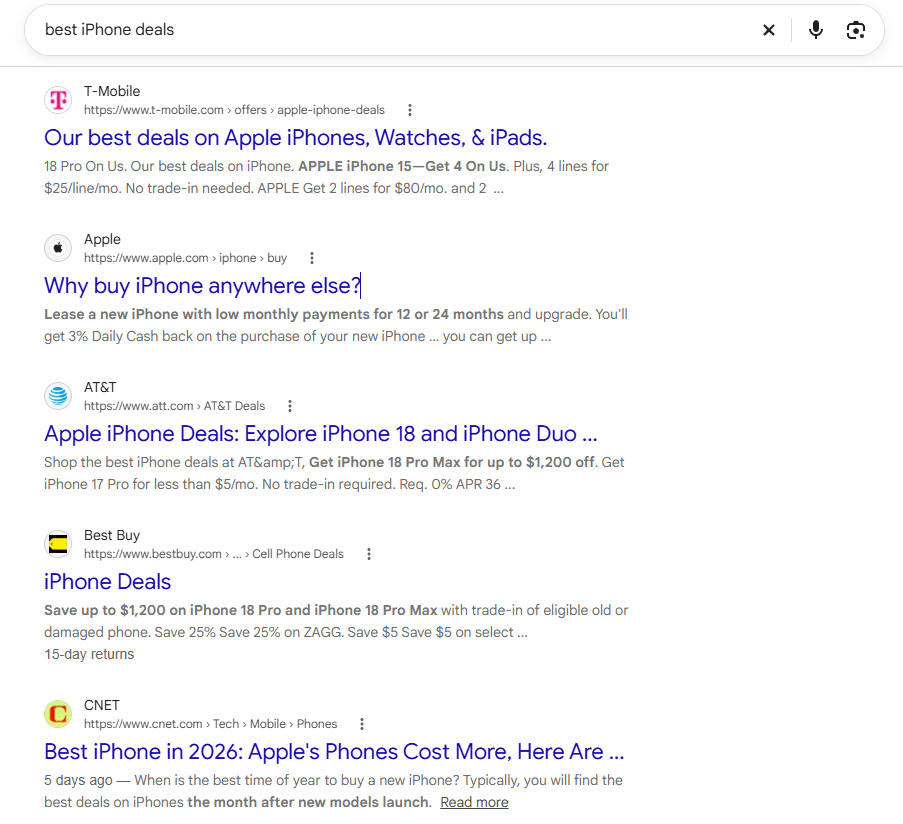
11 Important Ranking Signals and SEO Considerations
The following list combines publicly documented ranking signals and systems with important SEO considerations that can support search visibility. Not every item is a separately confirmed ranking signal. Google has publicly confirmed some ranking-related mechanisms, including PageRank as a link-analysis system and HTTPS as a lightweight ranking signal, while many common SEO recommendations are best practices rather than individually confirmed ranking factors. Structured data, for example, can help Google understand content and enable rich results but should not be treated as a general ranking boost.
- Search Intent Alignment: Content should match what the user appears to be trying to find or accomplish. Google’s systems aim to understand the meaning of queries and return the most relevant and useful results.
- Topical Relevance and Coverage: Comprehensive coverage can help a page answer related questions naturally, but more words or subtopics do not automatically improve rankings.
- Originality and Added Value: Google has systems designed to surface original content and original reporting prominently. Content that adds first-hand analysis, unique data, or genuinely useful information can therefore provide stronger value than a rewritten summary.
- Link Signals and PageRank: Google uses link analysis, including PageRank, as part of its ranking systems. Relevant links can help Google understand relationships and importance between pages.
- Relevant and Genuine Links: Links from contextually relevant, reputable sources can be useful, while manipulative link-building practices may violate Google’s spam policies.
- Core Web Vitals and Page Experience: Loading performance, responsiveness, and visual stability contribute to page experience. Google recommends good Core Web Vitals, although relevance and content quality can outweigh page-experience differences.
- Mobile Accessibility: Google primarily uses the mobile version of a page for indexing and ranking. Content, links, structured data, and functionality should therefore remain accessible on mobile devices.
- Titles and Headings: Clear titles and descriptive headings help users and search engines understand page structure and subject matter.
- Content Freshness: Keep time-sensitive information, statistics, examples, and recommendations current. Freshness can matter more for queries where users are likely to expect recent information.
- Structured Data: Schema markup can provide search engines with explicit information about page content. It may also make eligible pages available for rich-result features, but it should not be treated as a general ranking boost.
- HTTPS: Google has described HTTPS as a lightweight ranking signal. HTTPS also encrypts data exchanged between users and the website, helping protect information in transit.
What Content Creators Need to Know About Ranking Signals
Modern search systems are designed to reward useful, relevant, original content rather than content created mainly to manipulate rankings. To improve search visibility systematically, it is important to:
- Match Search Intent: Answer the user’s main question clearly and in an appropriate format.
- Create Genuinely Useful Content: Add original examples, first-hand experience, research, or analysis where appropriate.
- Use Clear Page Structure: Organize content with descriptive titles, headings, paragraphs, and internal links.
- Maintain Strong Technical Foundations: Keep pages crawlable, mobile-accessible, secure, and reasonably fast.
- Use Structured Data Accurately: Add supported schema markup when it helps describe eligible content.
- Keep Important Information Current: Update time-sensitive claims, statistics, and recommendations when necessary.
- Earn Genuine Links and Mentions: Build reputation through useful work rather than manipulative link schemes.
Frequently Asked Questions
What is a ranking signal?
A ranking signal is a piece of information a search system may use when evaluating and ordering search results for a query, such as relevance, freshness, links, or page experience data.
What is the difference between ranking factors, ranking signals, and ranking systems?
A ranking factor is a broad SEO term for something that may influence search rankings, while a ranking signal is the actual information or input a search engine can evaluate. A ranking system is the broader algorithmic system or technology that processes information and signals to help evaluate and rank search results. In SEO discussions, ranking factor and ranking signal are often used interchangeably.
Does one ranking signal determine a page’s position?
No. Search rankings are generally based on many signals considered together, and the importance of individual signals can vary depending on the query, content, context, and search system involved.