



Influencer marketing has changed how businesses connect with customers. Instead of relying only on traditional advertisements, brands can now collaborate with individuals who already have the attention and trust of specific audiences.
An influencer is a person who has built an audience around their knowledge, personality, lifestyle, or expertise and can influence the opinions, decisions, or purchasing behavior of that audience. Influencer marketing is the practice of partnering with these individuals to promote products, services, or brands.
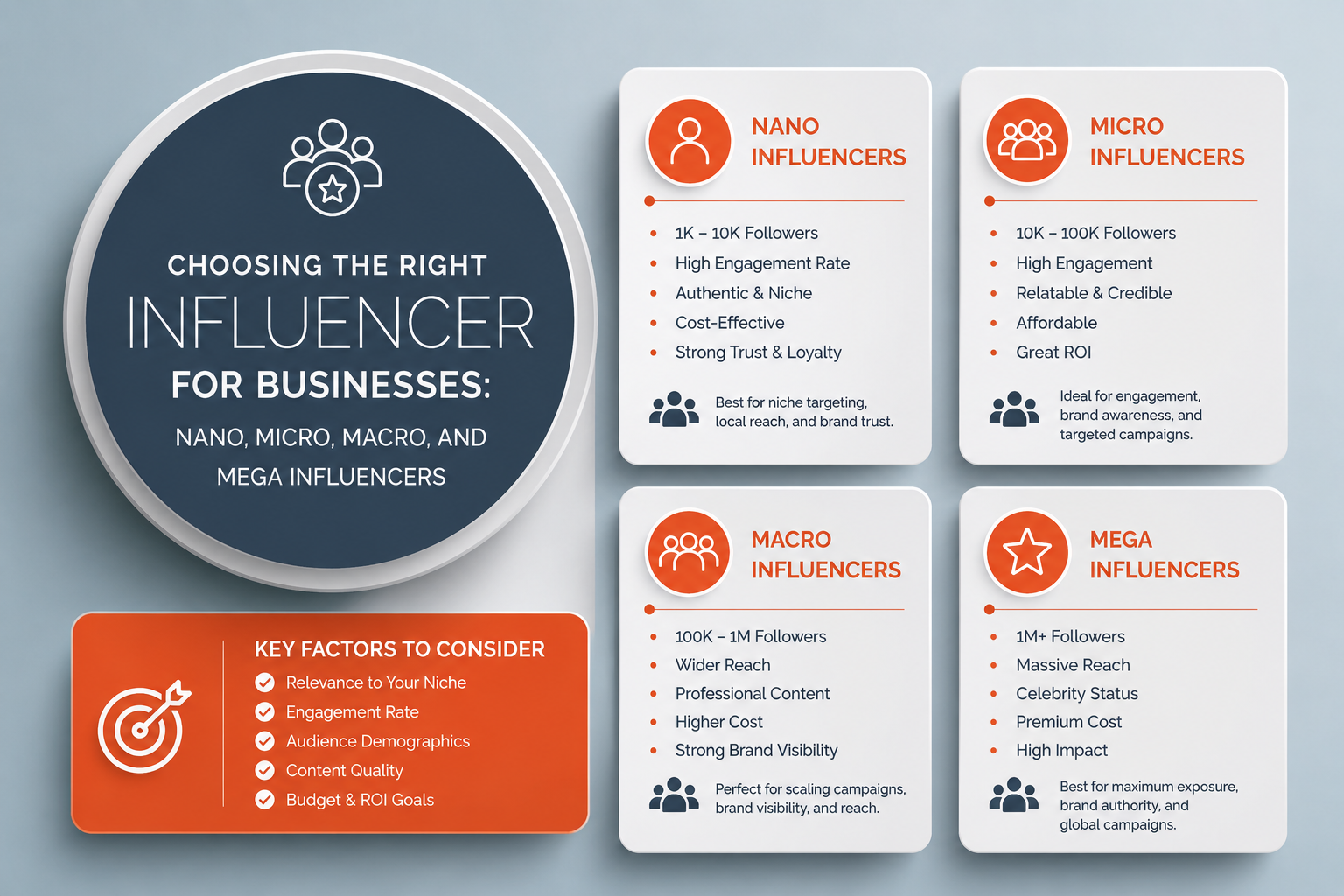
However, choosing an influencer is not simply about finding someone with the largest follower count. A creator with 20,000 highly engaged followers may sometimes deliver better results than someone with millions of followers but limited audience connection.
For example, a local skincare brand launching a new product may benefit more from partnering with several beauty creators who have small but trusted communities rather than paying a celebrity with a massive audience. The right influencer depends on the business goal, target audience, budget, and expected outcome.
As influencer marketing continues to evolve, businesses are also seeing new opportunities through niche creators, long-term creator partnerships, and AI-powered influencer campaigns. Understanding different influencer categories helps brands make smarter decisions and improve marketing ROI.
Table of Contents
- What Is Influencer Marketing?
- Why Choosing the Right Influencer Matters for Businesses
- Understanding Influencer Categories: Nano, Micro, Macro, and Mega Influencers
- Nano and Micro Influencers: Building Trust Through Niche Communities
- Macro and Mega Influencers: Scaling Reach and Brand Awareness
- Nano vs Micro vs Macro vs Mega Influencers: Comparison and Decision Guide
- How Businesses Can Evaluate Influencer Partnerships
- Conclusion
- Frequently Asked Questions
What Is Influencer Marketing?
Influencer marketing is a digital marketing strategy where businesses collaborate with individuals who have an engaged audience to promote products, services, or ideas.
In simple words:
Influencer marketing is when a brand uses someone’s trust and relationship with their audience to reach potential customers.
Who Is an Influencer?
An influencer is someone who has the ability to affect audience decisions because of their:
- Knowledge
- Experience
- Personality
- Reputation
- Relationship with followers
Influencers can exist in almost every industry.
Examples:
- A fitness creator recommending workout equipment
- A technology creator reviewing smartphones
- A food creator sharing restaurant recommendations
- A finance creator explaining investment tools
How Influencer Marketing Works
A simple influencer marketing flow looks like this:
Brand Identifies Audience
↓
Finds Relevant Influencer
↓
Creates Partnership
↓
Influencer Shares Content
↓
Audience Engages
↓
Brand Gains Awareness, Leads, or Sales
The goal is not only exposure.
A successful campaign creates meaningful connections with the right audience.
Influencer Partnerships vs Traditional Advertising
Traditional advertising often interrupts people.
Examples:
- Television ads
- Display ads
- Billboards
Influencer marketing feels more like a recommendation.
A creator says:
“I use this product, and here is why I like it.”
This personal connection is one reason influencer marketing has become valuable for brands.
Why Audiences Trust Influencers
People often trust creators because they feel more relatable.
A creator may:
- Share personal experiences
- Explain products in simple language
- Build conversations with followers
- Create communities around shared interests
Trust is one of the biggest assets in influencer marketing.
Influencer Marketing Trends
Influencer marketing is moving beyond simple sponsored posts.
Some important trends include:
Rise of Niche Creators
Brands are increasingly working with creators who have specialized audiences.
A creator with a smaller but highly relevant audience can create stronger results.
AI Influencers and Virtual Creators
AI-generated influencers and virtual personalities are becoming part of digital marketing experiments.
However, audience trust and authenticity remain important factors.
Long-Term Creator Partnerships
Many brands are moving away from one-time promotions and building long-term relationships with creators.
These partnerships often feel more authentic.
Why Choosing the Right Influencer Matters for Businesses
The biggest mistake businesses make is choosing influencers based only on follower count.
A large audience does not always mean strong results.
The right influencer should match:
- Brand goals
- Target audience
- Industry
- Budget
- Campaign objectives
Not Every Influencer Fits Every Brand
Example:
A luxury watch brand may not get the best results from a gaming influencer, even if the influencer has millions of followers.
Audience relevance matters more than just popularity.
Matching Influencer Type with Marketing Goals
Different influencer types serve different purposes.
For example:
Brand awareness:
Large influencers may help reach more people.
Community trust:
Smaller influencers may perform better.
Sales:
Creators with strong audience relationships may generate better conversions.
Brand Awareness vs Sales Goals
A business should first define the goal.
Brand Awareness
Goal:
“More people should know about us.”
Important factors:
- Reach
- Visibility
- Audience size
Sales and Conversions
Goal:
“Generate purchases or leads.”
Important factors:
- Trust
- Engagement
- Product relevance
Influencer ROI
Influencer ROI measures whether the results justify the investment.
Businesses can track:
- Reach
- Engagement
- Website visits
- Leads
- Sales
- Brand mentions
A successful campaign is not always the one with the highest views.
It is the one that creates meaningful business results.
Understanding Influencer Categories: Nano, Micro, Macro, and Mega Influencers
Influencers are usually categorized based on audience size, but follower count is only one factor.
Other important factors include:
- Engagement
- Audience quality
- Niche relevance
- Trust
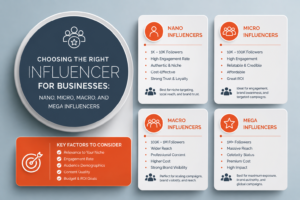
Nano Influencers
Nano influencers usually have smaller audiences but strong personal relationships with followers.
Typical audience size:
Around 1,000–10,000 followers
They often focus on specific communities.
Examples:
- Local creators
- Niche hobby creators
- Community-focused influencers
Micro Influencers
Micro influencers usually have a larger but still focused audience.
Typical audience size:
Around 10,000–100,000 followers
They often have strong expertise in specific areas.
Examples:
- Fitness creators
- Beauty creators
- Business creators
Macro Influencers
Macro influencers have larger audiences and broader reach.
Typical audience size:
Around 100,000–1 million followers
They are often established creators with strong visibility.
Mega Influencers
Mega influencers usually have very large audiences.
Typical audience size:
1 million+ followers
Examples:
- Celebrities
- Global creators
- Public figures
They provide massive reach but often come with higher costs.
Nano and Micro Influencers: Building Trust Through Niche Communities
Smaller influencers often create strong connections because their audiences feel more personal.
Nano Influencer Advantages
Benefits:
- High trust
- Strong community connection
- Lower cost
- Local relevance
Best for:
- Small businesses
- Local brands
- Niche products
Nano Influencer Challenges
Limitations:
- Smaller reach
- Less campaign scale
- Requires multiple partnerships for wider exposure
Micro Influencer Advantages
Benefits:
- Strong engagement
- Industry relevance
- Good balance between reach and trust
Best for:
- Ecommerce brands
- Product launches
- Specialized audiences
Micro Influencer Challenges
Challenges:
- More expensive than nano creators
- Results vary by niche
Macro and Mega Influencers: Scaling Reach and Brand Awareness
Large influencers are useful when brands need visibility at scale.
Macro Influencer Advantages
Benefits:
- Larger audience
- Professional content
- Strong visibility
Best for:
- Brand campaigns
- Product awareness
- Large launches
Macro Influencer Challenges
Challenges:
- Higher cost
- Engagement may be lower than smaller creators
- Audience may be less niche
Mega Influencer Advantages
Benefits:
- Massive exposure
- Strong brand association
- Global reach
Mega Influencer Challenges
Challenges:
- Very expensive
- Less personal connection
- Harder for small brands to access
Nano vs Micro vs Macro vs Mega Influencers: Comparison and Decision Guide
| Factor | Nano | Micro | Macro | Mega |
| Audience Size | 1K–10K | 10K–100K | 100K–1M | 1M+ |
| Reach | Low | Medium | High | Very High |
| Trust | Very High | High | Medium | Varies |
| Cost | Low | Moderate | High | Very High |
| Best For | Communities, local brands | Niche marketing | Awareness campaigns | Large-scale visibility |
Which Influencer Type Is Best for Small Businesses?
Small businesses often benefit from nano and micro influencers because:
- Costs are lower
- Audiences are more targeted
- Trust levels are higher
Which Influencer Type Is Best for Brand Awareness?
Macro and mega influencers usually work better for:
- Large launches
- National campaigns
- Mass visibility
Which Influencer Type Is Best for Sales?
For conversions, relevance and trust often matter more than audience size.
Micro and niche influencers can perform strongly because audiences value their recommendations.
How Businesses Can Evaluate Influencer Partnerships
Finding an influencer is only the first step.
Businesses need to evaluate whether the partnership makes sense.
Finding the Right Influencers
Look for:
- Audience relevance
- Content quality
- Engagement
- Brand alignment
Evaluating Audience Quality
Follower count can be misleading.
Check:
- Comments
- Engagement patterns
- Audience interaction
- Content authenticity
Measuring Engagement
Important metrics:
- Likes
- Comments
- Shares
- Saves
- Clicks
Engagement shows how connected the audience is.
Understanding Influencer Pricing
Pricing depends on:
- Audience size
- Industry
- Platform
- Content type
- Campaign requirements
Larger influencers usually charge more.
Measuring Influencer ROI
Track:
- Sales
- Leads
- Traffic
- Engagement
- Brand mentions
The goal is connecting influencer activity with business outcomes.
Building Long-Term Creator Partnerships
Long-term collaborations often create stronger results because audiences see repeated brand relationships.
Common Influencer Marketing Mistakes
Avoid:
- Choosing influencers only by followers
- Ignoring audience relevance
- Lack of clear goals
- Poor campaign tracking
- Over-controlling creator content
Conclusion
Choosing the right influencer is not about finding the biggest name. It is about finding the right connection between the creator, audience, and business goal.
Nano and micro influencers often provide stronger trust and niche engagement, while macro and mega influencers provide greater reach and visibility. The best choice depends on whether a brand wants awareness, engagement, leads, or sales.
As influencer marketing continues to evolve, businesses that focus on authentic partnerships, audience relevance, and measurable outcomes will achieve stronger long-term results.
Frequently Asked Questions
What is influencer marketing?
Influencer marketing is a strategy where brands collaborate with creators who have engaged audiences to promote products or services.
What are the different types of influencers?
The main categories are nano, micro, macro, and mega influencers, based on audience size and reach.
How do businesses choose influencers?
Businesses should evaluate audience relevance, engagement, content quality, budget, and campaign goals.
What is the difference between nano and micro influencers?
Nano influencers have smaller audiences but stronger personal connections, while micro influencers have larger niche audiences.
Are micro influencers better than macro influencers?
It depends on the goal. Micro influencers often provide stronger engagement, while macro influencers provide wider reach.
What are mega influencers?
Mega influencers are creators with very large audiences, often including celebrities and globally recognized personalities.
How does influencer marketing work?
Brands partner with influencers who create content to introduce products or services to their audiences.
How do brands measure influencer ROI?
Brands measure ROI through metrics like sales, leads, traffic, engagement, and brand awareness.
How can I find influencers for my brand?
Brands can find influencers through social platforms, influencer marketplaces, agencies, and industry research.
What are influencer marketing trends?
Major trends include niche creators, AI influencers, long-term partnerships, and creator-led brand growth.