



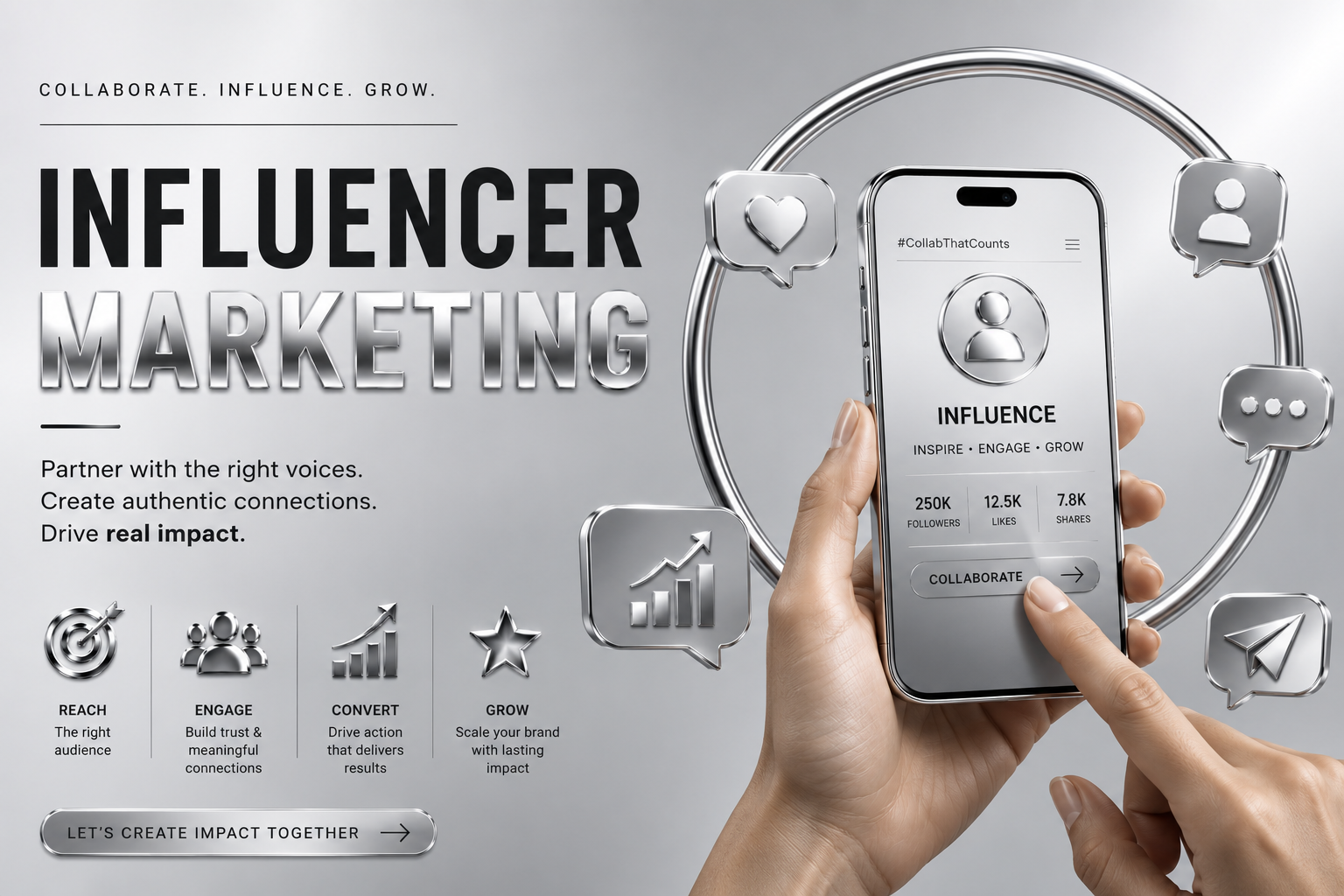
Influencer marketing is a form of marketing where businesses collaborate with creators, influencers, industry experts, and content creators to promote products, services, or brands to their audiences. Instead of advertising directly to consumers, brands leverage the trust influencers have built with their followers to increase awareness, credibility, engagement, leads, and sales.
According to McKinsey, influencer marketing is a collaboration between popular social-media users and brands to promote products or services. It has become one of the fastest-growing marketing channels because consumers increasingly trust recommendations from creators they follow more than traditional advertisements.
In simple words, influencer marketing is modern-day word-of-mouth marketing.
Imagine you’re planning to buy a new smartphone. You could:
- Watch a company advertisement.
- Ask a trusted friend who has already used the phone.
Most people trust the friend’s recommendation more than the advertisement. Influencer marketing works in the same way.
Influencers become trusted voices within specific communities. Their followers view them as knowledgeable, relatable, and authentic. When they recommend a product, many followers pay attention because the recommendation feels personal rather than promotional.
This is why influencer marketing has become a core strategy for brands, startups, ecommerce companies, SaaS businesses, and creators.
Table of Contents
- What Is Influencer Marketing?
- Influencer Marketing in Numbers
- Types of Influencers
- How Influencer Partnerships Work
- Influencer Marketing for Businesses and Startups
- Strategies for Influencer Marketing
- Influencer Marketing Do’s and Don’ts
- Conclusion
- Frequently Asked Questions (FAQs)
What Is Influencer Marketing?
Influencer marketing is a partnership between a brand and an individual who has built an engaged audience online.
These individuals may be:
- YouTubers
- Instagram creators
- TikTok influencers
- LinkedIn experts
- Bloggers
- Podcasters
- Industry thought leaders
The influencer creates content featuring the brand, while the brand benefits from the influencer’s credibility and audience reach.
Why Influencer Marketing Works
Traditional advertising often interrupts people.
Influencer marketing integrates products into content people already consume.
Instead of:
“Buy this product.”
The message becomes:
“I’ve been using this product and here’s my experience.”
The second approach feels more natural and trustworthy.
How Influencer Marketing Creates Results
Influencer marketing helps businesses:
Increase Brand Awareness: Millions of consumers discover new brands through creators every day.
Build Trust: People trust recommendations from creators they follow.
Generate Leads: Interested viewers click links, join email lists, and request information.
Increase Sales: Authentic recommendations can drive direct purchases.
Create Social Proof: Seeing others use a product reduces purchase hesitation.
Examples of Influencer Marketing
Ecommerce Brand: A skincare company partners with beauty creators to review products.
SaaS Company: A software company collaborates with productivity YouTubers.
Local Business: A restaurant invites food influencers to share their experience.
B2B Company: A cybersecurity firm works with LinkedIn experts to educate decision-makers.
In all these cases, the goal remains the same: reach the right audience through trusted voices.
Influencer Marketing in Numbers
Influencer marketing is no longer an experimental channel. It has become a significant part of modern marketing budgets.
Creator Economy Growth
According to McKinsey, the creator economy includes millions of content creators worldwide and continues to expand as more individuals build audiences and monetize their expertise.
Consumers Trust Influencer Recommendations
Research consistently shows that consumers often trust recommendations from creators and peers more than traditional advertisements.
This trust is one of the primary reasons influencer marketing generates strong engagement rates.
Influencer Marketing Spending Continues to Rise
Brands across industries continue increasing influencer marketing budgets because creator-led campaigns often produce measurable results in awareness, engagement, and sales.
How Much Are Influencers Paid?
One of the most common questions businesses ask is:
“How much does an influencer cost?”
The answer depends on several factors:
- Audience size
- Engagement rate
- Industry
- Platform
- Content format
- Campaign complexity
According to McKinsey, influencer compensation can range from a few hundred dollars for smaller creators to hundreds of thousands of dollars for celebrity-level influencers.
Common Payment Models
Flat Fee: A creator receives a fixed payment. Example: $500 for one Instagram Reel.
Affiliate Commission: The influencer earns a percentage of sales generated. Example: 10% commission per sale.
Product Exchange: The creator receives free products instead of direct payment.
Brand Ambassador Programs: Long-term partnerships involving recurring compensation.
Why Smaller Influencers Often Perform Better
Many businesses assume bigger is always better. Not necessarily.
Micro-influencers frequently generate higher engagement because their audiences are highly focused and loyal.
A creator with 20,000 highly engaged followers may outperform someone with 500,000 passive followers.
Types of Influencers
Not all influencers are the same.
Understanding influencer categories helps brands select the right partners.
Nano Influencers
Audience Size:
1,000–10,000 followers
Characteristics:
- Highly engaged communities
- Strong personal relationships
- Affordable partnerships
Best for:
- Local businesses
- Startups
- Small ecommerce brands
Micro Influencers
Audience Size:
10,000–100,000 followers
Characteristics:
- Niche expertise
- Strong engagement
- Authentic content
Best for:
- Targeted campaigns
- Industry-specific audiences
Macro Influencers
Audience Size:
100,000–1 million followers
Characteristics:
- Larger reach
- Professional content production
Best for:
- National campaigns
- Brand awareness initiatives
Mega Influencers
Audience Size:
1 million+ followers
Characteristics:
- Massive exposure
- Celebrity-like influence
Best for:
- Global campaigns
- Large brands
Industry Experts and Thought Leaders
Influence isn’t always measured by follower count.
Some creators influence purchasing decisions through expertise.
Examples:
- LinkedIn professionals
- Industry consultants
- Subject matter experts
- Researchers
- Educators
For B2B companies, these partnerships often outperform traditional influencers.
How Influencer Partnerships Work
Many businesses understand influencer marketing conceptually but struggle to execute campaigns.
Here’s a simplified workflow.
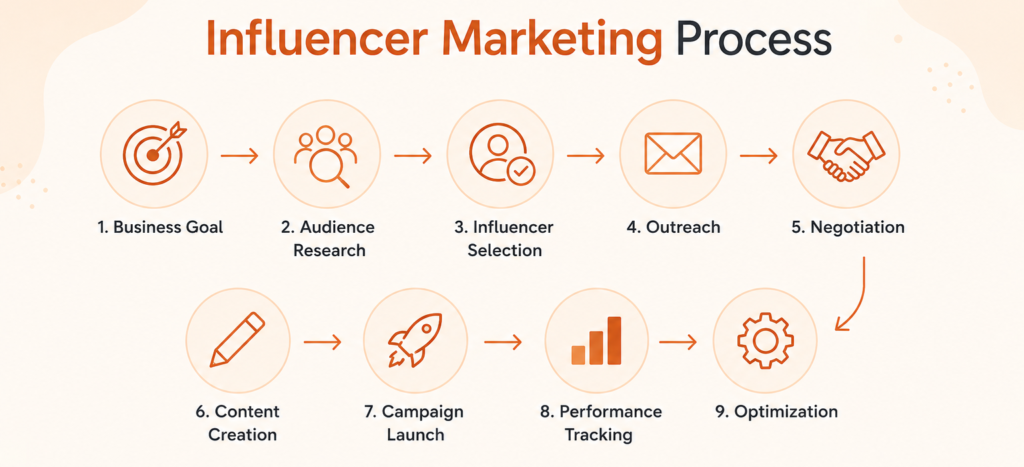
Influencer Marketing Process
Influencer marketing begins by defining clear business goals and understanding the target audience through detailed research.
Based on audience insights, brands identify suitable influencers who align with their niche, values, and campaign objectives, followed by outreach and negotiation to establish partnerships.
Once the collaboration is finalized, influencers create authentic content that is published as part of the campaign launch. The campaign’s performance is then tracked using key metrics, and the strategy is optimized based on results to improve engagement, reach, and overall ROI.
Step 1: Define Campaign Goals
Before contacting creators, determine objectives.
Common goals include:
- Brand awareness
- Lead generation
- Product launches
- App installs
- Website traffic
- Sales
Step 2: Identify the Right Audience
Ask: Who are we trying to reach?
Examples:
- Students
- Entrepreneurs
- Parents
- Gamers
- Marketers
The influencer’s audience should closely match your target customer.
Step 3: Research Influencers
Evaluate:
Audience Relevance
Do their followers match your buyers?
Engagement
Are followers actively interacting?
Content Quality
Does the creator produce professional content?
Brand Alignment
Do their values align with your brand?
Step 4: Outreach
A typical outreach message includes:
- Brand introduction
- Campaign objective
- Collaboration opportunity
- Deliverables
- Budget information
Step 5: Content Creation
The creator develops content based on campaign requirements.
Examples:
- Reviews
- Tutorials
- Unboxings
- Product demonstrations
- Sponsored posts
Step 6: Performance Measurement
Track:
- Reach
- Engagement
- Traffic
- Leads
- Conversions
- Revenue
Without tracking, it becomes difficult to determine ROI.
Influencer Marketing for Businesses and Startups
Many startups assume influencer marketing is only for large brands.
That’s not true.
Small businesses often benefit even more because influencers help them build trust quickly.
Why Startups Use Influencer Marketing
New companies typically face three challenges:
Low Brand Awareness
Nobody knows the brand.
Limited Trust
Consumers hesitate to purchase.
Small Marketing Budgets
Advertising costs can be expensive.
Influencer marketing helps solve all three problems.
Example: Startup Product Launch
A startup launches a productivity app.
Instead of spending thousands on ads immediately, the company partners with:
- Productivity YouTubers
- LinkedIn creators
- Tech reviewers
The creators demonstrate the app to relevant audiences.
Awareness grows quickly.
Ecommerce and Influencer Marketing
Ecommerce brands commonly use:
Product Reviews: Creators test and review products.
Unboxing Videos: Followers see first impressions.
Tutorials: Creators explain product usage.
Lifestyle Content: Products appear naturally in everyday situations.
These formats often feel less promotional and more authentic.
B2B Influencer Marketing
B2B companies increasingly collaborate with:
- Consultants
- Analysts
- Industry experts
- Podcast hosts
Decision-makers trust industry expertise.
This makes expert-led influencer marketing particularly effective.
Strategies for Influencer Marketing
Successful campaigns rarely happen by accident.
They follow clear strategies.
Focus on Relevance Over Reach
Many brands make the mistake of choosing the largest influencer available.
A smaller creator with the right audience usually delivers better results.
Build Long-Term Relationships
One-off campaigns can work.
Long-term partnerships often perform better.
Why?
Repeated exposure builds familiarity and trust.
Combine Influencer Marketing with Other Channels
Influencer marketing becomes more powerful when integrated with:
- Social media marketing
- Email marketing
- Content marketing
- Paid advertising
- SEO
Encourage Authentic Storytelling
Consumers recognize scripted promotions.
Allow creators to communicate naturally.
Authenticity often increases engagement.
Use Affiliate Partnerships
Affiliate partnerships align incentives.
Influencer Promotes Product
↓
Audience Purchases
↓
Influencer Earns Commission
↓
Brand Generates Revenue
This creates a performance-driven relationship.
Measure ROI
Track meaningful metrics.
Reach: How many people saw the campaign?
Impressions: How many times was content displayed?
Engagement Rate: How actively did users interact?
Clicks: How many users visited the website?
Leads: How many prospects entered the sales funnel?
Sales: How much revenue was generated?
CPA: Cost per acquisition.
ROI: Return on investment.
The most successful brands continuously optimize campaigns using data.
Legal Disclosures and Compliance
Transparency matters.
Many regions require sponsored content disclosures.
Common disclosures include:
- #Ad
- #Sponsored
- Paid Partnership Labels
Consumers deserve to know when content is sponsored.
Transparency protects both creators and brands.
Influencer Marketing Do’s and Don’ts
Successful influencer marketing campaigns are typically built on authenticity, clear communication, and partnerships that genuinely align with the brand’s values and target audience. Conversely, prioritizing follower counts over engagement, neglecting transparency, or forcing overly promotional content can reduce credibility and limit campaign effectiveness.
Do’s
Do Prioritize Audience Fit
Choose influencers whose audiences match your target market.
Do Review Engagement Quality
Look beyond follower counts.
Do Set Clear Expectations
Define goals, timelines, and deliverables.
Do Provide Creative Freedom
Creators understand their audiences best.
Do Track Results
Measure campaign performance consistently.
Do Build Long-Term Relationships
Partnerships become stronger over time.
Don’ts
Don’t Buy Followers
Fake audiences create misleading metrics.
Don’t Focus Only on Reach
Engagement and relevance matter more.
Don’t Ignore Compliance
Disclosure requirements are essential.
Don’t Micromanage Creators
Overly scripted content often performs poorly.
Don’t Expect Instant Results
Brand building requires consistency.
Don’t Choose Influencers Solely Based on Price
The cheapest creator is not always the best investment.
The Future of Influencer Marketing
The creator economy continues expanding. The future belongs to brands that prioritize authenticity, relevance, and long-term creator relationships.
Several trends are shaping the future. These include:
Creator-Led Brands
Creators increasingly launch their own products.
AI-Powered Campaign Management
Technology helps brands identify ideal creators.
Performance-Based Partnerships
Affiliate and commission-based models continue growing.
Niche Communities
Brands increasingly target highly specific audiences.
Video Dominance
Short-form and long-form video remain powerful content formats.
B2B Influencer Growth
Professional creators are becoming influential decision-making resources.
Conclusion
Influencer marketing is essentially digital word-of-mouth at scale. Instead of relying solely on advertisements, businesses partner with trusted creators who already have established relationships with their audiences. These partnerships help brands increase awareness, build credibility, generate leads, and drive sales in a way that feels authentic and relatable.
Whether you’re a startup, ecommerce business, SaaS company, agency, or established brand, the key to success is not finding the biggest influencer—it’s finding the right influencer. By focusing on audience alignment, authentic partnerships, measurable goals, and long-term relationships, businesses can transform influencer marketing from an experimental tactic into a predictable growth channel.
Frequently Asked Questions (FAQs)
Is Influencer Marketing Effective?
Yes. Influencer marketing can increase brand awareness, trust, engagement, leads, and sales when executed properly.
What Is the Difference Between Influencer Marketing and Celebrity Endorsements?
Influencer marketing often focuses on niche communities and engaged audiences, while celebrity endorsements typically emphasize mass exposure.
How Much Does Influencer Marketing Cost?
Costs range from free product exchanges to six-figure sponsorships depending on audience size, platform, and campaign objectives.
Which Platform is Best for Influencer Marketing?
It depends on the audience. Instagram, TikTok, YouTube, LinkedIn, and podcasts all serve different purposes.
How Do Brands Measure Influencer Marketing ROI?
Brands track reach, engagement, clicks, leads, sales, CPA, and ROI.
Are Micro Influencers Better Than Macro Influencers?
Often, yes. Micro influencers frequently have stronger audience engagement and trust.
How do Businesses Find Influencers?
Through manual research, influencer marketplaces, agencies, social media platforms, and creator databases.
Is Influencer Marketing Suitable for B2B Companies?
Yes. B2B influencer marketing is growing rapidly through industry experts, consultants, analysts, and thought leaders.
Should Influencers Disclose Sponsored Content?
Yes. Transparency is essential for compliance and consumer trust.
Is Influencer Marketing the Future of Digital Marketing?
Influencer marketing is becoming a permanent component of modern marketing strategies because consumers increasingly trust creators and peer recommendations over traditional advertising.