



High-quality content is one of the most effective ways to attract organic traffic because it helps businesses appear when people search for information, products, or solutions online.
Helpful, informative content that addresses user needs can build trust, keep visitors engaged, and encourage them to return. Well-placed keywords help search engines understand the topic of a page and connect it with relevant search queries without disrupting the reading experience.
Over time, a library of useful content can become a powerful asset that consistently drives both traffic and conversions.
Table of Contents
- Understanding the Role of Content in Marketing
- What Is Content Marketing and Why Does It Matter?
- How Content Helps Drive Website Traffic
- Types of Content
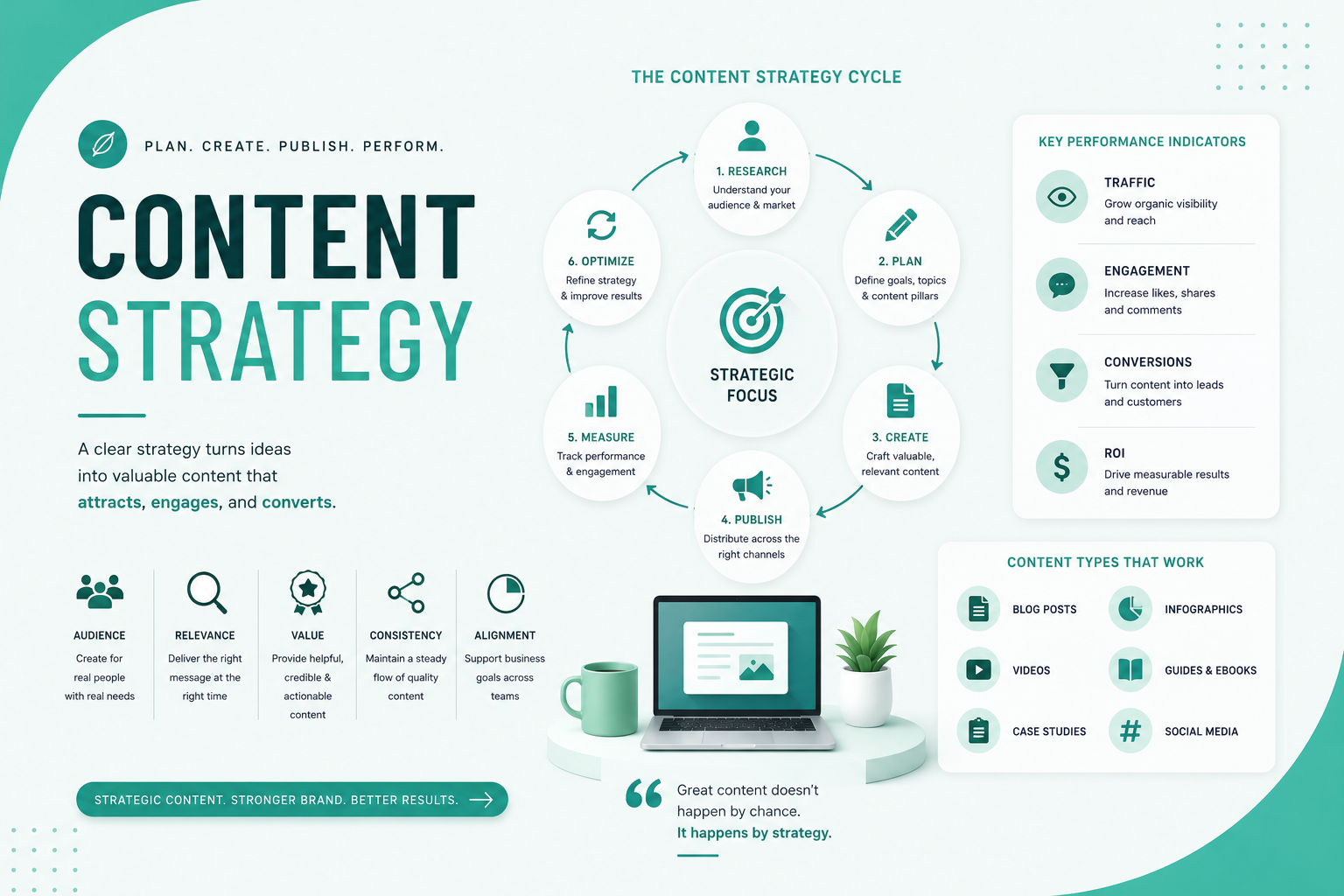
- Content Strategy: Planning Content That Supports Business Goals
- Content Funnels: Turning Visitors Into Leads and Customers
- Content Management, Tools, and Performance Analysis
- AI Content and the Future of Content Marketing
- Conclusion
- Frequently Asked Questions
Understanding the Role of Content in Marketing
Content is any piece of information a business creates and shares to educate, inform, entertain, or persuade an audience.
In digital marketing, content can include blog posts, videos, social media posts, emails, podcasts, guides, case studies, product descriptions, landing pages, and many other formats.
A simple definition:
Content is the information businesses create to communicate with their audience and help them solve problems.
For example, a digital marketing agency may create:
- A blog explaining “What Is SEO?”
- A checklist for improving website traffic
- A video explaining Google Ads
- A case study showing how a client increased sales
All of these are examples of content.
A useful analogy is to think of content as a conversation between a business and its customers.
Imagine opening a physical store. A salesperson does not immediately ask a visitor to buy something. They first answer questions, explain products, provide recommendations, and build trust.
Digital content works in the same way.
A customer may first discover your blog while searching for information. After reading helpful content, they become familiar with your brand. Over time, that trust can turn into a purchase.
This is why content plays a major role in attracting visitors, building relationships, generating leads, and increasing conversions.
What Is Content Marketing and Why Does It Matter?
Content marketing is the process of creating and distributing valuable content to attract, engage, and convert a target audience.
Unlike traditional advertising, where businesses directly promote products, content marketing focuses on providing value first.
For example:
A software company could run an advertisement saying:
“Buy our project management tool.”
Or it could create content like:
- How to manage remote teams
- Best productivity strategies
- Project management templates
The second approach helps people before asking them to purchase.
This creates trust.
Content Marketing vs Traditional Marketing
Traditional marketing often interrupts people:
- Ads during videos
- Promotional emails
- Display advertisements
Content marketing attracts people by providing useful information.
The goal is to become a trusted resource.
A successful content marketing strategy helps businesses:
- Increase website traffic
- Build brand awareness
- Improve search rankings
- Generate leads
- Educate customers
- Support sales teams
How Content Helps Drive Website Traffic
One of the biggest benefits of content is its ability to attract visitors through multiple channels.
A website without content often depends heavily on paid advertising or direct traffic.
Content creates more opportunities for people to discover a business.
Content and SEO Traffic
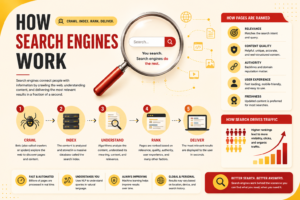
Search engines like Google help users find answers.
When businesses create content around topics their audience searches for, they can appear in search results.
Example:
A fitness company may create content around:
- Best beginner workout plans
- How to build muscle
- Healthy meal ideas
People searching these topics may discover the company through organic search.
This is known as SEO content marketing.
Good SEO content focuses on:
- Relevant topics
- Search intent
- Keyword optimization
- Helpful information
- Strong user experience
Evergreen Content: Creating Long-Term Traffic
Evergreen content is content that remains useful for a long time.
Examples:
- How to create a marketing strategy
- Beginner guide to SEO
- How to start an email newsletter
Unlike news articles or temporary trends, evergreen content can continue attracting visitors months or years after publishing.
For example:
A blog about “What Is Content Marketing?” can continue bringing traffic because people will always search for explanations of the topic.
Evergreen content is valuable because it creates a long-term traffic asset.
Using Content to Answer Customer Questions
Most customers have questions before buying.
Content helps businesses answer those questions before a sales conversation begins.
Example:
Someone searching:
“Best CRM software for small businesses”
may not be ready to buy immediately.
A company can create:
- Comparison guides
- Feature explanations
- Customer examples
By answering questions, businesses move customers closer to making decisions.
Types of Content
Different content formats serve different purposes.
A strong content strategy usually combines multiple formats.
Blog Content
Blogs are one of the most common forms of content marketing.
They help businesses:
- Target search keywords
- Educate audiences
- Build authority
- Generate organic traffic
Examples:
- Guides
- Tutorials
- How-to articles
- Industry insights
Educational Content
Educational content focuses on teaching.
Examples:
- Beginner guides
- Checklists
- Templates
- Tutorials
This type of content works especially well for businesses selling complex products.
Video Content
Videos are effective for explaining ideas quickly.
Examples:
- Product demonstrations
- Tutorials
- Customer stories
- Webinars
Many users prefer watching explanations instead of reading long articles.
Social Media Content
Social media content helps businesses distribute ideas and engage communities. Even website content can be repurposed for social media posts.
Examples of social media content include:
- Short videos
- Infographics
- Industry tips
- Discussions
Social content can increase awareness and bring visitors back to a website.
Lead Generation Content
Lead generation content provides value in exchange for customer information.
Examples:
- Ebooks
- Reports
- Templates
- Free tools
- Webinars
A visitor downloads the resource and becomes a potential lead.
Conversion-Focused Content
Some content directly supports sales.
Examples:
- Product pages
- Landing pages
- Case studies
- Customer testimonials
This content helps users understand why they should choose a business.
Content Strategy: Planning Content That Supports Business Goals
Creating random content is not a strategy.
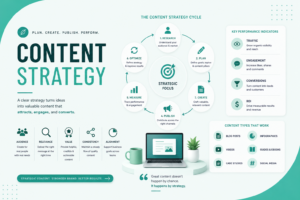
A content strategy defines:
- What content to create
- Who it is for
- Why it is being created
- How it supports business goals
A strong content strategy connects audience needs with business objectives.
Understanding Your Audience
Before creating content, businesses should understand:
- Who their customers are
- What problems they have
- What questions they ask
- What influences their decisions
For example:
A beginner searching “what is SEO” needs different content compared with someone searching “best SEO tools.”
Understanding the audience helps create more relevant content.
Content Pillars and Topic Clusters
A content pillar is a broad topic a business wants to build authority around.
Example:
Content pillar:
“Digital Marketing”
Supporting cluster topics:
- SEO
- Email marketing
- Social media marketing
- PPC advertising
- Content marketing
This approach is called topic clustering.
It helps search engines understand that a website has expertise around a subject.
Content Planning: From Ideas to Execution
A good content plan includes:
- Main topics
- Target audience
- Keywords
- Content format
- Publishing schedule
- Promotion channels
This prevents businesses from creating content without direction.
Avoiding Thin Content
Thin content often provides little value to readers because it lacks depth, originality, or useful information, making it less likely to satisfy user intent or perform well in search results. Businesses can avoid thin content by focusing on comprehensive, well-researched, and genuinely helpful material that answers questions thoroughly and offers unique insights or practical examples.
Content Calendar for Planning Content Effectively
A content calendar is a planning document that organizes future content.
It helps businesses maintain consistency and manage publishing workflows.
A content calendar usually includes:
| Field | Purpose |
| Content Topic | Main idea |
| Target Keyword | SEO focus |
| Audience | Who it targets |
| Search Intent | User purpose |
| Content Format | Blog, video, email, etc. |
| Funnel Stage | Awareness, consideration, conversion |
| Author | Responsible person |
| Publish Date | Schedule |
| Status | Planned, writing, published |
A content calendar helps teams:
- Stay organized
- Avoid duplicate topics
- Maintain consistency
- Align content with campaigns
Optimizing Content for Google Search and Users
Content optimization improves the chances of ranking while making content easier for users.
Important optimization practices include:
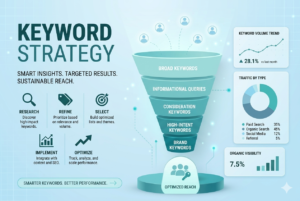
Use Relevant Keywords
Keywords help search engines understand the topic.
However, keywords should be used naturally.
Focus on:
- Main topic
- Related terms
- User questions
Match Search Intent
Content should answer what users actually want.
If users search:
“best SEO tools”
they expect comparisons, not a definition.
Improve Content Structure
Good structure includes:
- Clear headings
- Short paragraphs
- Examples
- Lists
- Visual elements
This improves readability.
Update Existing Content
Content can lose rankings over time.
Updating old content with:
- New information
- Better examples
- Updated statistics
can improve performance.
Content Funnels: Turning Visitors Into Leads and Customers
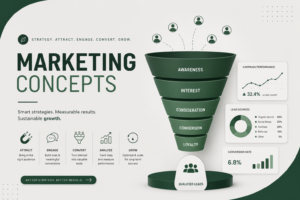
Content does not only attract visitors. It helps guide them through the buying journey.
A content funnel usually has three stages.
Awareness Stage
At this stage, users are discovering a problem.
Content examples:
- Blog posts
- Educational videos
- Beginner guides
Example:
“What is email marketing?”
Consideration Stage
Users are comparing solutions.
Content examples:
- Comparison articles
- Case studies
- Reviews
Example:
“Best email marketing tools”
Conversion Stage
Users are ready to take action.
Content examples:
- Product pages
- Free trials
- Consultation pages
Example:
“Start free email marketing software trial”
Content Management, Tools, and Performance Analysis
Managing content becomes easier with a content management system (CMS). A content management system (CMS) simplifies the process of creating, organizing, and publishing digital content without requiring extensive technical knowledge.
Modern CMS platforms also provide tools for collaboration, design customization, and search engine optimization, making them essential for managing websites efficiently.
A CMS allows businesses to:
- Create pages
- Publish content
- Organize media
- Manage websites
Popular CMS platforms include:
- WordPress
- Wix
- Shopify
A CMS is especially useful for businesses publishing content regularly.
Content Analysis: Measuring Performance
Creating content is only one part of the process. Businesses need to measure results.
Important content metrics include:
Traffic
How many people visit content pages?
Engagement
How users interact with content:
- Time spent
- Scroll depth
- Shares
- Comments
Leads
How many visitors take valuable actions?
Examples:
- Downloading resources
- Signing up
- Contacting sales
Conversions
The final goal:
Turning visitors into customers.
AI Content and the Future of Content Marketing
Artificial intelligence is transforming content marketing by accelerating research, content creation, personalization, and data analysis at an unprecedented scale. As AI tools become more sophisticated, the future of content marketing will likely combine human creativity and expertise with AI-powered efficiency to deliver more relevant and personalized experiences.
Businesses that learn to balance automation with authenticity may gain a significant competitive advantage.
AI tools have changed how businesses create content.
AI can help with:
- Research
- Brainstorming
- Outlining
- Editing
- Content optimization
However, successful content still requires:
- Original ideas
- Human experience
- Expertise
- Accuracy
- Brand perspective
AI can increase efficiency, but valuable content still depends on understanding the audience.
The future of content marketing will focus more on:
- Personalization
- Quality
- First-hand experience
- Audience relationships
- Multi-channel content
Conclusion
Content is one of the most powerful ways businesses attract audiences, build trust, and generate conversions.
A strong content strategy does more than create website visitors. It helps businesses educate potential customers, answer their questions, build authority, and guide people toward purchasing decisions.
Successful content marketing requires:
- Understanding your audience
- Creating valuable content
- Optimizing for search
- Planning consistently
- Measuring performance
The goal is not simply creating more content.
The goal is creating content that helps the right people at the right stage of their journey.
Frequently Asked Questions
What do you mean by content marketing?
Content marketing is the process of creating and sharing valuable content to attract, engage, and convert an audience instead of directly promoting products.
How do I start content marketing?
Start by:
- Understanding your audience
- Identifying their problems
- Researching topics
- Creating useful content
- Publishing consistently
- Measuring results
What is a content management system?
A content management system (CMS) is software that helps businesses create, manage, and publish website content without requiring advanced technical skills.
Examples include WordPress, Wix, and Shopify.
How do I optimize my content for Google Search?
Optimize content by:
- Understanding search intent
- Using relevant keywords
- Creating helpful information
- Improving structure
- Adding internal links
- Updating content regularly
How do I plan a content calendar?
A content calendar should include:
- Topics
- Keywords
- Content formats
- Publishing dates
- Target audience
- Content goals
- Status tracking
What are common content strategies?
Common content strategies include:
- SEO content marketing
- Educational content
- Social media content
- Video marketing
- Email content
- Lead generation content
What is evergreen content?
Evergreen content is content that remains useful and continues attracting traffic over a long period.
Examples include guides, tutorials, and educational resources.
How does content generate leads?
Content generates leads by attracting visitors and encouraging them to take actions like downloading resources, signing up for newsletters, or requesting information.
How do you measure content marketing ROI?
Content marketing ROI can be measured through:
- Traffic growth
- Leads generated
- Conversion rates
- Revenue influenced by content
Is AI content useful for businesses?
Yes, AI content tools can improve productivity, but businesses still need human expertise, creativity, and quality control to create valuable content.