Keywords are the words and phrases people use to search for information, products, services or solutions online. For example, a person searching best email marketing tools for startups is communicating a topic, an intended audience and a need to compare available options.
In SEO, a keyword represents the search term or subject that a webpage is designed to address. Keywords therefore connect what people want with the content businesses publish. They help marketers choose relevant topics, help search engines interpret a page and help the right audience discover useful information.
However, adding a keyword to a page does not guarantee that the page will rank. Google Search Essentials recommends using the words your audience searches for in the page title, main heading, image descriptions and links. At the same time, Google emphasizes creating helpful, reliable and people-first content rather than pages that aim primarily to manipulate rankings.
Modern keyword optimization is therefore not about repeating an exact phrase. It is about understanding the meaning, intent and questions behind a search and creating the most appropriate page to satisfy that need.
Table of Contents
What Are Keywords in SEO?
A keyword is a word or phrase that represents the main subject or search need associated with a webpage. It may be broad, such as marketing, or more descriptive, such as email marketing strategy for small businesses.
A simple way to understand keywords is to think of them as customer requests. Imagine that someone enters a shop and asks, “Do you have affordable running shoes for beginners?” The request identifies the product, price concern and intended user.
The search affordable running shoes for beginners works in a similar way. It gives the search engine context about what the person expects and gives the business a clearer idea of what kind of content or product page may be useful.
A search query and a keyword are closely connected, although they are not identical. A search query is the precise wording entered by one user. A keyword is the broader phrase or topic that a marketer researches and targets.
For example:
- Search query: What are the best email marketing tools for startups?
- Target keyword: email marketing tools
Many differently worded queries can lead to the same page because search engines can interpret language beyond exact matches.
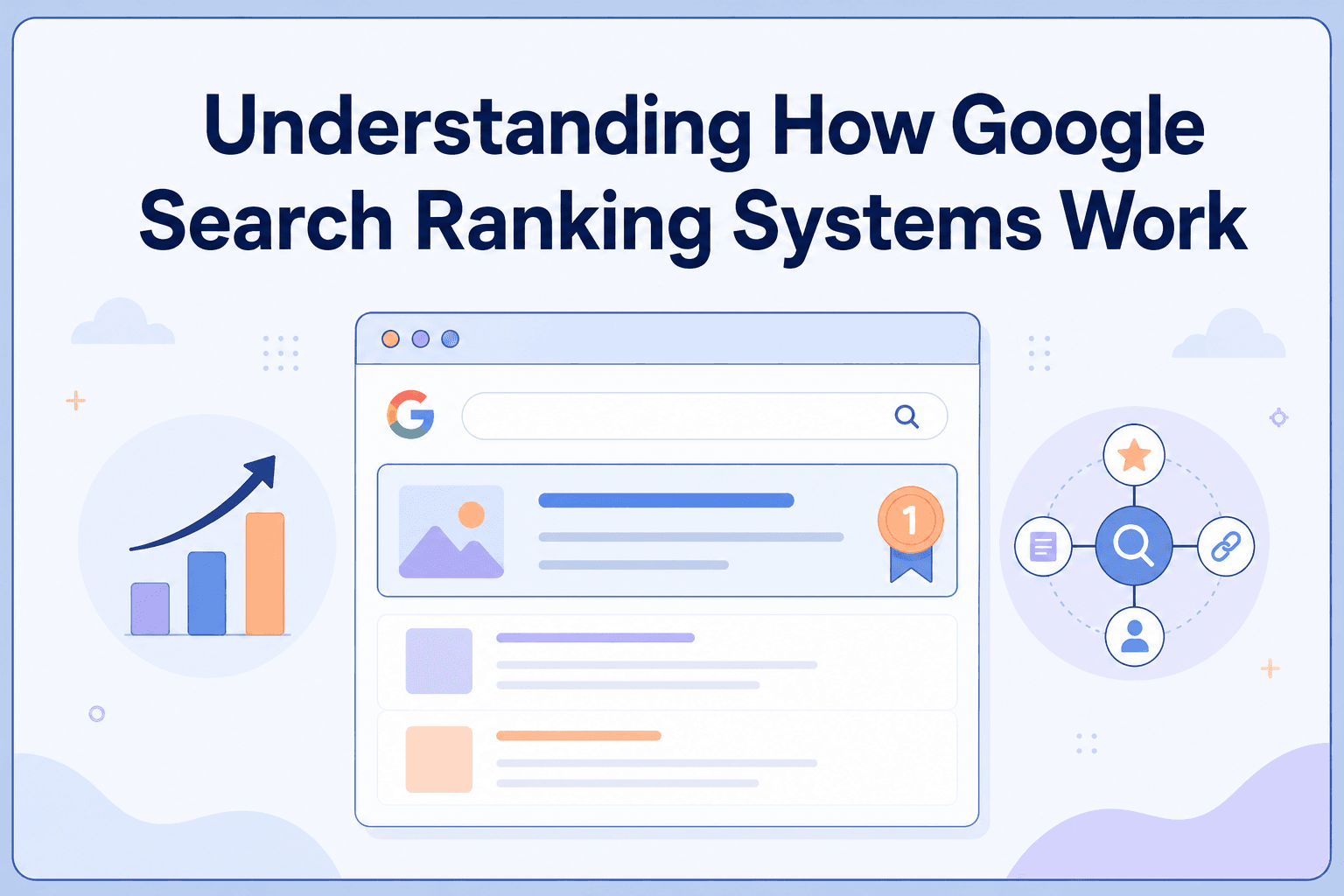
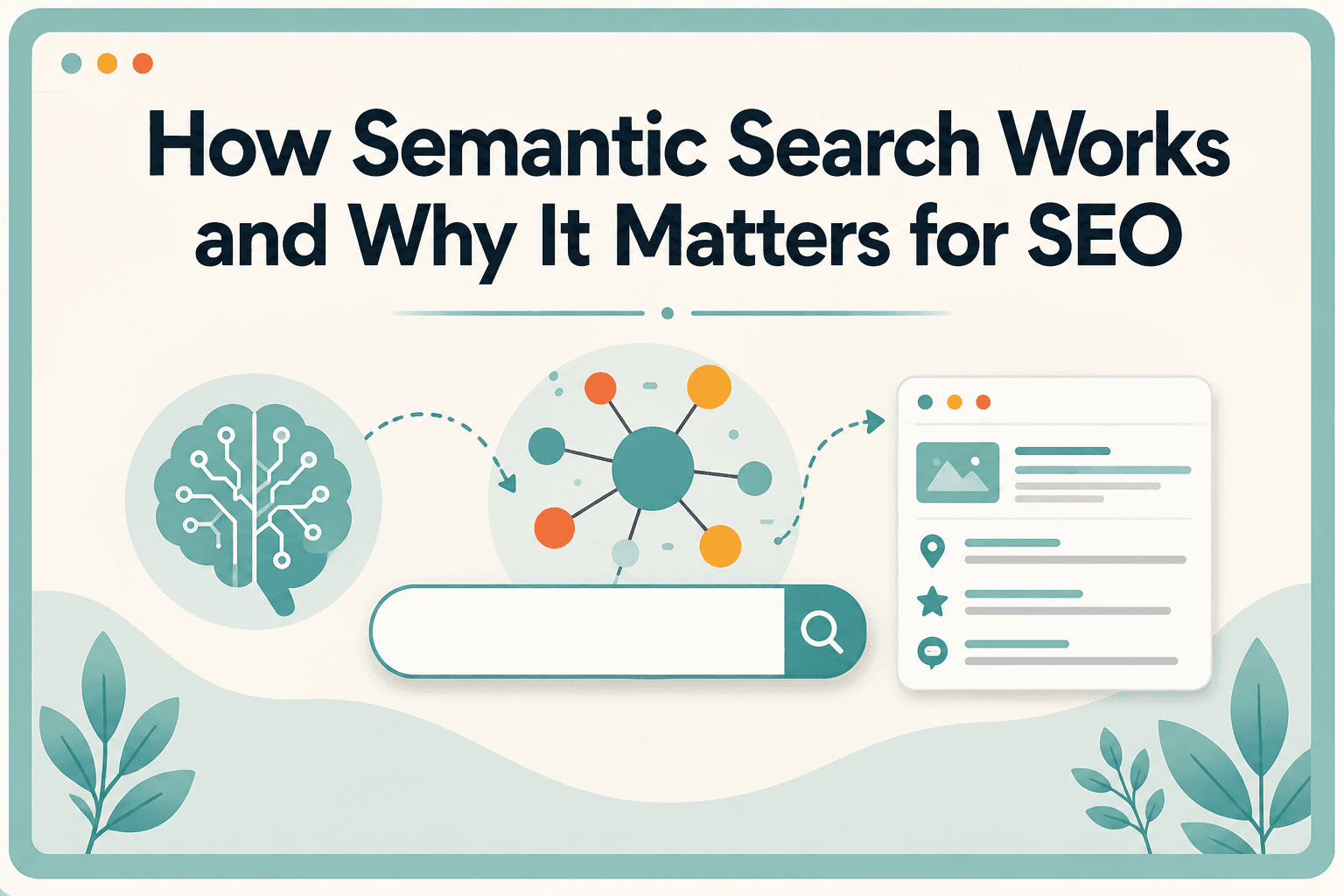
Google’s ranking systems guide explains that BERT helps Google understand how combinations of words express meaning and intent. Neural matching and RankBrain also help connect the concepts within queries to relevant concepts on webpages, even when the page does not contain every exact word used by the searcher.
In other words, keywords still identify the subject, but context helps search engines understand the subject more completely.
Primary and Secondary Keywords
A primary keyword represents the main topic of a page. In SEO workflows, secondary keywords commonly refer to related terms, variations, concepts and questions that support the same topic.
For an article about keyword research, related terms might include:
- SEO keyword research
- keyword analysis
- keyword tools
- search volume
- keyword difficulty
- search intent
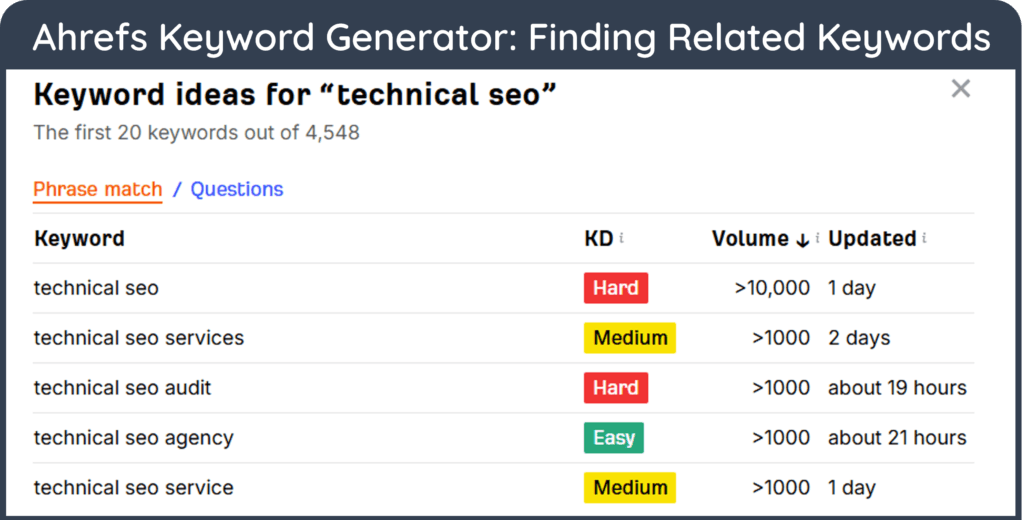
These terms should appear because they improve the explanation. They should not be treated as a list that must be inserted a certain number of times. You may use free tools like Ahrefs Keyword Generator for finding related terms based on keyword difficulty and search volume.
A Brief Overview of Keyword Types
Keywords can be classified in several ways. A common SEO classification groups keywords into four main types based on search intent:
| Keyword Type | What the Searcher Wants | Example |
|---|---|---|
| Informational | To learn or solve a problem | What is SEO? |
| Commercial | To compare available options | Best SEO tools |
| Transactional | To complete an action | Buy SEO software |
| Navigational | To reach a known page or brand | Semrush login |
The keyword’s intent helps determine the most suitable type of page. An informational keyword may require a guide, while a transactional keyword may require a product, service or subscription page.
Other classifications include branded, non-branded, local, seasonal, product and service keywords.
Why Keywords Matter for SEO, Content and Rankings
Keywords help connect webpages with relevant searches. They communicate what a page covers, who it is intended for and what questions it may answer.
However, their importance extends beyond placing a phrase in a title. Keywords support SEO, content planning, search-intent analysis and the acquisition of qualified organic traffic.
Keywords Help Communicate Page Relevance
Search engines examine the language used across a webpage to understand its subject. Important locations include the title, main heading, introduction, supporting headings, body content, alt text and internal links.
This does not mean that the same phrase should appear in every location. The wording should remain natural and accurately describe the page.
For example, a useful page targeting email marketing may also discuss:
- email campaigns
- newsletters
- subscribers
- audience segmentation
- automation
- open rates
- conversions
Together, these concepts provide a clearer explanation than repeated use of email marketing alone.
Keywords Connect Content with Search Intent
Search intent is the outcome a person wants from a search. Two searches about the same broad subject may require completely different pages.
| Keyword | Likely Intent | Suitable Page |
|---|---|---|
| What is SEO? | Informational | Educational article |
| SEO services | Commercial or transactional | Service page |
| Best SEO tools | Commercial | Comparison article |
| Semrush login | Navigational | Official login page |
It is therefore important to inspect the existing search results before creating content. If most results are product pages, a general blog article may not satisfy the dominant intent. Likewise, a sales page may not be suitable when people are looking for a neutral explanation.
Keywords Support Content Planning
Keyword information can reveal the subjects, questions and problems that matter to an audience. Businesses can use it to:
- choose relevant article topics;
- understand customer language;
- match topics with suitable page types;
- organize related content;
- prioritize commercially useful subjects;
- avoid publishing unrelated content without a clear purpose.
For example, a CRM company might discover searches for what is CRM?, CRM for small businesses, best CRM software and CRM pricing. These keywords relate to the same general subject, but each represents a different information need.
The business can therefore create connected pages for education, comparison and purchase rather than forcing every need into a single article.
How Keywords Affect Search Rankings
Keywords contribute to relevance, but they do not directly control rankings.
Google Search Central explains that Google’s automated ranking systems examine many factors and signals across hundreds of billions of webpages and other indexed content. These systems attempt to identify results that are both relevant and useful.
A page may use its primary keyword correctly and still fail to rank because it:
- does not match search intent;
- provides incomplete or unoriginal information;
- cannot be crawled or indexed properly;
- provides weaker relevance or quality signals than competing pages;
- has weak internal linking or fewer useful links from other websites;
Therefore, the objective is not merely to “add keywords.” It is to create a strong page for a relevant search need and describe that page using language the audience understands.
Keywords Help Attract Qualified Organic Traffic
The keyword with the highest search volume is not always the most valuable.
A broad term such as marketing may generate considerable interest but reveal little about what the searcher wants. A phrase such as email marketing software for independent restaurants expresses a much clearer need.
The more focused term may attract fewer searches. However, it could bring visitors who are more likely to engage with a specialized product or service.
In short, keyword value should be judged through relevance, intent and business usefulness rather than search volume alone.
How to Find and Use Keywords Effectively
Keyword research is the process of discovering and evaluating the search terms an audience uses. A complete research project may involve many tools and hundreds of terms. However, the basic process can remain straightforward.
Start with the Audience and Topic
Begin with the website’s products, services, expertise and recurring audience questions.
Keyword ideas may come from:
- customer conversations;
- sales and support teams;
- website searches;
- online communities;
- competitor pages;
- Google Search Console;
- keyword research tools.
For example, a company providing email software may begin with the seed keyword email marketing. It can then investigate related needs involving newsletters, templates, automation, segmentation, pricing and reporting.
Conduct Basic Keyword Research
A simple keyword research process includes four steps:
- Select a subject relevant to the website and audience.
- Collect related phrases, questions and problems.
- Identify the probable search intent.
- Review the search results and choose the right page type.
A basic spreadsheet can contain the following information:
| Field | Purpose |
|---|---|
| Keyword | The search term or topic being evaluated |
| Search intent | What the user wants to accomplish |
| Search volume | Estimated search demand |
| Keyword difficulty | Estimated organic ranking competition |
| Content type | Article, service, product or comparison page |
| Target URL | The page assigned to the keyword |
| Priority | Its importance to the website |
| Status | Planned, drafted, published or updated |
The spreadsheet does not need to become unnecessarily complicated. Its main purpose is to turn keyword ideas into clear publishing decisions.
Map Keywords to Suitable Pages
Keyword mapping means assigning each important keyword or search need to a particular page.
| Keyword | Recommended Page Type |
|---|---|
| What is SEO? | Educational article |
| SEO services | Service page |
| Best SEO tools | Comparison article |
| SEO audit template | Download or resource page |
This process helps prevent several pages from targeting substantially the same search intent. It also makes internal linking and content planning easier.
Closely related phrases do not always require different pages. For example, SEO tools for beginners and beginner SEO software may be addressed by the same comparison article when the search intent and expected content are similar.
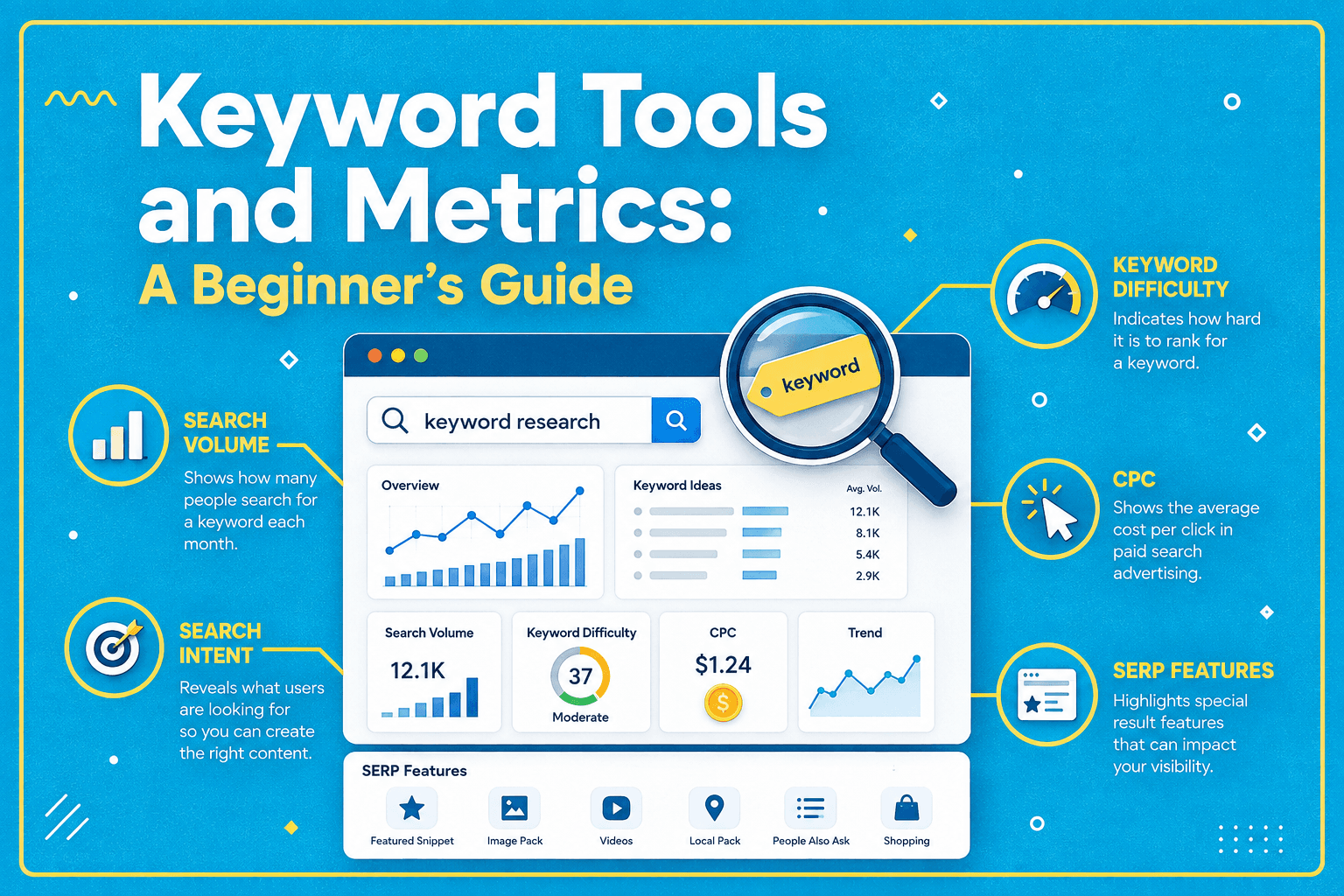
Evaluate the Most Important Keyword Metrics
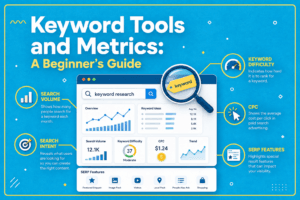
Three important considerations are search volume, keyword difficulty and business relevance.
Search volume estimates how often a keyword is searched within a particular location and period.
Keyword difficulty is a third-party metric that estimates how challenging it may be to rank for a keyword. The calculation and scoring methodology may vary by tool.
Business relevance measures whether the keyword is genuinely valuable to the website and its audience.
A low-difficulty keyword is not useful when it has no connection with the business. Likewise, a high-difficulty keyword may still deserve long-term investment when it is central to the website’s purpose.
Tools for Finding Keywords
Useful keyword tools include:
- Google Keyword Planner, for keyword ideas, forecasts and search estimates;
- Google Search Console, for queries that already produce impressions and clicks;
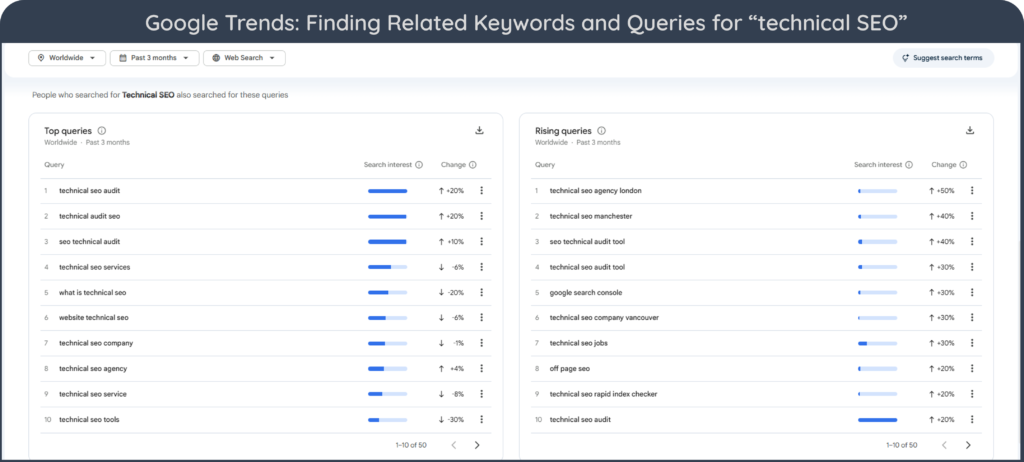
- Google Trends, for changes in relative interest over time;
- Semrush, for keyword ideas, competitor analysis and difficulty metrics;
- Ahrefs, for keywords, ranking pages, backlinks and traffic estimates.
Keyword Planner was primarily designed for Google Ads. Therefore, the competition data it displays reflects advertising activity rather than the difficulty of earning an organic ranking.
No keyword tool provides perfect numbers. Different platforms use different databases and calculation methods, so their search-volume and keyword-difficulty estimates may vary.
Place Keywords Naturally
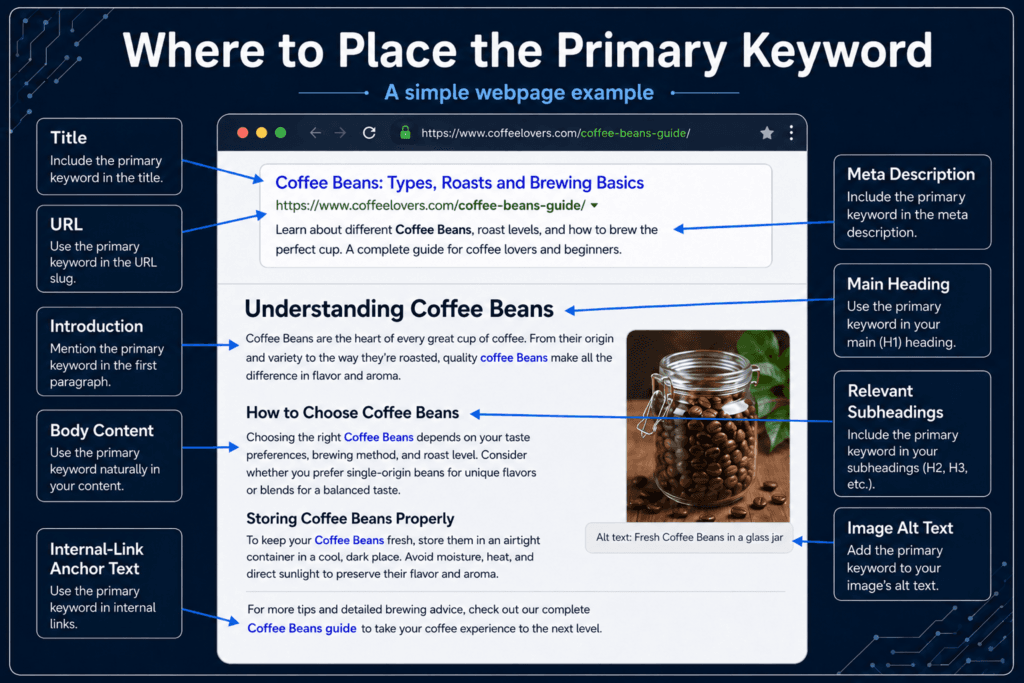
The primary keyword can appear naturally in the:
- title;
- main heading;
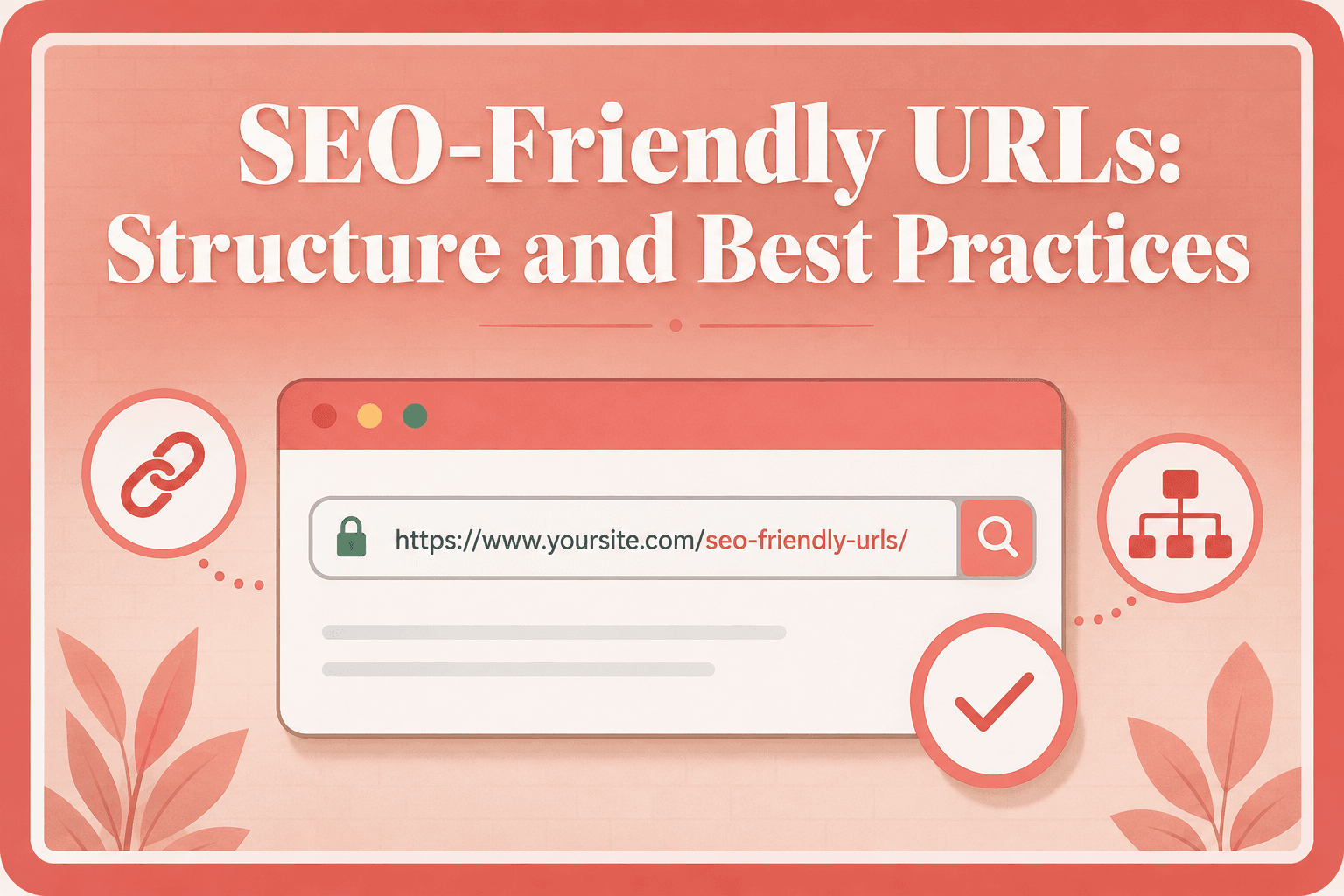
- URL;
- introduction;
- relevant subheadings;
- body content;
- meta description;
- image alt text;
- internal-link anchor text.
Alt text should describe the image accurately, while anchor text should naturally describe the destination page. Google’s link best practices recommend descriptive, reasonably concise and relevant anchor text because it helps both readers and Google understand the linked page.
However, these are possible locations, not fields that must all contain the exact keyword. Clear writing and complete coverage are more important than mechanical placement.
Common Keyword Mistakes and the Changing Role of Keywords
Keyword optimization can become ineffective when a phrase or metric is given more importance than the reader’s needs.
Keyword Stuffing
Keyword stuffing means repeating terms excessively or placing them unnaturally within a page to influence rankings.
Google’s spam policies define keyword stuffing as filling a page with keywords or numbers to manipulate search results. Examples include repeating words so frequently that the text sounds unnatural.
A keyword should therefore be used only where it makes the subject clearer.
Ignoring Search Intent
A page may contain the right keyword but answer the wrong need.
For example, an educational article cannot replace a login page. Similarly, a product page may not satisfy someone seeking a neutral definition or tutorial.
The search results should therefore be reviewed before the page format is selected.
Choosing Keywords Only by Volume or Difficulty
A high-volume keyword may be too broad or poorly connected with the business. A low-difficulty keyword may have little value or may be based on an inaccurate third-party estimate.
Search volume and keyword difficulty should therefore be combined with intent, relevance, current search results and business value.
Creating Too Many Similar Pages
Publishing separate pages for minor wording variations can create unnecessary overlap.
Keyword cannibalization can become a concern when multiple pages target substantially the same query and intent. Similar pages may split internal links and backlinks between different URLs and make the site’s content structure less clear.
However, two pages that mention the same broad topic are not automatically competing. The important question is whether they satisfy the same intent.
Keywords in AI-Powered Search
Keywords remain relevant because people still express their needs through words, questions and prompts. However, AI-powered search can interpret longer queries, related concepts and follow-up questions.
Google explains that AI Overviews and AI Mode may use query fan-out, which involves generating related searches across multiple subtopics to retrieve additional relevant results. Google also states that its generative AI features are rooted in its existing Search ranking and quality systems.
It is therefore unnecessary to create a separate page for every possible wording variation. Instead, content should:
- answer the main question directly;
- explain related concepts;
- use clear and natural language;
- provide credible supporting information;
- anticipate useful follow-up questions.
In other words, keywords still identify the need, while complete topic coverage helps the content remain useful across traditional and AI-powered search.
Conclusion
Keywords connect audience searches with online content. They help businesses understand demand, plan useful pages, communicate relevance and attract qualified organic traffic.
However, keywords are only one part of SEO. Rankings are influenced by many systems and signals related to relevance, usefulness, accessibility, links, page quality and competition. Modern keyword optimization therefore focuses on meaning and usefulness rather than exact-match repetition.
To sum up, choose topics that matter to the audience, create the right page for the search intent and use the language people naturally use to find it.
Frequently Asked Questions
What are keywords in SEO?
Keywords are words and phrases that represent what people search for and what a webpage covers. They help marketers understand audience demand, select topics and make page relevance clearer to readers and search engines.
What tools do I need to find keywords?
A basic toolkit can include Google Keyword Planner for ideas and estimates, Google Search Console for actual website queries and Google Trends for changes in search interest. Semrush and Ahrefs provide additional competitor and keyword-difficulty data.
Why are keywords important for SEO?
Keywords connect pages with relevant searches. They help identify audience needs, guide content planning and communicate a page’s subject. However, using a keyword does not guarantee rankings because search engines consider many other signals.
How many keywords should one page target?
A page should have one clear central topic and may naturally address several closely related terms and questions with the same search intent. There is no fixed number of keywords that every page must contain.
Where should keywords be placed?
Use the primary keyword naturally in the title, main heading, URL, introduction and relevant content. Related terms may appear in subheadings, meta descriptions, alt text and internal-link anchors where they accurately describe the page.
What is keyword stuffing?
Keyword stuffing is the unnatural or excessive repetition of words and phrases in an attempt to manipulate rankings. It reduces readability and may violate Google’s spam policies.
Do keywords directly determine Google rankings?
No. Keywords contribute to relevance, but Google’s ranking systems consider many other factors and signals related to usefulness, content quality, links, technical accessibility and competing results.
Are keywords still important for AI search engines?
Yes. Queries and prompts still express subjects, entities and intent. However, AI systems can interpret wider context and related questions, so content should provide complete, credible answers rather than repeat exact-match keywords.